Shape Recognition Easy Fractions of Shapes Worksheets for Ages 6-8
5 filtered results
-
From - To
Introduce your child to the concept of fractions with our "Shape Recognition Easy Fractions of Shapes Worksheets for Ages 6-8." These engaging worksheets are designed to help young learners improve their shape recognition skills while understanding basic fractions. Perfect for children ages 6-8, each worksheet blends fun and education by using colorful shapes to illustrate parts of a whole. Kids will develop their confidence in identifying and working with fractions in a visually illustrative manner. Download our printable worksheets to provide an enjoyable and effective learning experience for your child today!
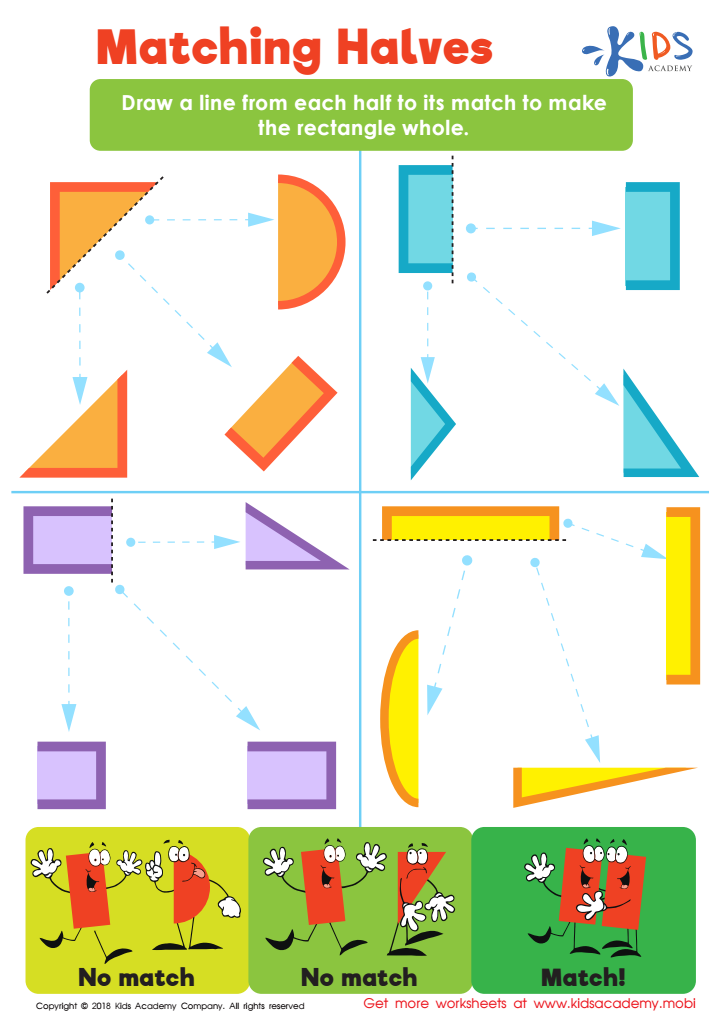
Matching Halves Worksheet
 Assign to My Students
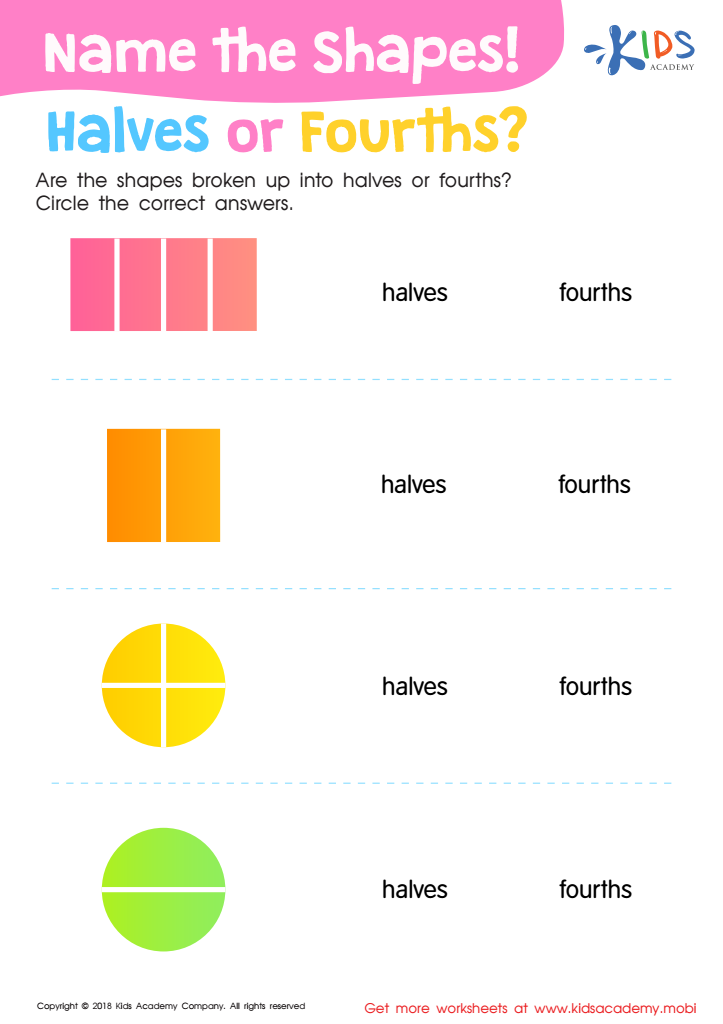
Name the Shapes Halves or Fourths? Worksheet
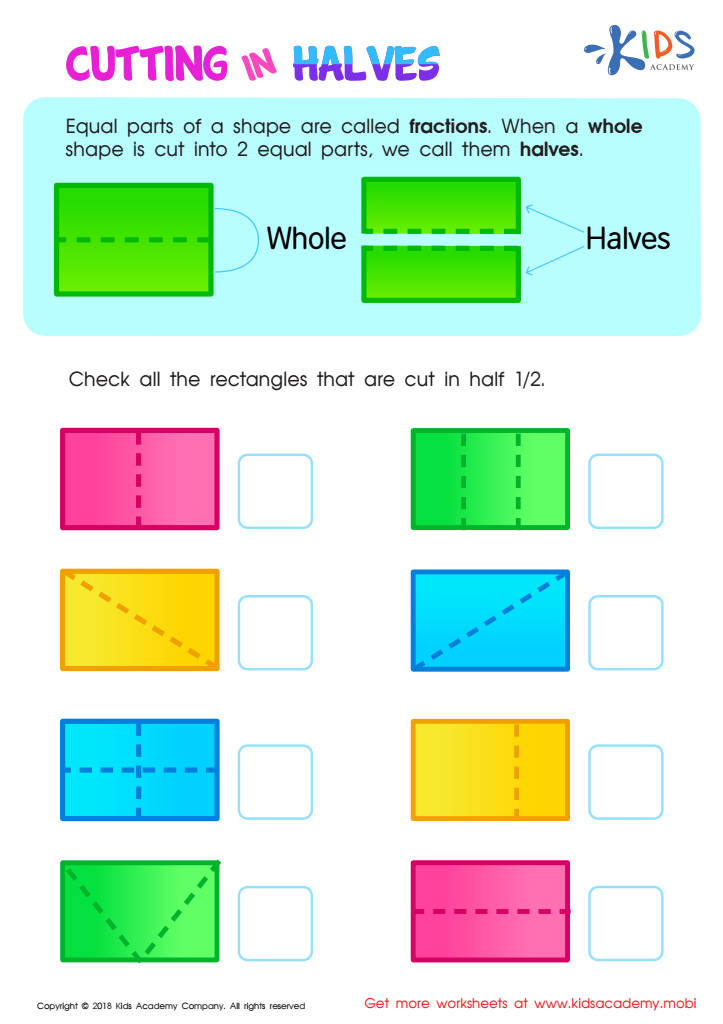
Cutting in Halves Worksheet
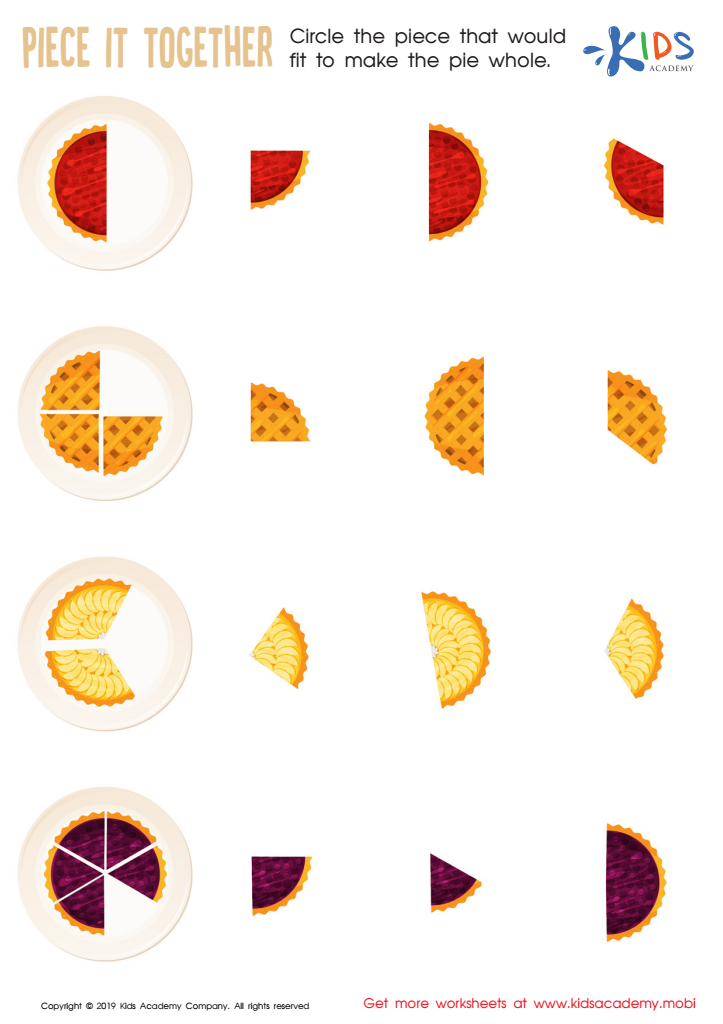
Piece it together Worksheet
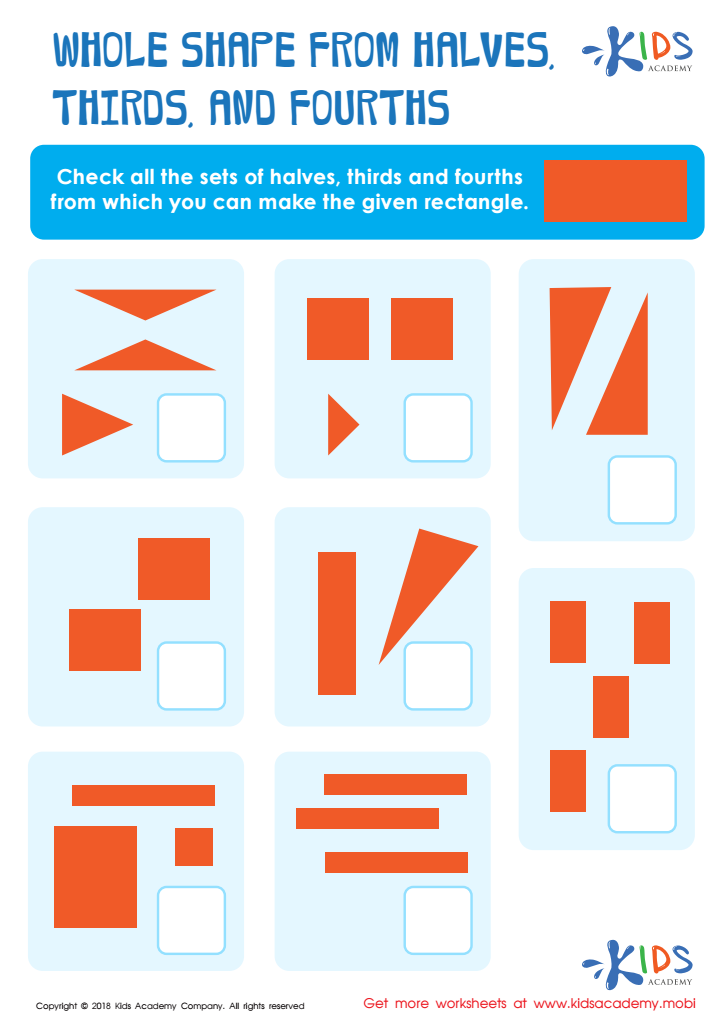
Whole Shape from Halves, Thirds and Fourths Worksheet








Parents and teachers should care about teaching shape recognition and easy fractions of shapes to children aged 6-8 because these skills lay the foundation for essential mathematical and cognitive development. At this age, children are developing their ability to identify, analyze, and differentiate various shapes, which is crucial for their spatial awareness. Recognizing shapes helps children understand geometry's basic principles and prepares them for more complex mathematical concepts.
Additionally, understanding fractions using shapes introduces the concept of dividing a whole into parts in a tangible and relatable way. This visual and hands-on approach makes abstract concepts more concrete, enhancing comprehension and retention. For example, dividing a shape like a pie or a square into equal parts can help children grasp what 1/2, 1/3, or 1/4 represents.
These skills also support other curricular areas and everyday problem-solving scenarios. For instance, in art, children learn about symmetry and proportion, while in cooking, they might encounter recipes that require understanding fractions of ingredients. Furthermore, early mastery of these concepts fosters a positive attitude towards mathematics, promotes critical thinking, and equips children with skills that are directly translatable to real-life situations. By caring about shape recognition and fractions, parents and teachers invest in a child’s holistic education and long-term academic success.