Pattern recognition Easy Numbers Worksheets for Ages 6-8
3 filtered results
-
From - To
Unlock your child’s potential with our "Pattern Recognition Easy Numbers Worksheets" specifically designed for ages 6-8. These engaging worksheets help young learners enhance their numerical, reasoning, and fine motor skills through fun, easy-to-understand tasks. Perfect for early graders, our resources focus on identifying, completing, and creating number patterns, laying a strong mathematical foundation. These activities not only boost math confidence but also promote critical thinking and problem-solving abilities. Ideal for both classroom and home use, these worksheets are a valuable tool in making math an enjoyable and rewarding experience. Foster a love for learning with Kids Academy!
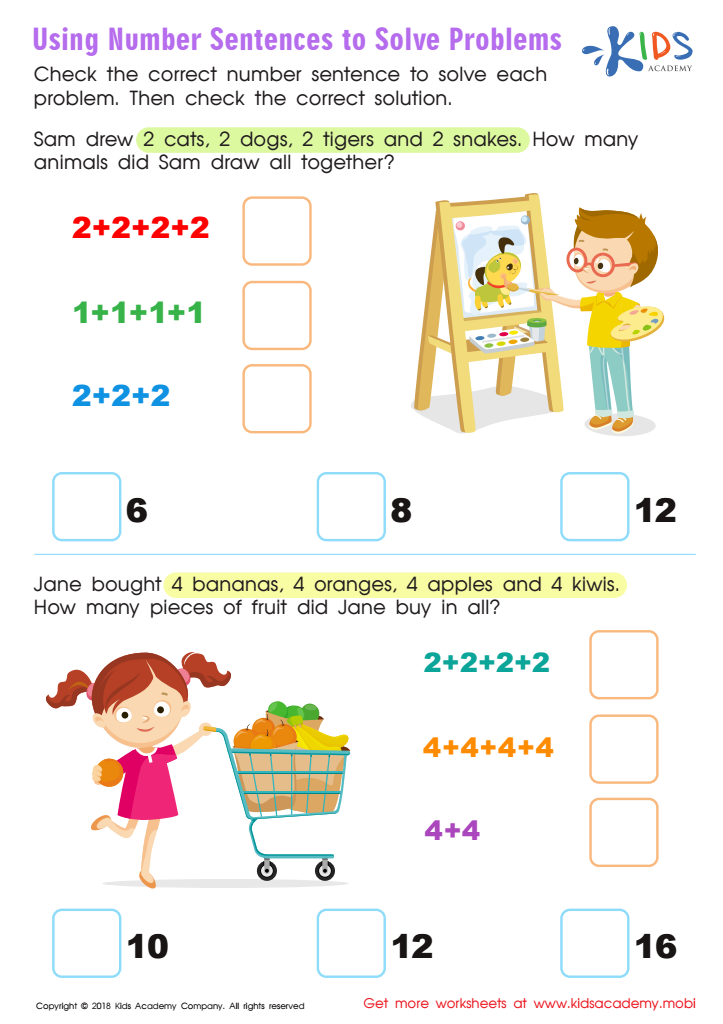
Using Number Sentences to Solve Problems Worksheet
 Assign to My Students
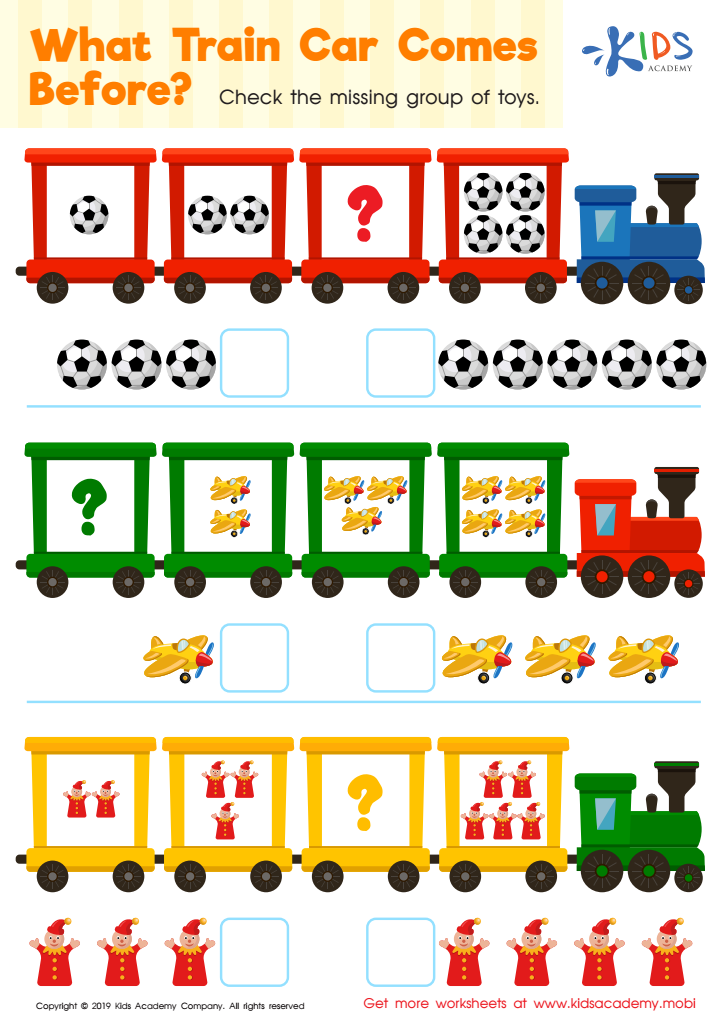
What Train Car Comes Before? Worksheet
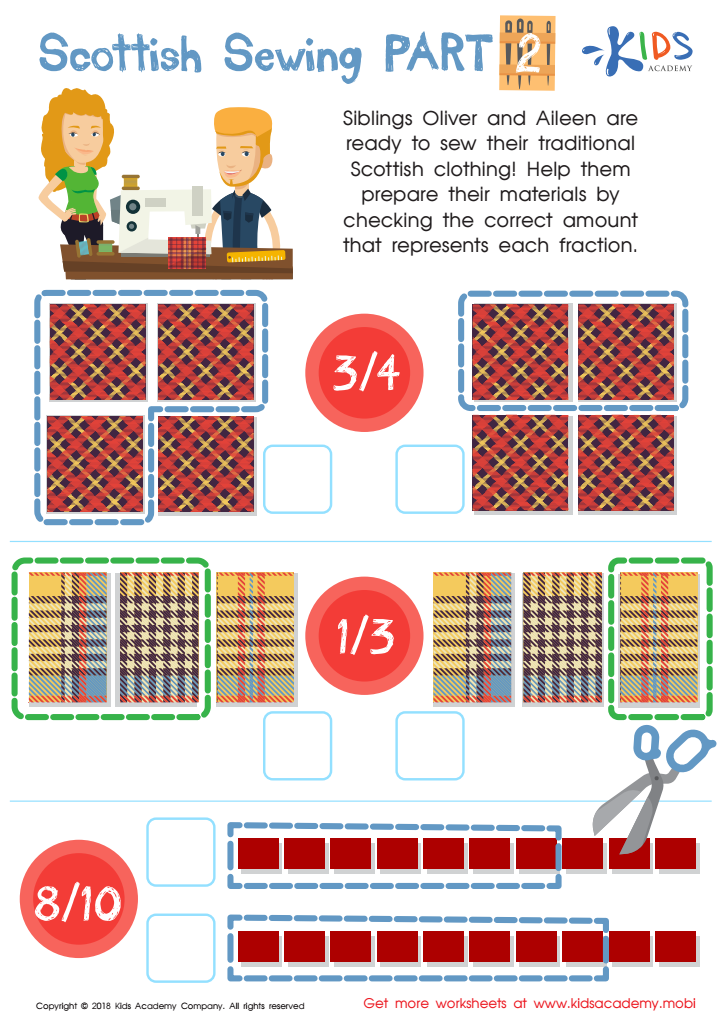
Scottish Sewing Part 2 Worksheet



.jpg)




Pattern recognition and understanding basic numbers are fundamental skills that serve as the cornerstone for a child’s mathematical development. For children aged 6-8, these skills are critical as they are at a stage where they are learning to think logically and make sense of the world around them.
Firstly, pattern recognition helps in developing cognitive abilities. Being able to identify and predict sequences enhances a child’s problem-solving skills and logical thinking. This can translate to improvements not just in math, but in a variety of subjects where logical reasoning is required.
Secondly, understanding numbers and simple patterns provides a smooth transition into more complex arithmetic operations. When children perceive how numbers work together in patterns, they start to grasp the basics of addition, subtraction, multiplication, and division more easily.
These skills also aid in everyday life. From recognizing the days of the week to understanding the concept of time and money, pattern recognition and basic numeracy are practical life skills.
Parents and teachers play a crucial role by incorporating fun and engaging activities such as sorting objects, recognizing sequences in stories, or using math games. Supporting these skills reinforces the idea that learning can be enjoyable, fostering a lifelong interest in mathematics and critical thinking.
In summary, investing time and effort into developing pattern recognition and basic numerical skills for children aged 6-8 equips them with essential cognitive tools, enhances academic performance, encourages logical reasoning, and provides practical life skills.








