Understanding Sequences Easy Numbers Worksheets for Ages 6-8
3 filtered results
-
From - To
Welcome to our "Understanding Sequences Easy Numbers Worksheets" designed specifically for children ages 6-8! These engaging worksheets aim to introduce young learners to the concept of sequences through fun and interactive activities. By exploring number patterns, students will enhance their critical thinking and problem-solving skills while gaining confidence in math. Our colorful and age-appropriate worksheets encourage creativity and exploration, making learning enjoyable. With a variety of exercises such as fill-in-the-blanks and puzzles, your child will grasp foundational math concepts easily. Perfect for teachers and parents alike, these resources provide an ideal way to reinforce learning at home or in the classroom!
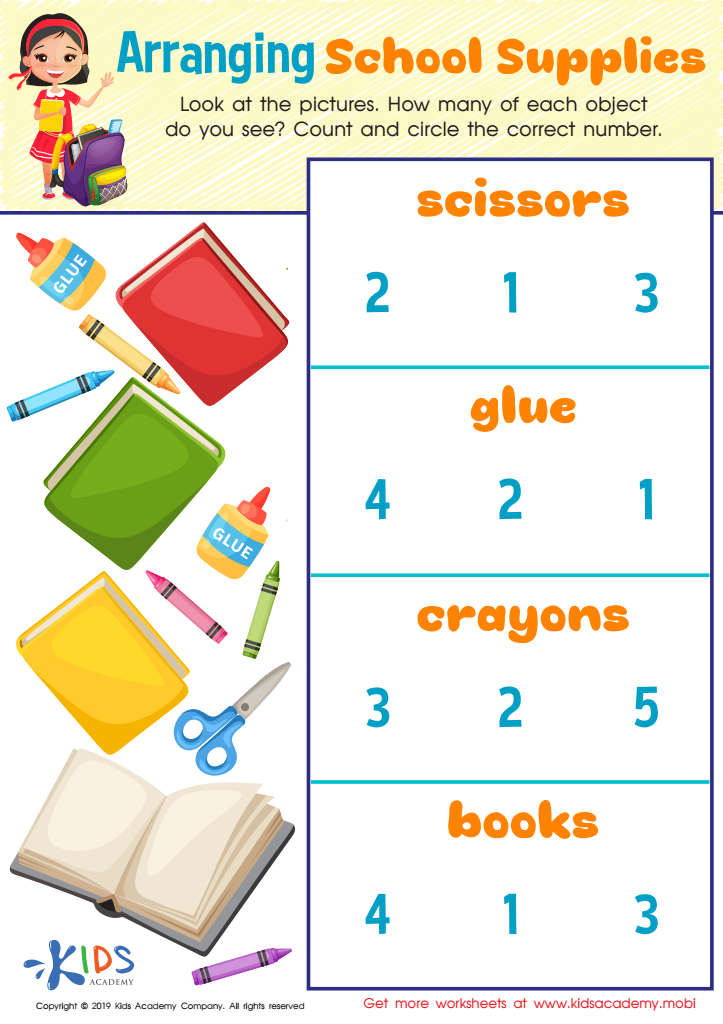
Arranging School Supplies Worksheet
 Assign to My Students
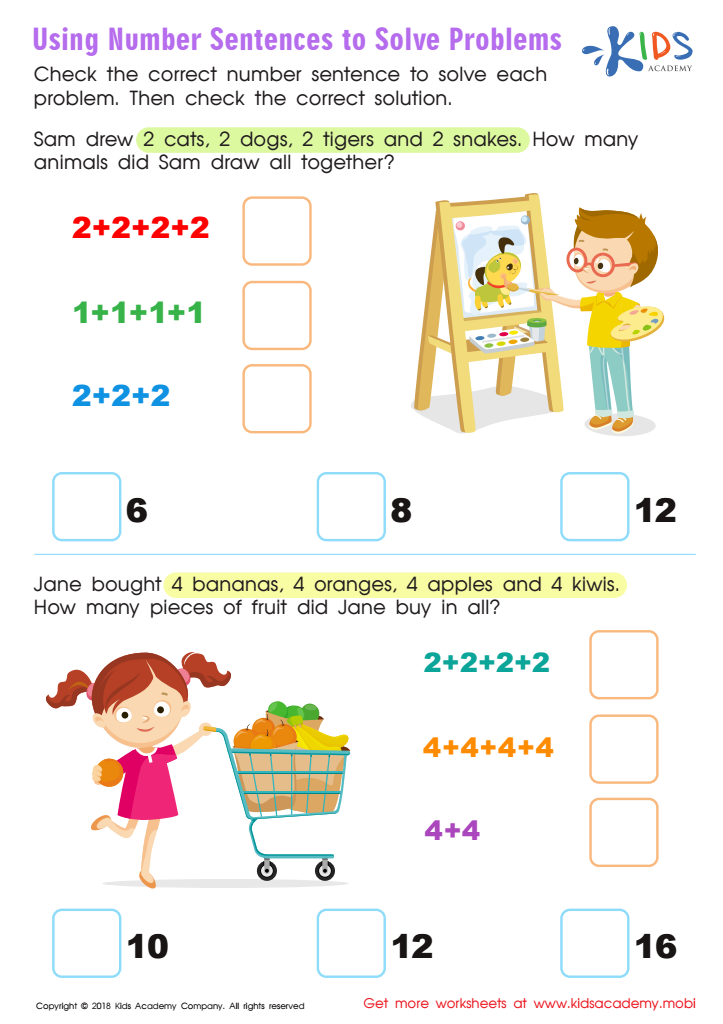
Using Number Sentences to Solve Problems Worksheet
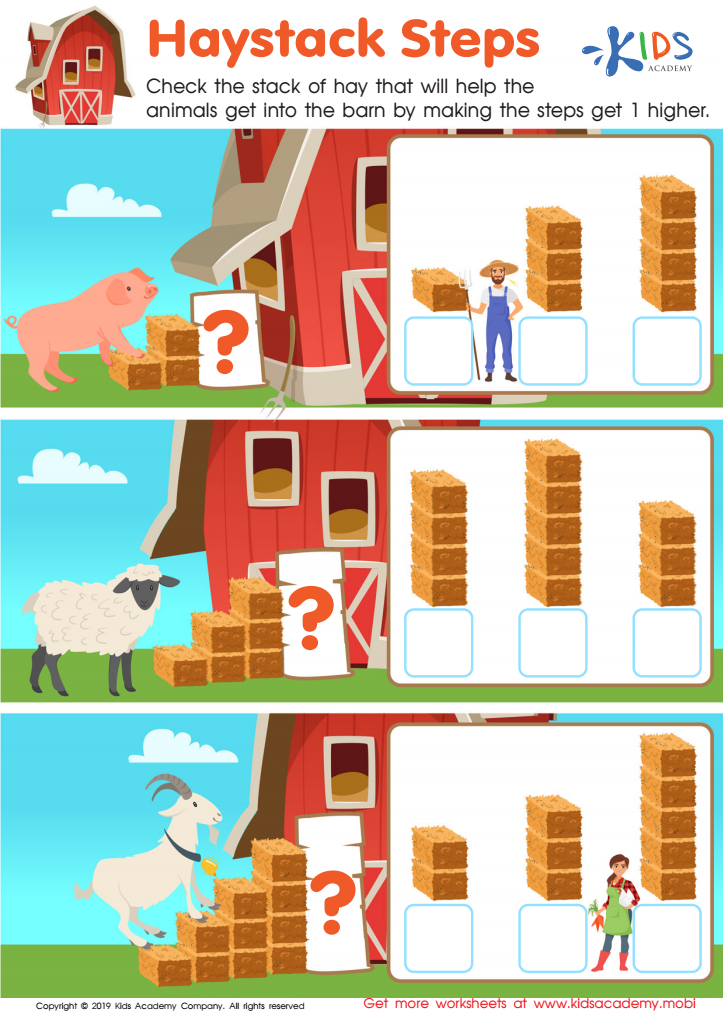
Haystack Steps Worksheet







Understanding sequences of easy numbers is crucial for children ages 6-8, as it lays the foundation for their mathematical development and critical thinking skills. During this age, kids are naturally curious and eager to grasp concepts that will serve them throughout their academic journey. Recognizing patterns in sequences helps enhance their problem-solving abilities, enabling them to predict outcomes based on patterns, which is a skill applicable in various subjects beyond math.
Parents and teachers should prioritize this understanding, as it fosters logical reasoning and encourages a growth mindset. By discovering how numbers relate to one another, children develop their analytical skills and learn to approach complex problems with confidence. Additionally, recognizing sequences can deepen their comprehension of counting, addition, and subtraction, making other math concepts more accessible.
Furthermore, engaging children in fun activities related to sequences—such as number games and puzzles—can strengthen their interpersonal skills and promote collaborative learning. Ultimately, establishing a solid grasp of sequences not only enhances mathematical proficiency but also cultivates a positive attitude toward learning, setting the stage for educational success in later years. By prioritizing this area of learning, parents and teachers can effectively support children's cognitive development and instill a lifelong love for mathematics.








