Enhancing Counting Skills Easy Math Worksheets for Ages 6-8
5 filtered results
-
From - To
Enhancing Counting Skills with our easy math worksheets for ages 6-8 provides a fun and interactive way for young learners to develop essential counting abilities. Designed for early grade students, these worksheets offer engaging activities that promote number recognition, one-to-one correspondence, and basic arithmetic. Each printable sheet is tailored to foster a love for math through colorful visuals and creative exercises. Our resources help build confidence in counting while making learning enjoyable. Perfect for classroom use or at-home practice, these worksheets ensure children gain a strong mathematical foundation. Start enhancing your child’s counting skills today with our thoughtfully crafted materials!
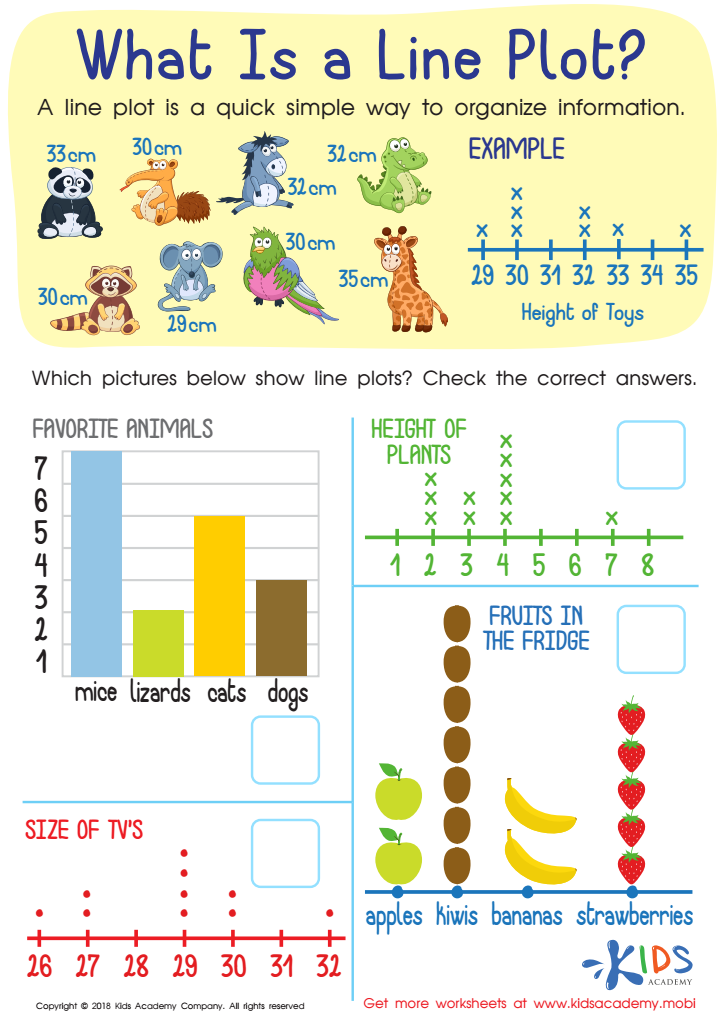
What Is a Line Plot? Worksheet
 Assign to My Students
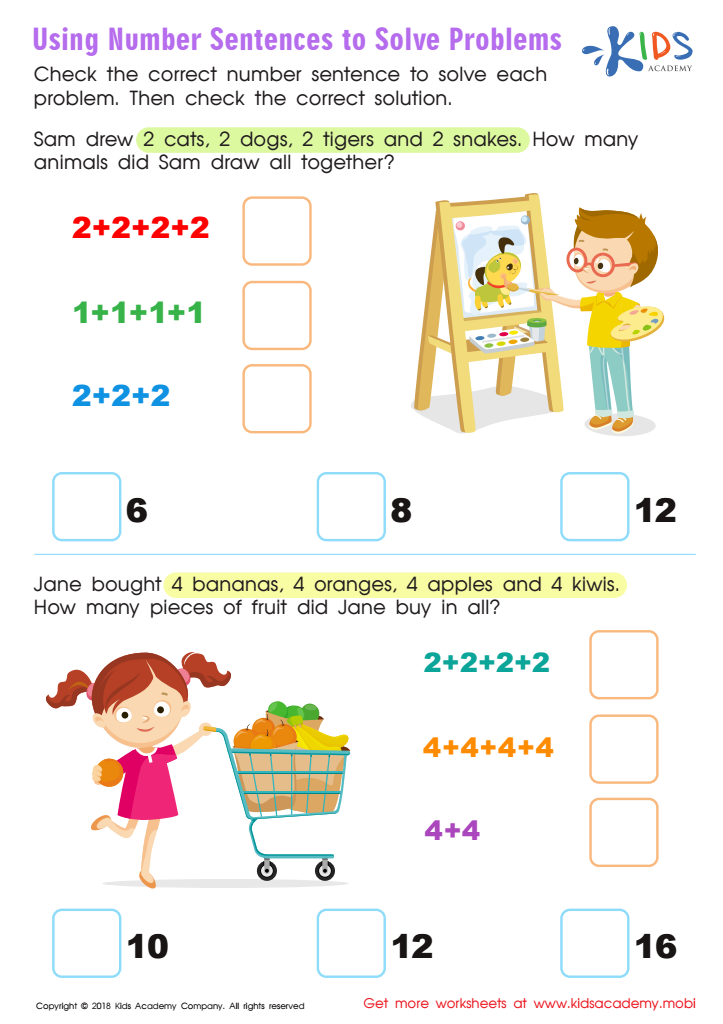
Using Number Sentences to Solve Problems Worksheet
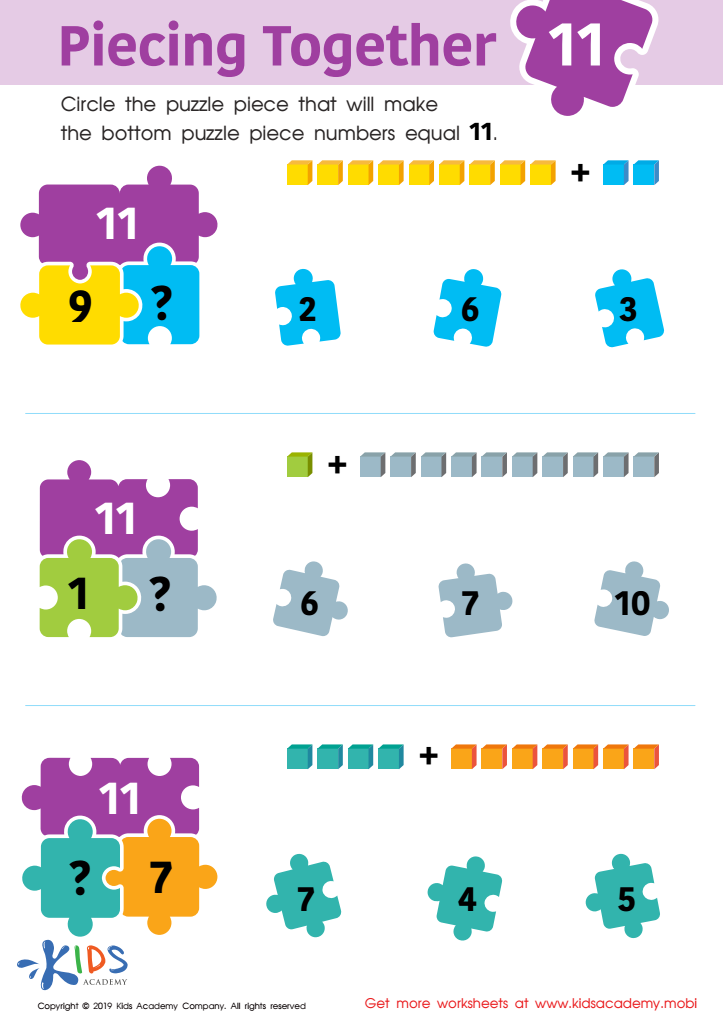
Piecing Together 11 Worksheet
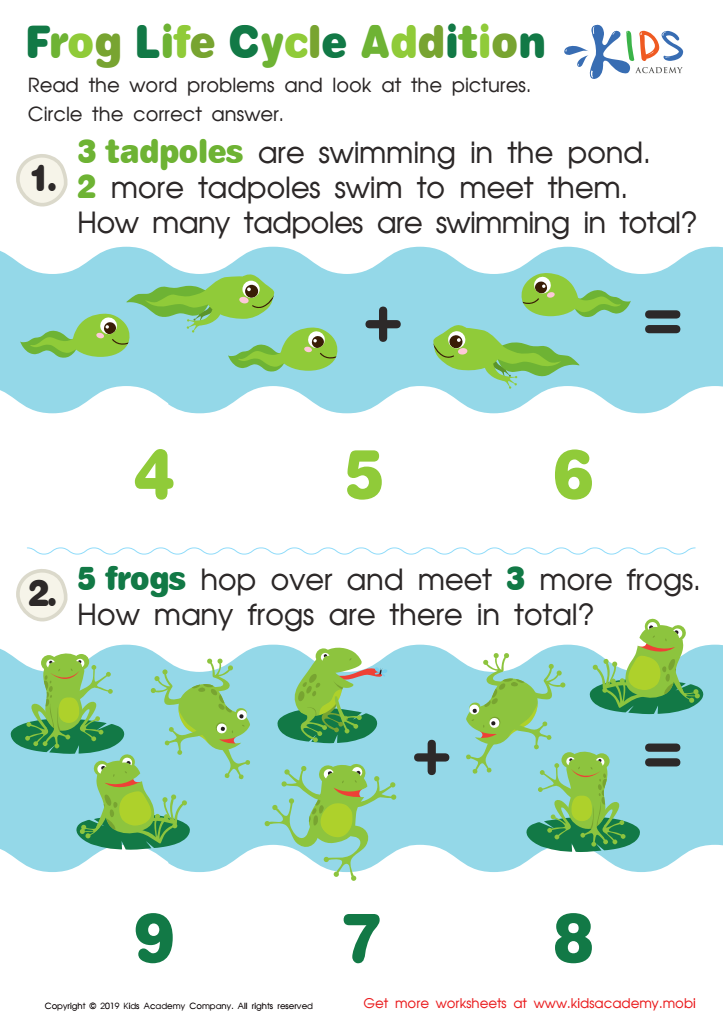
Frog Life Cycle Addition Worksheet
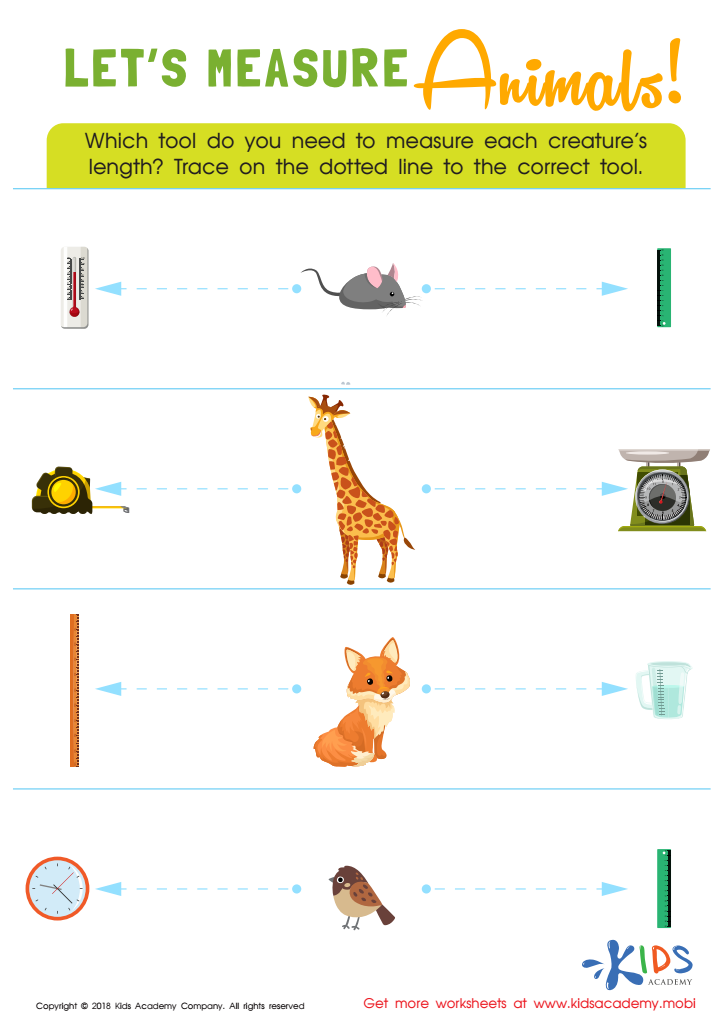
Let's Measure Animals! Worksheet







Enhancing counting skills in children aged 6-8 is crucial for their overall mathematical development and academic success. During this formative stage, children solidify their understanding of numbers, which serves as a foundation for more advanced math concepts later on. Parents and teachers play a pivotal role in fostering these skills, as early experiences with counting can significantly impact a child's confidence and motivation in math.
Songs, games, and interactive activities can make counting engaging and fun, combining learning with play. Developing strong counting skills helps children understand critical concepts like addition, subtraction, patterns, and even early measurement—skills essential for everyday life. Moreover, these counting exercises enhance a child's cognitive abilities, promoting logical reasoning and problem-solving skills.
Furthermore, early math proficiency is linked to better performance in school, lowering the likelihood of math anxiety as they progress into more complex topics. By prioritizing counting skills, parents and teachers create supportive learning environments that encourage curiosity and perseverance. Investing time and resources in this area ensures children develop a strong mathematical foundation, paving the way for future academic achievement and fostering a positive attitude toward math in general.








