Filters

12 filtered results

Clear all filters
Favorites
With answer key
Interactive

12 filtered results

Difficulty Level

Grade


Explore our engaging Vocabulary Expansion Easy Reading Worksheets designed for ages 6-8! These fun, educational activities help young learners develop and enhance their vocabulary skills through carefully crafted exercises. Each worksheet focuses on age-appropriate vocabulary words, promoting comprehension and proper usage. With colorful illustrations and interactive tasks, children will stay motivated and eager to learn. Whether used in classrooms or at home, these worksheets foster a love for reading while building a strong language foundation. Visit Kids Academy to access our quality resources and empower your child’s vocabulary growth today!

Check out this FREE Trial Lesson on Reading for age 6-8!

Read Texts with Understanding - Main Idea

Favorites
With answer key
Interactive
  • 6-8
  • Vocabulary expansion
  • Reading
  • Easy
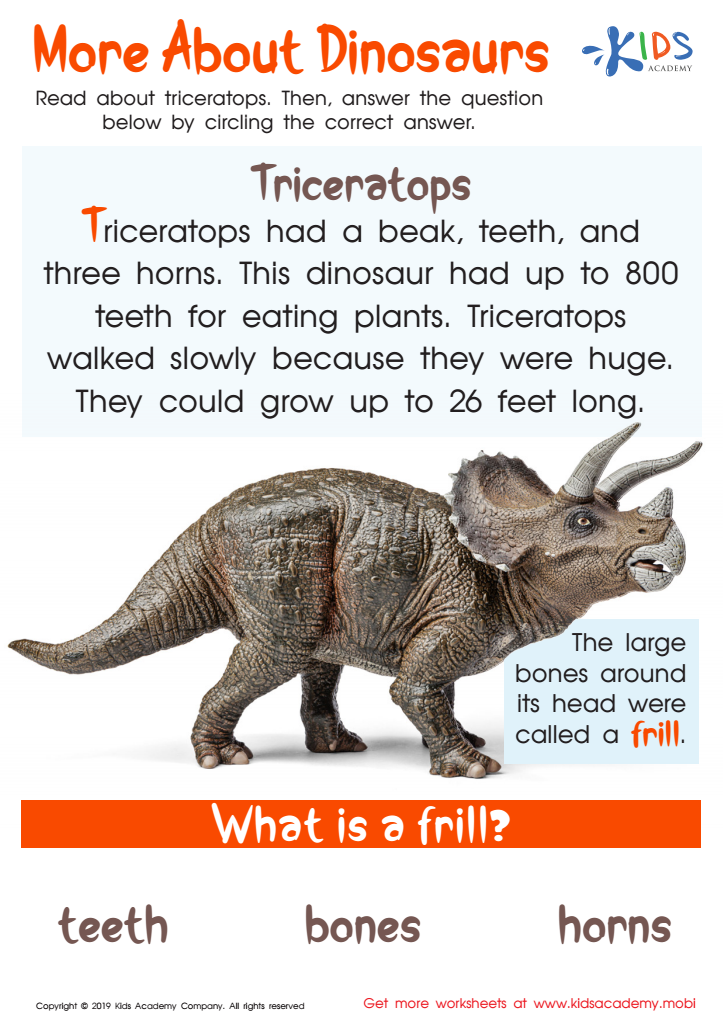
More About Dinosaurs Worksheet

More About Dinosaurs Worksheet

Let your little archaeologist have a blast with this Kids Academy worksheet! They’ll explore the past and learn more about the triceratops while practicing their informational text skills. Be sure to highlight the textbox and show them how the frill is explained. Finish the worksheet by answering the question!
More About Dinosaurs Worksheet
Worksheet
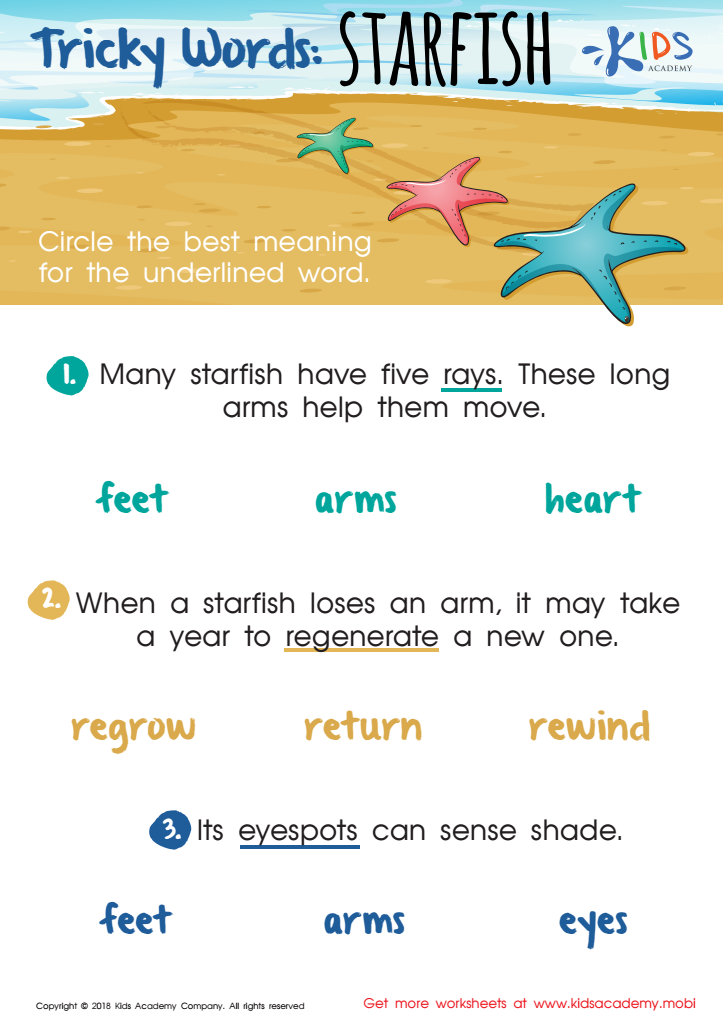
Tricky Words: Starfish Worksheet

Tricky Words: Starfish Worksheet

Encourage your kids' learning with a fun worksheet! Help them circle the best meaning for the underlined words in the sentences. This activity is a great way to practice what they learn at school and have fun. Your little ones will enjoy learning new words and make the experience even more memorable.
Tricky Words: Starfish Worksheet
Worksheet
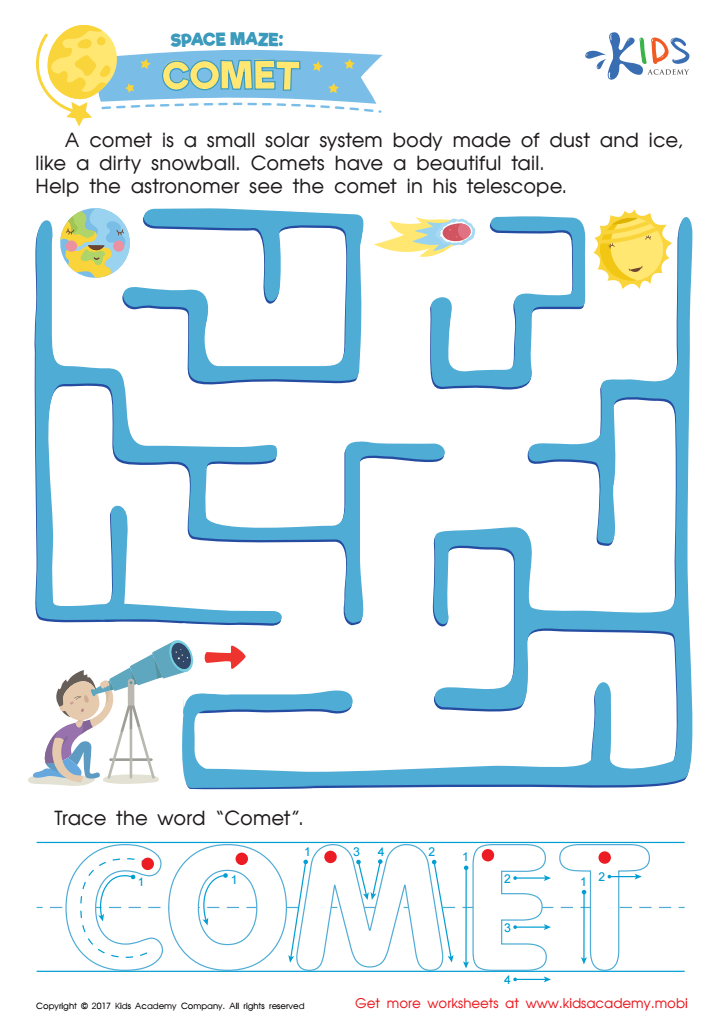
Space Maze: Comet
Space Maze: Comet

Space Maze: Comet Worksheet

Join them on their journey and explore comets with Space Maze: Comet.
Space Maze: Comet Worksheet
Worksheet
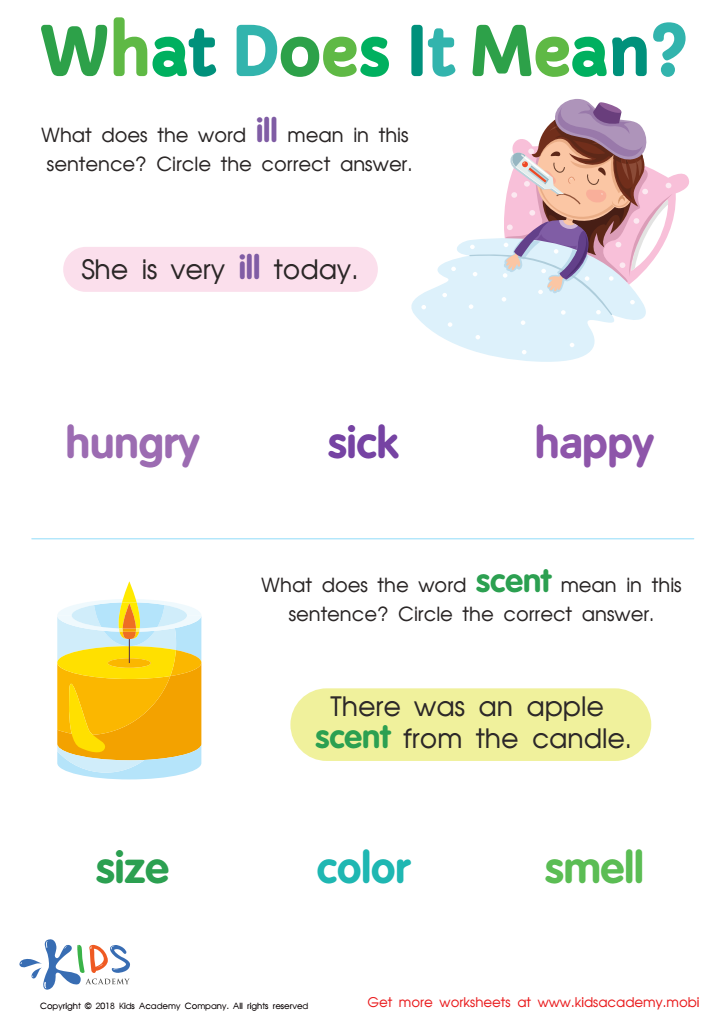
What Does It Mean? Worksheet

What Does It Mean? Worksheet

Students should know the meaning of words, even when used in different contexts. This worksheet has two sections. In the first, there's a picture on the right side. Ask students the meaning of 'ill' in "she is very ill today". Help them circle the correct answer from the options. The second section follows the same pattern. Make sure students circle the right answer.
What Does It Mean? Worksheet
Worksheet
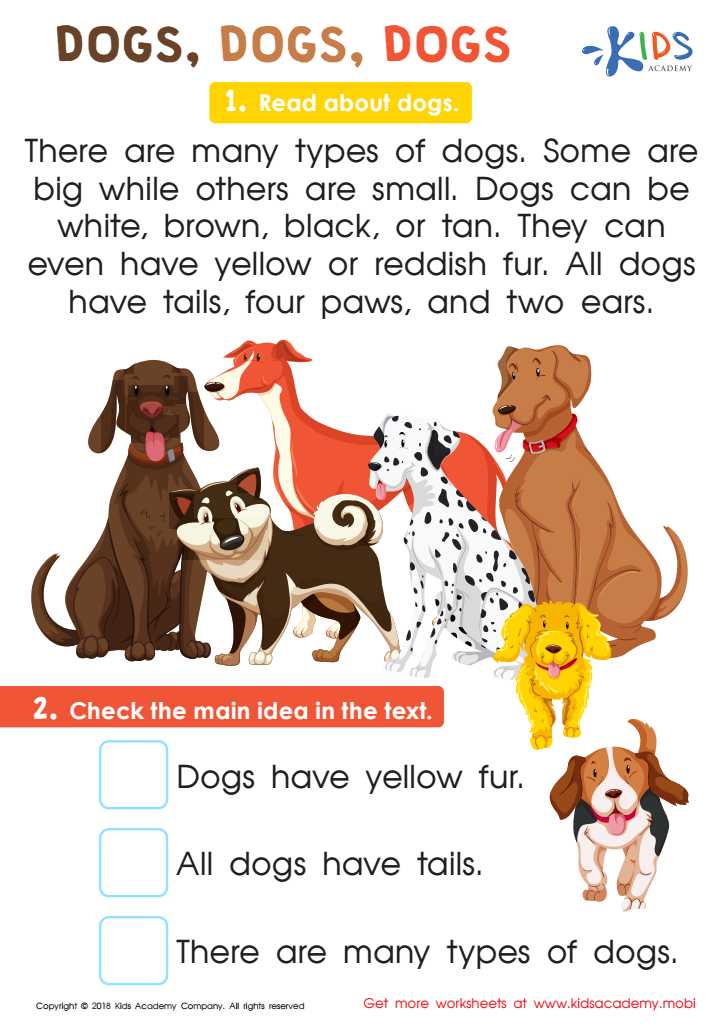
Dogs, Dogs Worksheet

Dogs, Dogs Worksheet

Help your child understand main ideas with this fun doggy worksheet from Kids Academy! Have them read the passage and then discuss the main idea. After that, have them read the answer choices and pick the right one. This will help your kiddo hone their critical reading comprehension skills!
Dogs, Dogs Worksheet
Worksheet
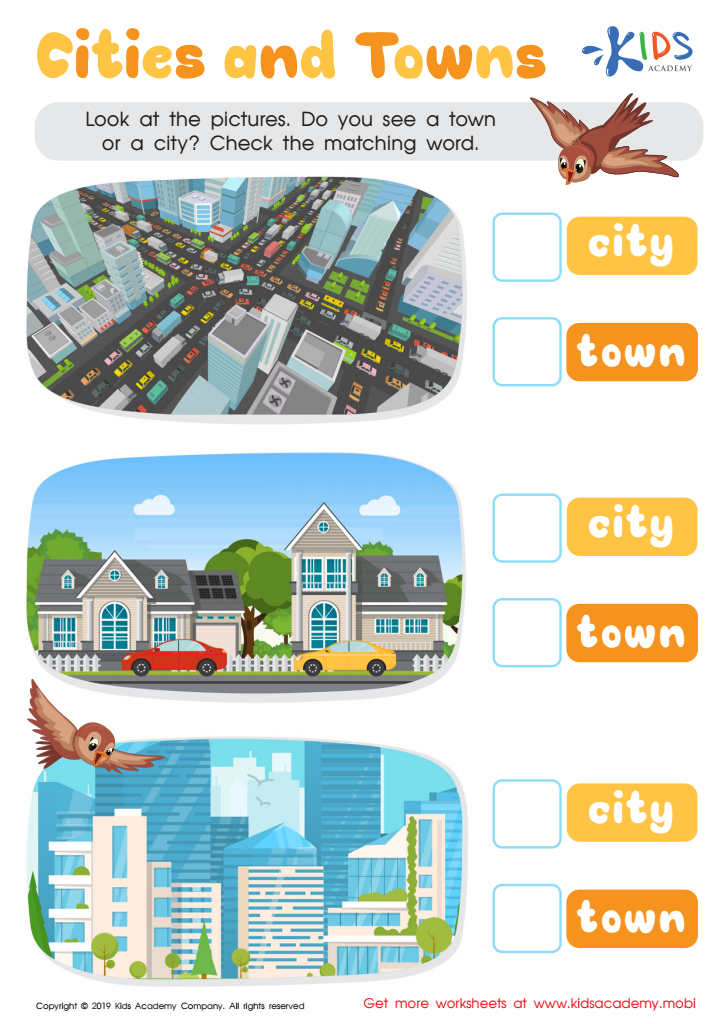
Cities and Towns Worksheet
Cities and Towns Worksheet

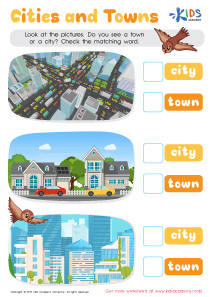
Cities are buzzy and busy while towns tend to be peaceful. Ask your child if they can tell which one is which from a picture. This could be a great way to test their understanding of the differences between towns and cities. There are many businesses in cities, tall buildings and lots to do. Meanwhile towns are usually quieter.
Cities and Towns Worksheet
Worksheet
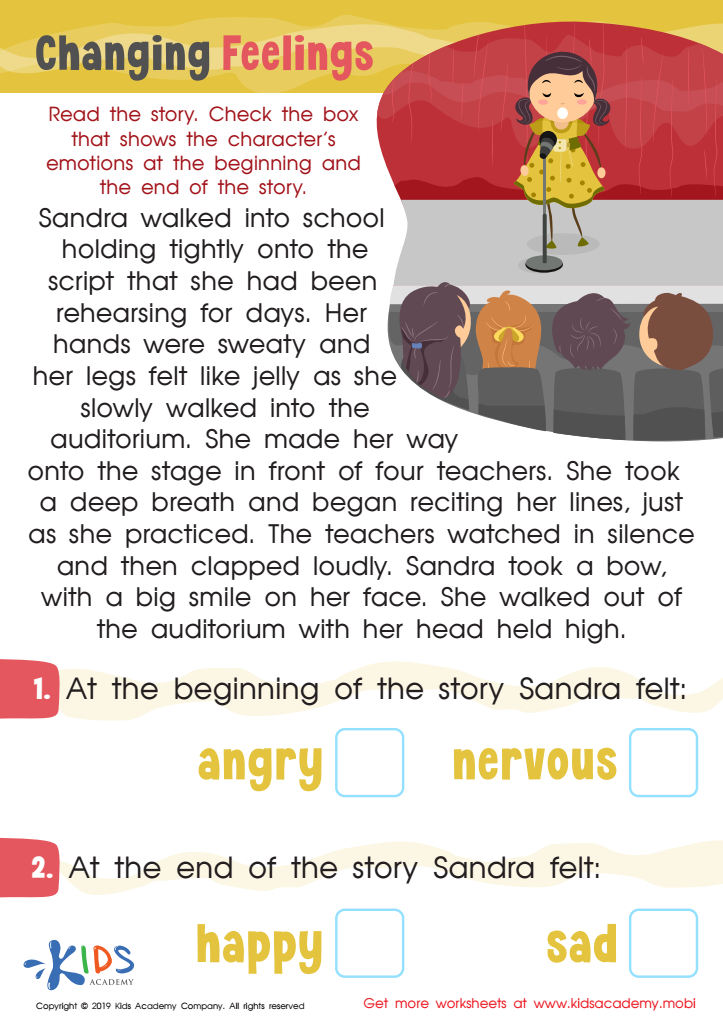
Changing Feelings Worksheet

Changing Feelings Worksheet

Help your kids practice reading skills with this exercise. Ask them to read the short passage, then check the boxes showing the character's emotions at the start and end. This will help them improve their reading and understanding.
Changing Feelings Worksheet
Worksheet
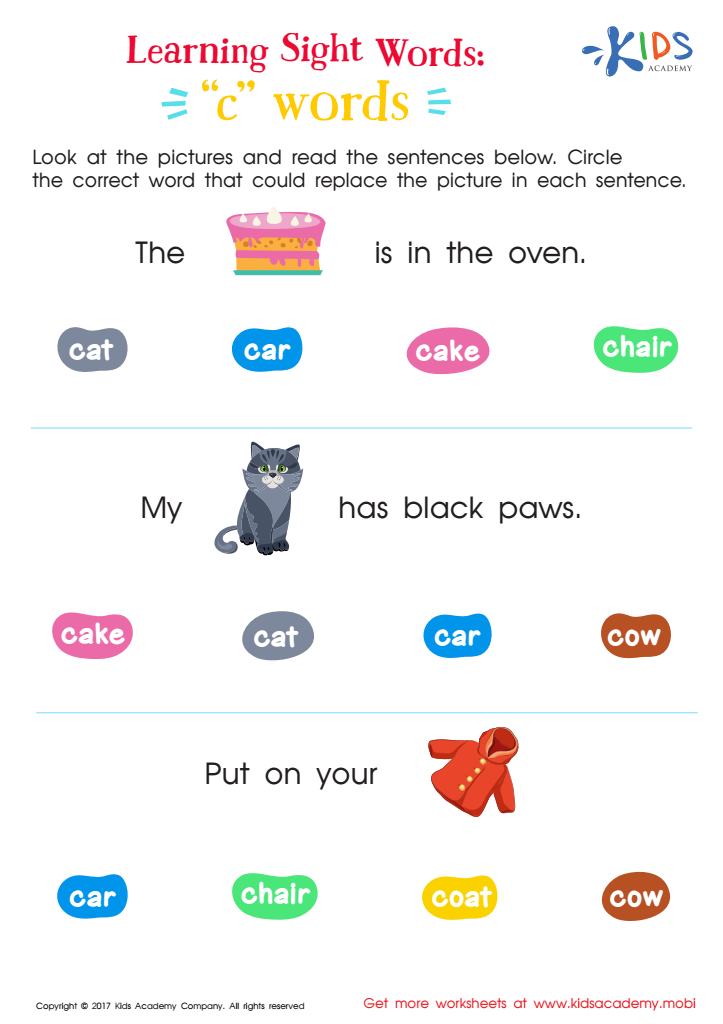
Sight Words Worksheet: C Words

"C" Words Printable Sight Words Worksheet
This C Words worksheet will help them become familiar with common words that start with the letter 'c'. It's easy and fun!
"C" Words Printable Sight Words Worksheet
Worksheet
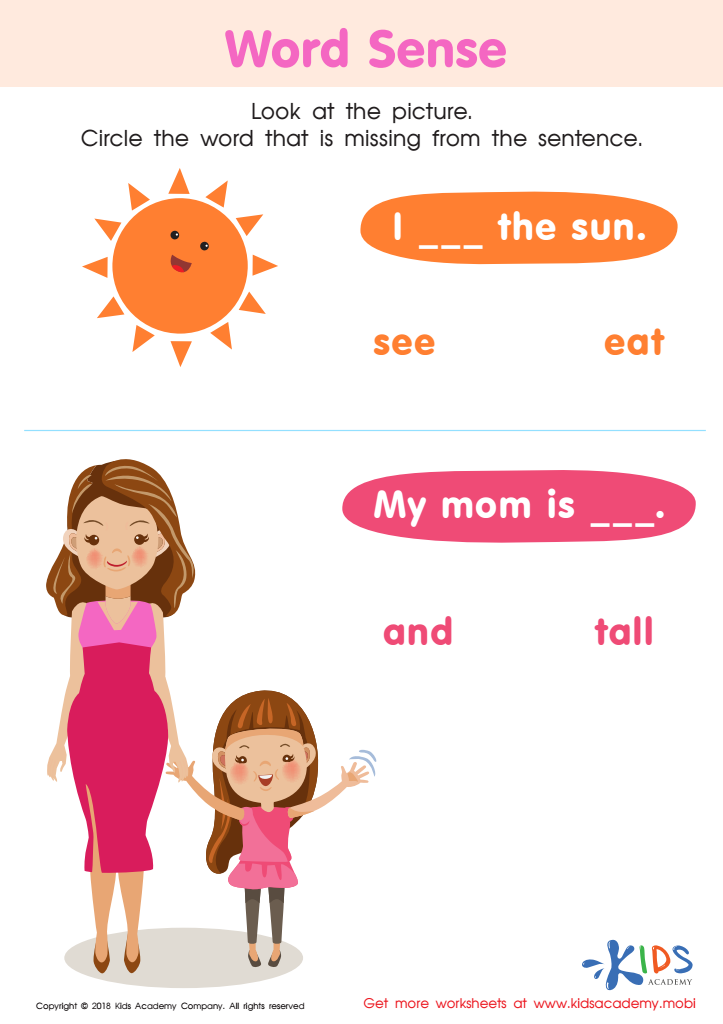
Word Sense Worksheet

Word Sense Worksheet

Expose your child to common high-frequency words with this free and colorful worksheet. It will help them use picture clues to choose the correct word for each phrase. The more they're exposed, the stronger their fluency will become when reading. This process is an important part of the emerging reader's learning-to-read journey.
Word Sense Worksheet
Worksheet
Descriptive Writing Worksheet: Part 2

Descriptive Writing Worksheet: Part 2

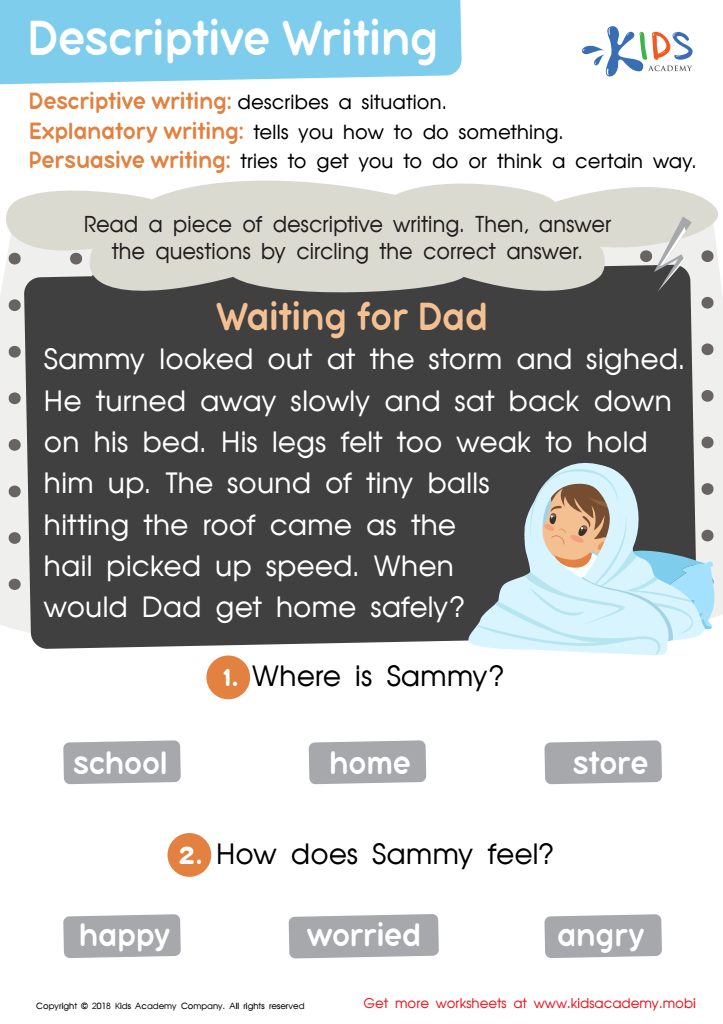
In this worksheet, your kids will explore writing styles like descriptive, explanatory and persuasive. Read them the descriptive text, then have them answer the questions. Writing is an art – it's a way to express emotions, tell stories and share information.
Descriptive Writing Worksheet: Part 2
Worksheet
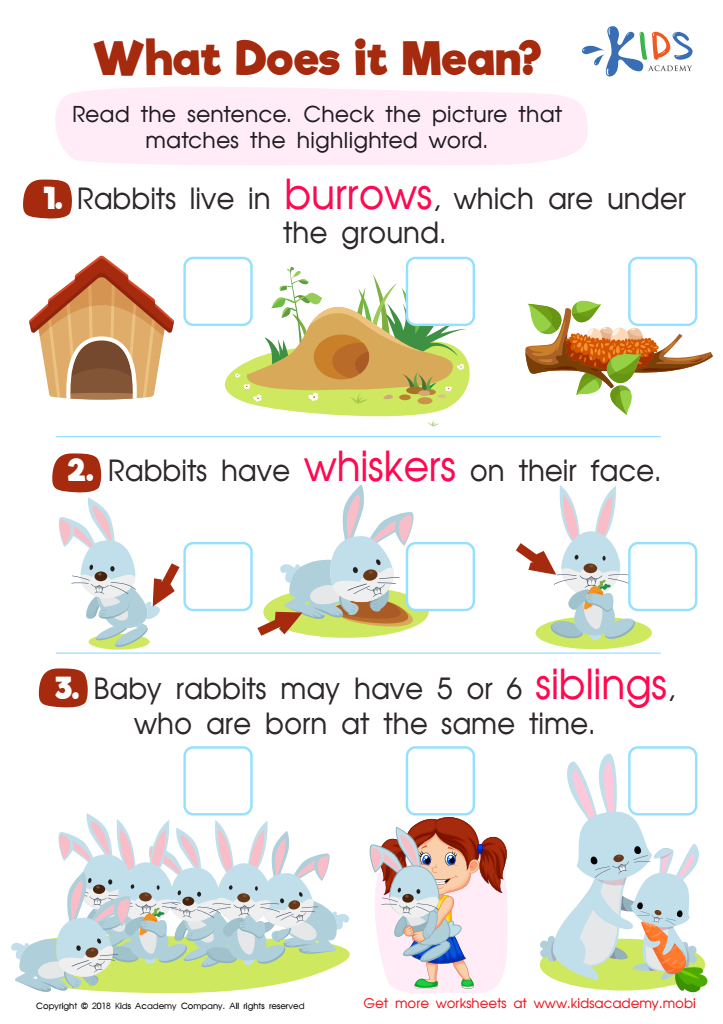
What Does It Mean? Worksheet

What Does It Mean? Worksheet

Teach your child to use context clues with this engaging Kids Academy worksheet. Read the sentences and find the pink-highlighted word. Use the other words in the sentence to figure out the meaning, then check the box next to the picture that represents it.
What Does It Mean? Worksheet
Worksheet
Nursery rhyme match-up worksheet

Nursery Rhyme Match–Up Worksheet

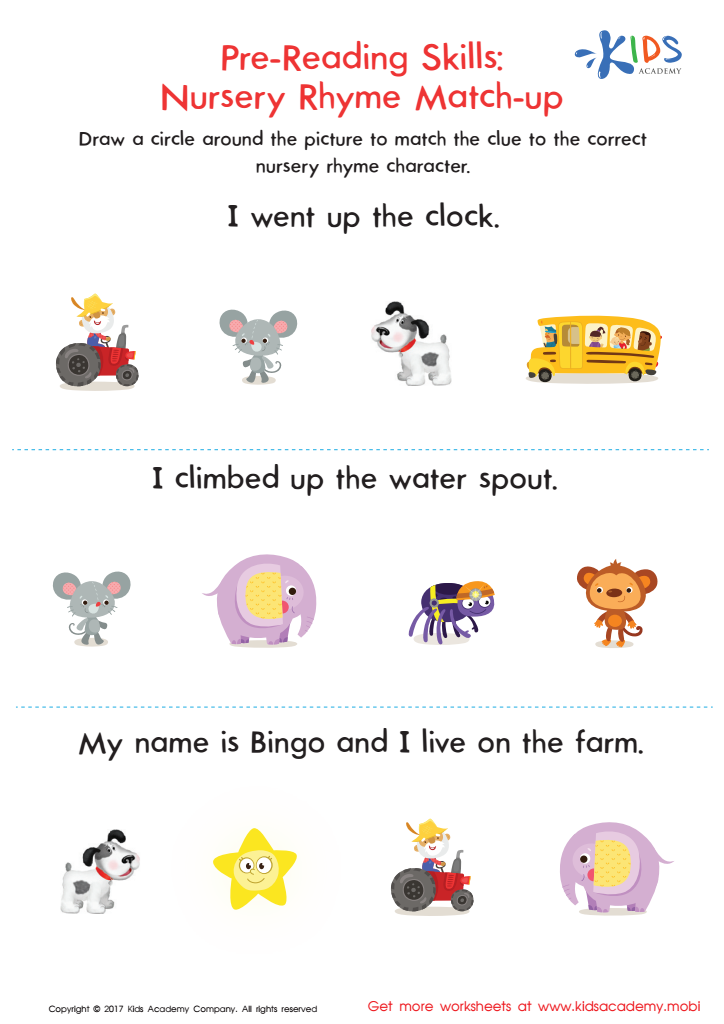
This worksheet helps kids build pre-reading skills using stories they know and love! By connecting with prior knowledge, kids can develop ideas about characters and set the stage for reading strategies.
Nursery Rhyme Match–Up Worksheet

Worksheet


Vocabulary expansion is crucial for children aged 6-8 as it serves as the foundation for their academic success and overall cognitive development. During these formative years, children's brains are particularly receptive to new information. By enriching their vocabulary, we enhance their ability to understand and process new concepts across subjects like science, math, and history.

Early reading is an effective way to broaden a child's vocabulary. When children are exposed to a wide range of words in meaningful contexts, they naturally acquire language skills that are essential for comprehension and communication. A rich vocabulary allows children to express their thoughts more clearly and understand others better, which is vital for social interactions and emotional development.

Furthermore, a strong vocabulary correlates with better reading and writing skills. It equips children with the tools they need to decode new words, comprehend texts, and express their ideas creatively and accurately. This can lead to increased confidence and a positive attitude toward learning.

Parents and teachers play a pivotal role in this process by providing a variety of reading materials, engaging in conversations, and being role models. Investing time in vocabulary expansion at this age sets the stage for lifelong learning and success.