Understanding life cycles Easy Science Worksheets for Ages 6-8
4 filtered results
-
From - To
Discover the fascinating world of life cycles with our easy science worksheets designed for ages 6-8. At Kids Academy, we provide engaging and educational printable activities to help young learners grasp the stages of growth and development in plants, animals, and insects. Our worksheets offer simple explanations, colorful illustrations, and fun exercises that make learning about life cycles exciting and understandable. Perfect for early grade students, these resources enhance curiosity, scientific thinking, and foundational knowledge. Bring science to life and inspire your child’s love for learning with our "Understanding Life Cycles" worksheets!
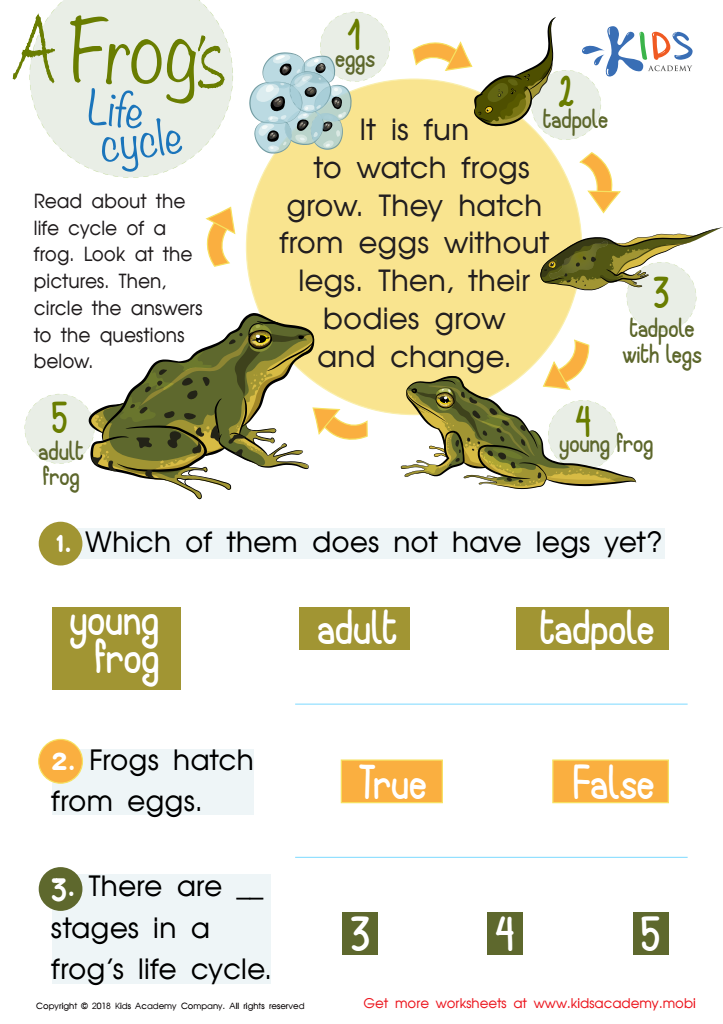
A Frog’s Life Cycle Worksheet
 Assign to My Students
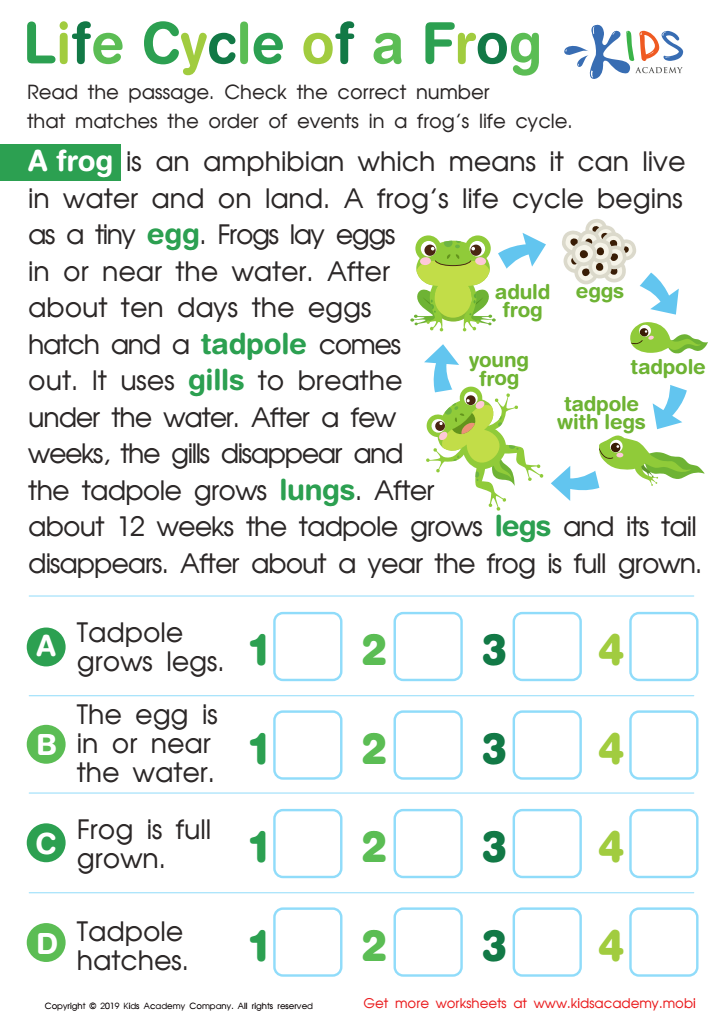
Life Cycle of a Frog Worksheet
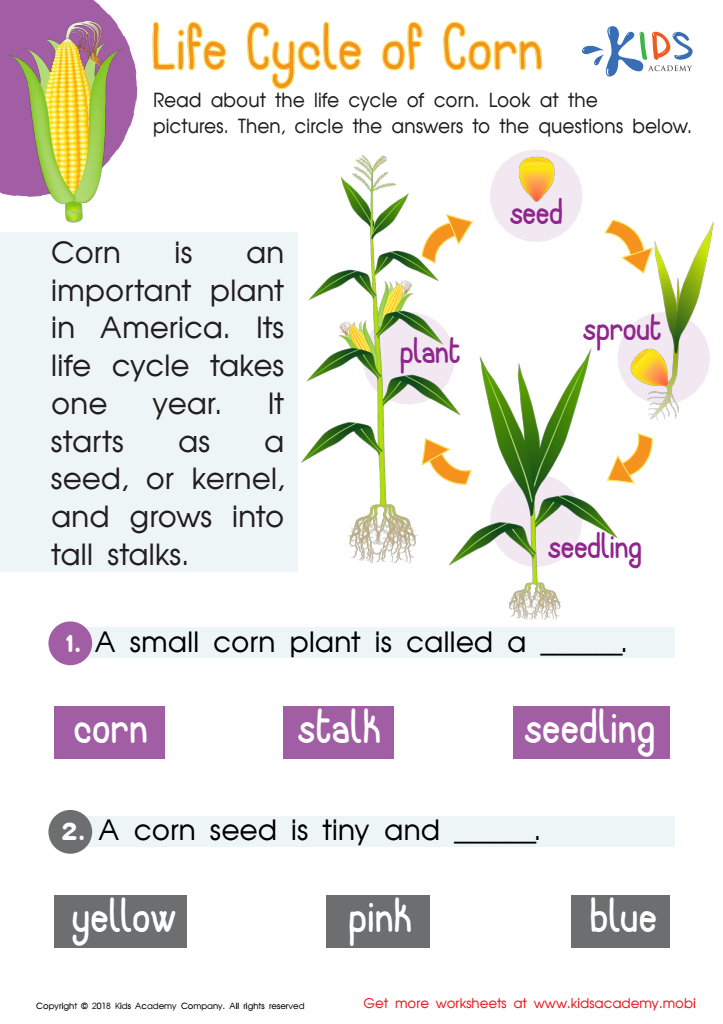
Life Cycle of Corn Worksheet
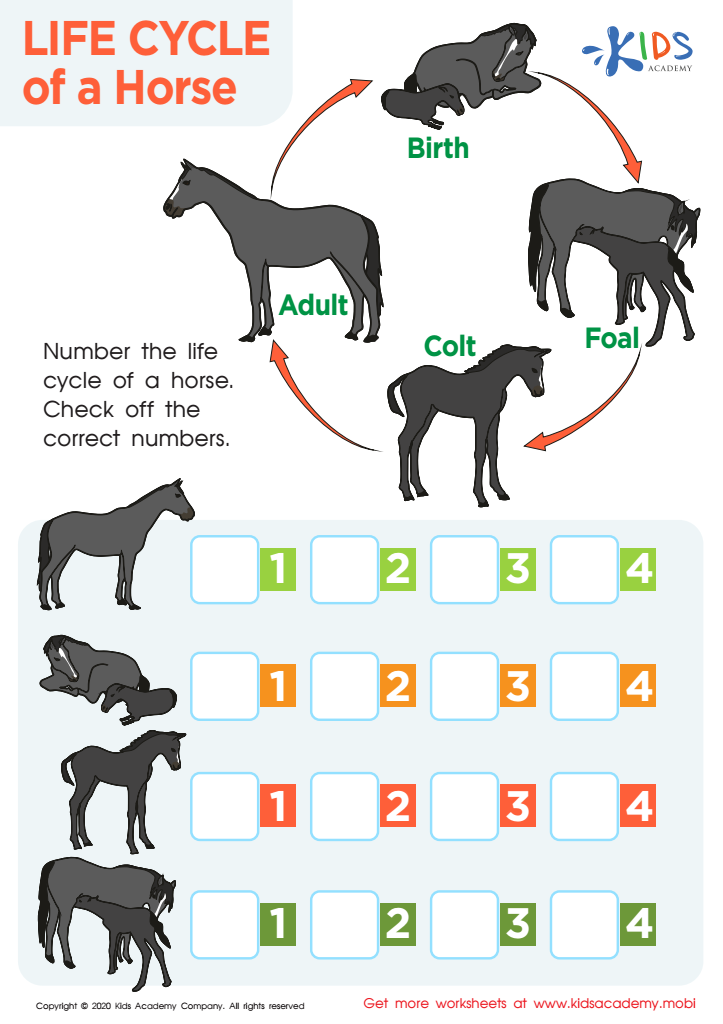
Life Cycle of a Horse Worksheet






Understanding life cycles is an essential aspect of early science education for children aged 6-8, and it is vital for teachers and parents to prioritize it. At this stage, children are naturally curious about the world around them. Learning about life cycles—such as those of plants, animals, and insects—helps satisfy this curiosity while laying the groundwork for scientific thinking.
Firstly, these concepts foster a sense of wonder and appreciation for nature. By understanding how living things grow, change, and reproduce, children gain insights into the complexities of life, promoting respect for all forms of life.
Secondly, learning about life cycles supports the development of critical thinking skills. It involves observing, questioning, and understanding sequences and patterns, thereby enhancing children’s cognitive abilities. Knowledge of life cycles also integrates well with other subjects such as reading, math, and art, offering holistic educational benefits.
Moreover, these lessons have practical implications. For instance, a basic understanding of plant life cycles can encourage gardening and healthier eating habits. Additionally, knowing about insect life cycles can be applied to backyard nature observation, enhancing outdoor learning experiences.
In summary, a solid grasp of life cycles nurtures curiosity, supports critical thinking, and offers practical knowledge, making it a valuable focus for parents and teachers in the early years of education.