Understanding life cycles Easy Plants and Animals Worksheets for Ages 6-8
3 filtered results
Difficulty Level
Grade
Age
-
From - To
Subject
Activity
Standards
Explore the fascinating world of life cycles with our "Understanding Life Cycles: Easy Plants and Animals Worksheets" designed for children ages 6 to 8. This engaging resource offers a variety of fun, interactive worksheets that introduce young learners to the growth and development of plants and animals. Through colorful illustrations and age-appropriate activities, students will grasp essential concepts such as the stages of life and the interdependence of living organisms. Perfect for homeschooling or classroom use, our worksheets encourage curiosity, critical thinking, and a deeper appreciation for nature's wonders, making science fun and accessible for every child. Start your learning journey today!
Favorites
With answer key
Interactive
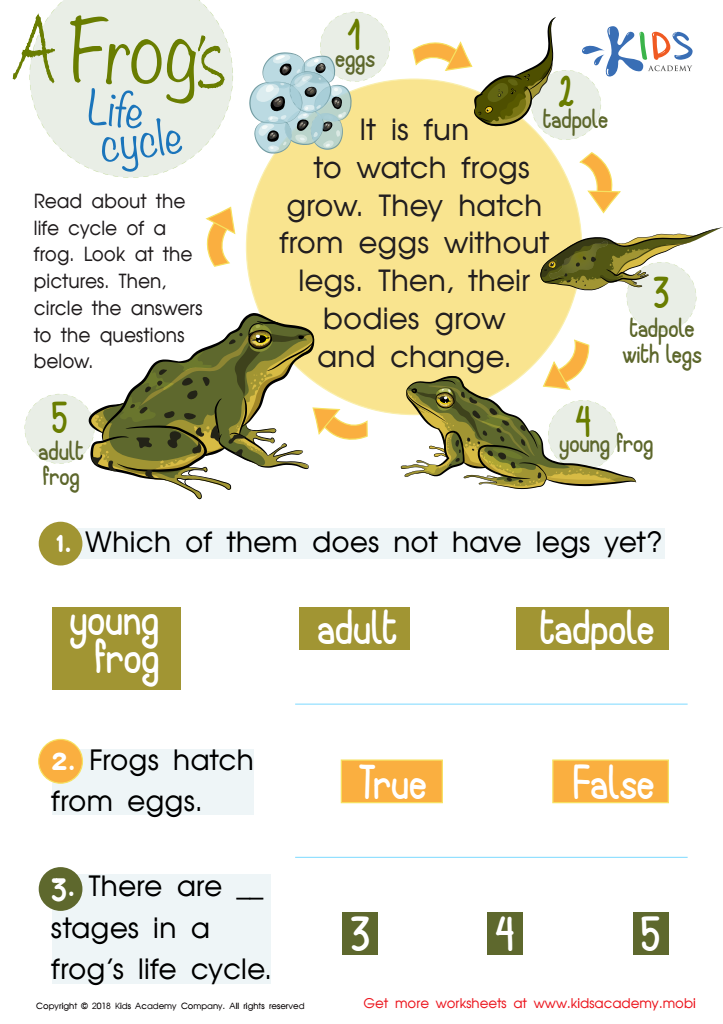
A Frog’s Life Cycle Worksheet
Encourage your kids to learn about frogs! Ask them to tell you some features, then read and discuss the text that explains the frog's life cycle. Show them the pictures to help them visualize it. Finish by helping them answer the questions at the bottom of the worksheet.
 Assign to My Students
A Frog’s Life Cycle Worksheet
Worksheet











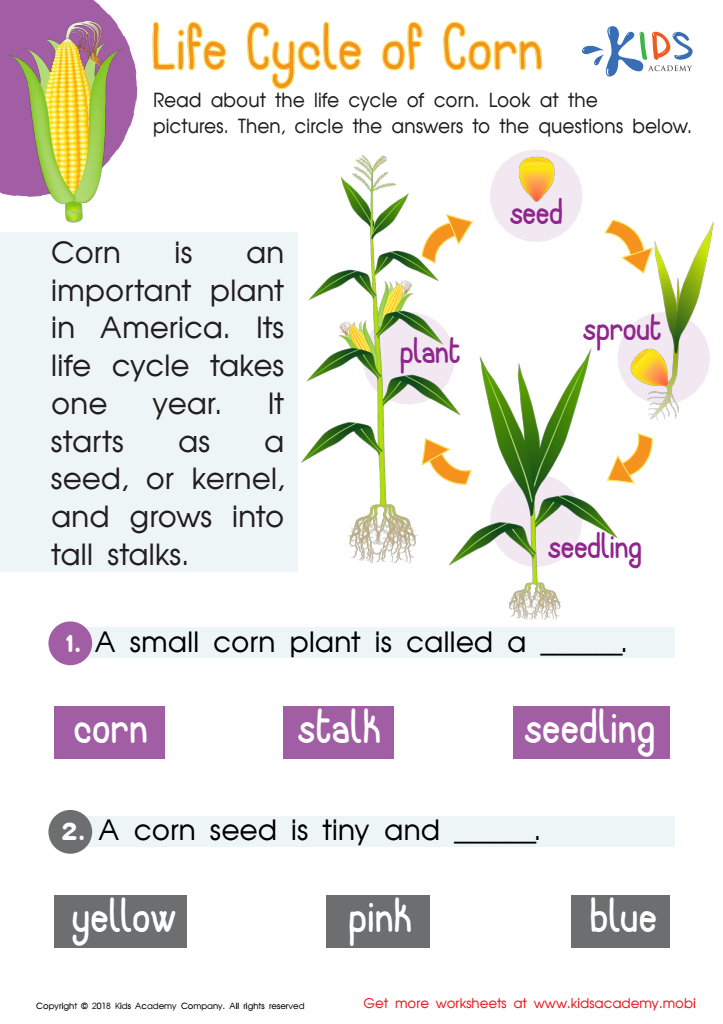
Life Cycle of Corn Worksheet
Help your kids learn about corn! Ask them what foods it's used to make. Read this worksheet and look at the pictures to learn the life cycle of corn. Then, have them circle the answers to the questions at the bottom. Corn is an important crop for farmers, used to make many foods we eat today.
Life Cycle of Corn Worksheet
Worksheet
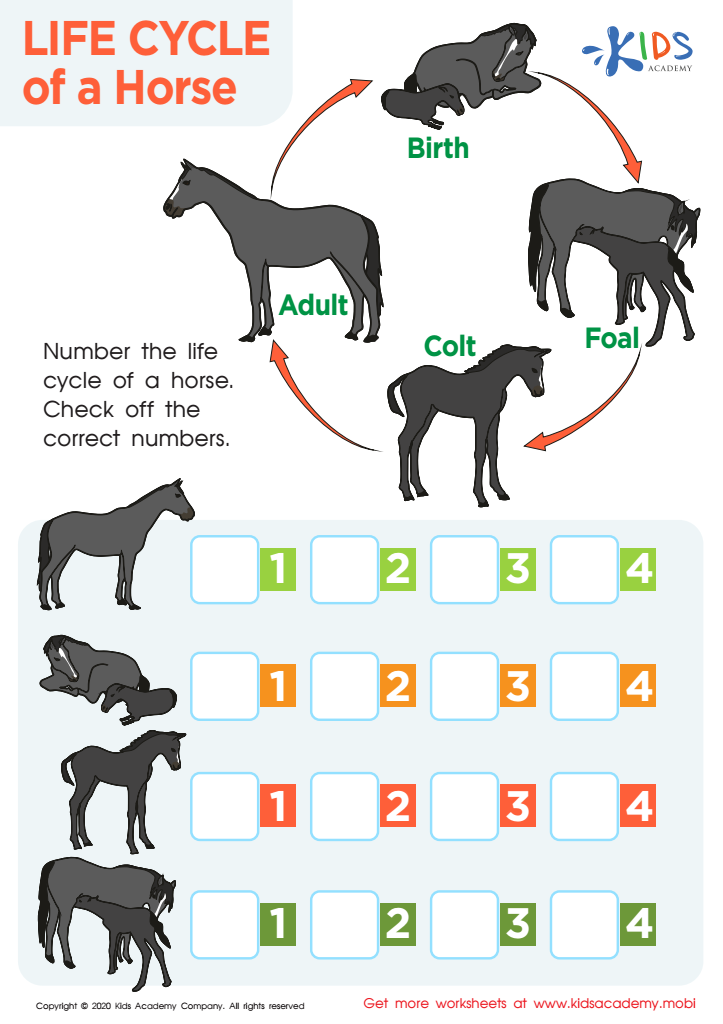
Life Cycle of a Horse Worksheet
Kids Academy's science worksheet on horses' lifecycles offers an engaging way for kids to learn! They'll study the diagram and label each stage of life, from birth to adulthood, and then number the pictures to mark the correct sequence. Fun and educational - a perfect way to get your kids learning!
Life Cycle of a Horse Worksheet
Worksheet
Join Kids Academy for Free
Who is primarily going to use this learning content?








Understanding life cycles is crucial for children aged 6-8 as it fosters a foundational awareness of biology, ecology, and respect for nature. By learning about the life cycles of easy plants and animals, children gain insight into the processes that sustain life, from germination and growth to reproduction and death. This knowledge sparks curiosity and encourages critical thinking, as they begin to connect these cycles to real-world phenomena around them.
Teachers and parents play a vital role in this learning process. It helps cultivate an appreciation for the environment, promoting responsible behaviors toward nature. Hands-on activities such as planting seeds or observing caterpillars transform into butterflies make learning engaging, enhancing retention and enjoyment. Additionally, understanding life cycles supports STEM education, a crucial area of focus in today's curriculum, as it integrates science, technology, engineering, and math principles.
Moreover, discussing life cycles can also introduce children to concepts such as sustainability and conservation. As they explore how organisms depend on one another and their environment, children can develop a sense of stewardship, encouraging behaviors that support ecological health and preservation. In sum, understanding life cycles is key to nurturing informed, respectful, and responsible future generations.