Filters

31 filtered results

Clear all filters
Favorites
With answer key
Interactive

31 filtered results

Difficulty Level

Grade


Check out this FREE "Cognitive Development" Trial Lesson for age 6-9!

Counting to 9

Favorites
With answer key
Interactive
  • 6-9
  • Cognitive Development
  • Easy
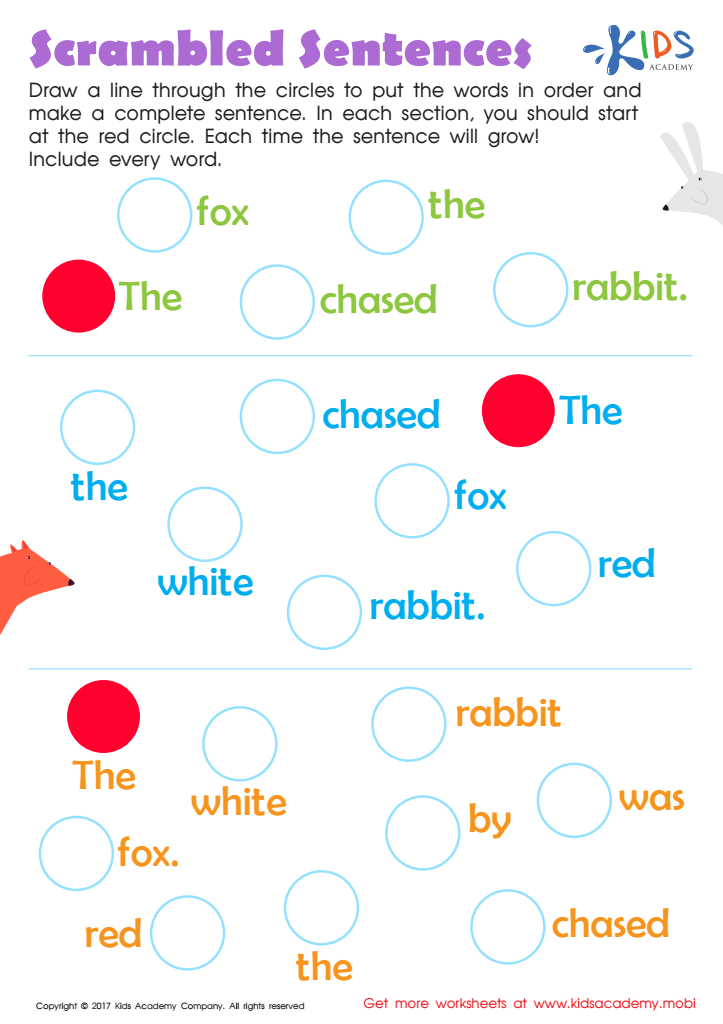
Scrambled sentences worksheet pdf

Scrambled Sentences Worksheet

Kids will have fun with the scrambled sentences worksheet: draw lines to make complete sentences. As the sentence grows, they'll learn sentence structure and word order. Easy instructions included!
Scrambled Sentences Worksheet
Worksheet
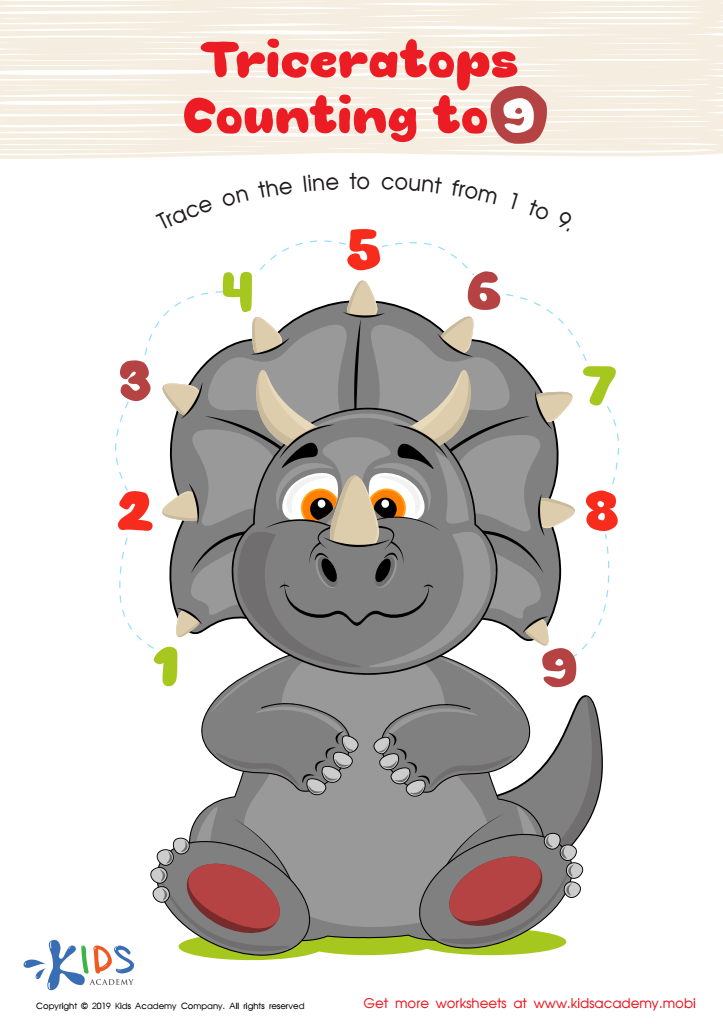
Triceratops Counting to 9 Worksheet

Triceratops Counting to 9 Worksheet

This little triceratops is here to help kids learn to count! Dinosaurs lived long before us and we've never seen one alive, but through research, we know a lot about them. Let the dinosaur help trace on the line from 1 to 9 for a fun counting practice.
Triceratops Counting to 9 Worksheet
Worksheet
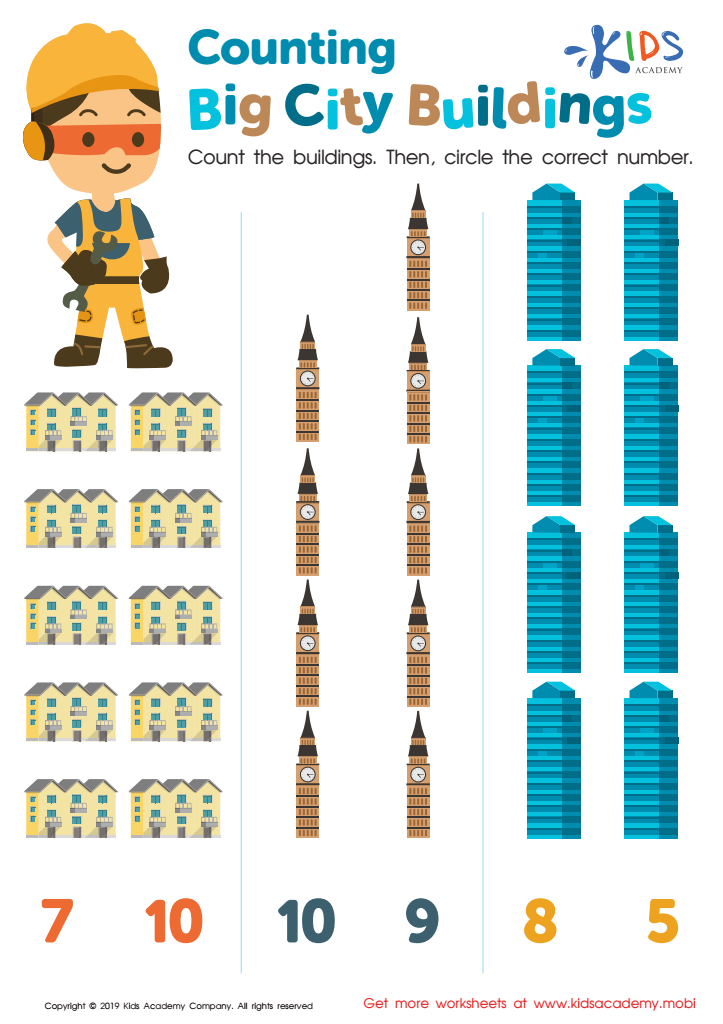
Counting Big City Buildings Worksheet


Counting Big City Buildings Worksheet

Test your child's counting skills! Ask them to count as high as they can and use the worksheet to brush up on any areas that need improvement. There are 3 sets of buildings in the picture; help your kids count them and circle the correct number. Mastering the art of counting is essential for advancing in math and solving equations, so take this opportunity to ensure your kids are ready!
Counting Big City Buildings Worksheet
Worksheet
Night Sky Numbers Worksheet

Night Sky Numbers Worksheet

Help your child develop their writing skills with this fun PDF worksheet! Using guiding stars, it teaches them the correct patterns for numbers 1, 2 and 3. They'll have a great time tracing their way from the top and will feel a sense of achievement when they finish.
Night Sky Numbers Worksheet
Worksheet
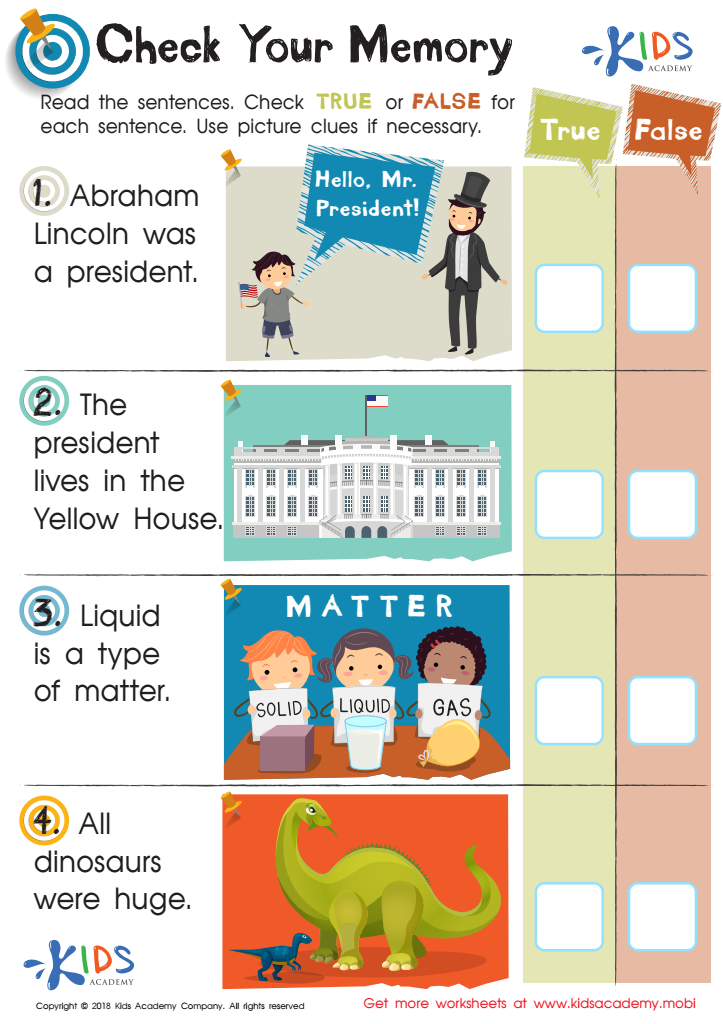
Check Memory Worksheet

Check Memory Worksheet

Assisting your kids with their homework and using worksheets is a great way for them to learn. The vibrant visuals in this printout can help stimulate the mind and motivate your child. Have them read the sentences and then point to the associated images. Afterwards, ask them to state True or False for each sentence. If they are still uncertain, offer them the picture clues to assist further.
Check Memory Worksheet
Worksheet
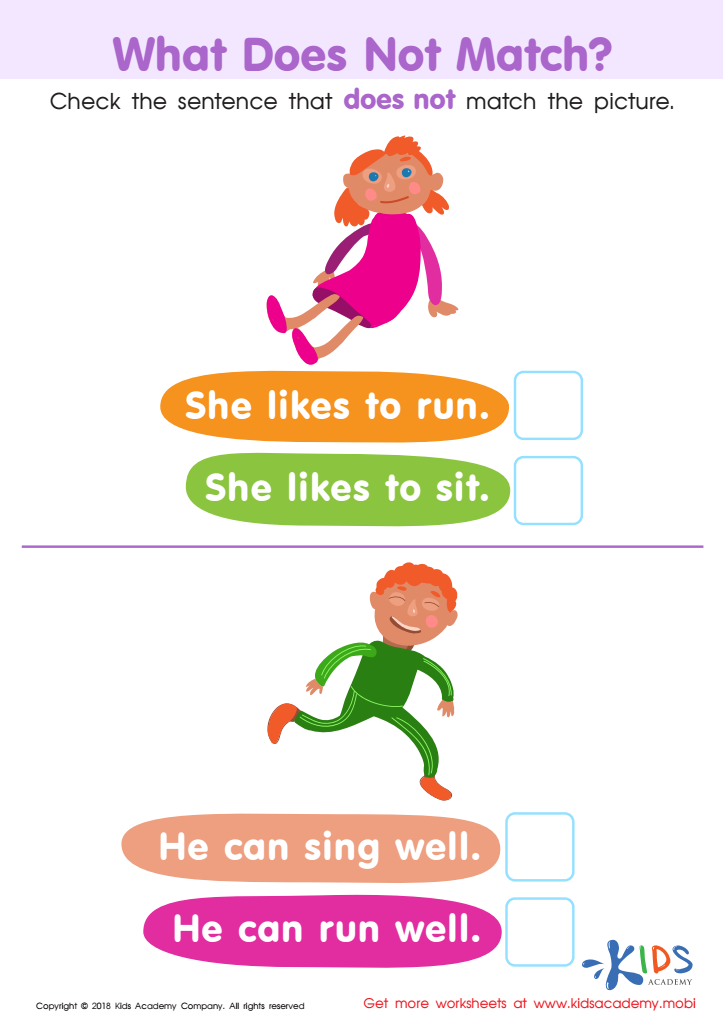
What Does Not Match? Worksheet

What Does Not Match? Worksheet

Emerging readers need to practice using visual cues and repetitive text. This colorful PDF provides them with an opportunity to look at pictures, use discrimination and discern which phrase does not match. It also enables them to gain familiarity with high-frequency words to aid decoding longer sentences.
What Does Not Match? Worksheet
Worksheet
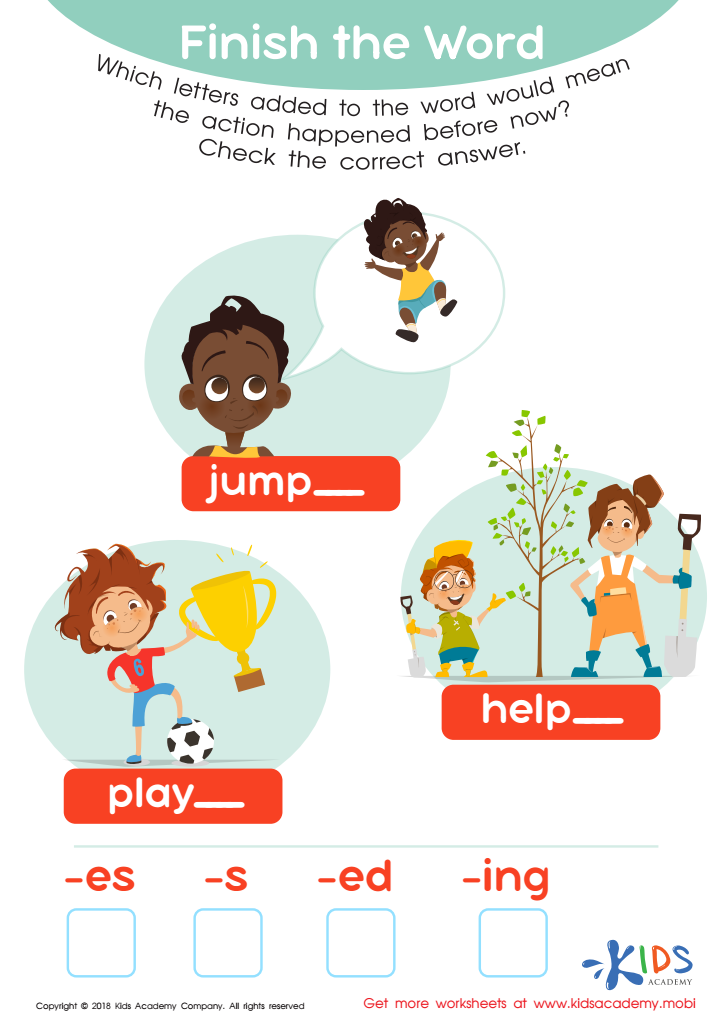
Finish the Word Worksheet


Finish the Word Worksheet

Does your kid know tenses? Listen to see if they are using words correctly. With this worksheet, your kids will learn to use the appropriate past tense forms. Ask them which letters added to words make the action past. Help them check the answers.
Finish the Word Worksheet
Worksheet


Caring about cognitive development in children ages 6-9 is crucial because this period is foundational for lifelong learning and success. During these formative years, children’s brains are like sponges, rapidly absorbing information and skills critical for their intellectual growth. Investing in cognitive development helps ensure that kids build strong problem-solving, memory, and critical-thinking skills, which are essential for academic achievement and everyday life.

For parents and teachers, supporting cognitive development means creating an enriched learning environment. This involves offering diverse activities that stimulate curiosity and critical thinking, such as reading, interactive play, and educational games. For instance, reading to children not only enhances vocabulary but also improves comprehension and concentration.

Additionally, children in this age group are developing their social cognition—understanding others' perspectives and emotions. Encouraging positive social interactions helps refine these skills and fosters empathy and cooperation.

Neglecting this aspect of development can lead to learning difficulties, lower academic performance, and social challenges. Thus, parents and teachers play a pivotal role in identifying and nurturing each child’s cognitive strengths and weaknesses, facilitating activities that are both fun and educational, and providing the emotional support needed to explore and learn. Caring about cognitive development lays the groundwork for a well-rounded, capable, and confident individual.