Contextual understanding Easy Worksheets for Ages 6-9
5 filtered results
-
From - To
Unlock your child’s potential with our Contextual Understanding Easy Worksheets for Ages 6-9. Tailored to build core comprehension skills, these worksheets help kids grasp the meaning behind texts by encouraging them to make connections, infer, and analyze content. Our printable activities cover a wide range of subjects, from stories and informational texts to real-world scenarios, making learning both fun and educational. Perfect for young learners, these worksheets aim to enhance critical thinking, vocabulary, and reading comprehension in an engaging, age-appropriate manner. Set your child up for academic success with our expertly designed resources.
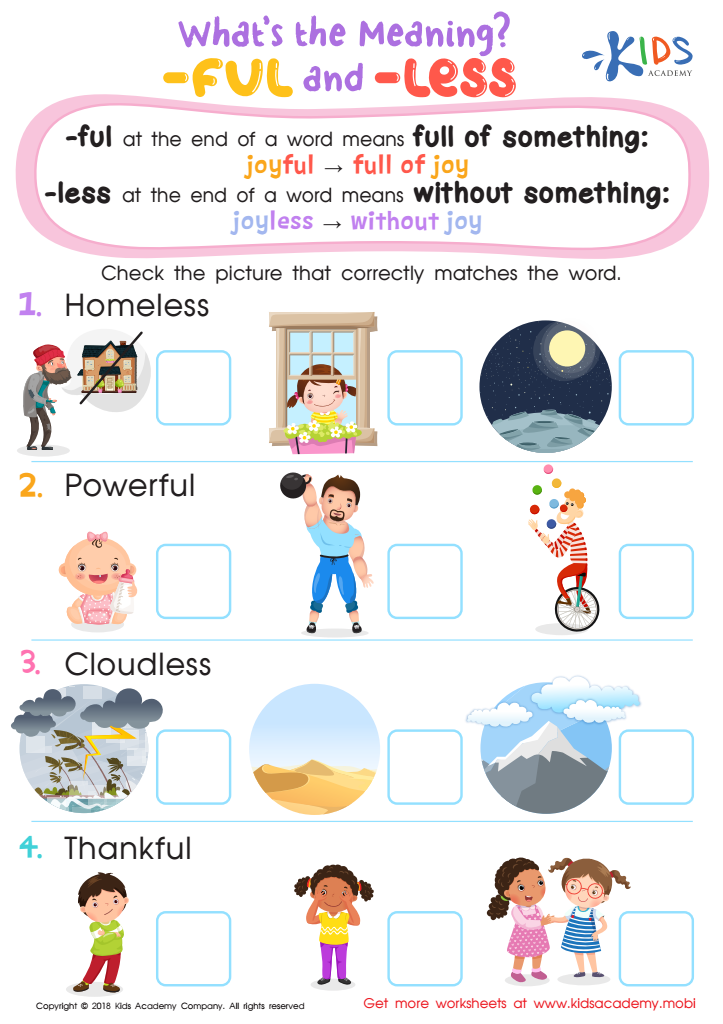
What's the Meaning? Worksheet
 Assign to My Students
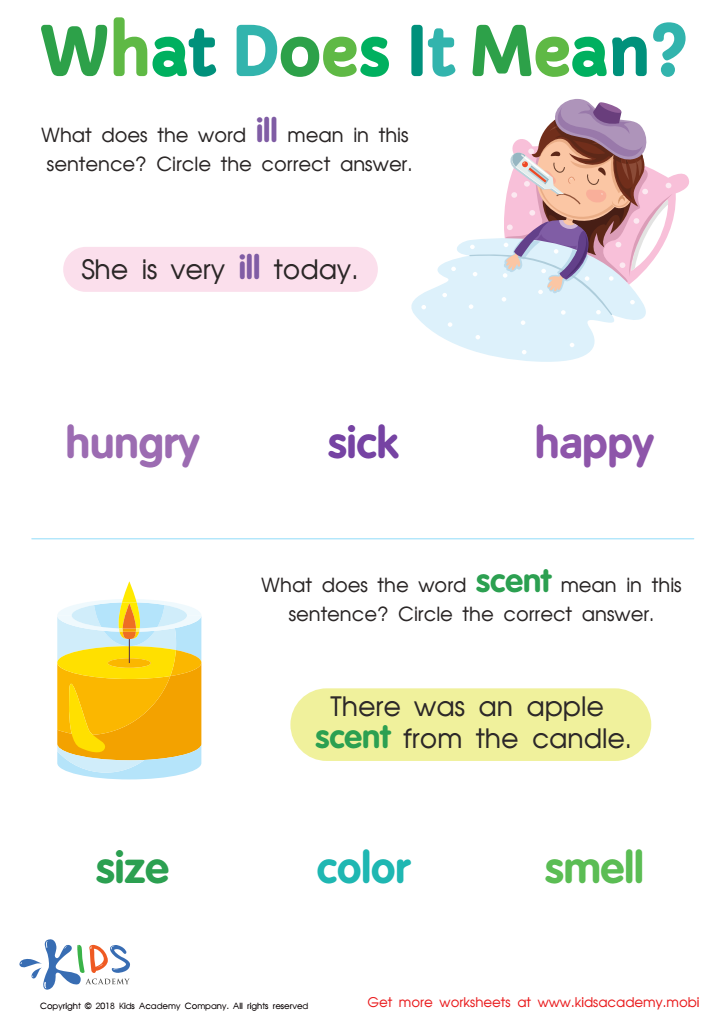
What Does It Mean? Worksheet
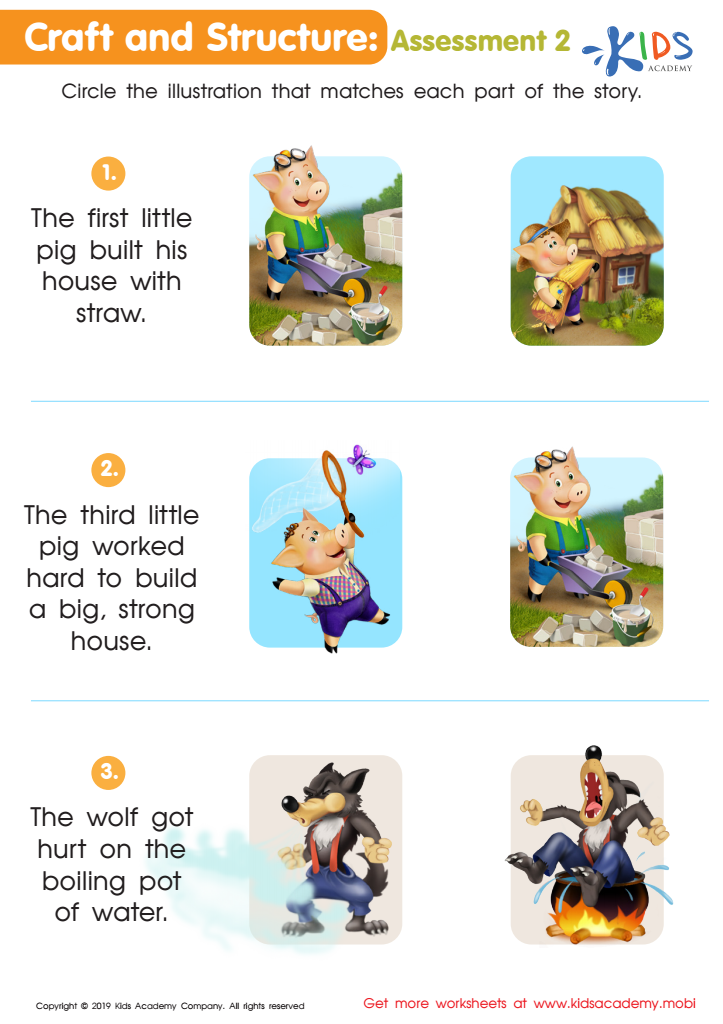
Craft and Structure: Assessment 2 Worksheet 2
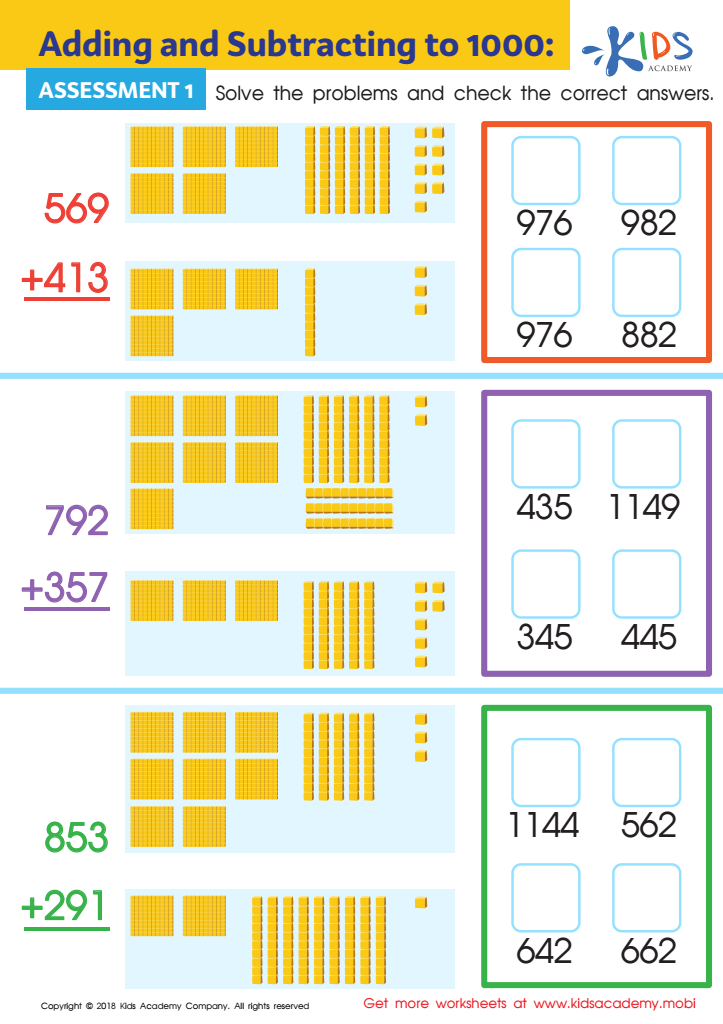
Adding and Subtracting to 1 Worksheet: Assessment 1
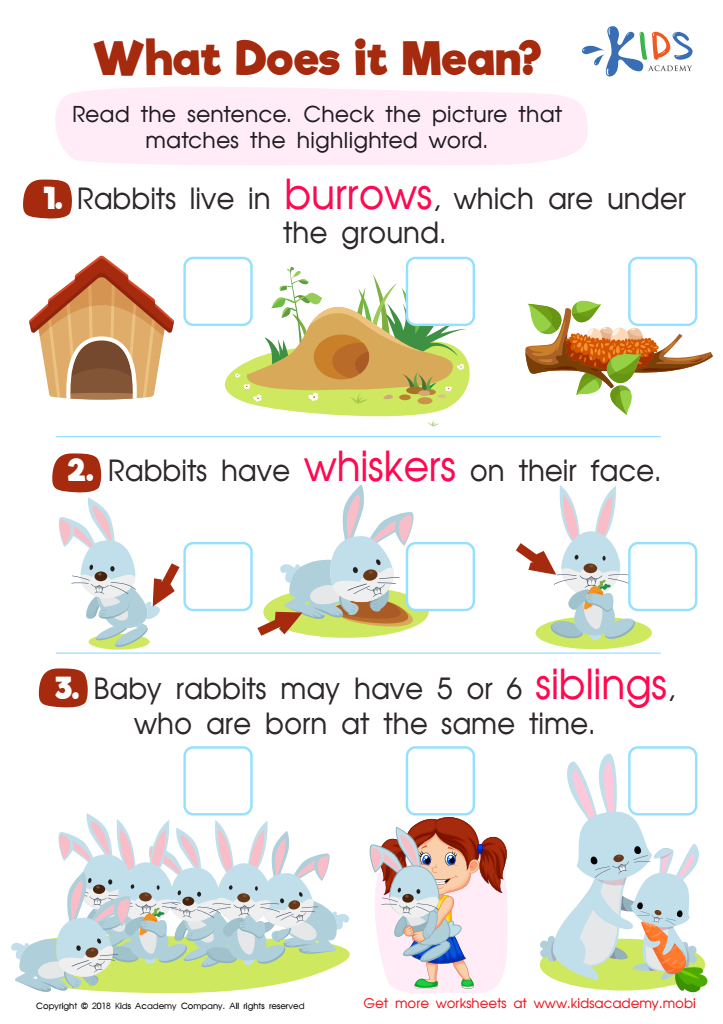
What Does It Mean? Worksheet


.jpg)





Contextual understanding is crucial for young children, as it lays the foundation for meaningful learning and future academic success. For ages 6-9, comprehension isn't just about remembering facts; it's about grasping how information fits into broader patterns and experiences. When parents and teachers focus on contextual understanding, they help children make connections between new knowledge and what they already know.
Firstly, contextual understanding boosts engagement. When children can relate new concepts to their personal experiences, they're more likely to be interested and motivated. For example, reading a story about animals is more captivating if children can recall visits to the zoo or their pets at home.
Secondly, it improves critical thinking. Context helps children understand "why" and "how" things happen rather than just memorizing "what" happened. This approach promotes deeper learning, where a child can reason through problems and apply their knowledge to various situations.
Lastly, it aids in vocabulary development and language skills. When words and phrases are presented in context, children are more likely to understand and remember them. This translates to better reading proficiency and communication skills.
In sum, emphasizing contextual understanding helps children link knowledge to real-world experiences, engage more deeply with material, and develop essential cognitive and language skills.








