Shape identification Easy Worksheets for Ages 6-9
6 filtered results
-
From - To
Our "Shape Identification Easy Worksheets for Ages 6-9" are designed to making learning fun and effective. Tailored for young learners, these worksheets help children practice identifying and differentiating between various shapes, enhancing their visual discrimination and cognitive skills. Engaging activities ensure kids enjoy learning as they explore a range of exercises featuring circles, squares, triangles, rectangles, and more. Ideal for both classroom and at-home practice, each worksheet encourages hands-on learning, critical thinking, and a foundation in geometry. Develop your child’s shape recognition skills effortlessly with these comprehensive, easy-to-use printables from Kids Academy.
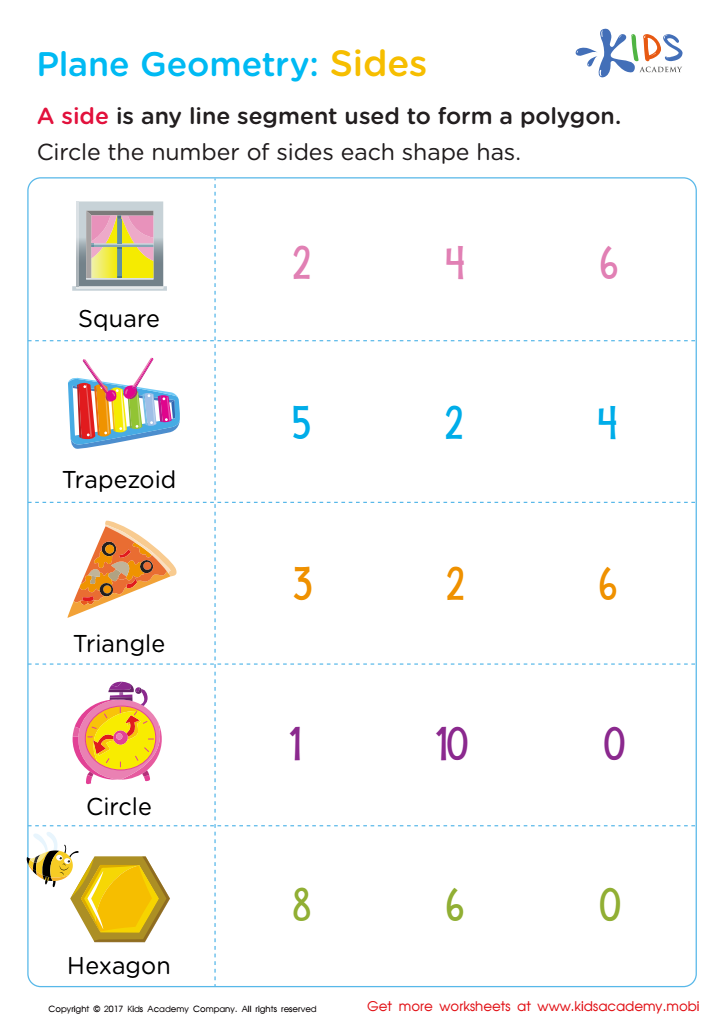
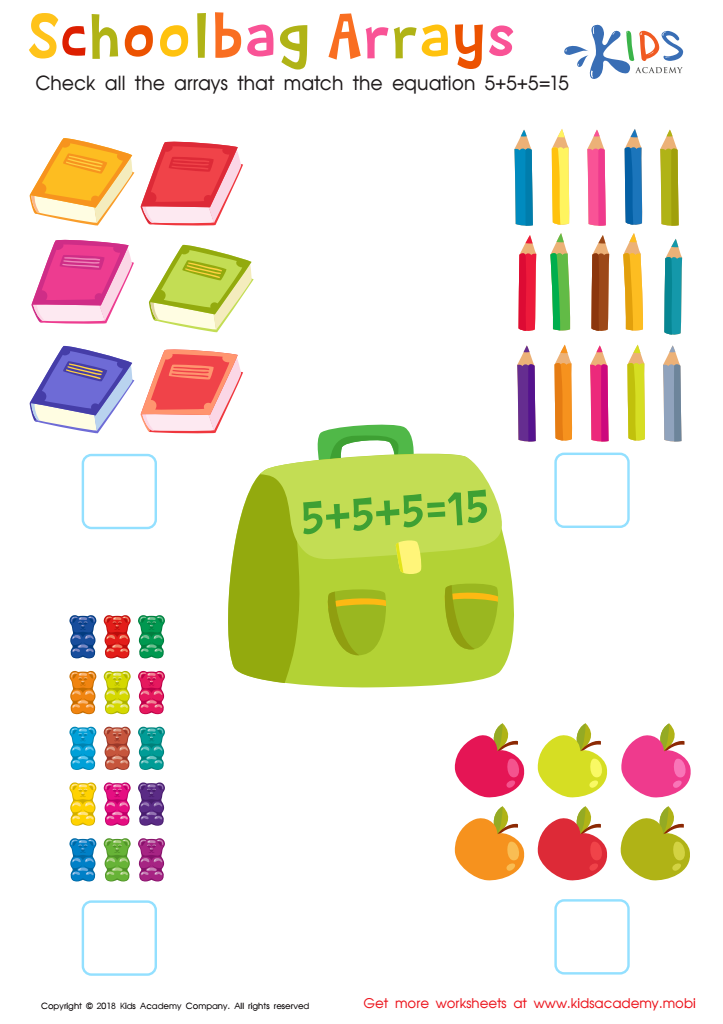
Schoolbag Arrays Worksheet
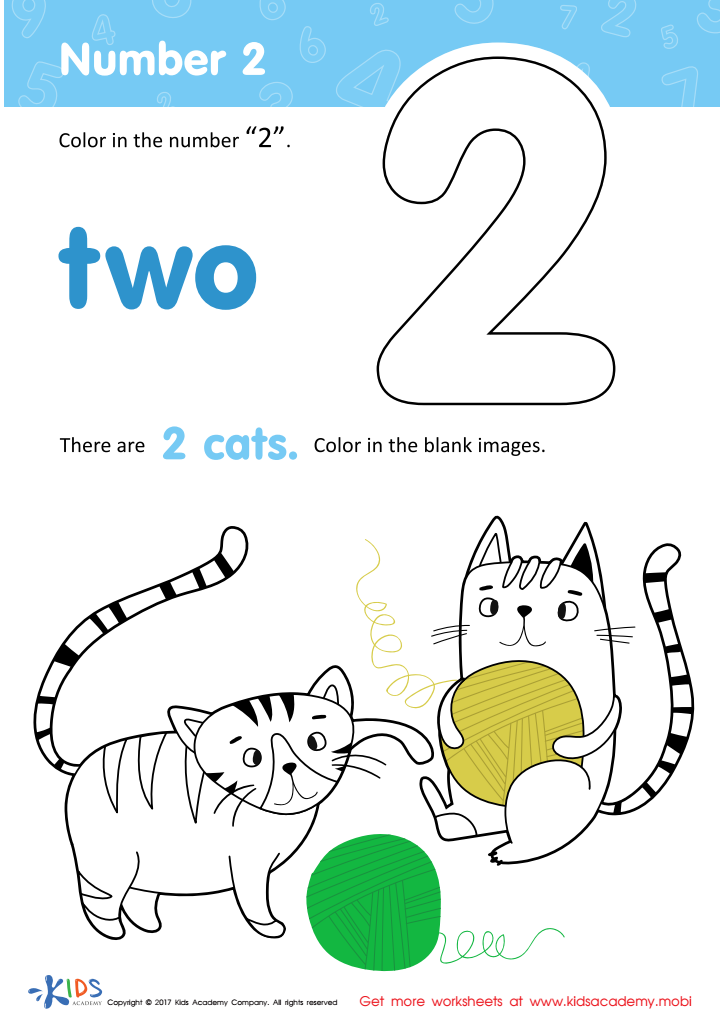
Number 2 Printable
 Assign to My Students
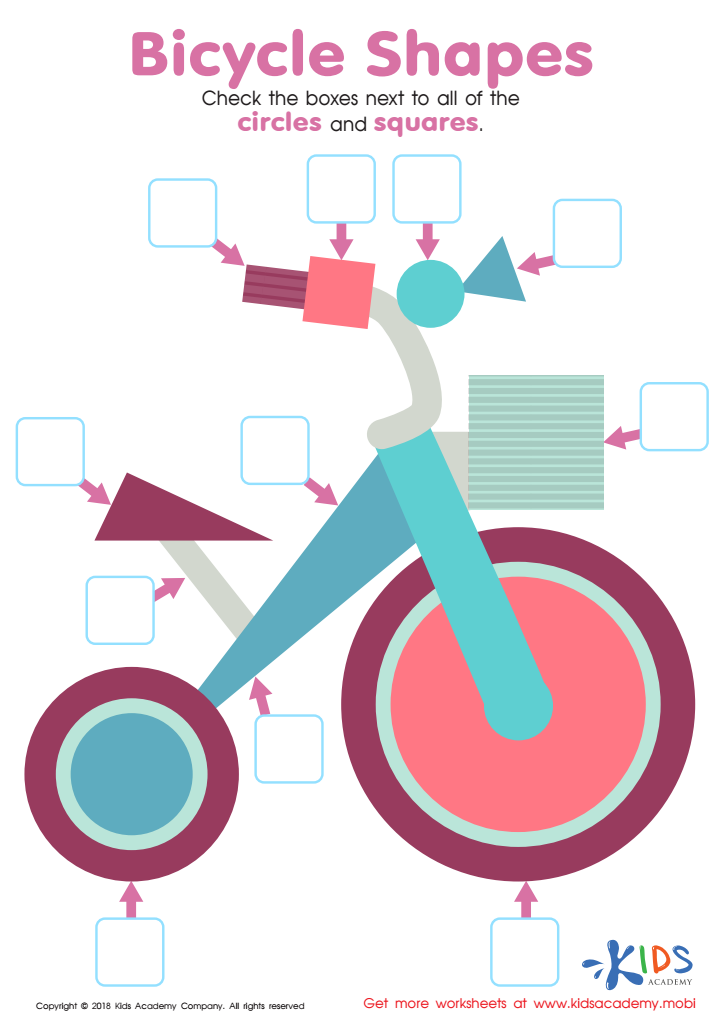
Bicycle Shapes Worksheet
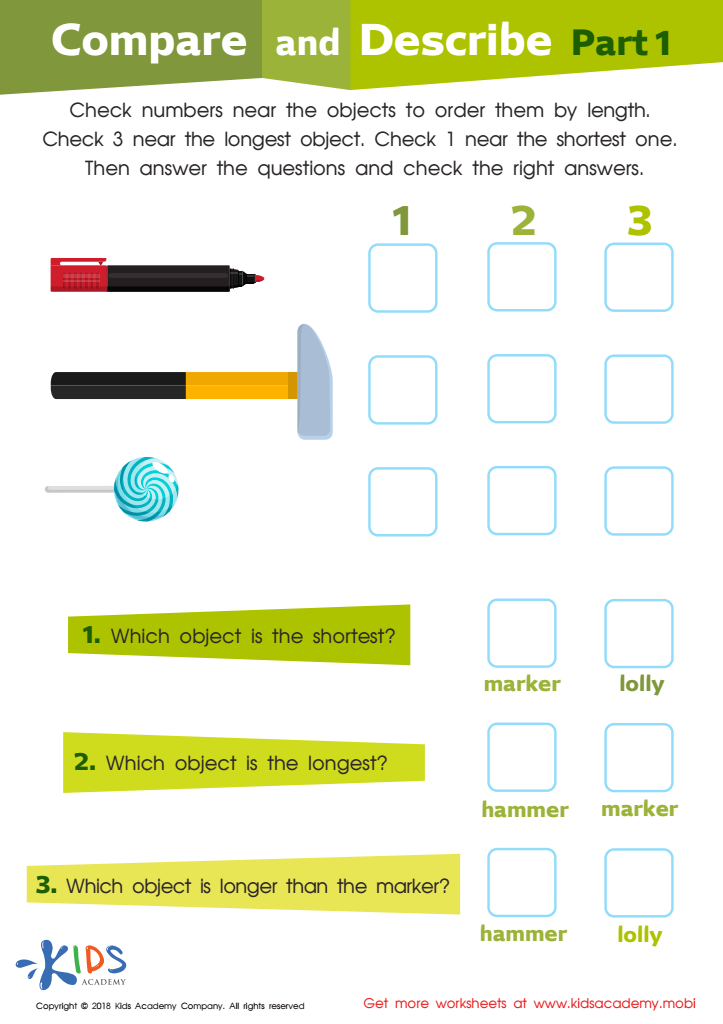
Compare and Describe: Part 1 Worksheet
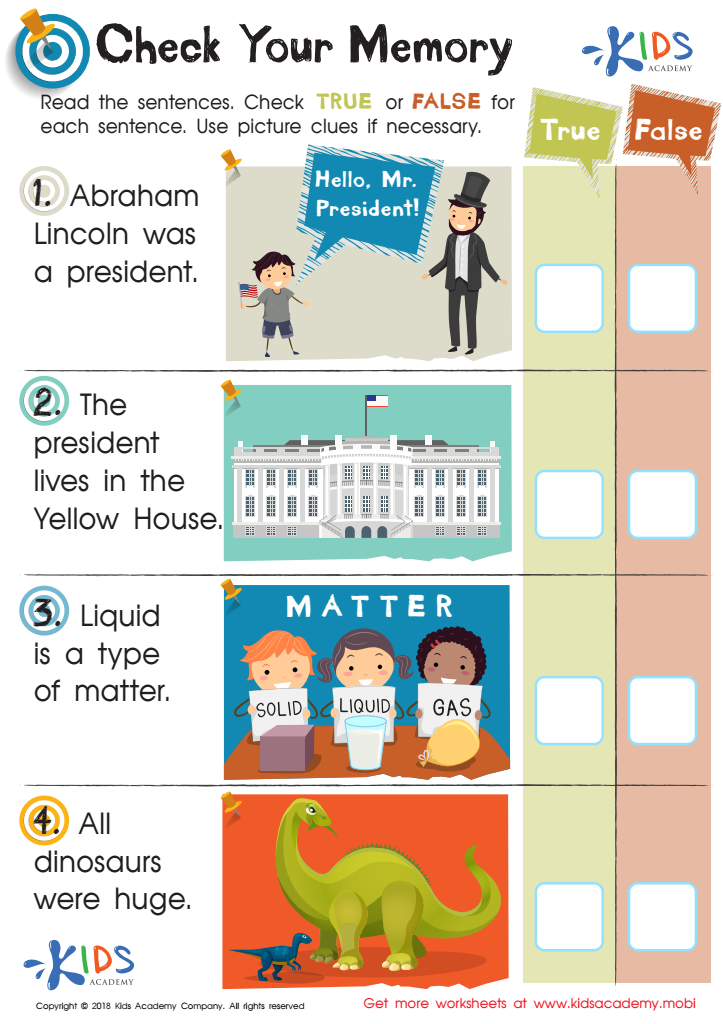
Check Memory Worksheet








Shape identification is a crucial skill for children aged 6-9 and should be a priority for both parents and teachers. Firstly, understanding shapes helps kids develop essential visual-spatial skills. These skills are foundational for reading, writing, and mathematics. When children identify and differentiate between shapes, they enhance their ability to recognize letters and numbers, thereby boosting early literacy and numeracy skills.
Furthermore, recognizing shapes aids in cognitive development. It encourages logical thinking and problem-solving abilities, as children learn to distinguish, categorize, and compare different shapes. This skill fosters early analytical thinking and sets the stage for more complex mathematical concepts like geometry, symmetry, and spatial reasoning.
In addition, shape identification enhances everyday practical skills. From early on, kids encounter shapes in their environment—think of road signs, toys, and even food items. The ability to identify and navigate these shapes safely and effectively enriches their understanding of the world.
Lastly, mastering shape identification builds confidence and encourages a love for learning. Children are naturally curious, and when they successfully learn to identify shapes, it boosts their self-esteem and makes them more eager to tackle new challenges. Therefore, an emphasis on shape identification aids in a child's all-around development.








