Time reading skills Easy Worksheets for Ages 6-9
4 filtered results
-
From - To
Boost your child's time-telling abilities with our engaging "Time Reading Skills Easy Worksheets" designed for ages 6-9. These worksheets simplify the concept of reading analog and digital clocks through fun, interactive exercises, and colorful illustrations. Perfect for young learners, they enhance understanding of hours, minutes, and daily time routines. Aligned with educational standards and developed by experienced educators, these printable activities make learning to tell time an enjoyable adventure. Available on Kids Academy, these resources are an excellent tool for parents and teachers aiming to build foundational time-reading skills in a supportive, effective manner.
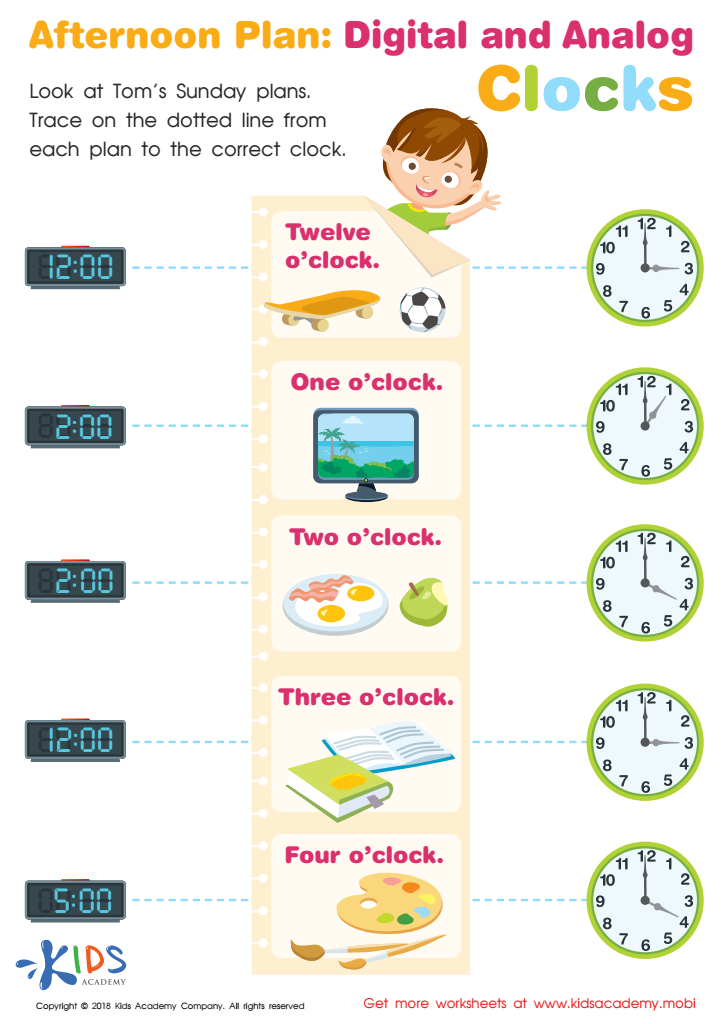
Afternoon Plan: Digital and Analog Clocks Worksheet
 Assign to My Students
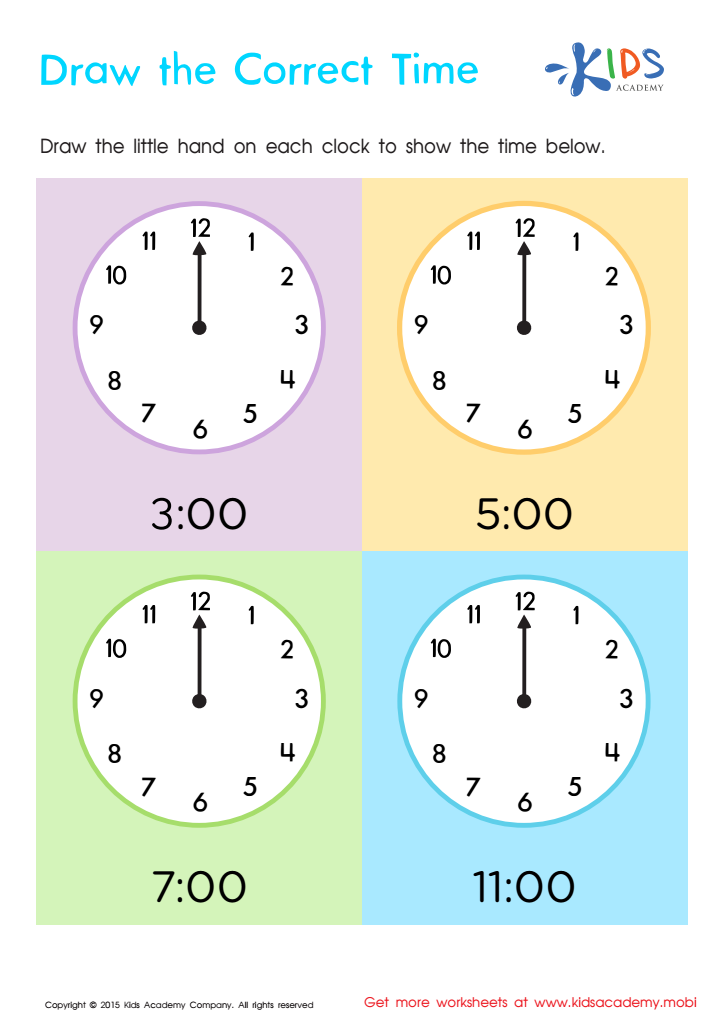
Telling The Time Worksheet: Part 1
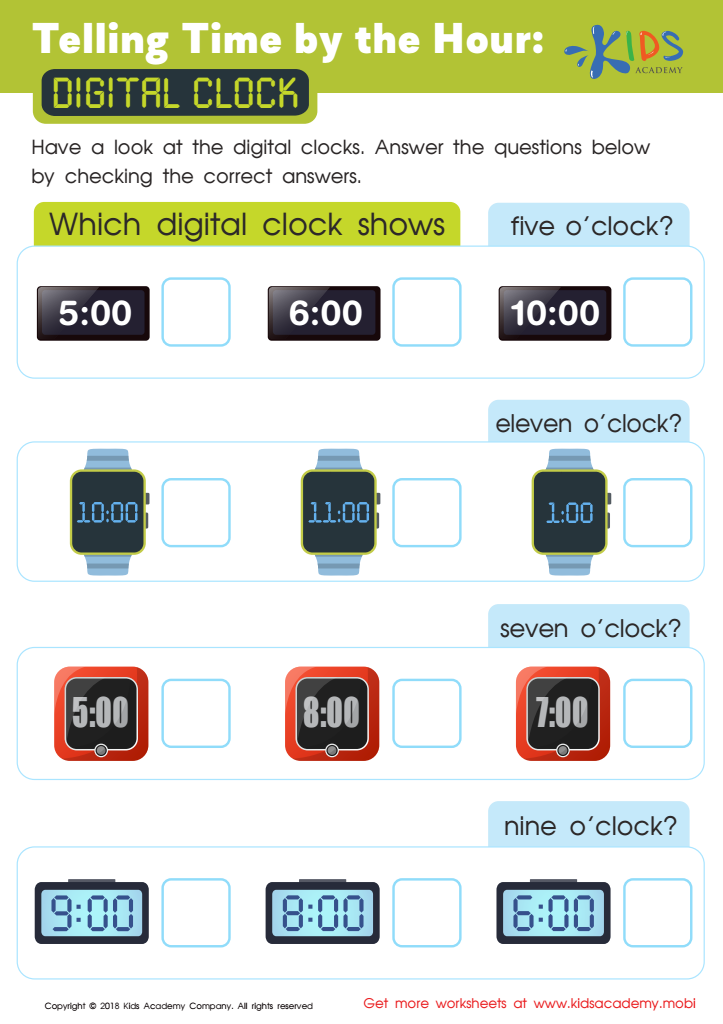
Telling Time by the Hour: Digital Clock Worksheet
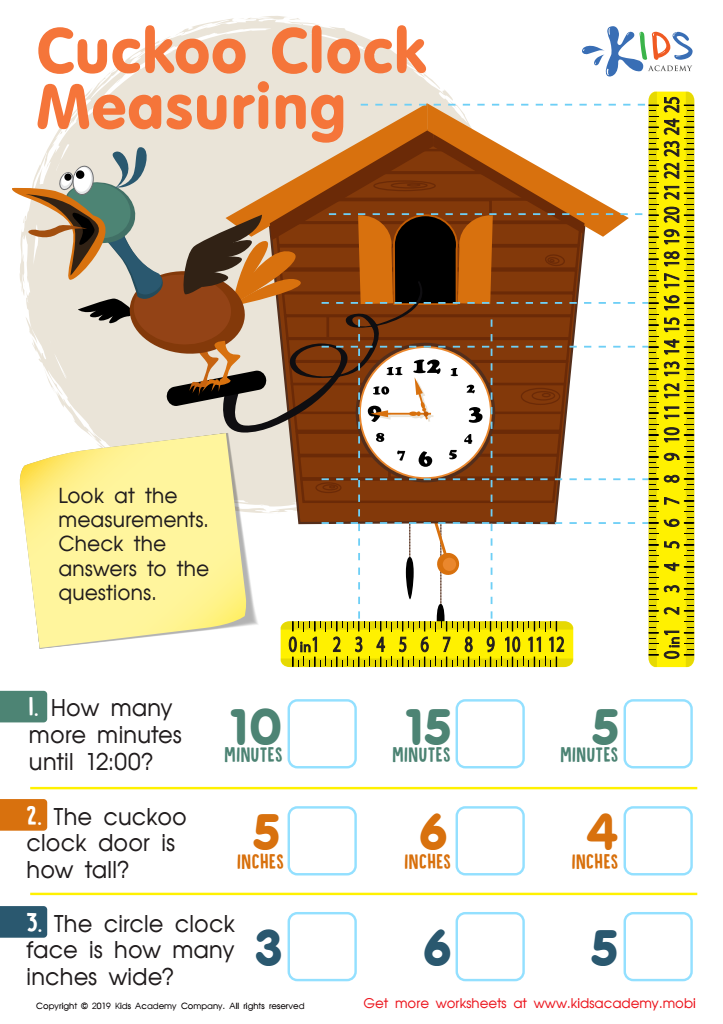
Cuckoo Clock Measuring Worksheet






Early reading skills are foundational for a child's academic and personal development, especially for ages 6-9. At this stage, children transition from learning to read to reading to learn. Parents and teachers should care deeply about fostering these skills because strong reading abilities enhance comprehension, critical thinking, and communication.
Firstly, reading proficiency is crucial for success in all school subjects including math, science, and social studies, as it allows children to understand and follow the curriculum more effectively. It also builds vocabulary, grammar, and language skills, which are essential for effective communication.
Secondly, reading early fosters a love for lifelong learning. When children discover the joy in stories, exploration, and knowledge, they become more motivated and engaged learners. This positive association with reading sets the stage for academic enthusiasm as they grow.
Emotionally and socially, reading helps children understand different perspectives, cultures, and experiences, fostering empathy and emotional intelligence. It can also serve as a bonding activity between parents and children, providing quality time and strengthening relationships.
Early investment in reading skills, especially making the process easy and enjoyable, can bridge potential educational gaps and provide a strong foundation for future success. Therefore, parents and teachers play a vital role in encouraging and supporting a child's reading journey during these formative years.








