Vocabulary expansion Easy Reading Fiction Worksheets for Ages 6-9
5 filtered results
Difficulty Level
Grade
Age
-
From - To
Subject
Activity
Standards
Enhance your child's vocabulary with our "Vocabulary Expansion Easy Reading Fiction Worksheets" designed specifically for ages 6-9! These engaging worksheets combine fun, imaginative stories with focused vocabulary exercises to help young readers grow their language skills confidently. Each activity fosters comprehension and encourages excitement about reading, making learning enjoyable. Kids will not only expand their vocabulary but also improve their reading fluency and comprehension through a variety of interactive tasks. Suitable for home or classroom use, these worksheets are perfect for helping your child become a more proficient reader while sparking their imagination. Start your vocabulary-building journey today!
Favorites
With answer key
Interactive
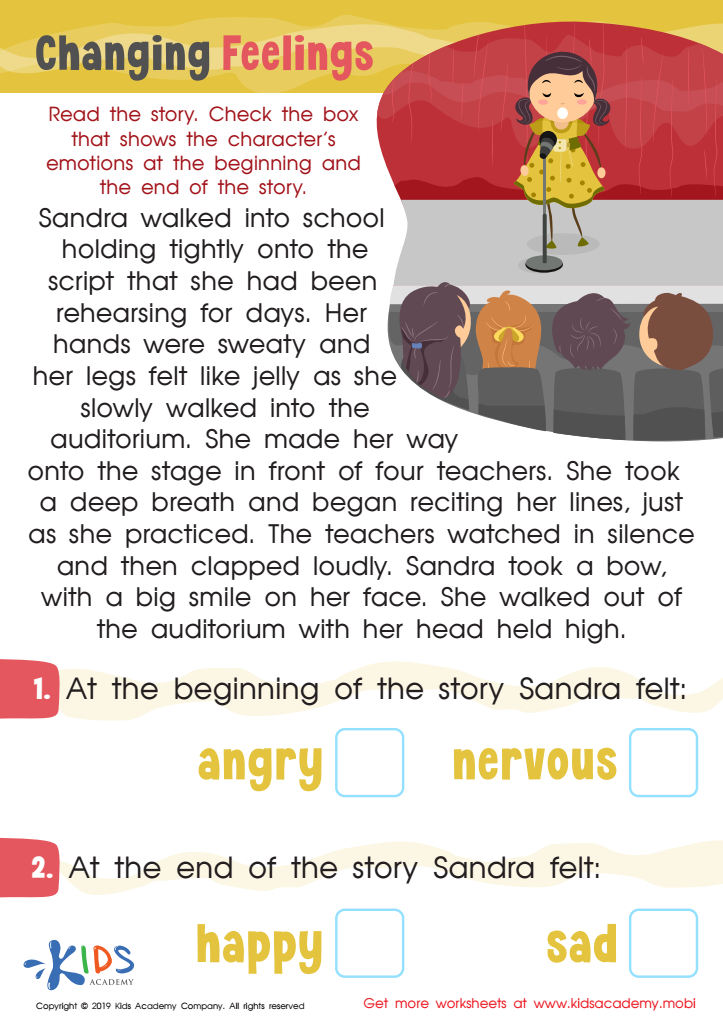
Changing Feelings Worksheet
Help your kids practice reading skills with this exercise. Ask them to read the short passage, then check the boxes showing the character's emotions at the start and end. This will help them improve their reading and understanding.
 Assign to My Students
Changing Feelings Worksheet
Worksheet
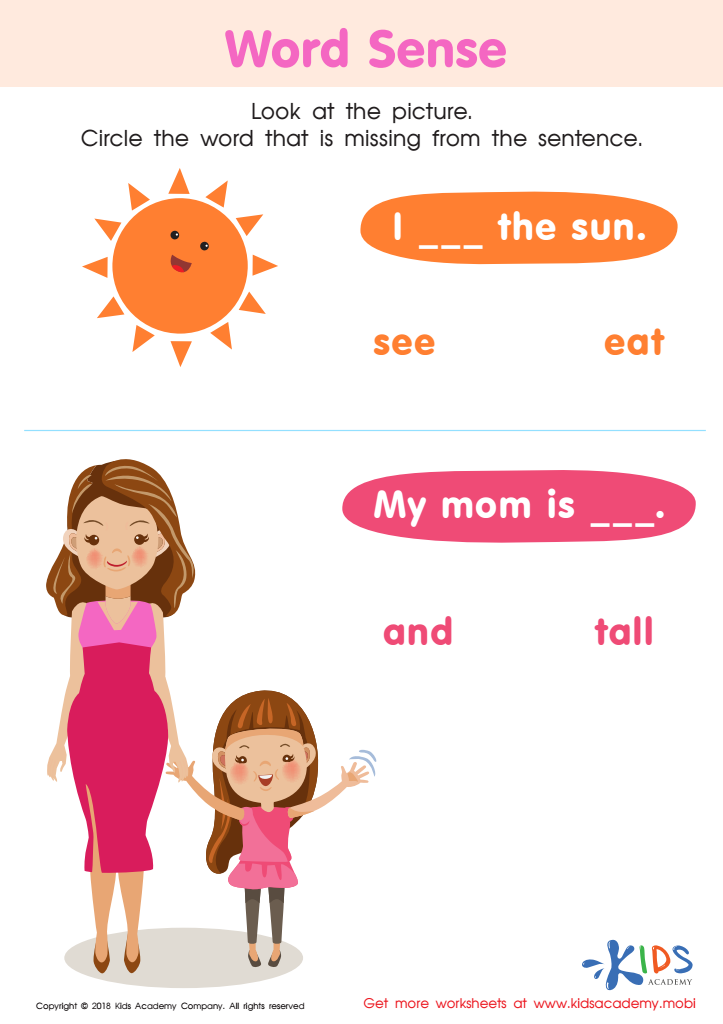
Word Sense Worksheet
Expose your child to common high-frequency words with this free and colorful worksheet. It will help them use picture clues to choose the correct word for each phrase. The more they're exposed, the stronger their fluency will become when reading. This process is an important part of the emerging reader's learning-to-read journey.
Word Sense Worksheet
Worksheet
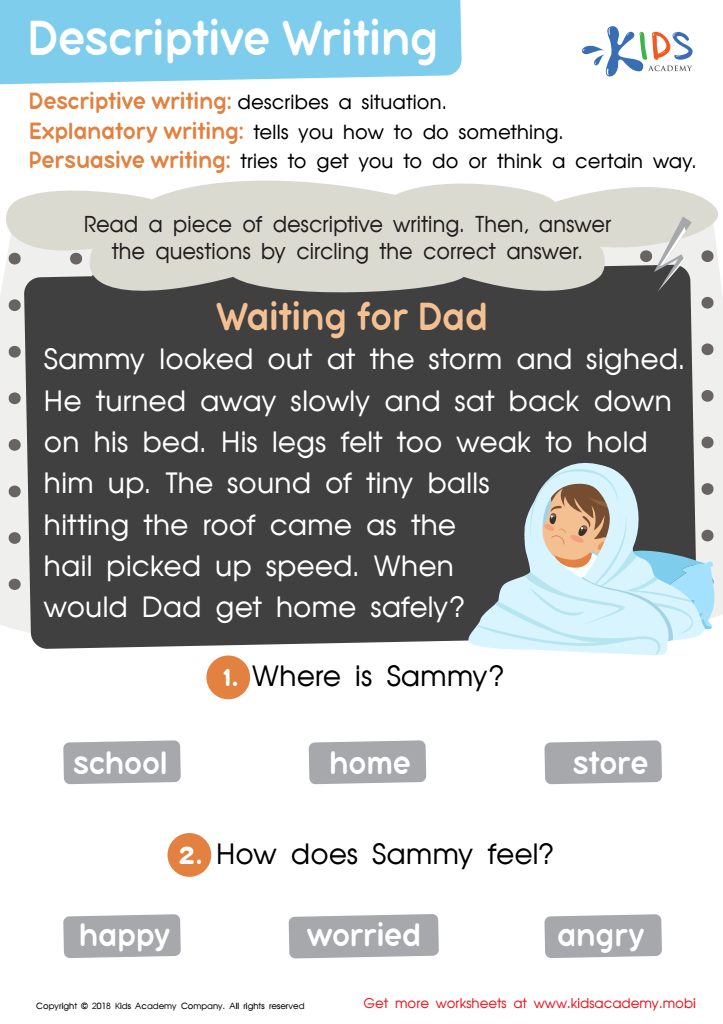
Descriptive Writing Worksheet: Part 2
In this worksheet, your kids will explore writing styles like descriptive, explanatory and persuasive. Read them the descriptive text, then have them answer the questions. Writing is an art – it's a way to express emotions, tell stories and share information.
Descriptive Writing Worksheet: Part 2
Worksheet
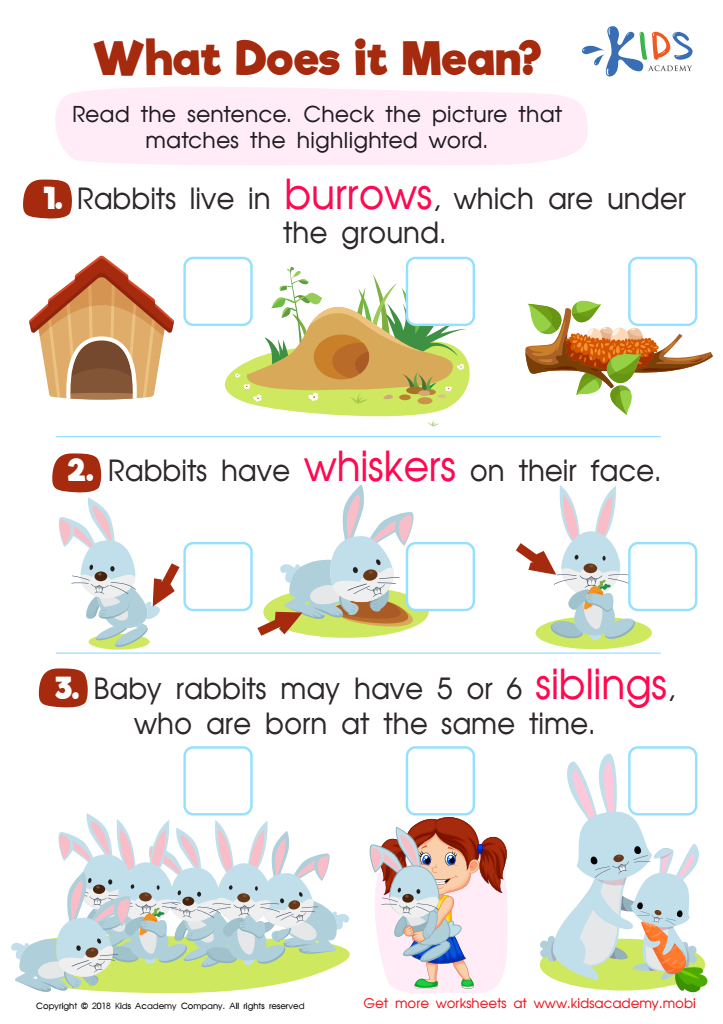
What Does It Mean? Worksheet
Teach your child to use context clues with this engaging Kids Academy worksheet. Read the sentences and find the pink-highlighted word. Use the other words in the sentence to figure out the meaning, then check the box next to the picture that represents it.
What Does It Mean? Worksheet
Worksheet
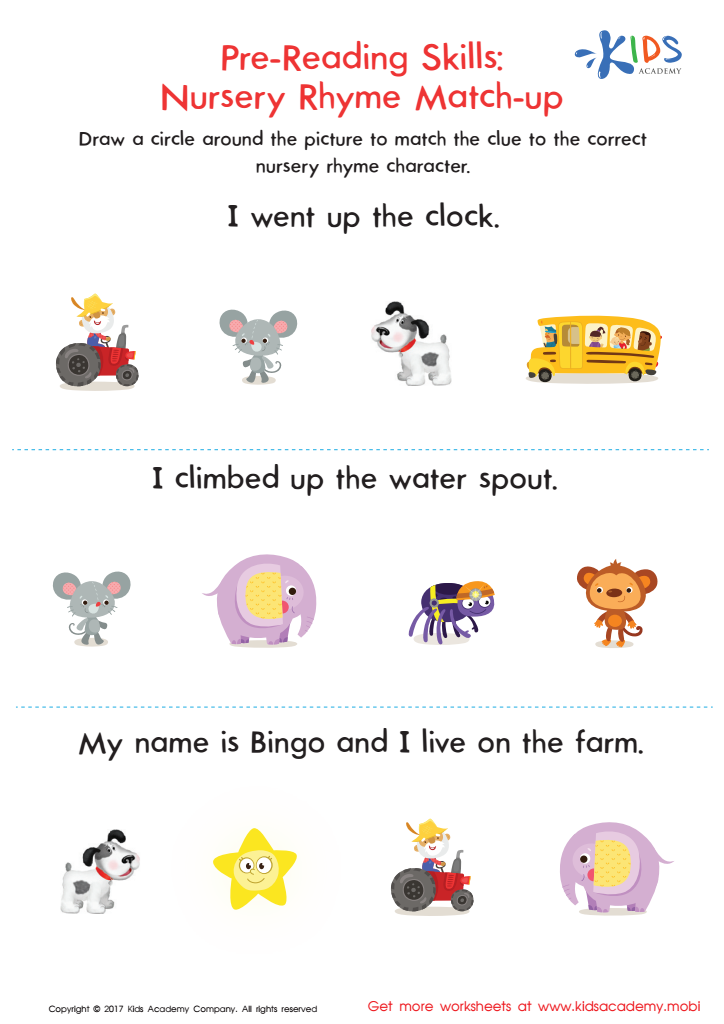
Nursery Rhyme Match–Up Worksheet
This worksheet helps kids build pre-reading skills using stories they know and love! By connecting with prior knowledge, kids can develop ideas about characters and set the stage for reading strategies.
Nursery Rhyme Match–Up Worksheet
Worksheet
Join Kids Academy for Free
Who is primarily going to use this learning content?








Vocabulary expansion is crucial for children aged 6-9, as it lays the foundation for effective communication, reading comprehension, and critical thinking. Easy reading fiction serves as an engaging and accessible way for young readers to encounter new words in context. When parents and teachers prioritize this type of literature, they not only enhance children's vocabulary but also encourage a lasting love for reading.
At this developmental stage, children's brains are particularly receptive to language acquisition. Exposure to diverse vocabulary through stories supports their cognitive growth and allows for better expression of thoughts and emotions. Moreover, easy reading fiction introduces complex ideas in a relatable manner, helping children to make connections and stimulating their imagination.
Furthermore, a well-developed vocabulary is linked to academic success across subjects. Children with a strong vocabulary base are more likely to excel in reading and writing, ultimately impacting their overall learning experiences.
By actively engaging with easy reading fiction—discussing new words, summarizing stories, and encouraging creative expression—parents and teachers foster an environment rich in language learning. This approach not only benefits vocabulary development but also nurtures confident, lifelong learners.