Problem-Solving Skills Easy Math Worksheets for 6-Year-Olds - Page 2
31 filtered results
-
From - To
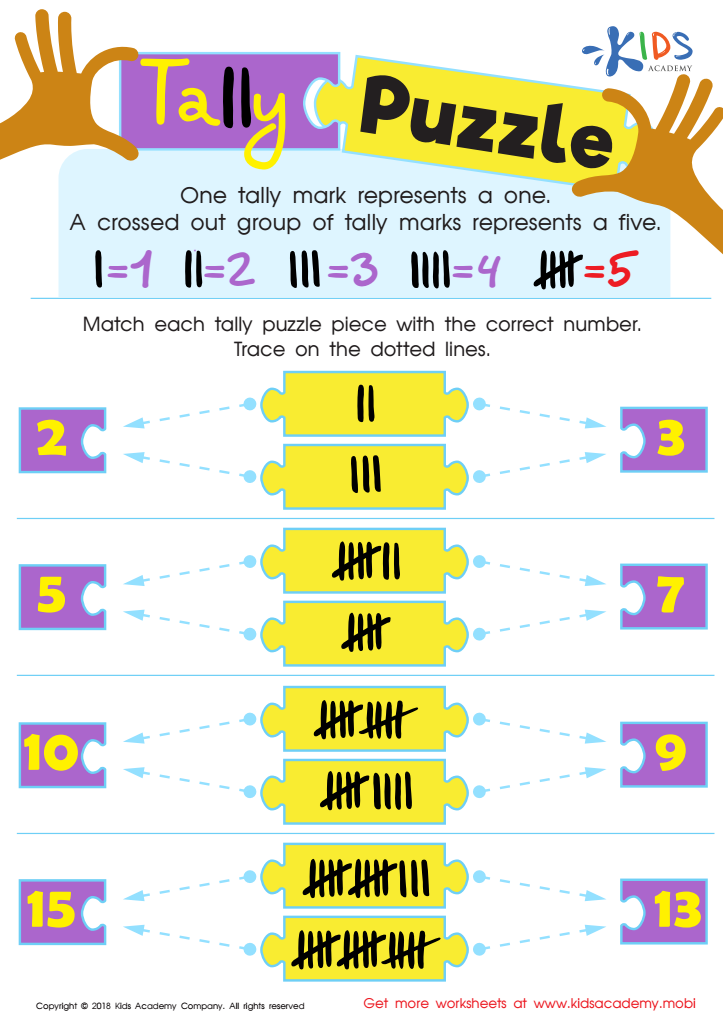
Tally Puzzle Worksheet
 Assign to My Students
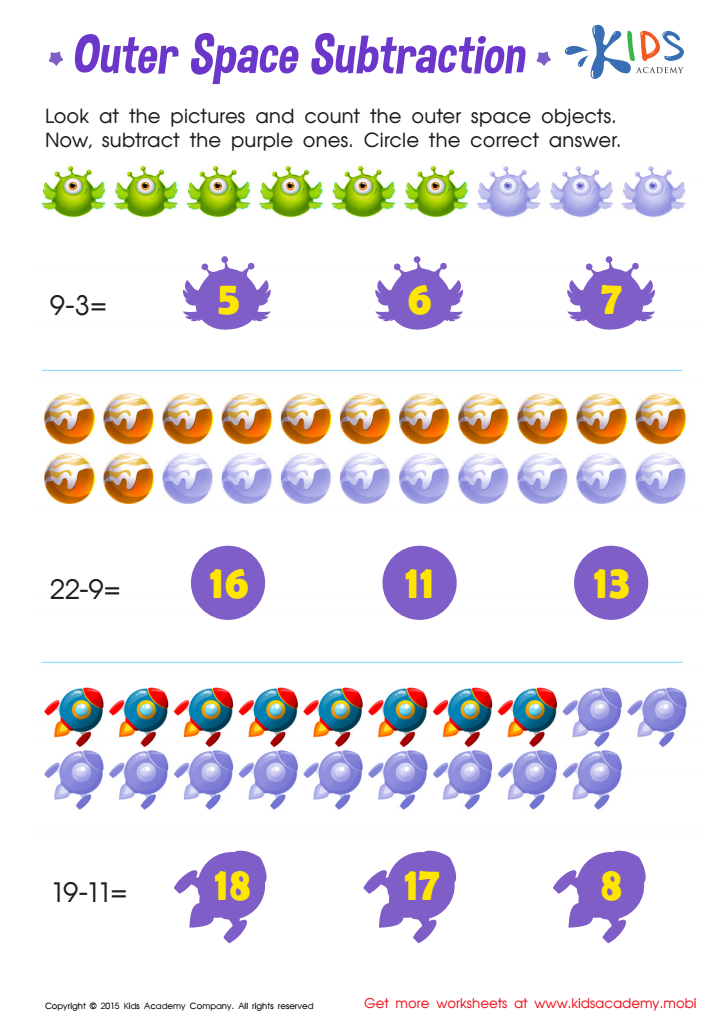
Outer Space Substraction Worksheet
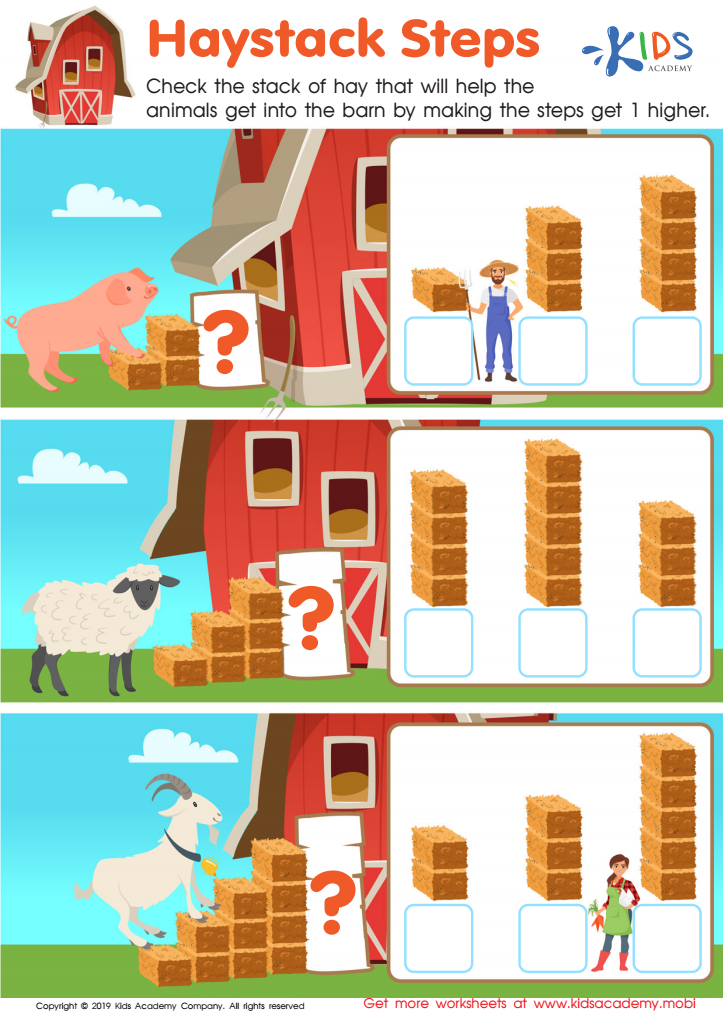
Haystack Steps Worksheet
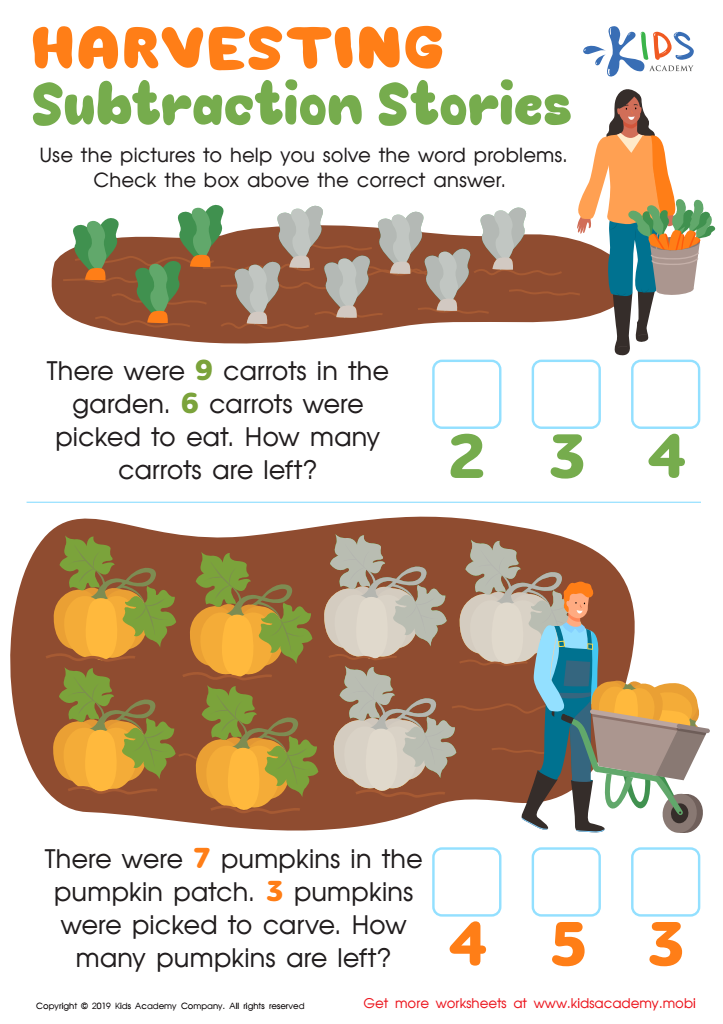
Harvesting Subtraction Stories Worksheet
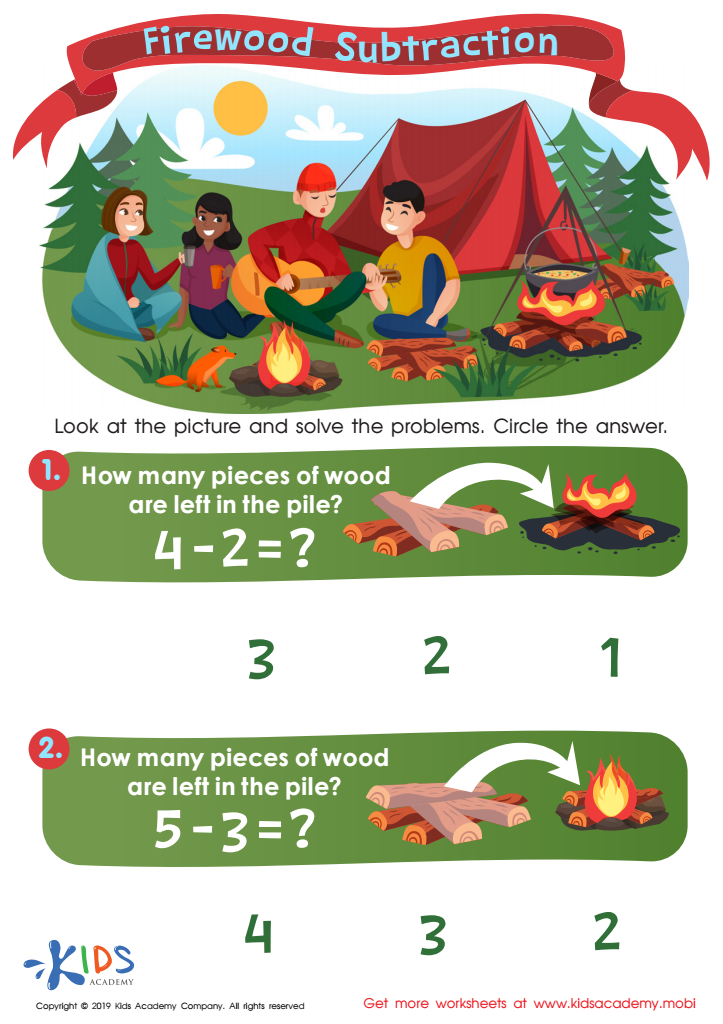
Firewood Subtraction Worksheet
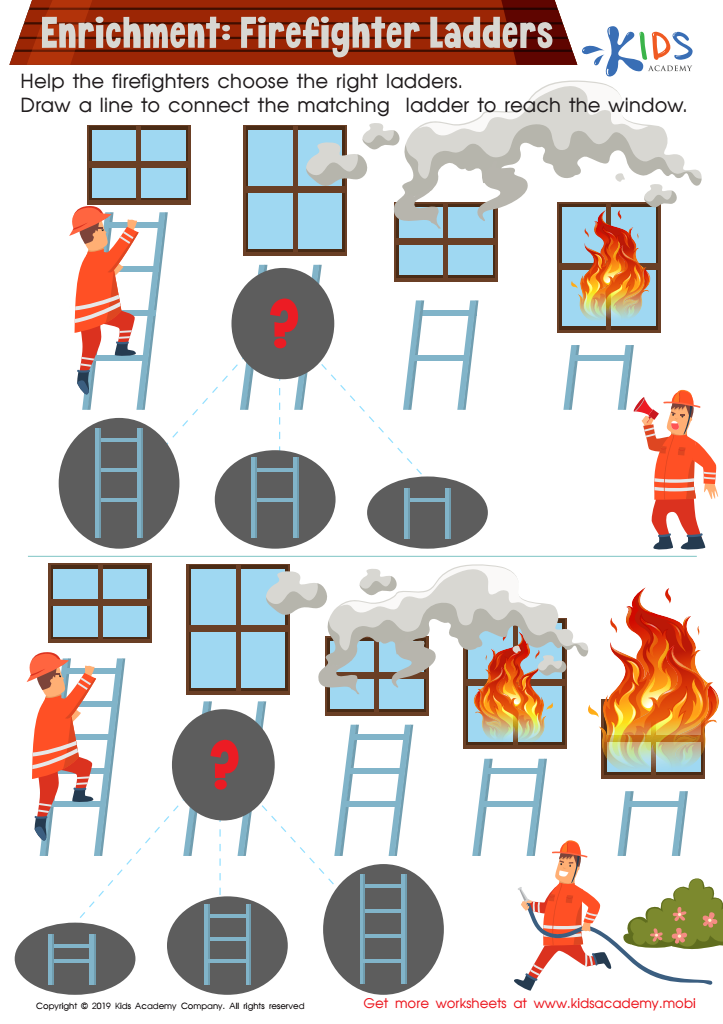
Enrichment: Firefighter Ladders Worksheet
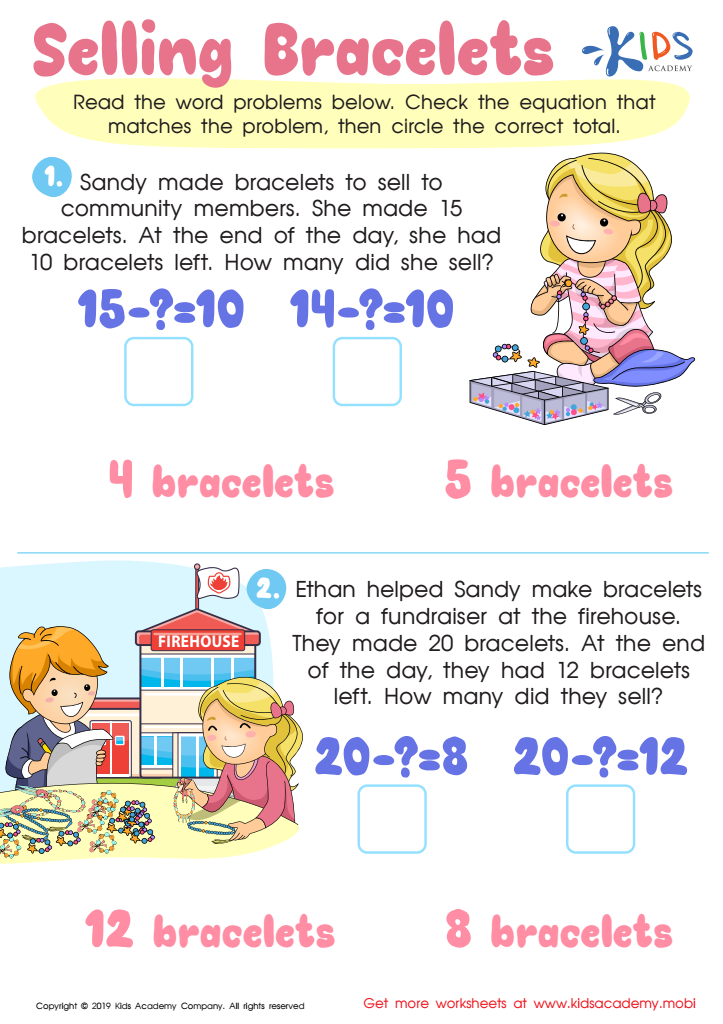
Selling the Bracelets Worksheet








Parents and teachers should prioritize teaching problem-solving skills through easy math problems to 6-year-olds because these formative years are crucial for developing cognitive and critical thinking abilities. Early math skills act as building blocks for more complex concepts in later years, but the benefits extend even beyond math. By engaging in simple problem-solving activities, children enhance their logical reasoning, spatial awareness, and ability to understand cause and effect, all of which are essential for their overall intellectual development.
Introducing math through fun and engaging problems stimulates curiosity and encourages a positive attitude toward learning. It boosts their confidence as they experience the satisfaction of finding solutions. These skills are not only vital for academic success but are transferrable to everyday life, helping children navigate challenges effectively and fostering independence.
Furthermore, problem-solving through math encourages children to become persistent and to approach challenges with a growth mindset. By learning to break down problems, consider various solutions, and correct errors, children develop resilience and adaptability. For parents and teachers, focusing on these skills means equipping young learners with tools that serve them well throughout life, creating a strong foundation for future academic and personal success.








