Understanding Sequences Easy Math Worksheets for 6-Year-Olds
4 filtered results
-
From - To
Unlock the fun of learning with our "Understanding Sequences Easy Math Worksheets" designed specifically for 6-year-olds. These carefully crafted worksheets help young learners grasp the concept of sequences in a playful and engaging way. By identifying patterns and arranging items in logical order, kids develop crucial math and critical thinking skills. Each worksheet is vibrant and interactive, aiming to keep children interested while they learn. Perfect for both classroom and home use, our worksheets provide a solid foundation for future math success. Start building your child’s sequencing skills today with Kids Academy's easy and entertaining resources!
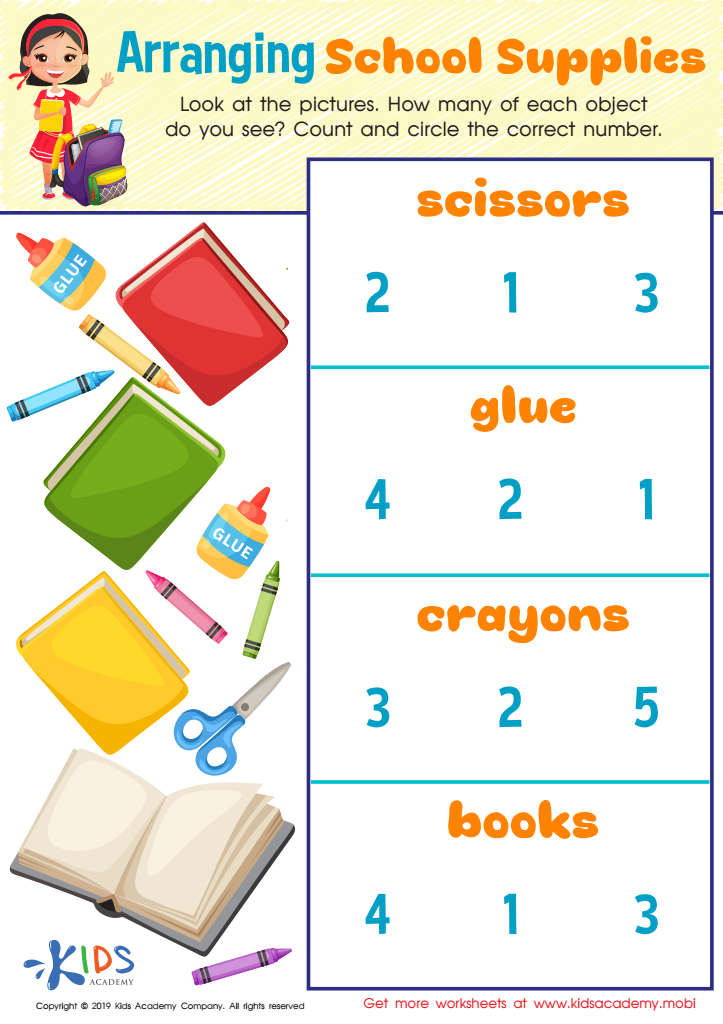
Arranging School Supplies Worksheet
 Assign to My Students
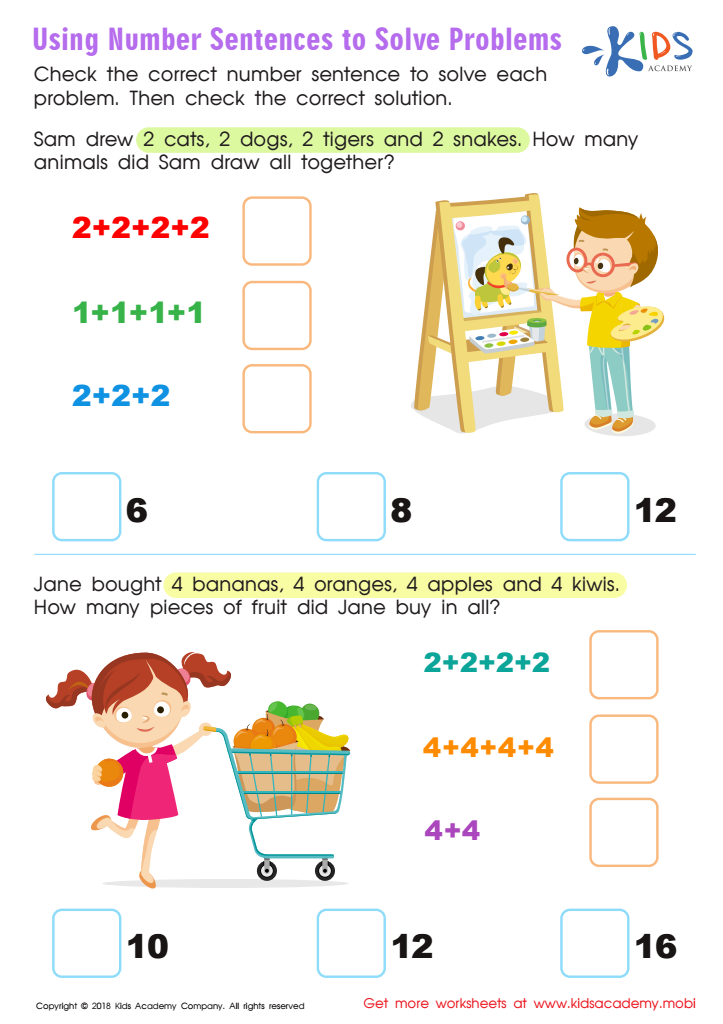
Using Number Sentences to Solve Problems Worksheet
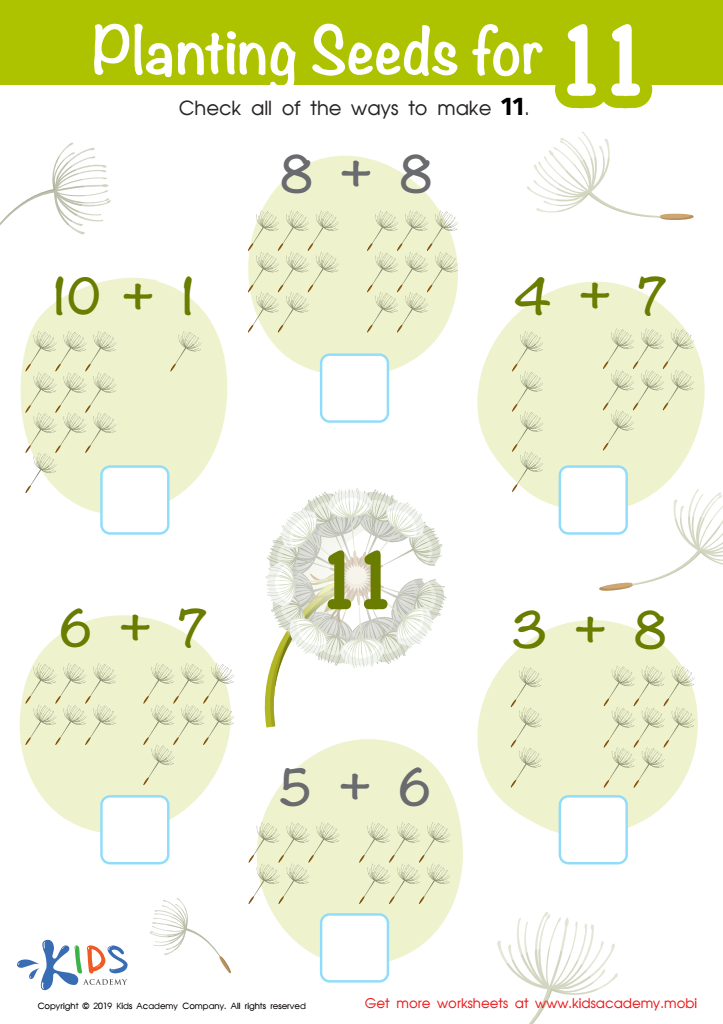
Planting Seeds for 11 Worksheet
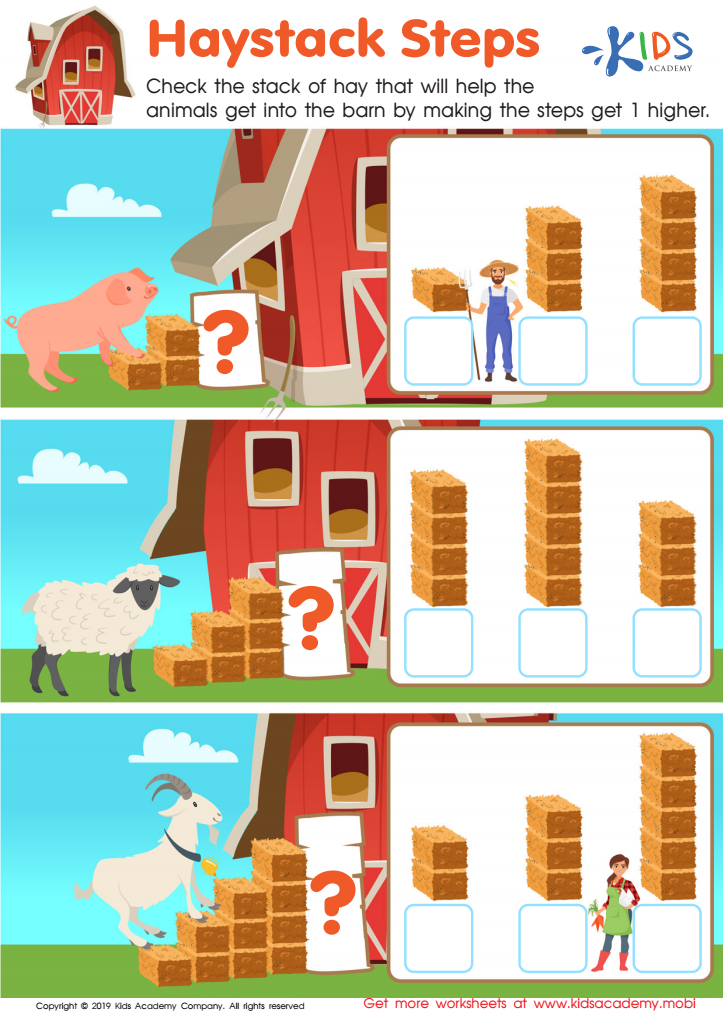
Haystack Steps Worksheet





Understanding sequences in early math education is foundational for several important cognitive skills that will support a child's overall academic growth. When 6-year-olds grasp the concept of sequences, they are not just learning a math topic but developing essential patterns of thought.
Firstly, understanding sequences helps to boost logical thinking and reasoning. It trains young minds to recognize patterns and predict what comes next, thereby enhancing problem-solving abilities that are crucial in everyday situations and later learning in subjects like science and computer programming.
Secondly, sequences support reading skills. The process of understanding the order in math parallels the sequence of events in a story, aiding in comprehension and retention when children read.
Additionally, early exposure to sequencing fortifies number sense. Recognizing numerical order, for example, helps children in understanding concepts like greater than, less than, addition, and subtraction. Such foundational skills are vital stepping stones for more complex mathematical operations in the future.
Finally, engaging in sequencing activities promotes critical life skills including patience, concentration, and perseverance. Completing a sequence often requires careful attention and consideration, qualities that benefit children beyond the classroom.
Parents and teachers really enhance a child's learning journey by focusing on sequences. They develop an enthusiasm for learning, improve broader cognitive development, and establish a strong academic foundation.








