Easy Multiplication Worksheets for Ages 7-8 - Page 2
29 filtered results
-
From - To
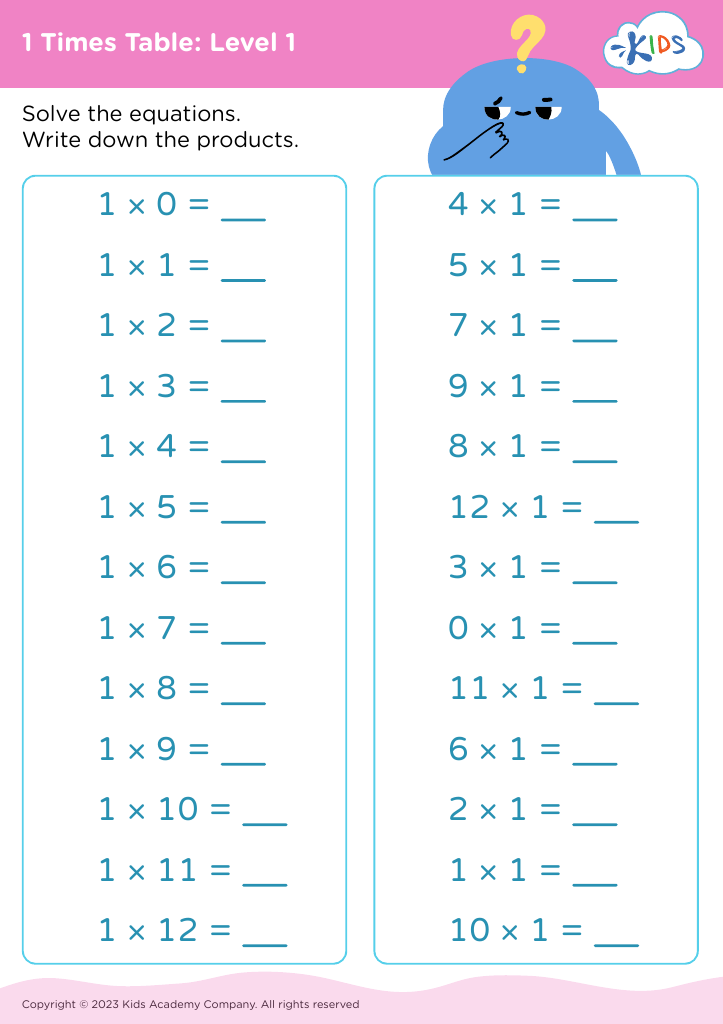
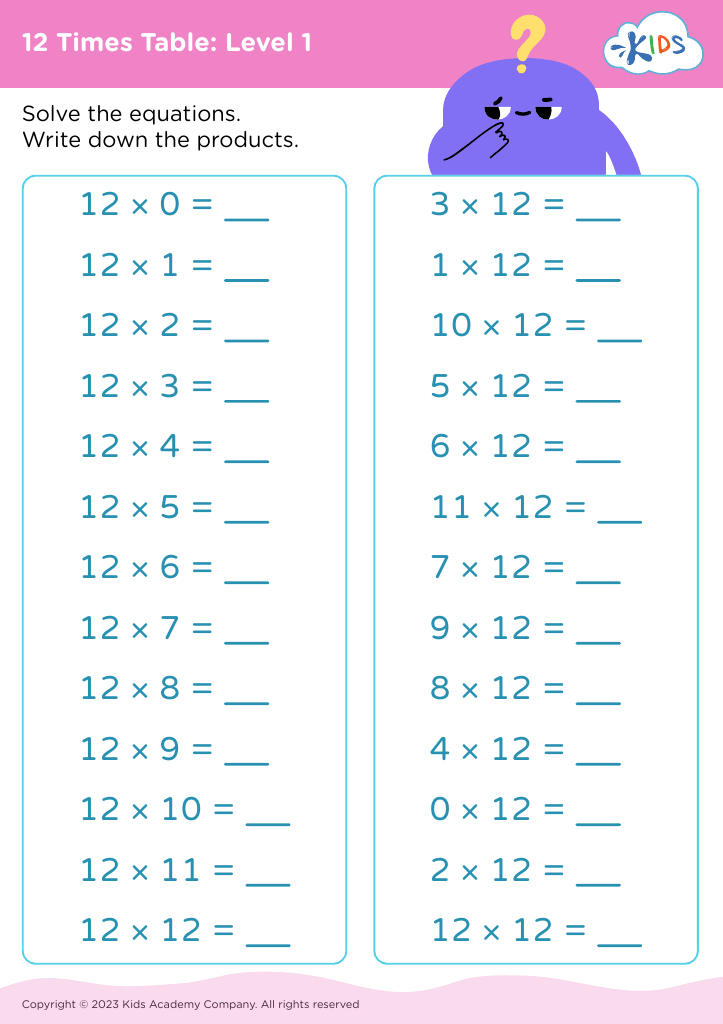
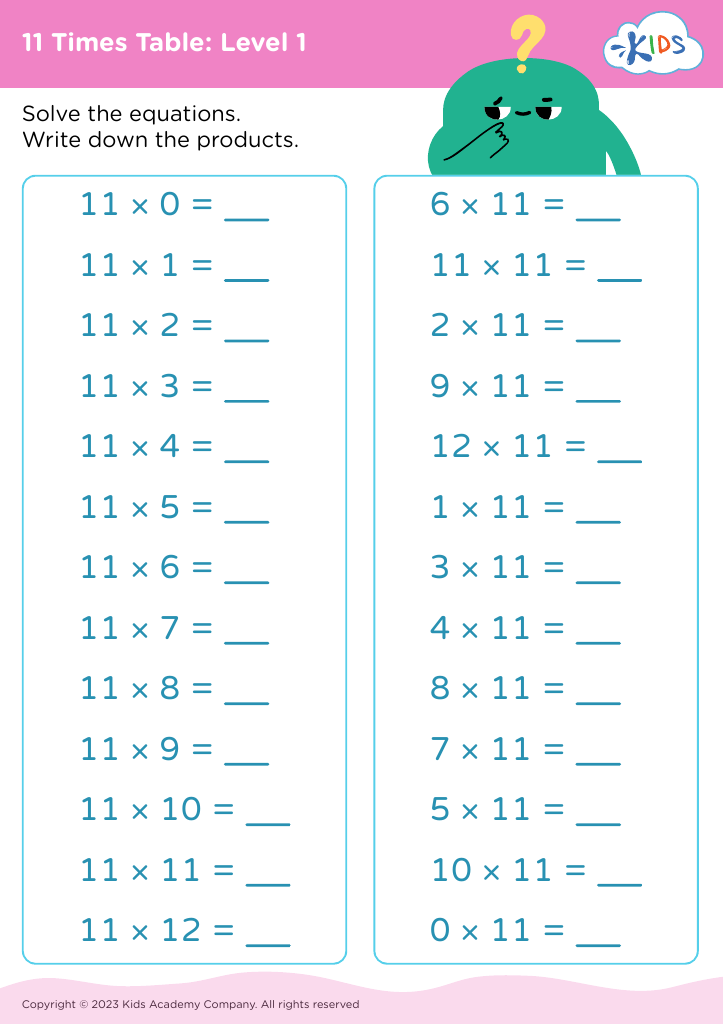
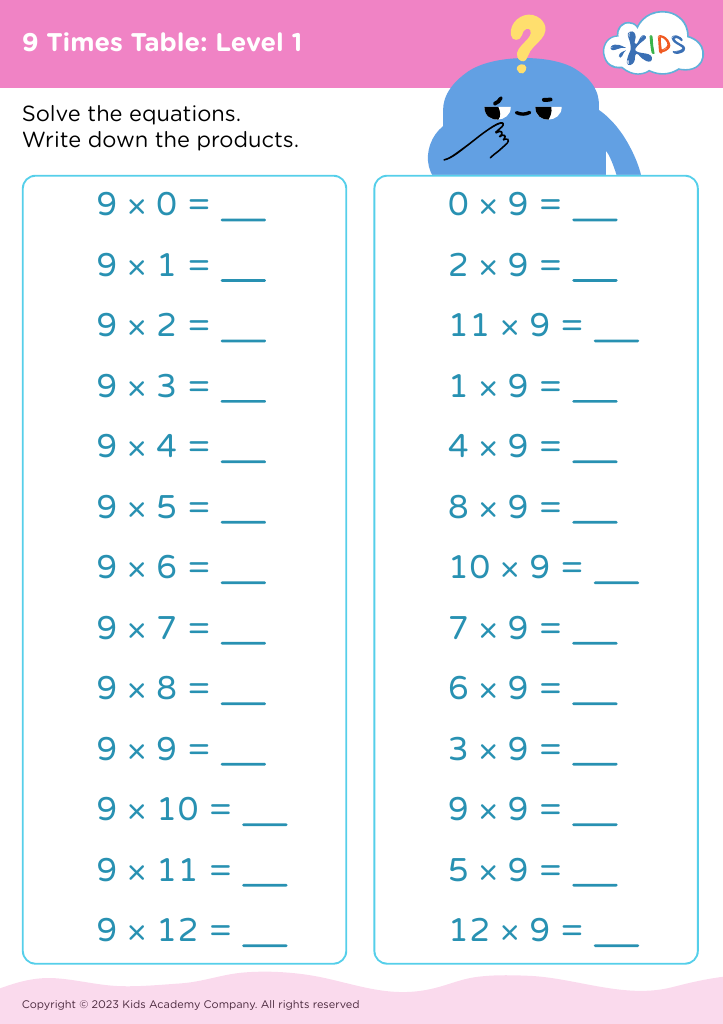
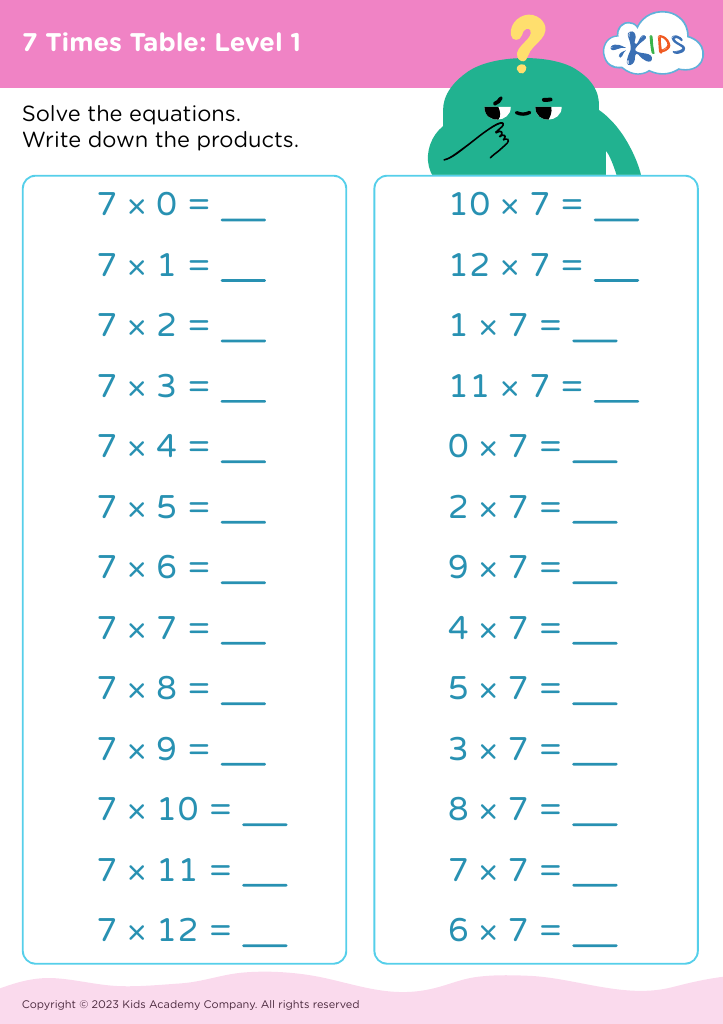








Easy Multiplication techniques for children ages 7-8 pave the way for a strong mathematical foundation, fostering lifelong skills. At this age, children transition from basic arithmetic to more complex operations, establishing the groundwork for future learning in math and science. Mastering multiplication early helps build confidence and improves overall numeracy, essential for success in various academic and real-world scenarios.
Introducing simple and engaging multiplication strategies aids in memory retention and reduces anxiety often associated with math. Techniques such as using visual aids, patterns, songs, or manipulatives can make multiplication more accessible and enjoyable for young learners, helping them understand concepts rather than just memorizing facts.
Furthermore, proficiency in multiplication is crucial for problem-solving. Grouping, division, area calculation, and fractions are key topics in later grades that rely heavily on multiplication skills. By ensuring children comprehend these basics, parents and teachers enable smoother transitions to advanced concepts, fueling curiosity and love for mathematics.
Lastly, promoting a strong start in math fosters a growth mindset. When children witness their own progress and success, even in challenging subjects, they're more likely to approach learning with enthusiasm and perseverance. Supporting easy multiplication for ages 7-8 isn't just about numbers; it's about instilling a lifelong passion and resilience in learning.








