Problem-Solving Skills Easy Chess Worksheets for Ages 7-9
4 filtered results
Difficulty Level
Grade
Age
-
From - To
Subject
Activity
Standards
Boost your child's problem-solving skills with our Easy Chess Worksheets designed specifically for ages 7-9! These interactive worksheets provide a fun and engaging way for kids to develop critical thinking and strategy skills through the game of chess. Each worksheet features age-appropriate challenges that encourage logical reasoning and decision-making as children learn to navigate various chess scenarios. Ideal for both classroom and at-home learning, these worksheets offer step-by-step guidance to build confidence in young learners. Whether a beginner or looking to refine skills, your child will enjoy discovering the world of chess while enhancing their problem-solving capabilities!
Favorites
With answer key
Interactive
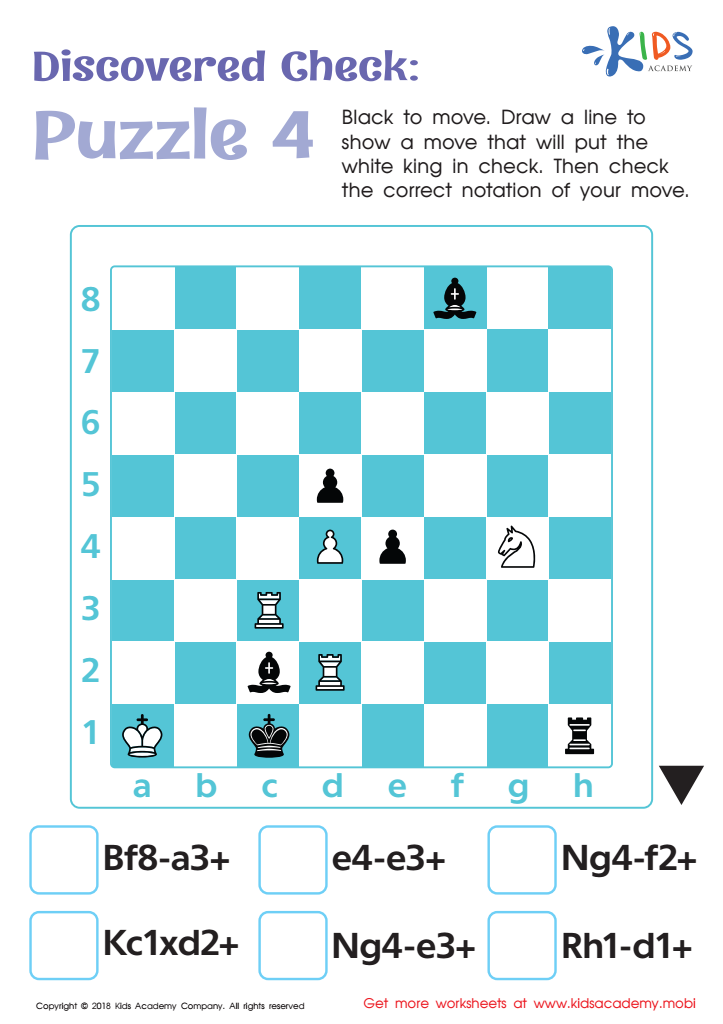
Discovered Check: Puzzle 4 Worksheet
Let your child test their chess skills with this easy worksheet. Have them take control of the black pieces and try to put the white king in checkmate. Ask them to draw a line from their chess piece to the white king, showing the move they'll make, then check the correct answer.
Discovered Check: Puzzle 4 Worksheet
Worksheet

Discovered Check: Puzzle 2 Worksheet
This worksheet exercise will stimulate your child's thinking and let them show off their chess skills. Ask them to use the white pieces and draw a line, pointing to the move that will put the black king in checkmate. Then they should check the correct option. Challenge your child and help them learn more about chess with this fun and educative activity.
Discovered Check: Puzzle 2 Worksheet
Worksheet
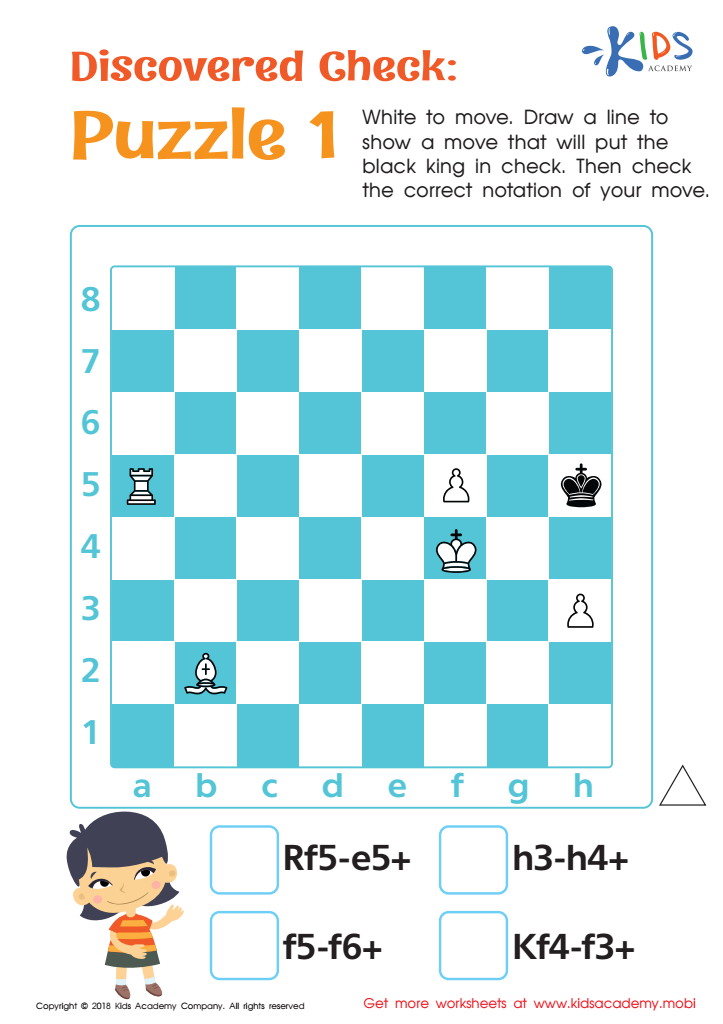
Discovered Check: Puzzle 1 Worksheet
Chess is an excellent way to engage your kids' brains and strengthen thinking skills. This worksheet is ideal for inspiring and growing their interest in the game. Have your child take the white pieces and move them to checkmate the black king. Compare their move against the provided notations to check accuracy.
Discovered Check: Puzzle 1 Worksheet
Worksheet
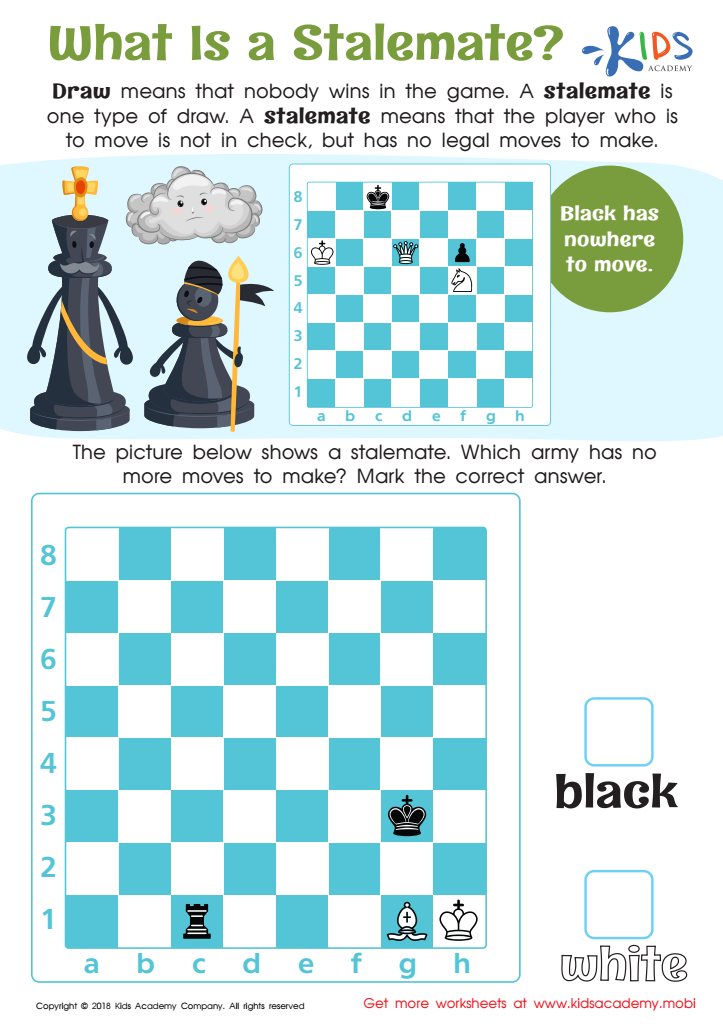
What Is a Stalemate? Worksheet
Chess is an ideal way to develop logic, strategizing, problem-solving and more! Even kids can learn it. With this worksheet, children can learn about draws and stalemates. Sample boards will help them decide which team, black or white, is at a stalemate.
 Assign to My Students
What Is a Stalemate? Worksheet
Worksheet
Join Kids Academy for Free
Who is primarily going to use this learning content?







Parents and teachers should prioritize problem-solving skills through initiatives like Easy Chess for Ages 7-9 because these skills are foundational to a child's cognitive development. Chess is not only an engaging game but also a powerful educational tool that fosters critical thinking, strategy, and decision-making. By learning to identify patterns, anticipate opponents' moves, and develop strategies, children enhance their analytical skills and learn to approach problems methodically.
Moreover, Easy Chess introduces kids to concepts of patience and perseverance as they navigate successes and challenges in gameplay. Such experiences bolster resilience, encouraging children to learn from mistakes rather than shy away from difficulties. These qualities are invaluable in both academic settings and everyday life.
Additionally, problem-solving skills cultivated through chess can influence students' performance in other subjects, particularly in math and science, where logical reasoning is key. With cooperative play involved, chess also promotes social skills, teaching children how to communicate, collaborate, and compete respectfully. Engaging in Easy Chess can enhance the overall learning environment, making it both fun and educational while laying the groundwork for lifelong critical thinking skills.