Alphabet Recognition Easy Worksheets for Ages 7-9
6 filtered results
-
From - To
Discover our engaging "Alphabet Recognition Easy Worksheets" designed specifically for children ages 7-9. These thoughtfully crafted worksheets promote literacy and boost confidence as young learners sharpen their alphabet skills. Each activity encourages letter recognition through fun exercises, including matching, tracing, and identifying letters in various contexts. Our worksheets are not only educational but also interactive, providing children with a stimulating way to practice the foundational skills necessary for reading and writing. Perfect for homeschooling, classroom use, or extra practice at home, these resources will empower your child to master the alphabet while having fun! Download today for a joyful learning experience!
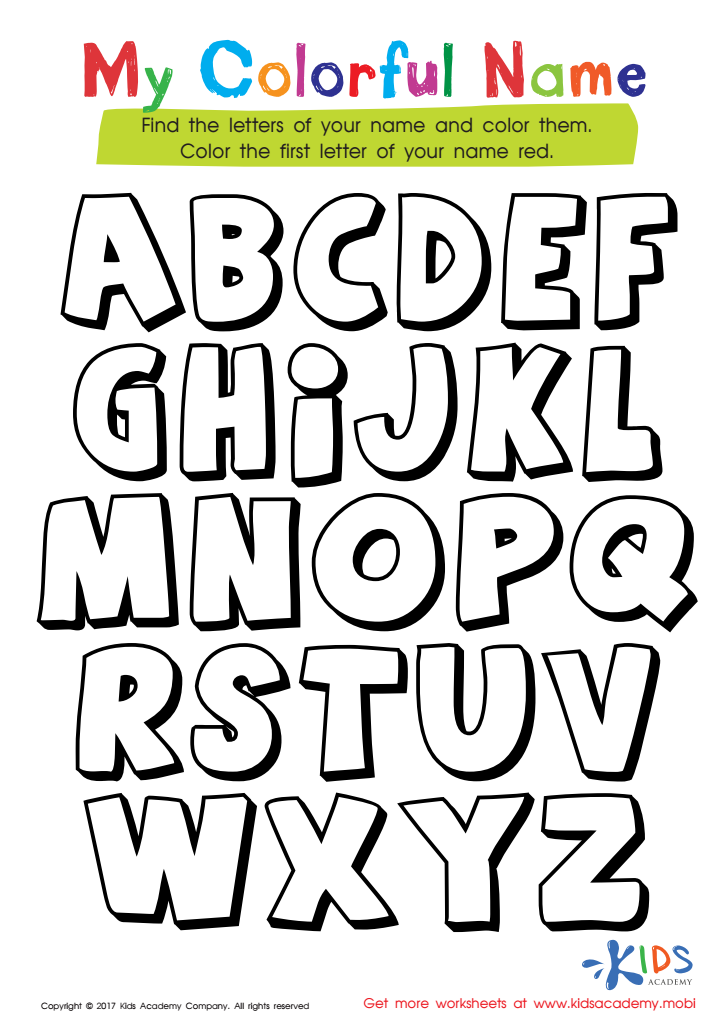
My Colorful Name Worksheet
 Assign to My Students
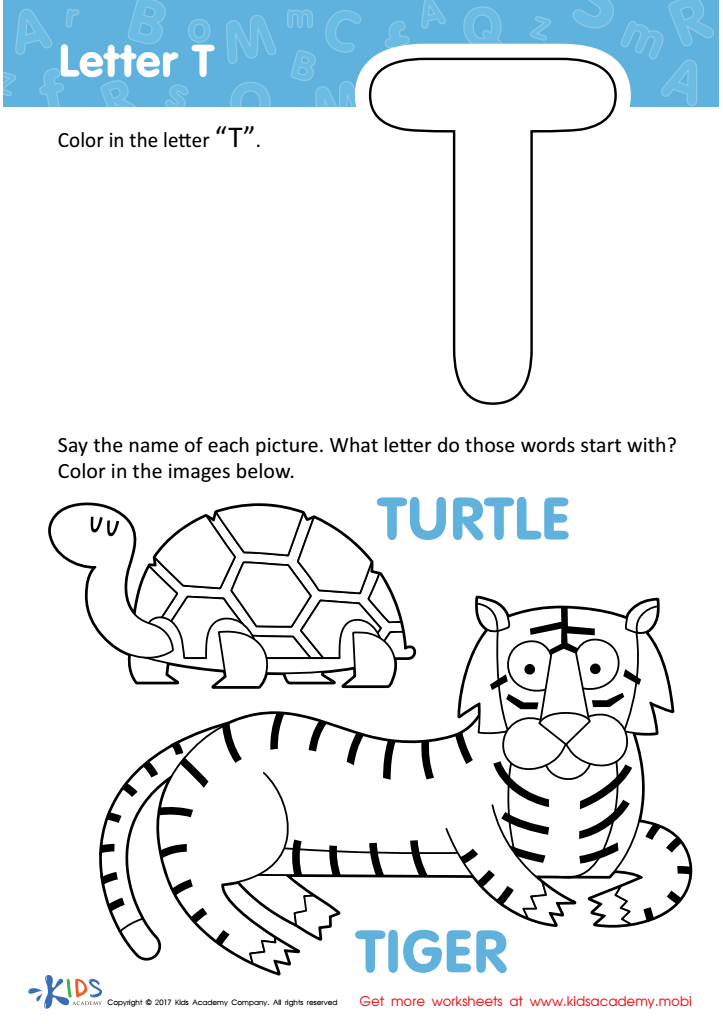
Letter T Coloring Sheet
Assign to My Students
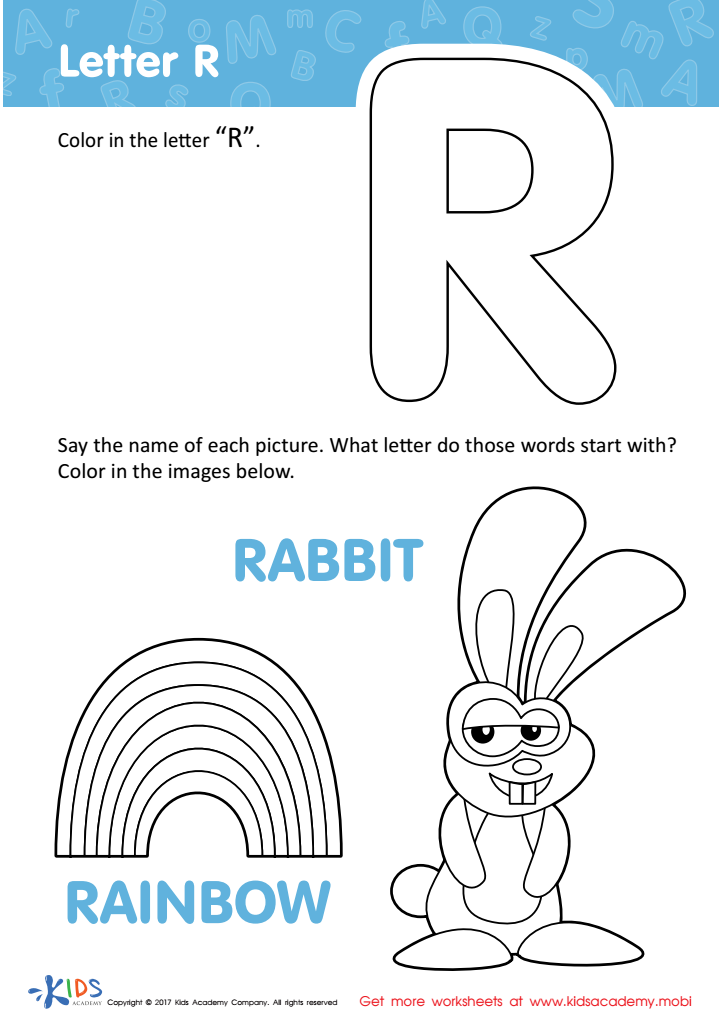
Letter R Coloring Sheet
Assign to My Students
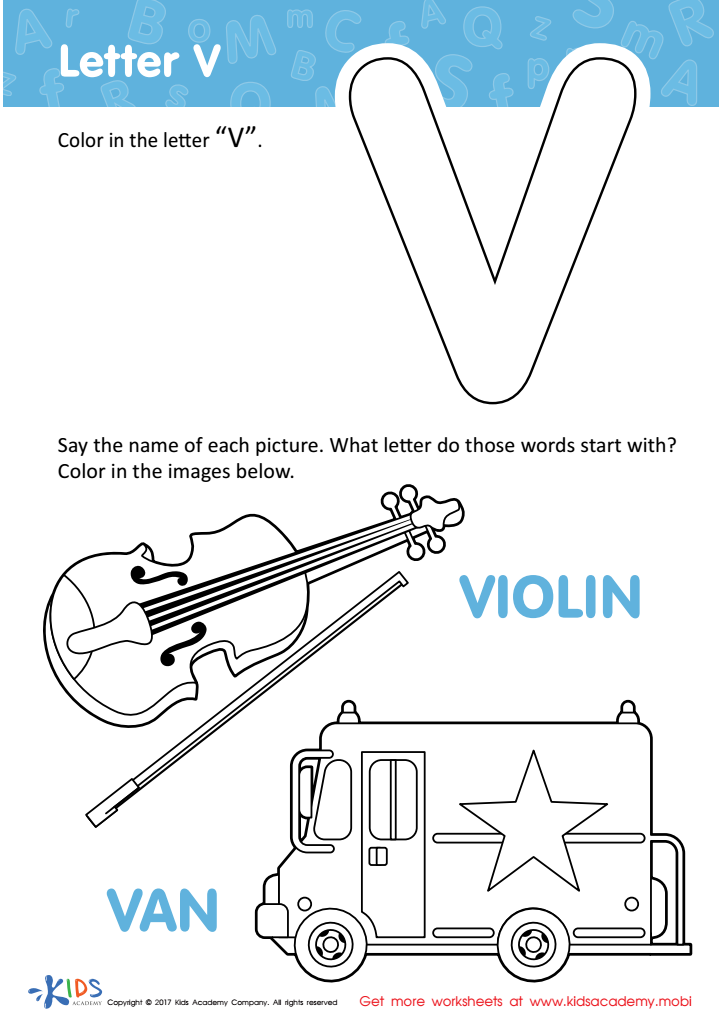
Letter V Coloring Sheet
Assign to My Students
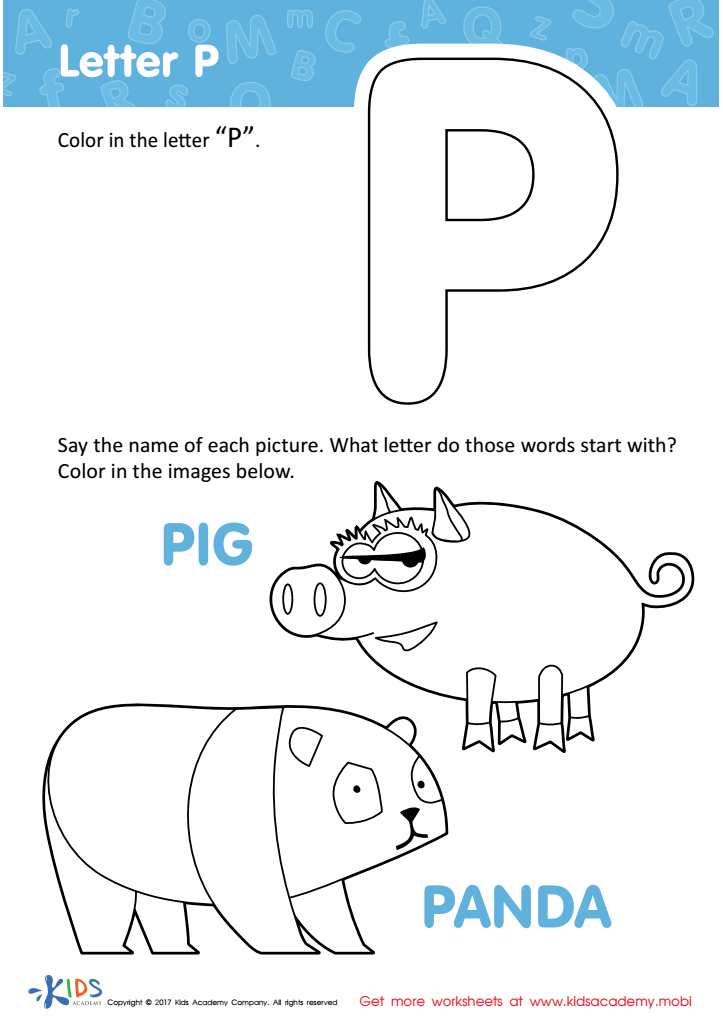
Letter P Coloring Sheet
Assign to My Students
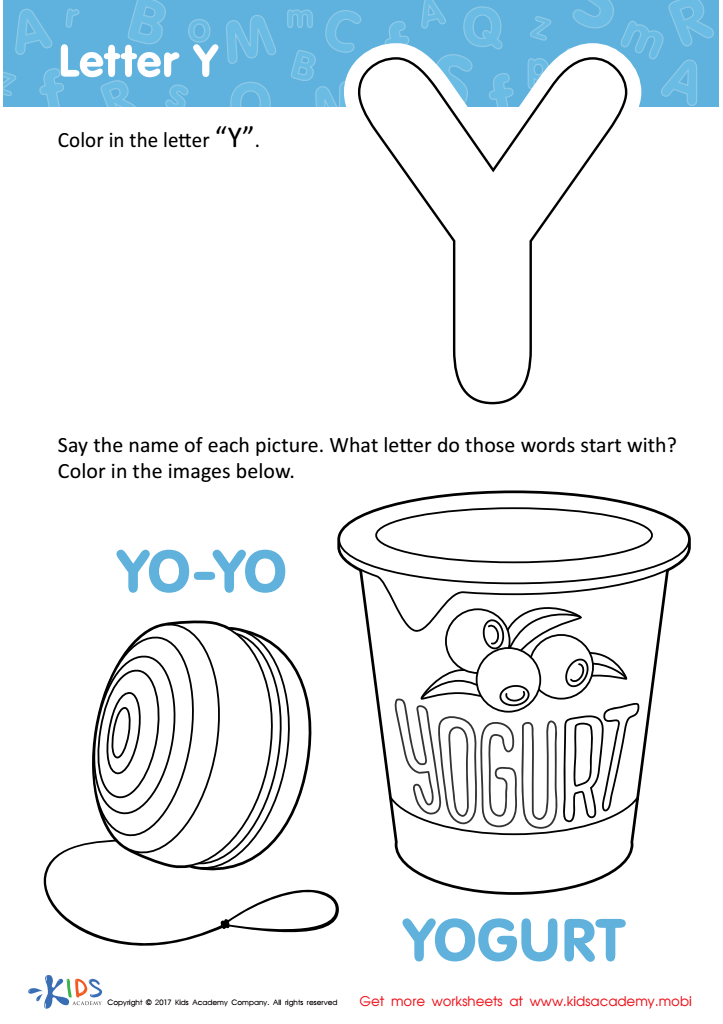
Letter Y Coloring Sheet
Assign to My Students







.jpg)
Alphabet recognition is a fundamental building block for literacy development, particularly for children ages 7-9. During these formative years, students are transitioning from phonics and decoding skills to fluent reading and comprehension. Thus, this age group must reinforce their understanding of the alphabet, as it forms the cornerstone of language skills.
Parents and teachers should care about this skill for several reasons. Firstly, a strong foundation in alphabet recognition aids in the transition to more complex reading materials, allowing children to decode unfamiliar words and improve their vocabulary effectively. This supports not only reading fluency but also boosts confidence in their reading abilities.
Additionally, proficient alphabet recognition enables students to engage better in classroom activities, such as writing assignments and language arts exercises. When children can quickly identify letters and their corresponding sounds, they can focus on more intricate language concepts, leading to overall academic success.
Furthermore, encouraging letter recognition fosters a love for reading. The more confident children feel about recognizing and producing letters, the more motivated they will be to explore books, enhancing their comprehension and critical thinking skills. Ultimately, promoting alphabet recognition empowers children to become effective communicators and lifelong learners.








