
Enhancing critical thinking Easy Worksheets for Ages 7-9
3 filtered results
Difficulty Level
Grade
Age
-
From - To
Subject
Activity
Standards
At Kids Academy, our "Enhancing Critical Thinking Easy Worksheets for Ages 7-9" are meticulously designed to foster young learners' analytical and problem-solving skills. These worksheets challenge kids to think outside the box while making learning engaging and enjoyable. From puzzles to logic games, each activity promotes reasoning, creativity, and decision-making. With clear instructions and diverse exercises, our worksheets ignite curiosity and improve cognitive abilities, laying a solid foundation for future academic success. Ideal for both classroom use and at-home practice, we provide the perfect tools to help your child grow intellectually and confidently tackle complex problems.
Favorites
With answer key
Interactive
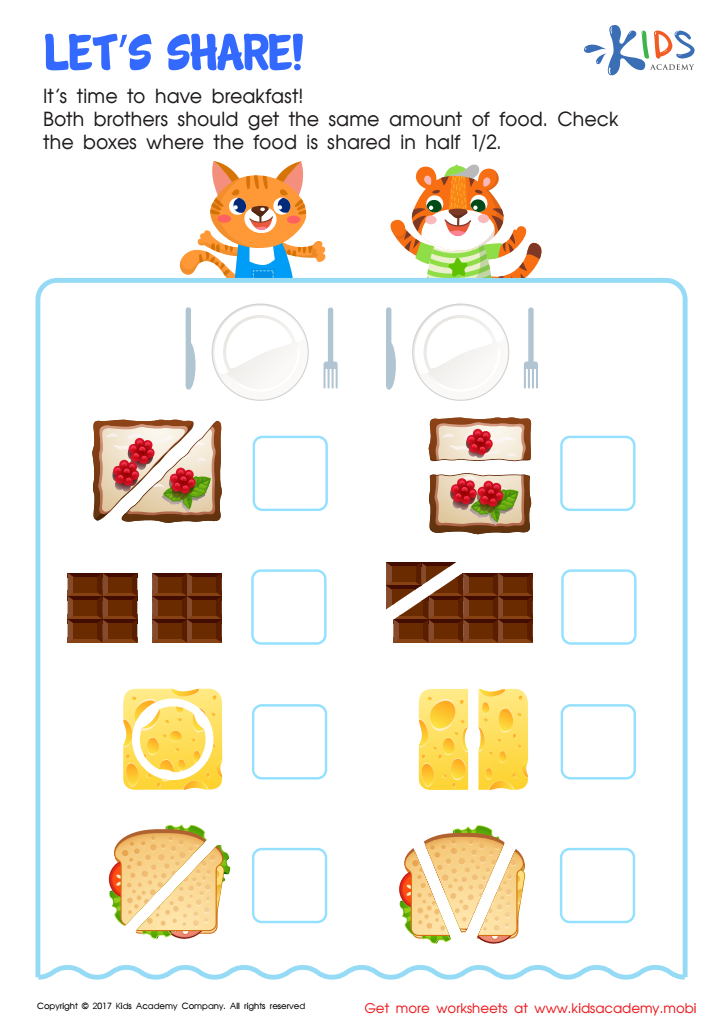
Let's Share Worksheet
It's time to test if your lessons on sharing paid off! With this worksheet, your child can have breakfast and make sure both brothers get equal amounts of food. Have them look at the food images and check the boxes where food is divided equally.
 Assign to My Students
Let's Share Worksheet
Worksheet
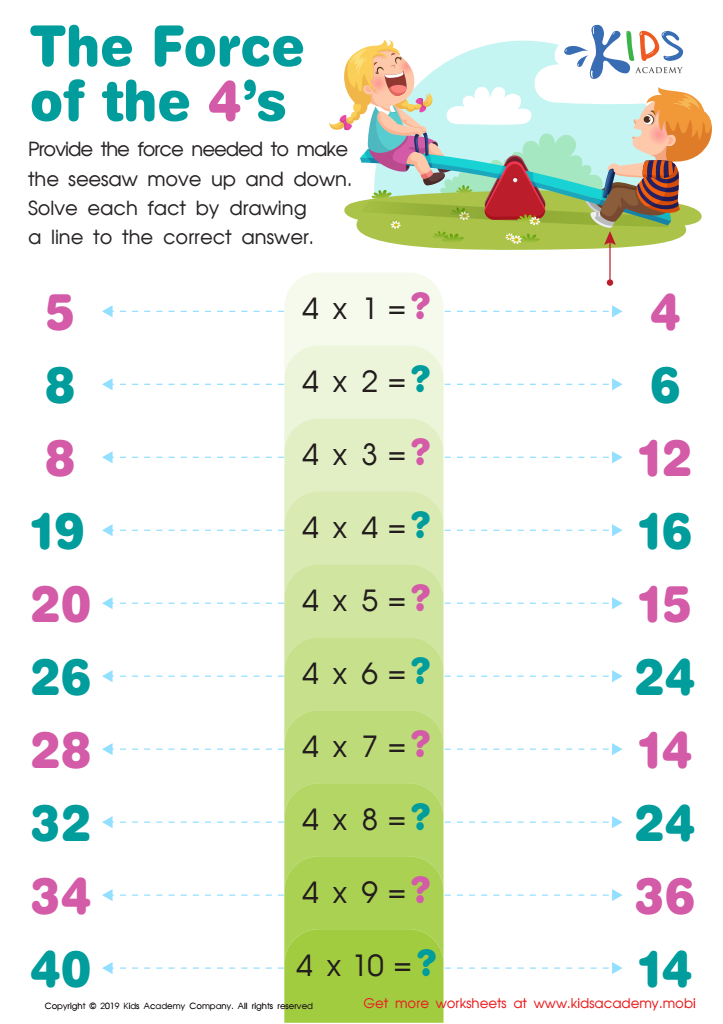
The Force of the 4's Worksheet
Ride a seesaw with your child and explore the physics behind it! Explain how it needs two people and how force makes it go up and down. Use the memories of the pleasurable experience to teach your kid a lesson in force. Show them how to solve the worksheet by drawing a line to the correct answer. This way, they'll learn the force needed for the seesaw to move.
The Force of the 4's Worksheet
Worksheet
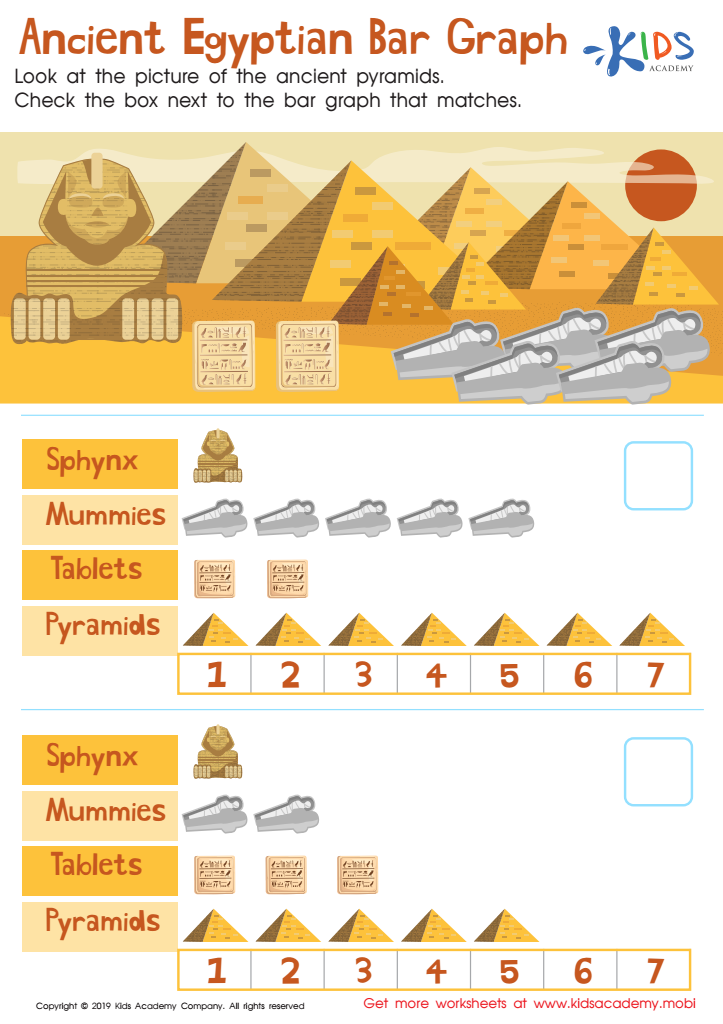
Egyptian Bar Graph Worksheet
Help your kids get a hang of bar graphs with this fun worksheet. Examine the picture of the ancient pyramids and help them match the bar graph to it. Check the box next to the correct bar graph and watch your little ones learn quickly!
Egyptian Bar Graph Worksheet
Worksheet
Join Kids Academy for Free
Who is primarily going to use this learning content?








Encouraging critical thinking skills in children ages 7-9 is crucial for their development in multiple areas of life. At this age, their brains are primed for learning and absorbing new information, making it an ideal time to introduce skills that will foster independent thought and problem-solving abilities.
Firstly, enhancing critical thinking helps children become more effective learners. It enables them to ask questions, make connections, and understand complex concepts, moving beyond rote memorization to deeper comprehension. This is crucial for academic success across all subjects, from reading comprehension to mathematical reasoning.
Moreover, critical thinking equips children to navigate the world more effectively. It fosters curiosity and encourages them to consider different perspectives and solutions. This is particularly important in our information-rich society, where distinguishing between reliable and unreliable sources is an essential skill.
Developing critical thinking also contributes to emotional and social growth. It encourages empathy and ethical reasoning, helping children understand the consequences of their actions and the impact they have on others. This leads to better decision-making and conflict resolution skills.
In summary, fostering critical thinking in young children sets a foundation for lifelong learning, informed decision-making, and responsible citizenship. Both parents and teachers play pivotal roles in nurturing these abilities, creating an environment where children are encouraged to think independently and analytically.








