Addition Practice Easy Addition Worksheets for Ages 7-9
3 filtered results
-
From - To
Explore our engaging and easy addition worksheets designed specifically for children aged 7 to 9! Our collection provides a variety of fun and interactive exercises aimed at reinforcing basic addition skills. Perfect for classroom use or at-home practice, these worksheets enhance arithmetic fluency while keeping young learners motivated. Each activity promotes critical thinking and problem-solving, helping your child gain confidence in their math abilities. With vibrant designs and student-friendly layouts, our easy addition worksheets make learning enjoyable and effective. Foster a positive attitude towards math and watch your child excel with our engaging addition practice resources!
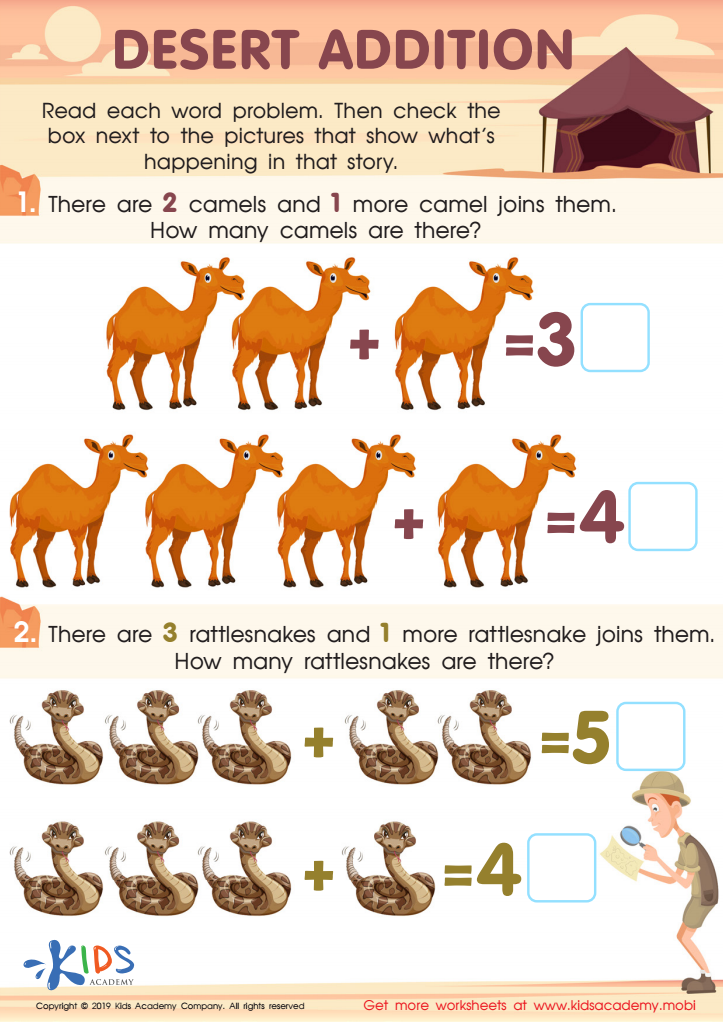
Desert Addition Worksheet
 Assign to My Students
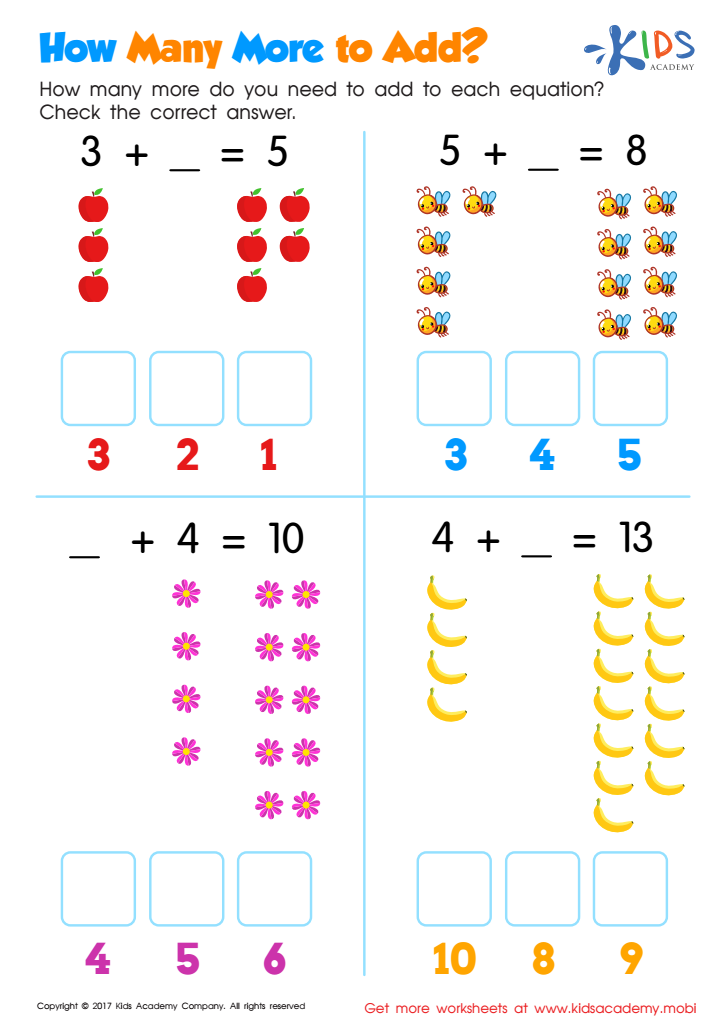
How Many More to Add Worksheet
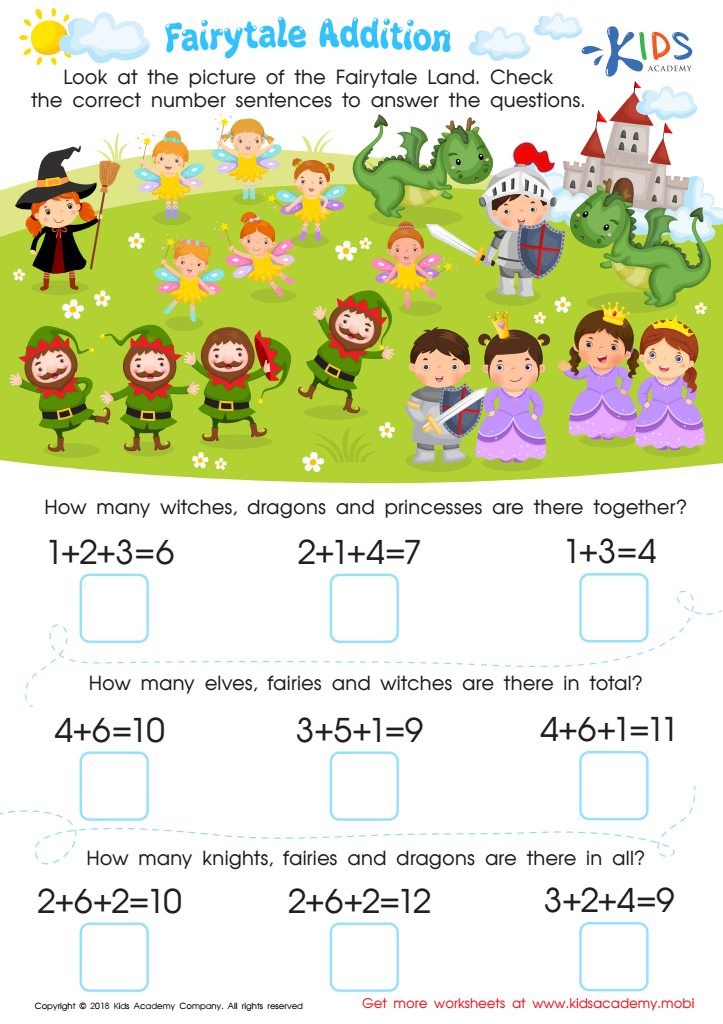
Fairytale Addition Worksheet








Addition Practice for ages 7-9 is crucial for several reasons, emphasizing both academic and developmental benefits. During this age range, children transition from basic arithmetic to more complex mathematical concepts. Practicing addition helps solidify foundational skills that are vital for future learning in math and other subjects. Mastery of addition promotes confidence, enabling children to tackle more challenging problems without fear.
Moreover, a strong grasp of addition supports overall cognitive development, enhancing problem-solving and critical-thinking skills. Children who regularly engage in practiced addition tend to perform better in mathematics, subsequently improving their overall academic performance. This foundational skill is key not just in math but also applies to logic puzzles and real-world problem-solving scenarios, such as budgeting or measuring.
In addition, parents and teachers play a pivotal role in cultivating a positive attitude toward learning. Encouraging effective addition practice instills a sense of accomplishment in children, making math a source of pride rather than anxiety. Interactive activities or games can take this engagement further, fostering collaborative learning experiences between parents and children. By prioritizing addition practice, parents and teachers empower young learners to succeed academically and boost their esteem in a critical area of education. Thus, the importance of this practice cannot be overstated.








