Easy Basic Times Tables up to 12 Worksheets for Ages 7-9
12 filtered results
-
From - To
Boost your child's multiplication skills with our "Easy Basic Times Tables up to 12 Worksheets" tailored for kids aged 7-9. These engaging and visually appealing worksheets are designed to reinforce number familiarity, enhance problem-solving abilities, and build confidence in mastering times tables. Offering a structured and enjoyable approach to learning, our printables make math practice fun and effective. Habas excellent resources for classroom activities or home study, helping learners develop strong mathematical foundations. Whether your child is just starting or needs extra practice, these worksheets provide essential support for their educational journey. Download today from Kids Academy and watch them excel!
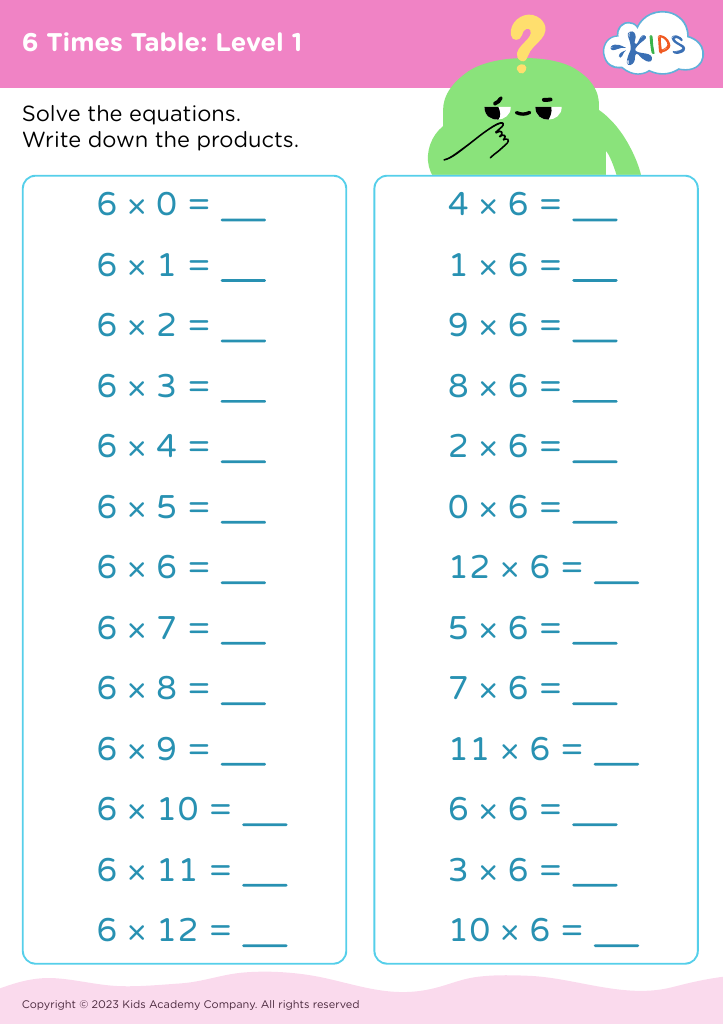
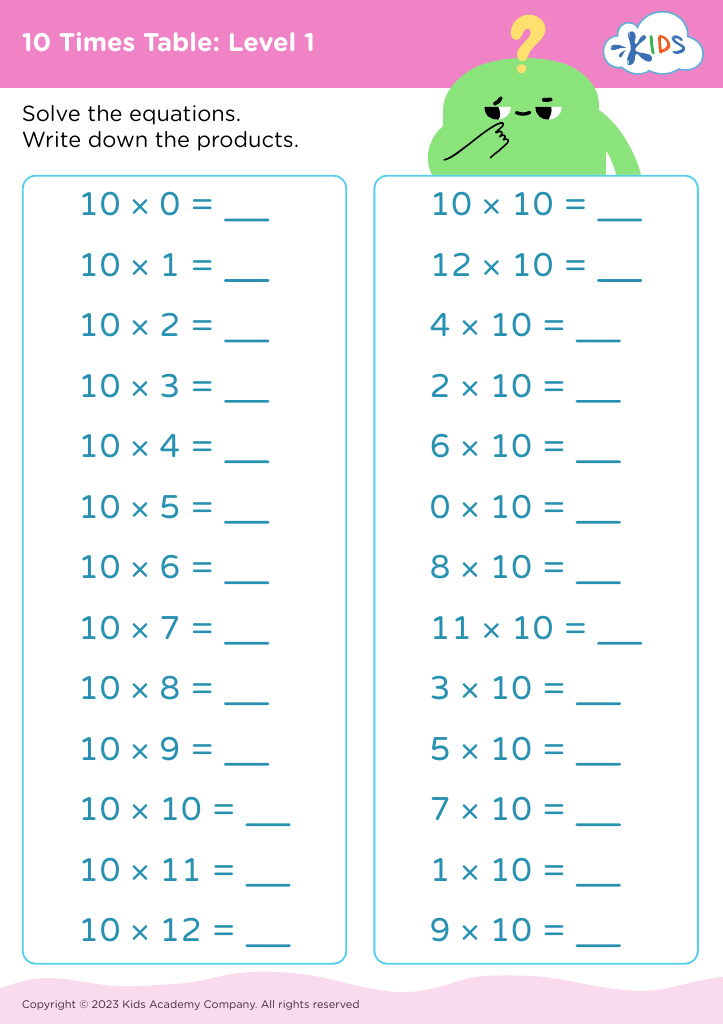
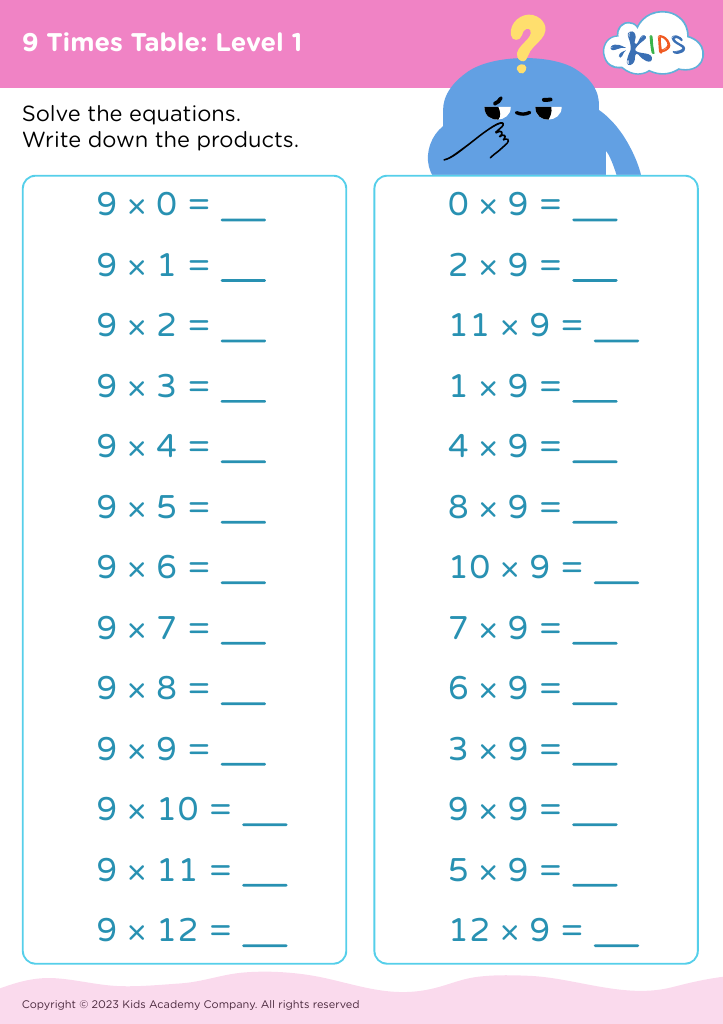
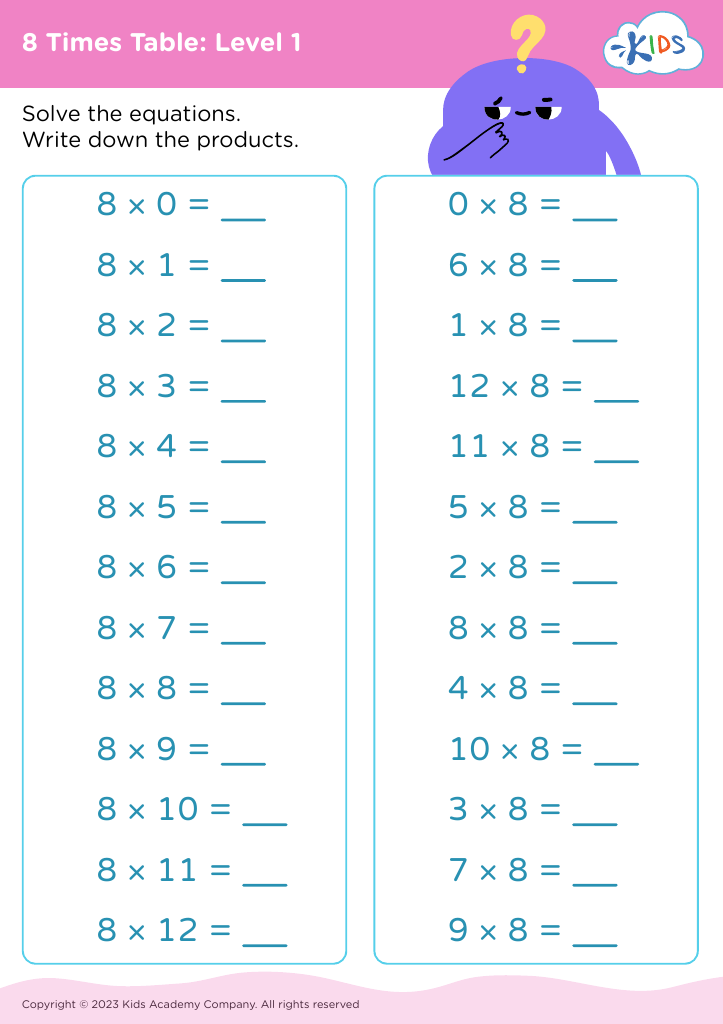
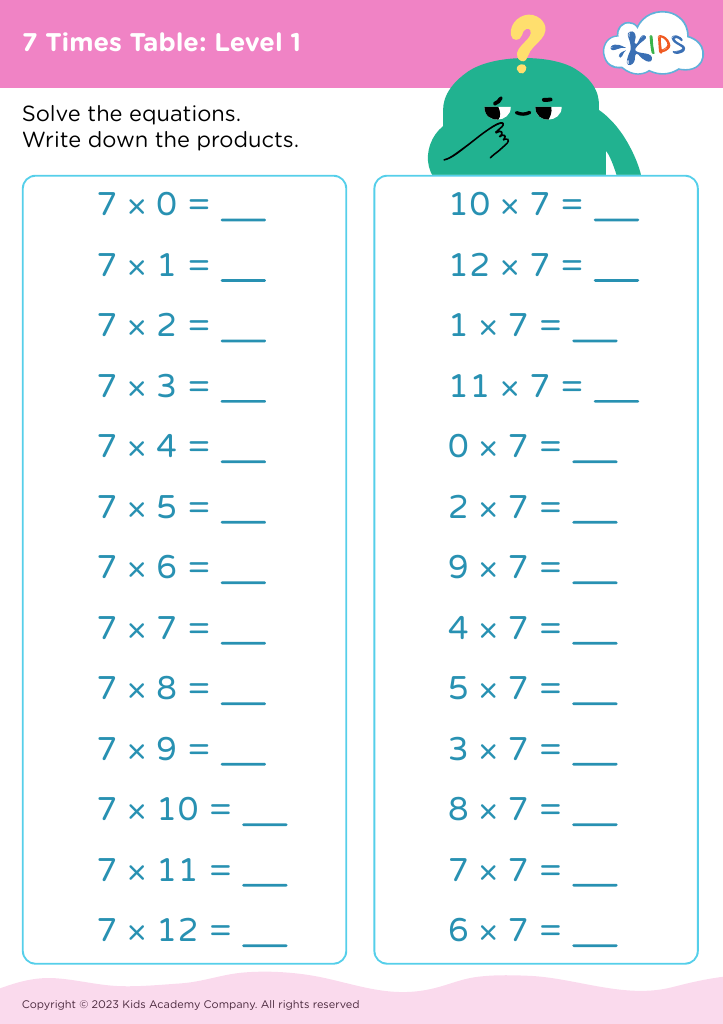
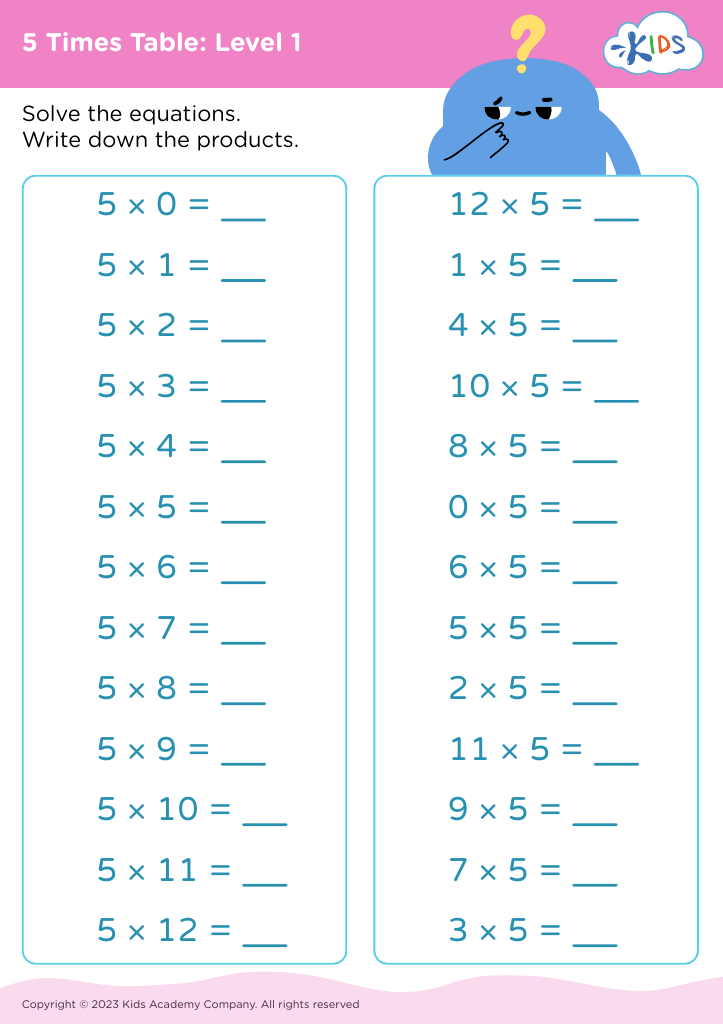
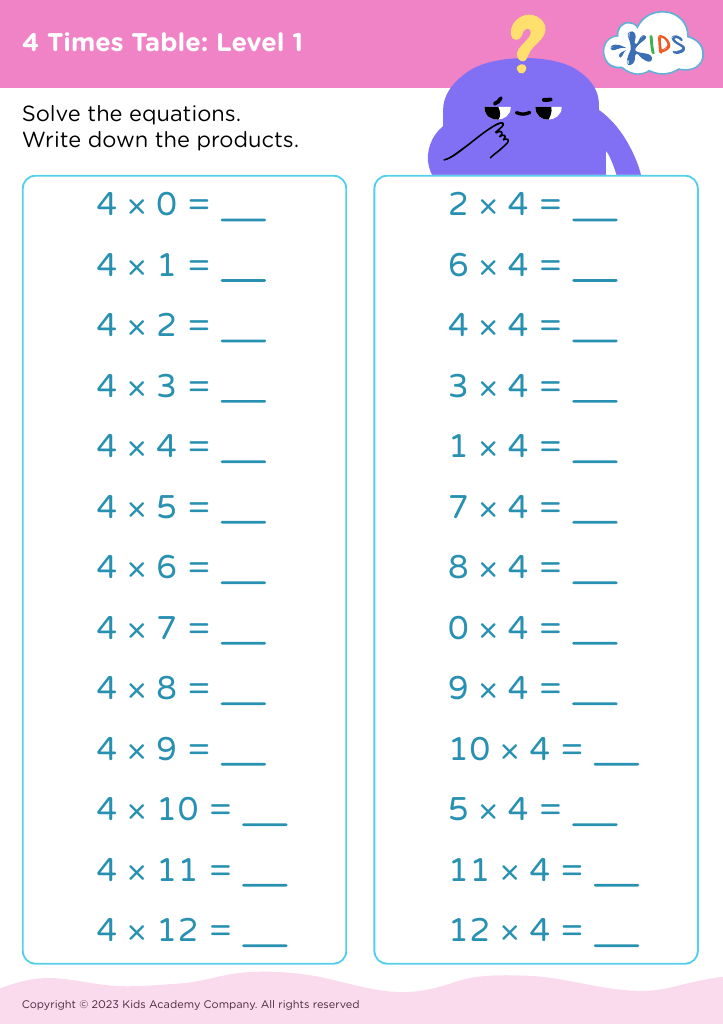
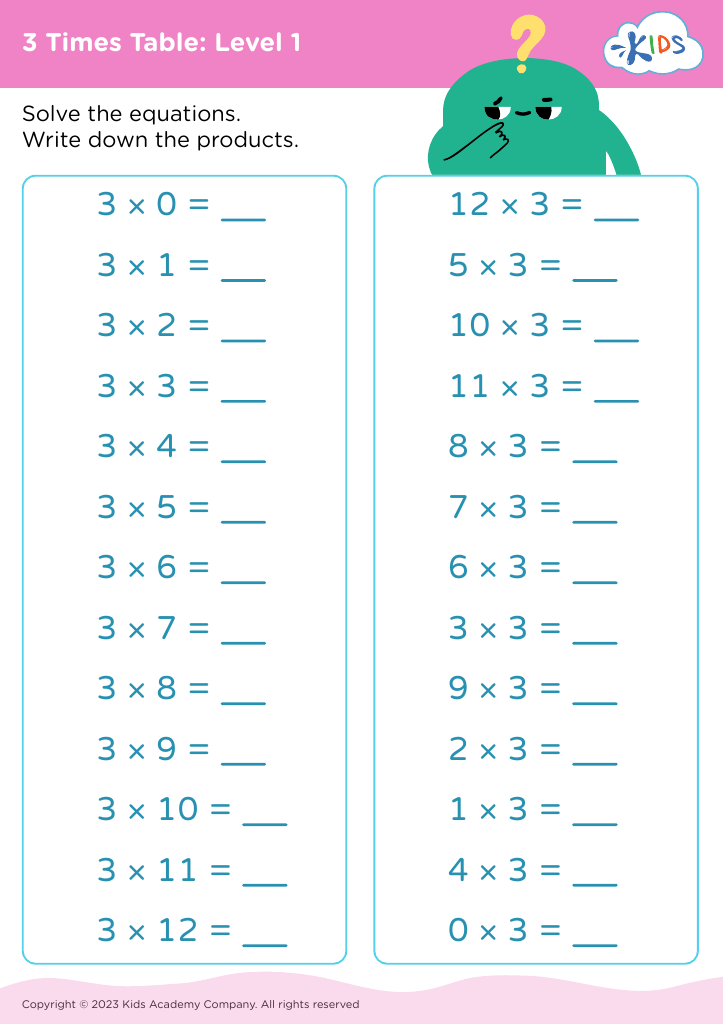
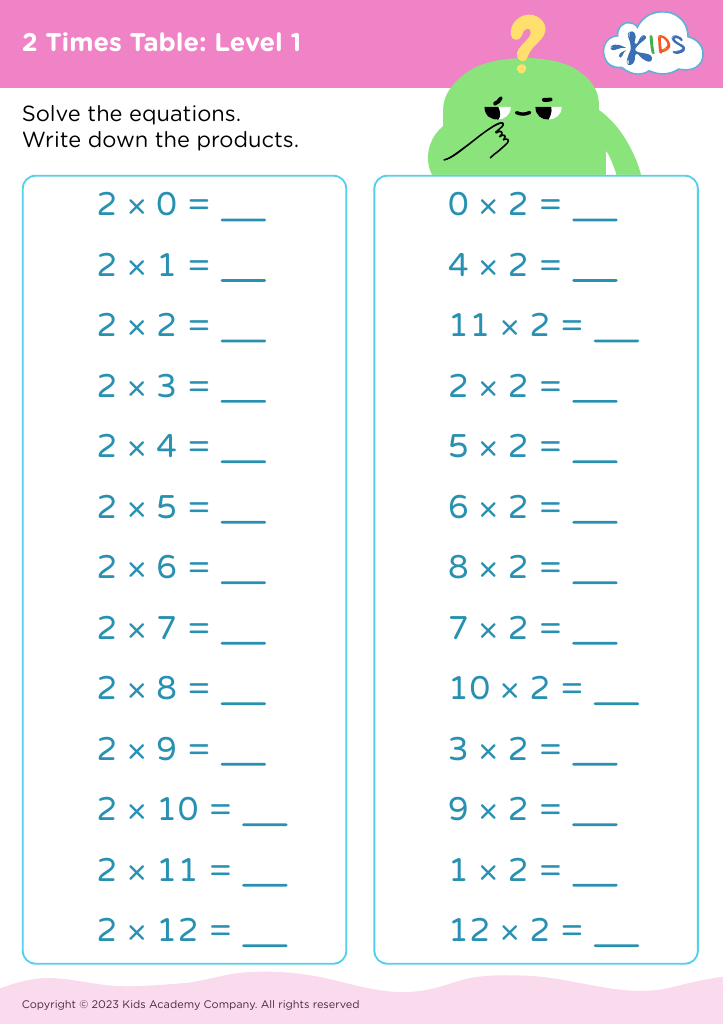
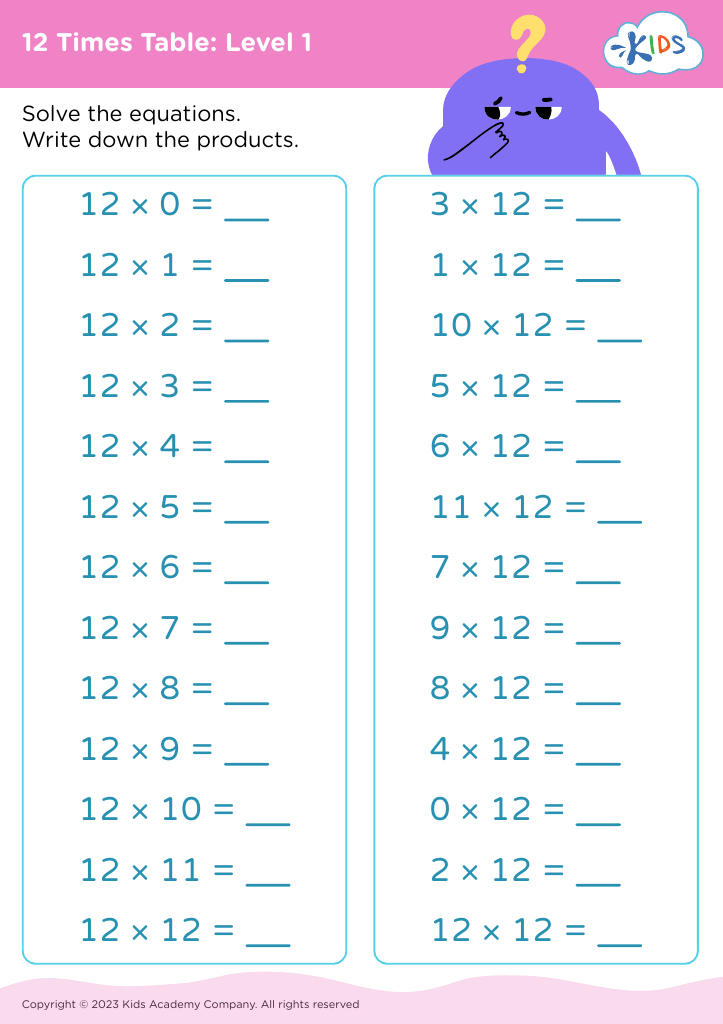
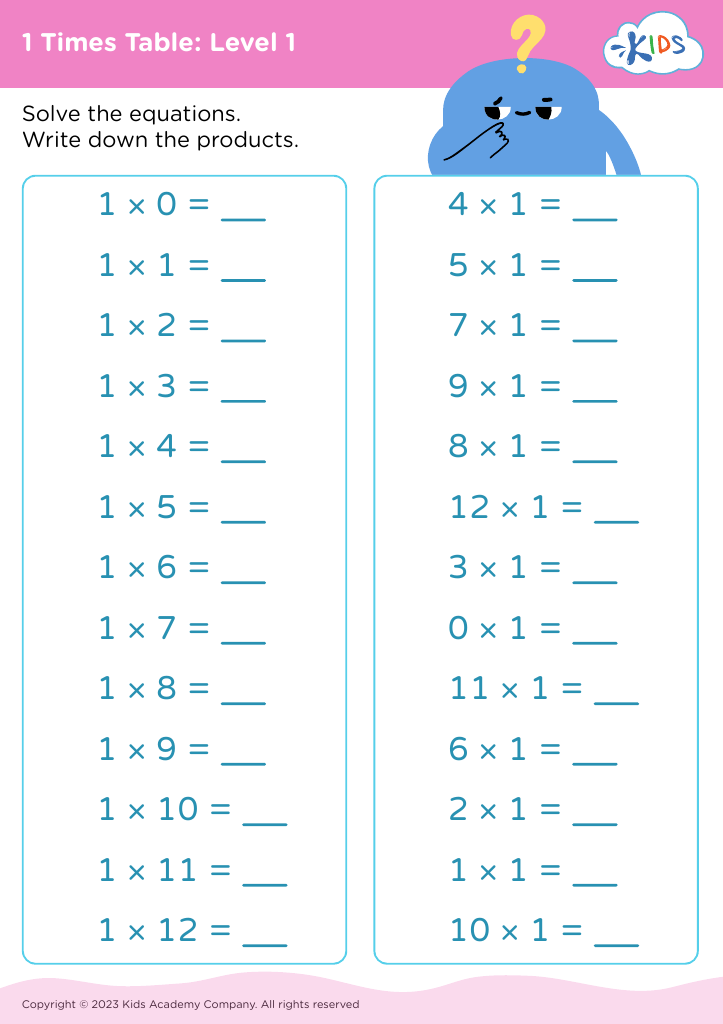
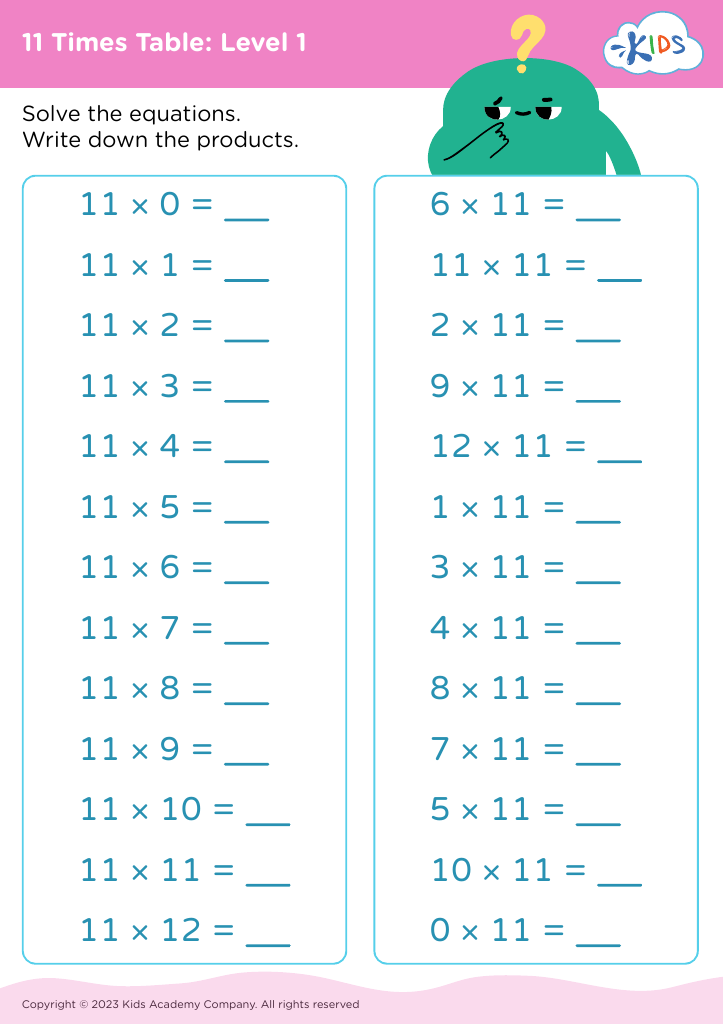


Parents and teachers should prioritize teaching children basic times tables up to 12 for ages 7-9 because it lays a fundamental foundation for future mathematical learning and daily life applications. Mastery of times tables significantly enhances a child's ability to tackle more complex arithmetic operations, including multiplication and division, which are essential components of most math curricula.
Understanding these basic facts aids in developing number sense—an intuitive understanding of numbers and their relationships. This proficiency can increase a child's confidence in tackling math problems, fostering a positive attitude towards the subject. Moreover, instant recall of times tables facilitates quicker mental calculations, which are invaluable skills not just in math classes but also in real-life scenarios such as shopping, cooking, and budgeting.
Employers across various fields often seek individuals with strong numerical skills, making early mastery a stepping stone to future career opportunities. Engaging kids at an early age with fun learning activities and regular practice ensures that they not only grasp these concepts but also retain them over time. Therefore, attention to early proficiency in basic times tables equips children with lifelong skills, helps instill mathematical confidence, and supports their overall academic achievement.








