Shape Recognition Easy Fractions of Shapes Worksheets for Ages 7-9
5 filtered results
-
From - To
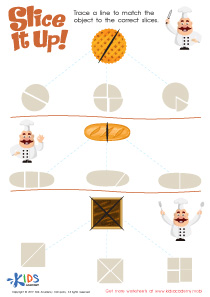
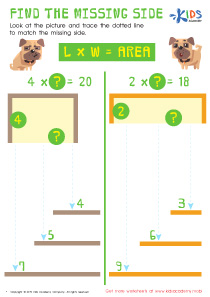
Explore our engaging "Shape Recognition Easy Fractions of Shapes Worksheets" designed for children aged 7-9! These interactive worksheets help students master the essential skill of recognizing shapes while introducing them to the concept of fractions. Through fun activities, kids will learn to identify and divide shapes into equal parts, reinforcing their understanding of both geometry and fractions. Each worksheet is tailored to foster critical thinking and problem-solving skills, making learning enjoyable and effective. Perfect for home or classroom use, these resources will empower young learners to build a strong foundation in math. Dive into shape recognition and fractions today!
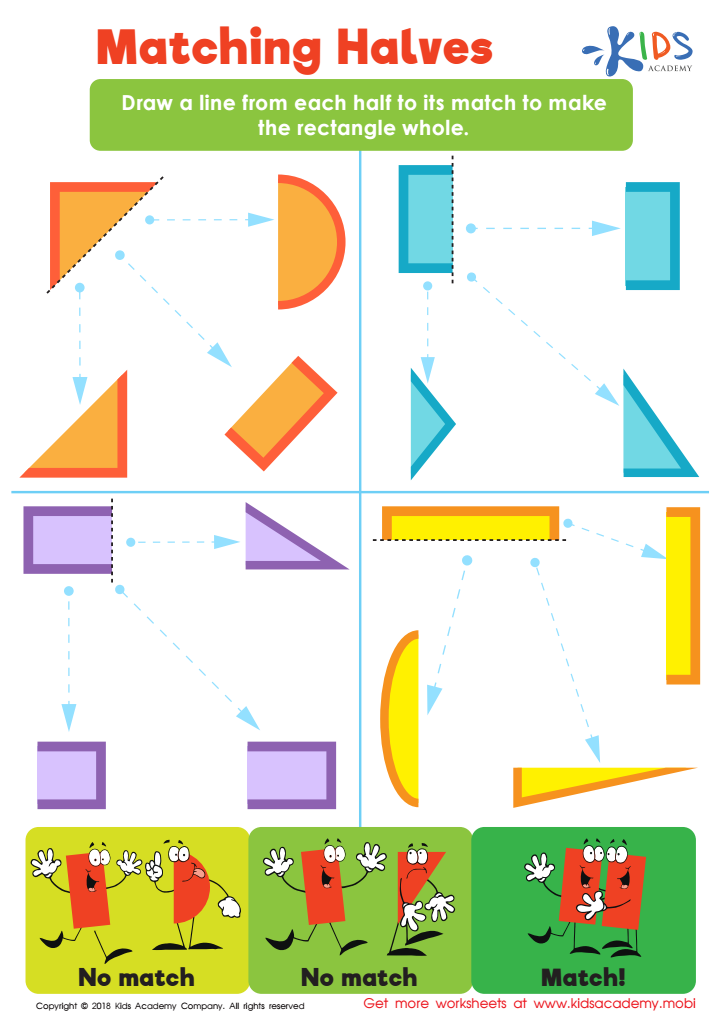
Matching Halves Worksheet
 Assign to My Students
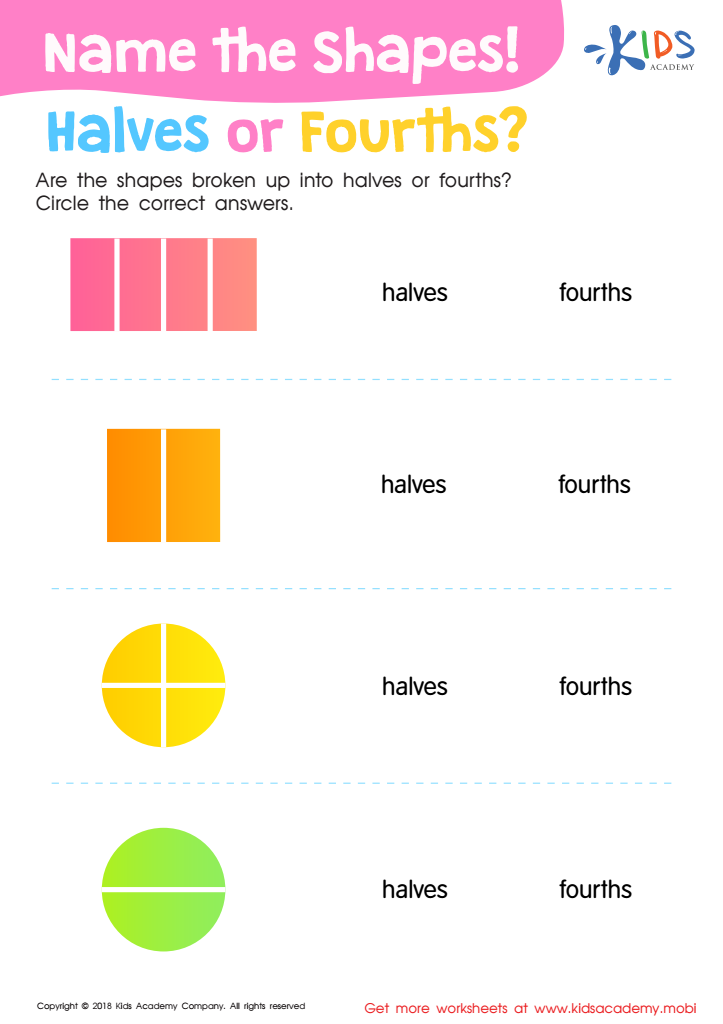
Name the Shapes Halves or Fourths? Worksheet
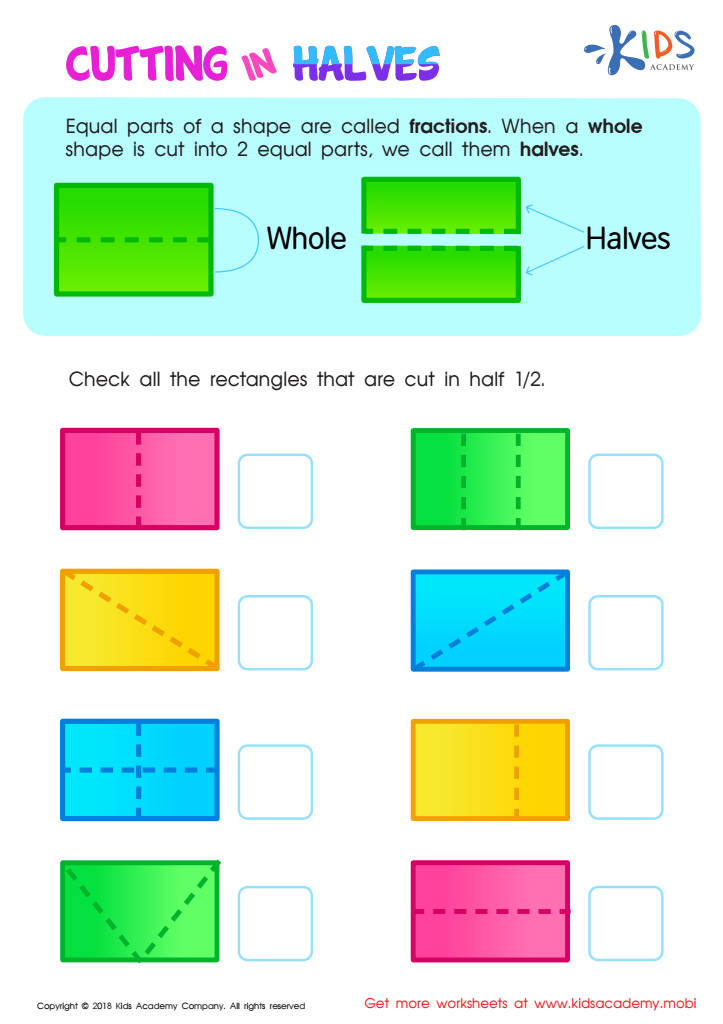
Cutting in Halves Worksheet
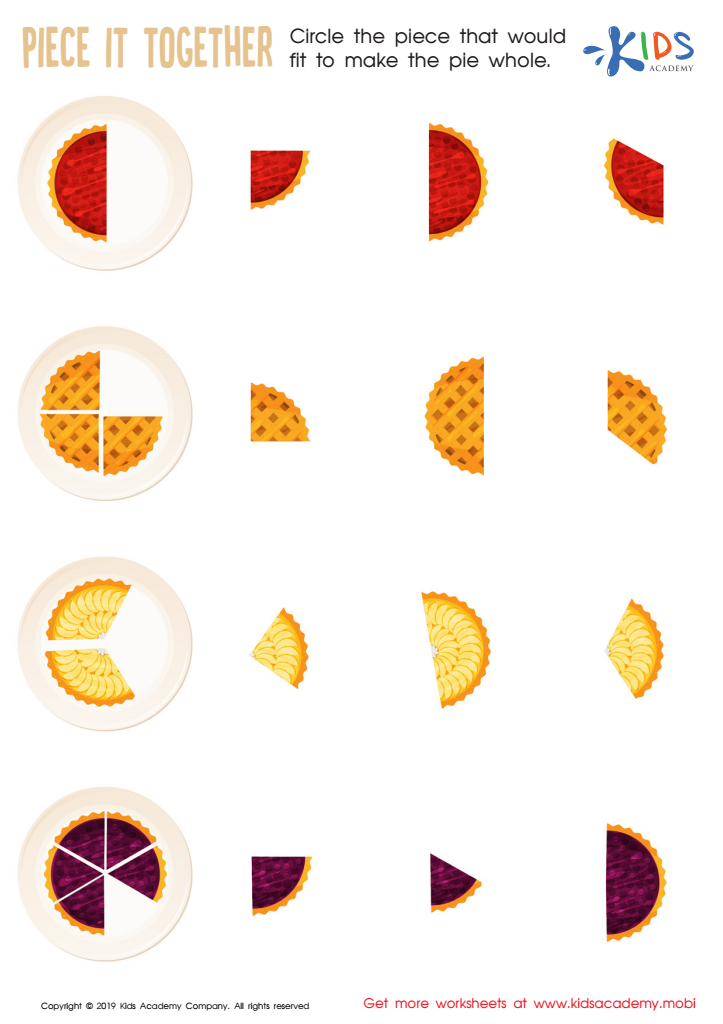
Piece it together Worksheet
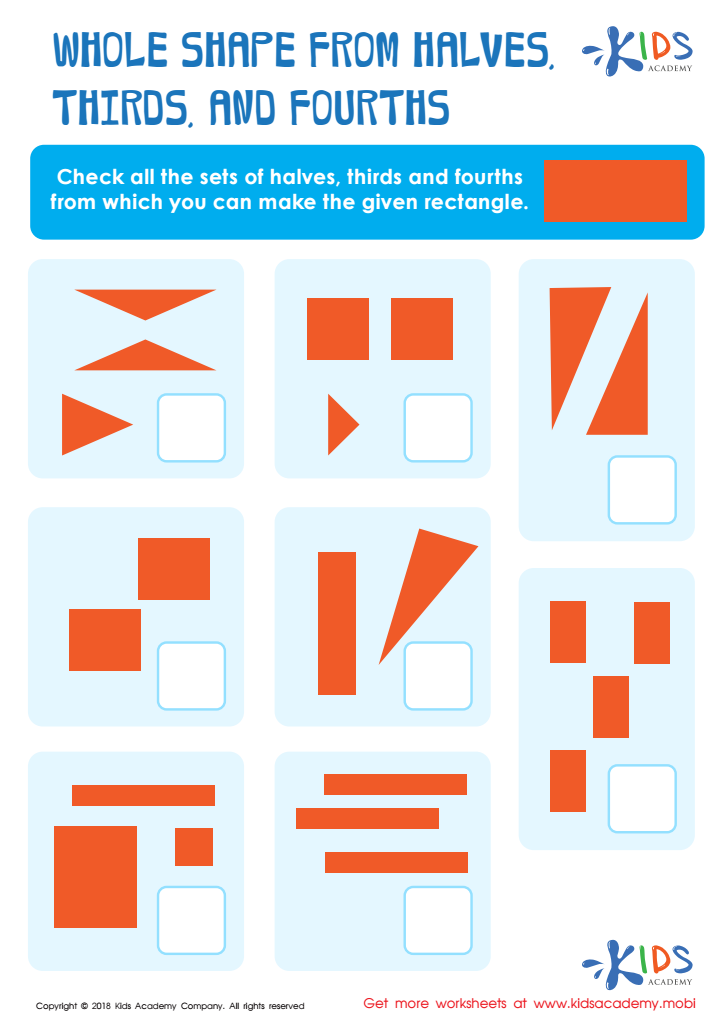
Whole Shape from Halves, Thirds and Fourths Worksheet








Shape recognition and understanding easy fractions of shapes are crucial for children ages 7-9 as they form foundational skills in mathematics and spatial awareness. During this developmental stage, children are increasing their ability to visualize and manipulate shapes, which aids in problem-solving and logical thinking.
Recognizing shapes helps children categorize their surroundings, enabling them to understand objects' characteristics and relationships. This skill enhances their artistic abilities and boosts confidence in mathematics—fields that intertwine with geometry, an essential component of their future studies.
Moreover, easy fractions of shapes introduce children to fundamental concepts of division and proportionality. When children learn to identify and subdivide shapes, they grasp how parts relate to a whole, aiding in the understanding of division and the concept of equal shares. This knowledge serves as a bridge to more complex math concepts in later grades.
By fostering shape recognition and fraction skills early, parents and teachers set the stage for children to succeed in both math and practical applications in everyday life. Understanding these concepts enhances critical thinking, boosts self-esteem, and prepares them for more advanced studies, making it essential for educators and parents to prioritize these learning areas.