Understanding life cycles Easy Reading Worksheets for Ages 7-9
3 filtered results
-
From - To
Explore our engaging "Understanding Life Cycles" easy reading worksheets, designed specifically for children ages 7-9. These interactive materials help young learners grasp the concept of life cycles through captivating stories and detailed illustrations. Students will read about the growth and transformation of various life forms, enhancing their comprehension and vocabulary. Each worksheet fosters critical thinking and encourages curiosity about nature, making learning enjoyable and effective. Perfect for classroom or at-home practice, our resources are aligned with educational standards to support young readers. Download them now to inspire and develop your child’s understanding of the fascinating cycles of life!
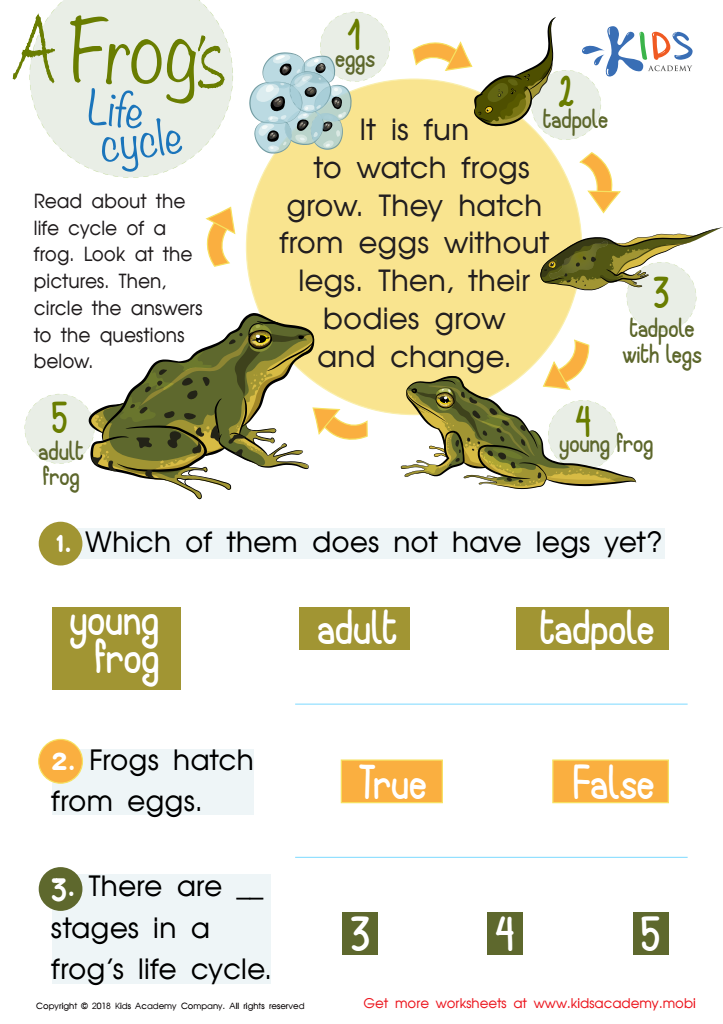
A Frog’s Life Cycle Worksheet
 Assign to My Students
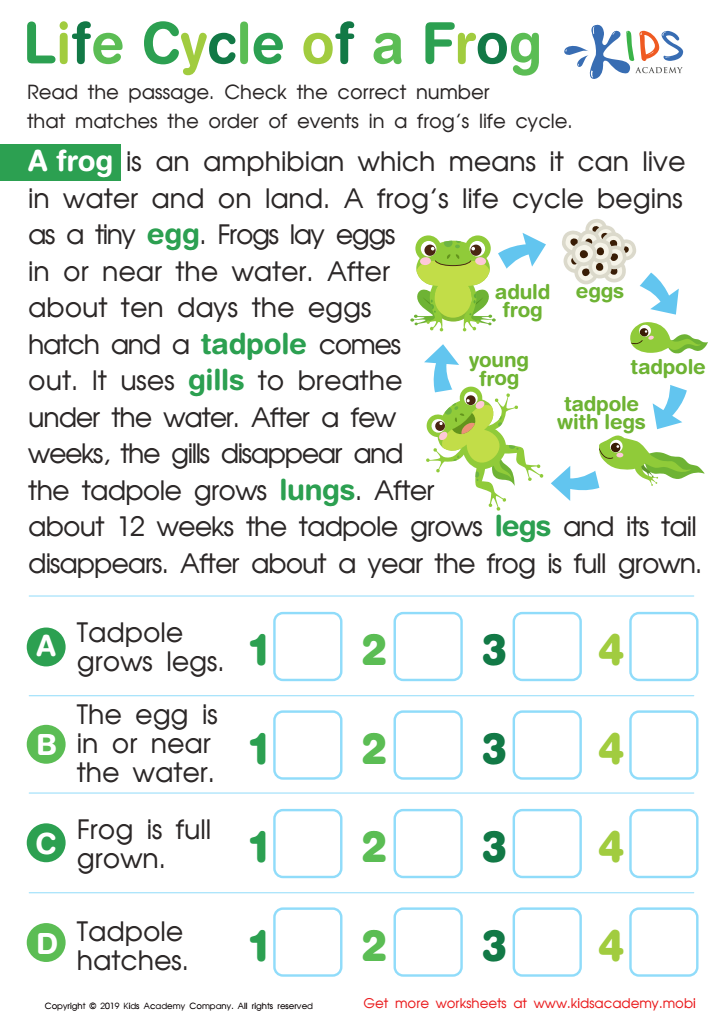
Life Cycle of a Frog Worksheet
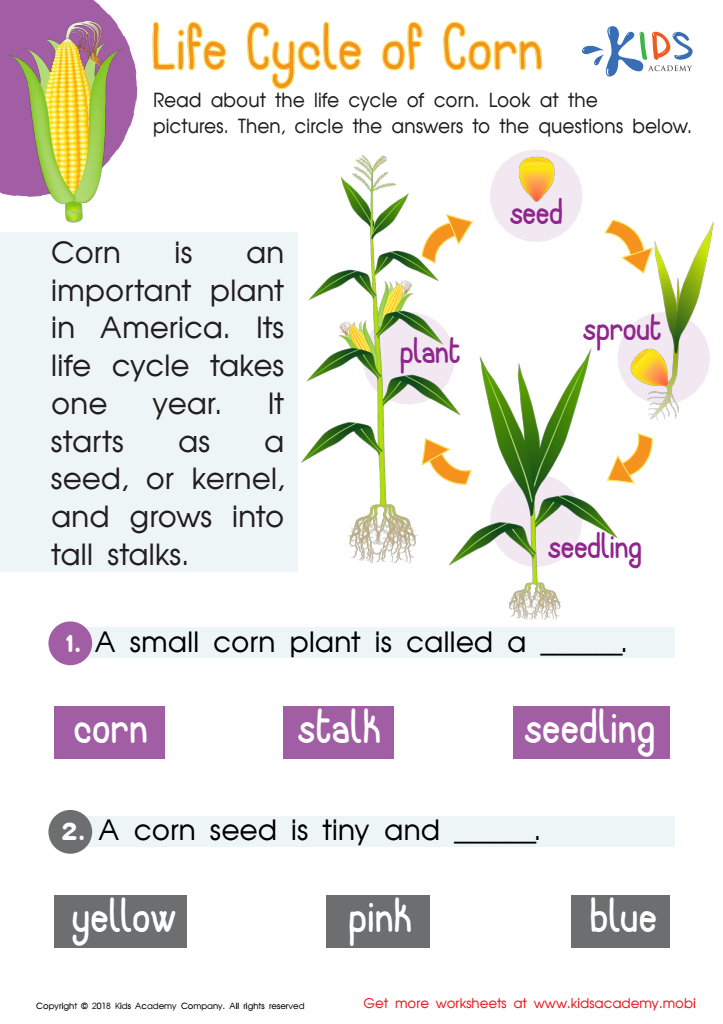
Life Cycle of Corn Worksheet







Understanding life cycles is essential for children ages 7-9, and parents or teachers should prioritize this topic for several reasons. First, life cycles are foundational concepts in biology that help children grasp how living things grow, reproduce, and die. By learning about the life cycles of plants and animals, children gain insights into the natural world, fostering a sense of curiosity and respect for nature.
Additionally, studying life cycles encourages critical thinking. Kids start to recognize patterns, such as the stages of metamorphosis in a butterfly or the growth of a seed into a plant. This knowledge also promotes scientific literacy, preparing them for future learning in various subjects.
Moreover, life cycles underscore the importance of ecosystems and biodiversity. Understanding how different species depend on one another can help children appreciate conservation and environmental stewardship.
Finally, these lessons often inspire creativity. Children can engage in activities like drawing life cycles, gardening, or conducting simple experiments, making learning fun and interactive.
By caring about understanding life cycles, parents and teachers provide valuable knowledge that shapes children's views of the world, encourages responsibility, and nurtures lifelong learners.