Visual discrimination Easy Worksheets
5 filtered results
-
From - To
Welcome to our "Visual Discrimination Easy Worksheets" page! Designed for early learners, these worksheets help children enhance their visual processing abilities by honing skills in distinguishing shapes, colors, and patterns. Engaging and age-appropriate, our easy worksheets not only make learning fun but also promote critical thinking and observational skills critical for academic success. Each worksheet features vibrant illustrations and varied activities to keep young students motivated and eager to learn. Perfect for classroom settings or at-home practice, our resources support educators and parents in fostering essential visual discrimination skills. Dive in and watch your child's confidence and abilities grow!
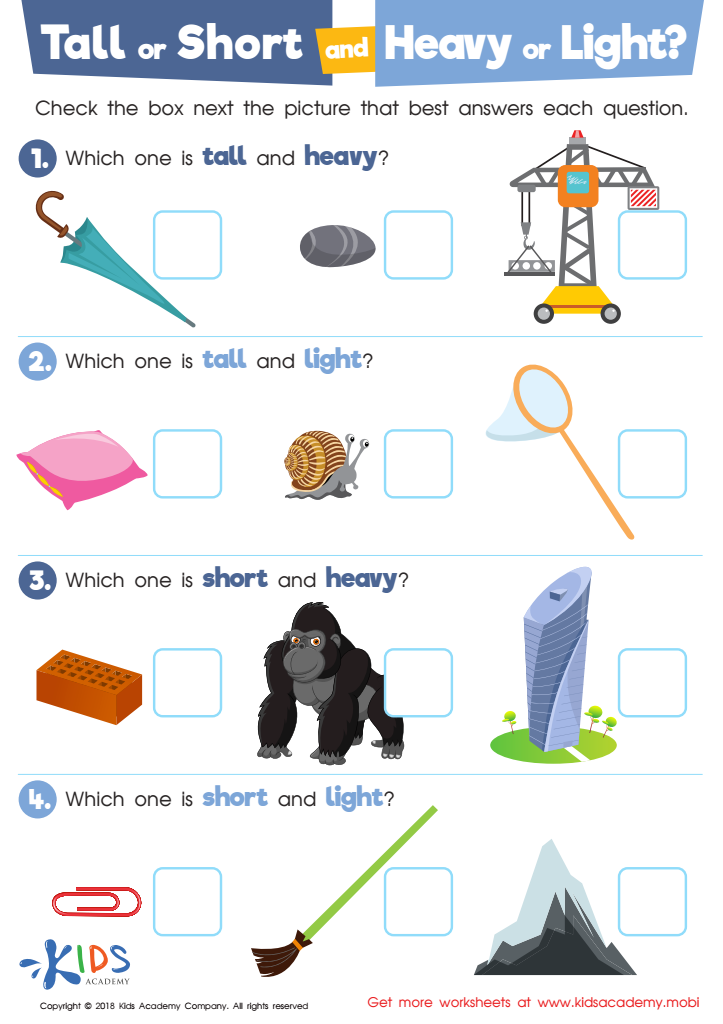
Tall or Short and Heavy or Light? Worksheet
 Assign to My Students
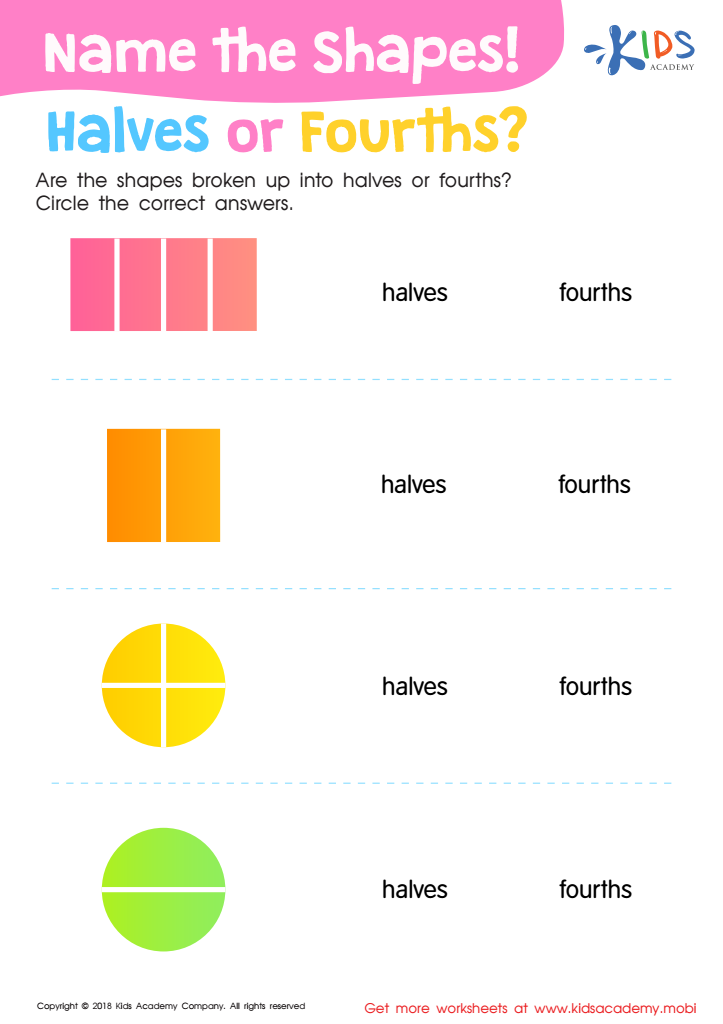
Name the Shapes Halves or Fourths? Worksheet
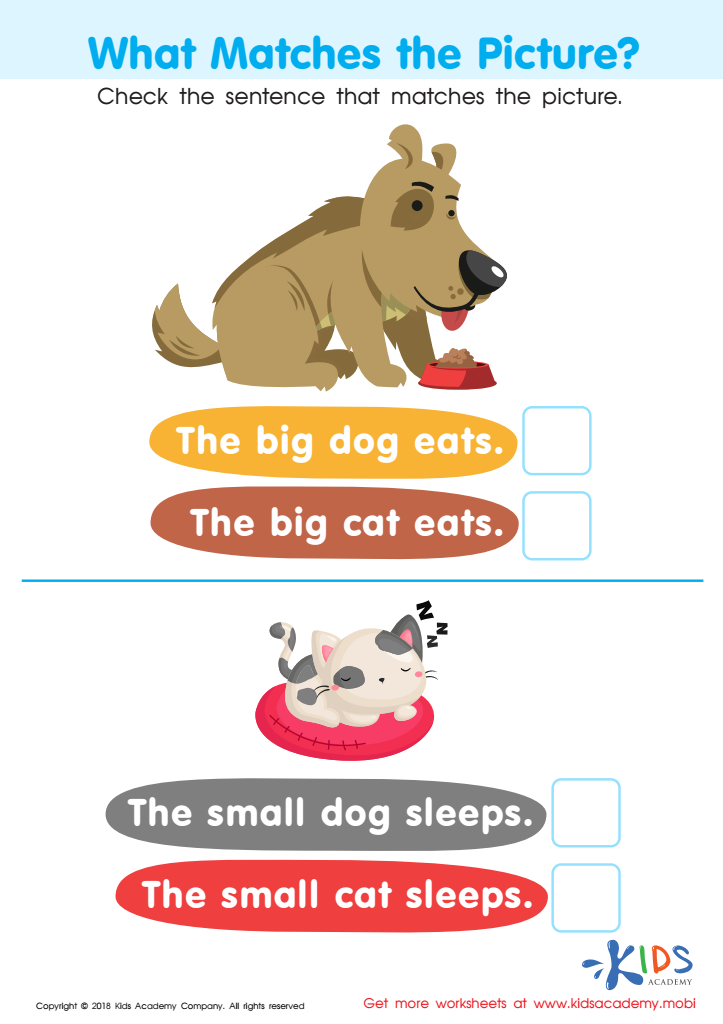
What Matches the Picture? Worksheet
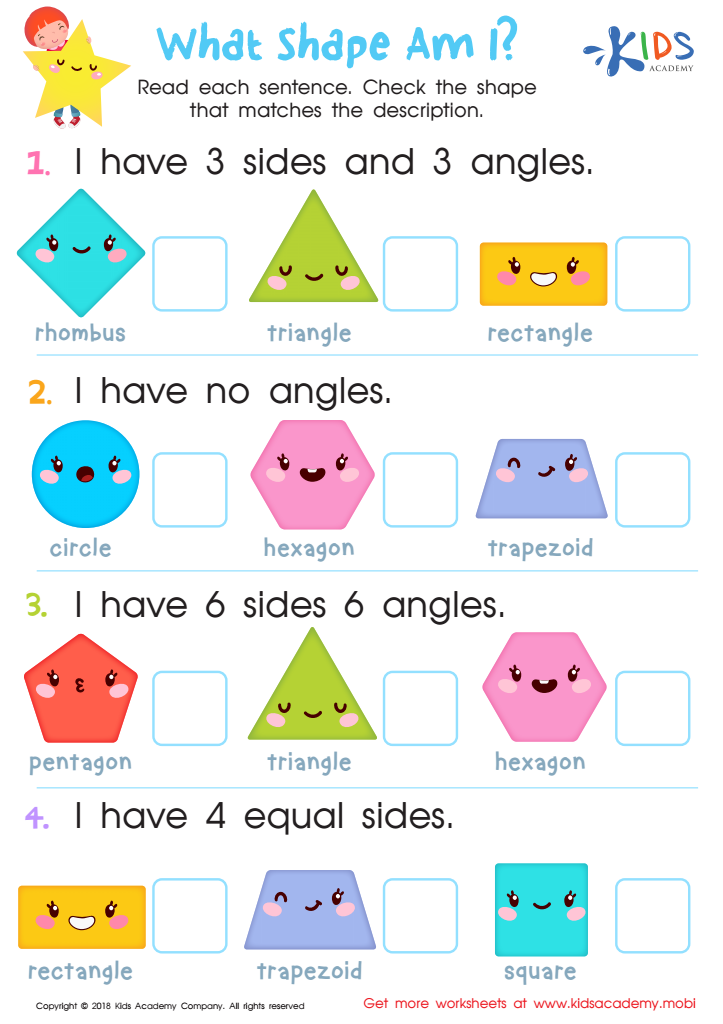
What Shape Am I? Worksheet
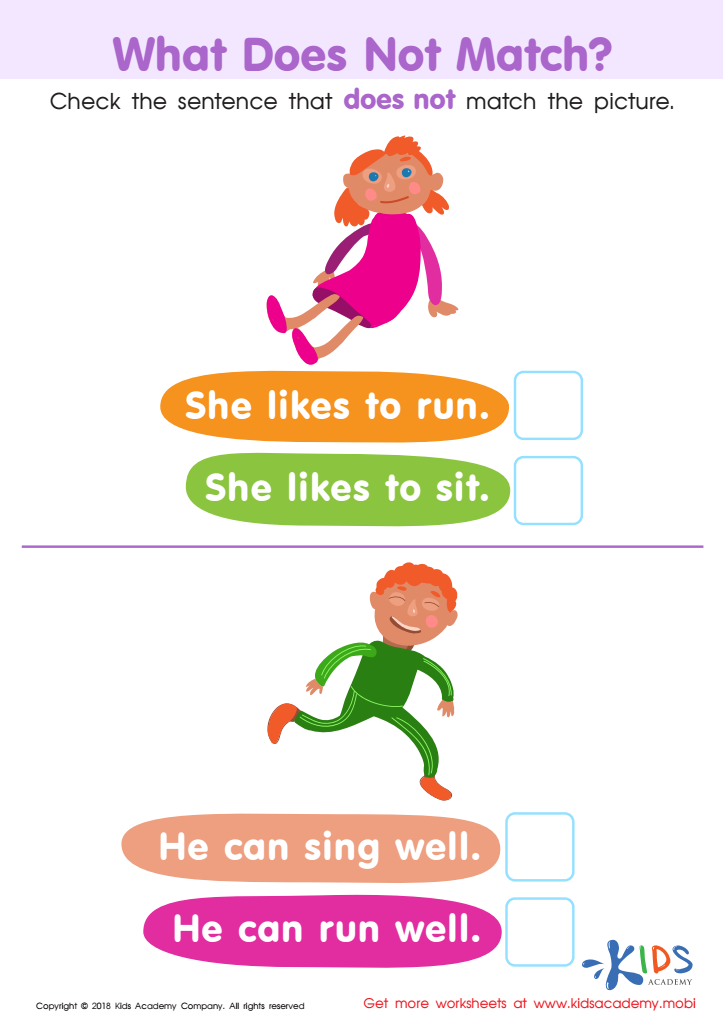
What Does Not Match? Worksheet






Visual discrimination is a crucial skill for early learners and holds significant importance for parents and teachers. It refers to the ability to distinguish between different shapes, colors, sizes, and patterns—a foundational element in children’s cognitive development. Parents and teachers should care about visual discrimination because it directly impacts a child’s learning and everyday functioning.
When children develop strong visual discrimination skills, they can recognize letters and numbers, making vital progress in reading and mathematics. Additionally, this skill helps them differentiate between similar objects, enhancing tasks such as sorting, categorizing, and problem-solving. It lays the groundwork for more complex academic skills in later grades.
Encouraging visual discrimination also fosters creativity and observational skills, essential for artistic endeavors and real-world interactions. Parents and teachers can promote this skill through simple activities like puzzles, matching games, and art projects, turning learning into a fun experience.
Investing time in developing this skill can lead to increased confidence in a child's abilities, positive engagement in learning environments, and improved academic outcomes. Overall, nurturing visual discrimination in early education is a key component to setting children up for future success.








