Problem-Solving Skills Easy Addition Worksheets
9 filtered results
-
From - To
Discover our engaging "Problem-Solving Skills Easy Addition Worksheets," designed to make learning math enjoyable for young learners! These worksheets provide a fun way for children to explore addition through problem-solving scenarios that stimulate critical thinking. Each activity promotes basic addition skills while encouraging students to analyze, strategize, and arrive at solutions independently. Perfect for classrooms or home practice, our resource fosters a strong mathematical foundation and confidence in early learners. Equip your students with essential problem-solving techniques and watch them thrive as they tackle addition challenges with enthusiasm. Start their learning journey today—math success is just a worksheet away!
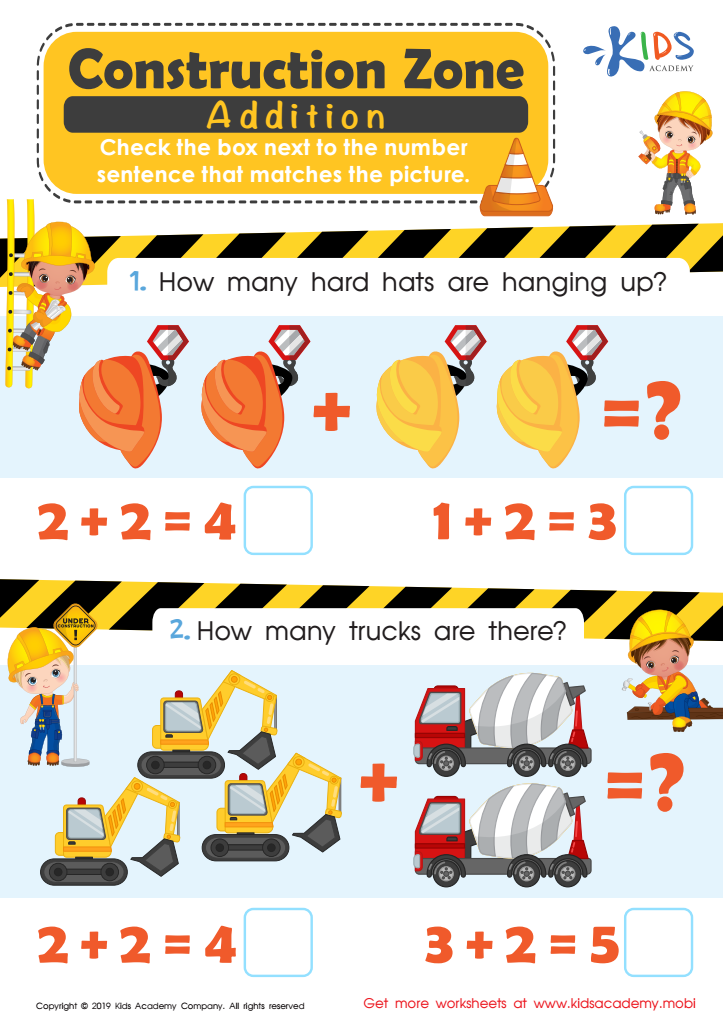
Construction Zone Addition Worksheet
 Assign to My Students
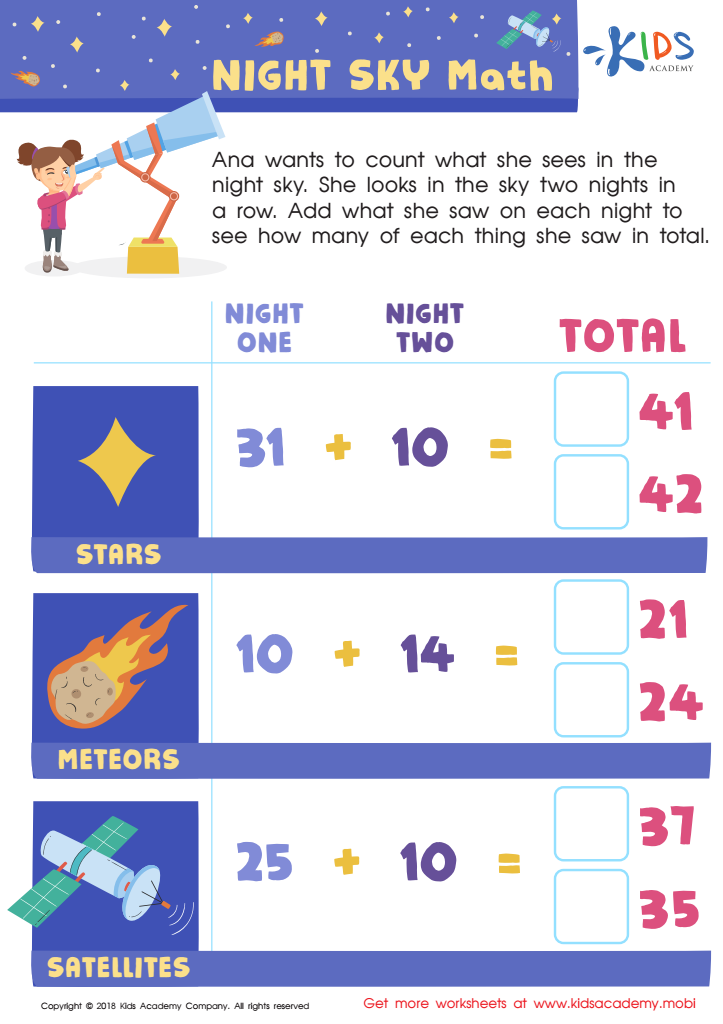
Night Sky Math Worksheet
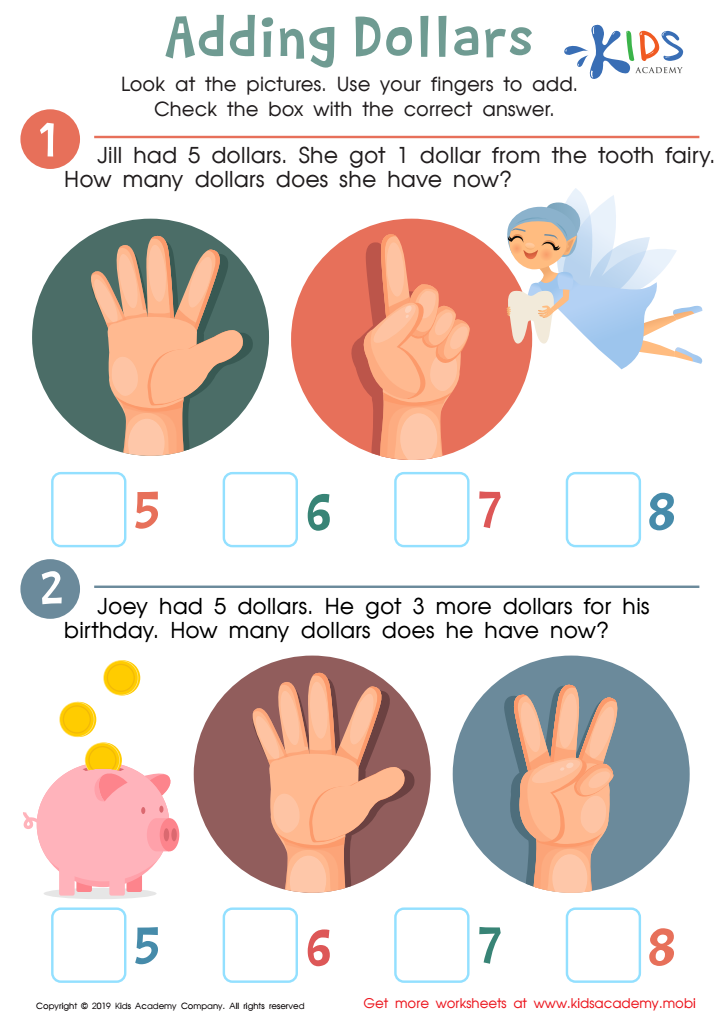
Tooth Fairy Addition Worksheet
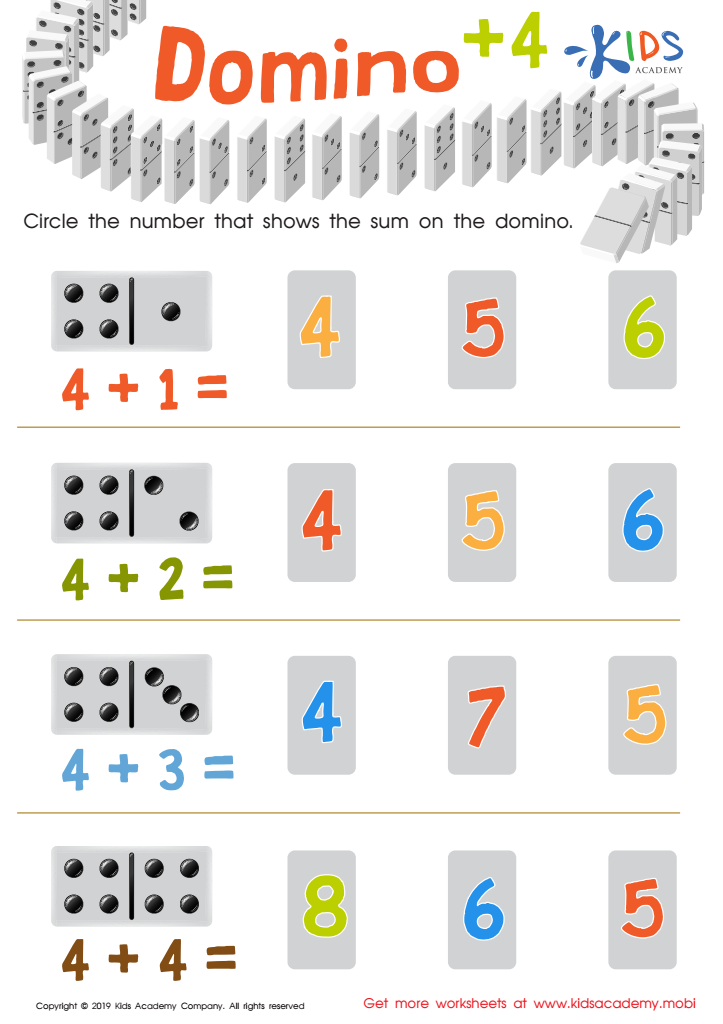
Domino +4 Worksheet
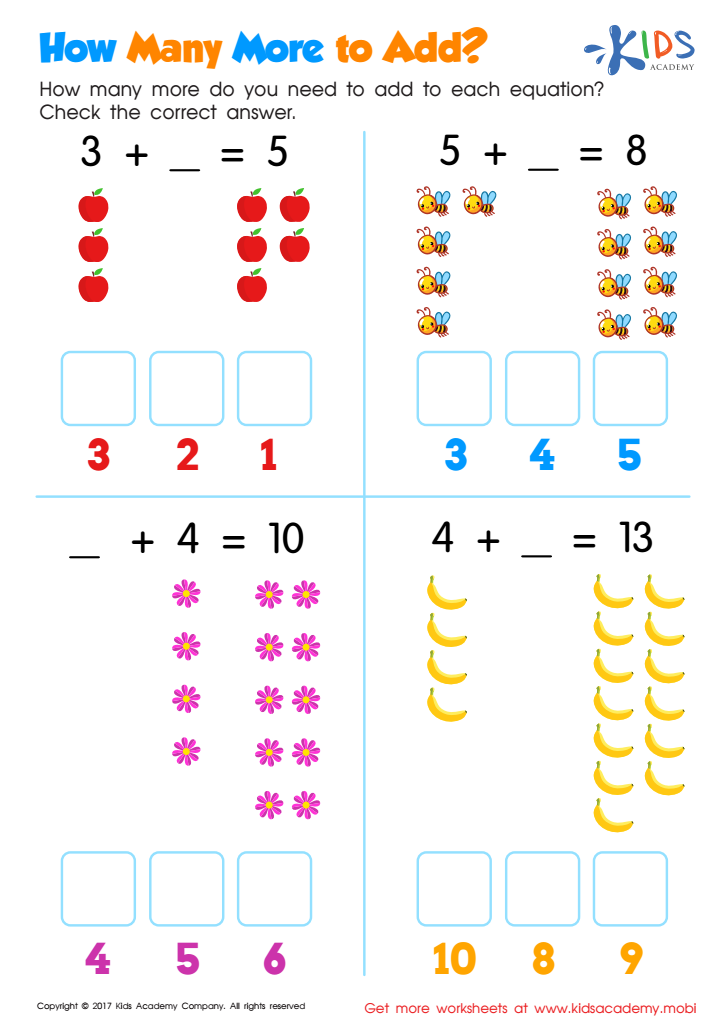
How Many More to Add Worksheet
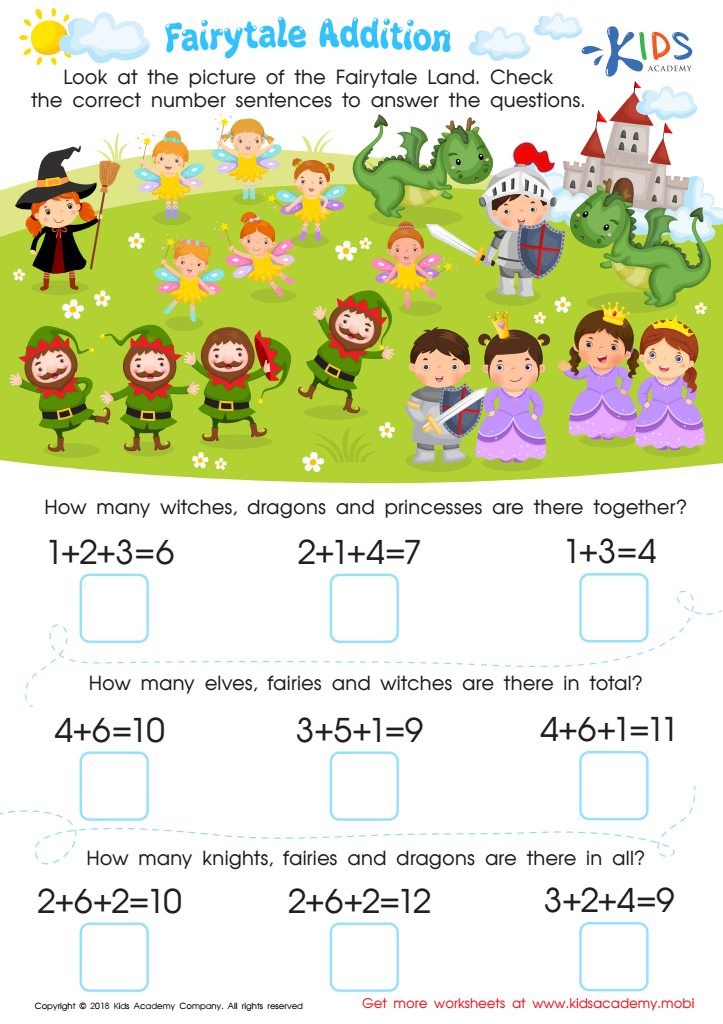
Fairytale Addition Worksheet
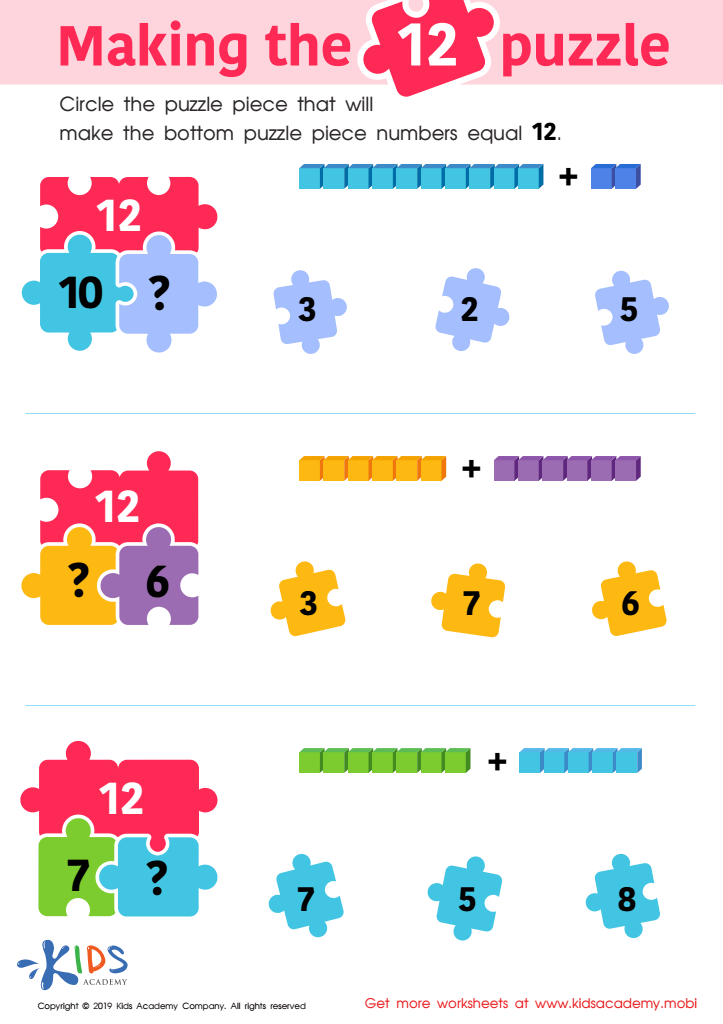
Making the 12 Puzzle Worksheet

Haystack Steps Worksheet
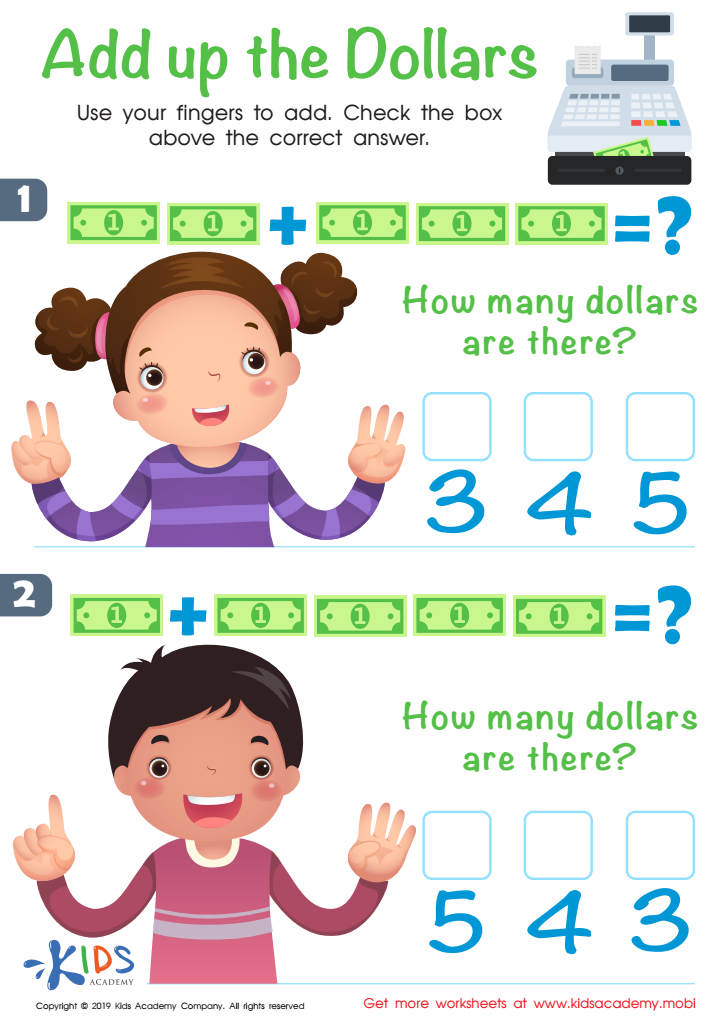
Add up the Dollars Worksheet








Parents and teachers should prioritize problem-solving skills related to easy addition because these foundational abilities equip children with critical analytical skills essential for lifelong learning. Mastering simple addition not only enhances a child's numerical fluency but also fosters logical thinking and resilience. When children engage in problem-solving, they learn to approach challenges methodically, breaking them down into manageable parts. This process builds confidence as they discover that they can find solutions, which encourages a growth mindset.
Additionally, strong problem-solving skills in math translate into practical life applications. For example, children learn to make informed decisions when comparing prices, understanding quantities, or planning activities, which are relevant in everyday situations. Moreover, these skills recognize the interconnectedness of mathematics with other subjects, such as science and economics, nurturing well-rounded individuals.
Beyond academic success, fostering problem-solving abilities in children supports social-emotional development. Collaborative problem-solving encourages communication, teamwork, and respect for diverse perspectives. Lastly, an early appreciation for math can boost a child's interest in STEM (science, technology, engineering, and mathematics) fields, opening doors for future opportunities. Therefore, both parents and teachers play a crucial role in cultivating these essential skills in young learners.








