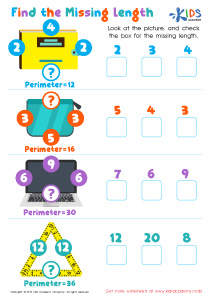
Reading comprehension Easy Subtraction Worksheets
3 filtered results
-
From - To
Enhance your child's reading and math skills with our Reading Comprehension Easy Subtraction Worksheets. Designed for early learners, these worksheets combine simple subtraction problems with engaging text passages. Students practice reading comprehension while solving math questions, reinforcing their understanding of both subjects. Each worksheet offers fun, relatable scenarios that captivate young minds and make learning enjoyable. Ideal for classroom or home use, these printables ensure kids build a solid foundation in reading and math simultaneously. Encourage your students to read carefully and think critically as they work through these structured, teacher-approved activities. Download now and watch their skills flourish!
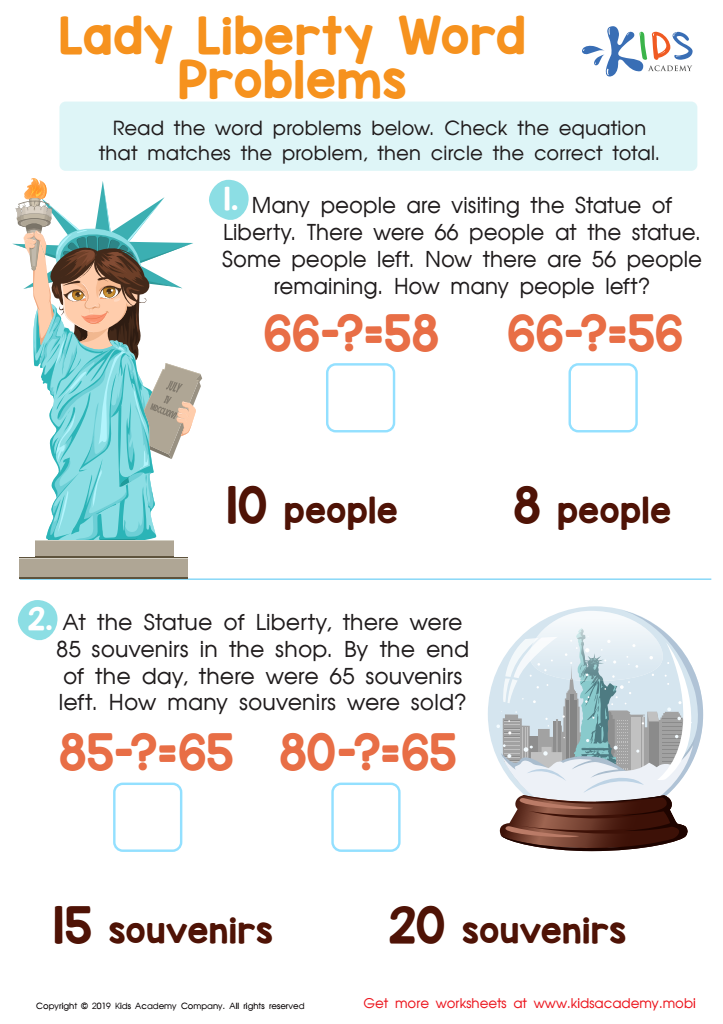
Lady Liberty Worksheet
 Assign to My Students
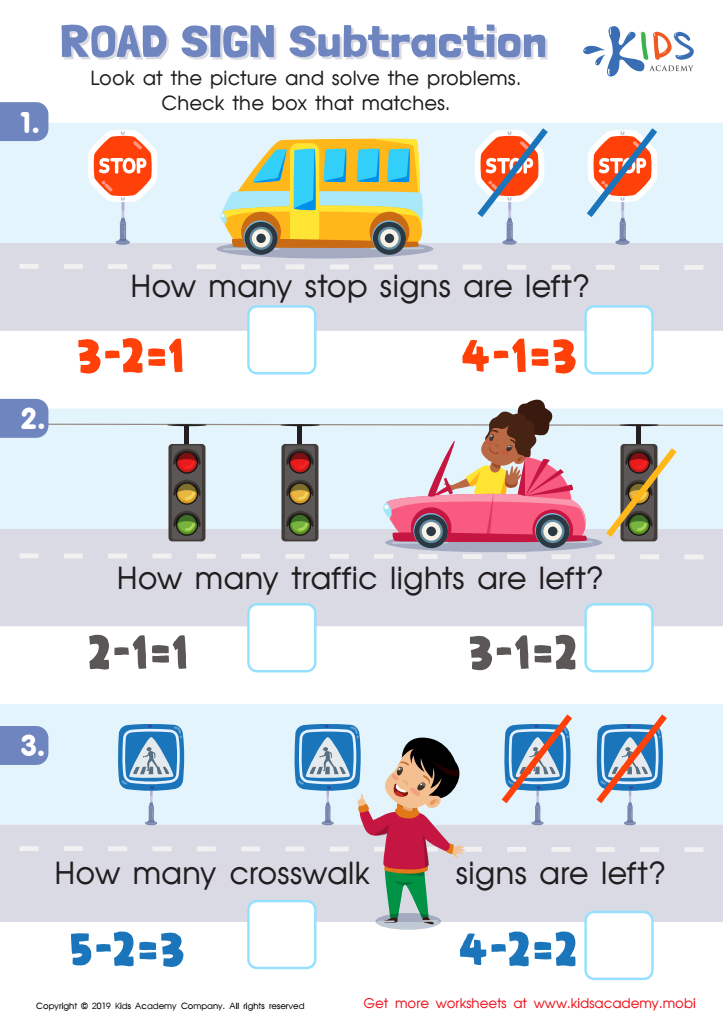
Road Sign Subtraction Worksheet
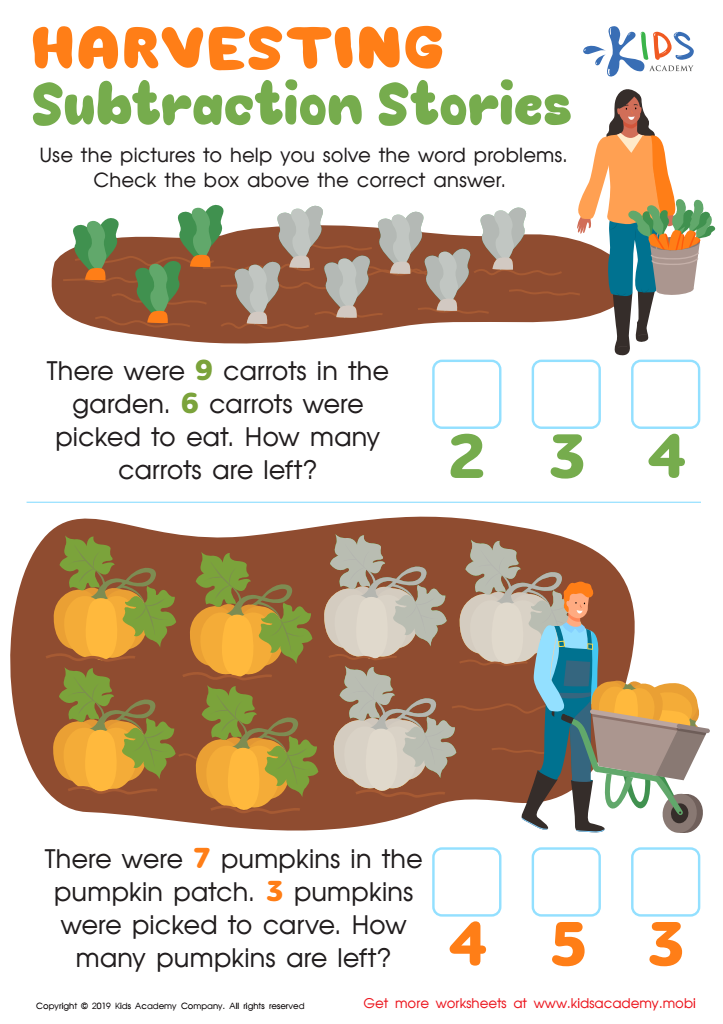
Harvesting Subtraction Stories Worksheet








Reading comprehension and easy subtraction are cornerstones of early education, and parents and teachers should give them considerable attention for several reasons. First, reading comprehension is not just about understanding words on a page; it's a critical skill that impacts a child's entire academic journey and life beyond the classroom. When a child comprehends what they read, they can follow instructions, grasp new concepts, and engage meaningfully with the material across all subjects, from science to social studies. This skill fosters critical thinking and creativity, allowing children to ask questions, form opinions, and make connections.
Easy subtraction, on the other hand, lays the foundation for more complex mathematical concepts. Mastering basic subtraction helps children develop logical thinking and problem-solving skills that apply not just in math, but in everyday situations like managing time and money or simply sharing resources equally. Confidence in these basic arithmetic skills often boosts overall confidence, making children more willing to tackle challenging problems in the future.
In essence, strong reading comprehension and a solid grasp of basic subtraction set the stage for academic success and practical life skills. These fundamental abilities reinforce each other, as problem-solving often requires understanding written instructions and scenarios. By focusing on these crucial areas, parents and teachers equip children with the tools they need for a brighter future.