Addition Practice Easy Word Problems Worksheets
6 filtered results
-
From - To
Welcome to our "Addition Practice Easy Word Problems Worksheets!" Designed for young learners, these engaging, printable worksheets help children develop their addition skills through relatable and fun scenarios. Each problem encourages critical thinking while reinforcing fundamental math concepts. Perfect for home or classroom use, our worksheets feature colorful illustrations and easy-to-understand language to make learning enjoyable. Watch your students enhance their problem-solving abilities and build confidence in their math skills. Whether they're counting snacks, toys, or pencils, our easy word problems will captivate their interest and support their learning journey. Download and start practicing today!
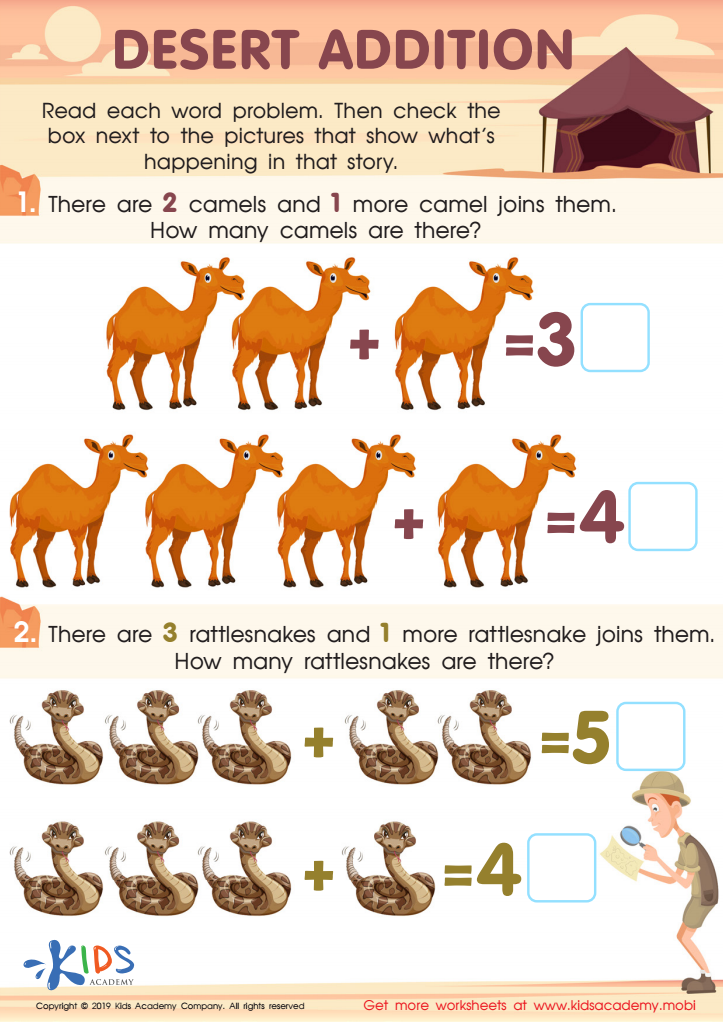
Desert Addition Worksheet
 Assign to My Students
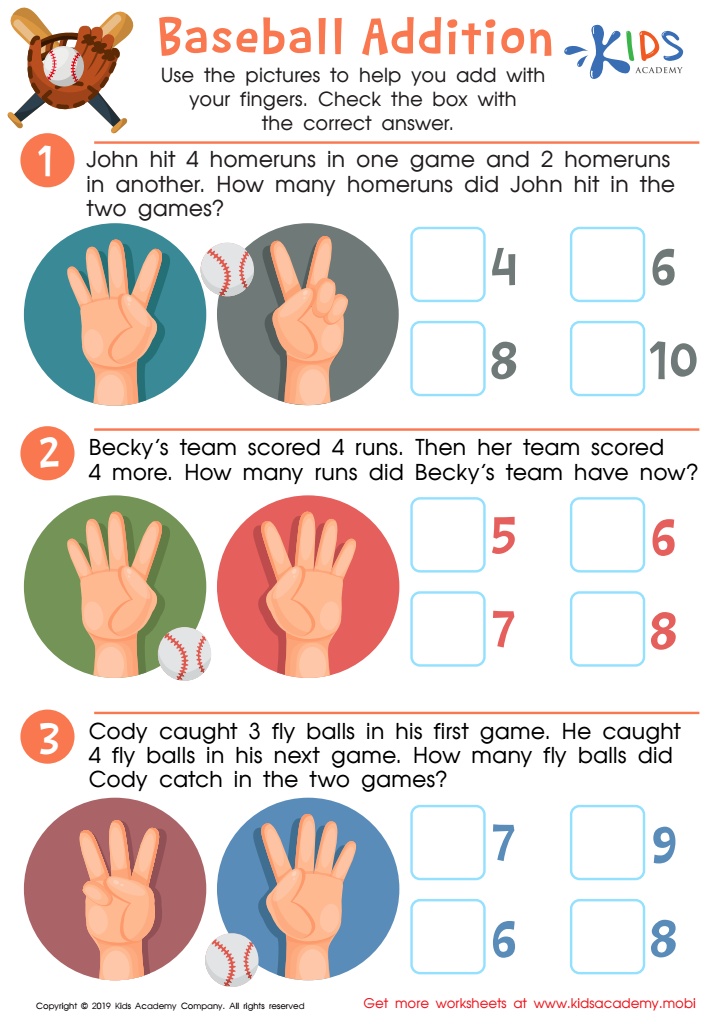
Baseball Addition Worksheet
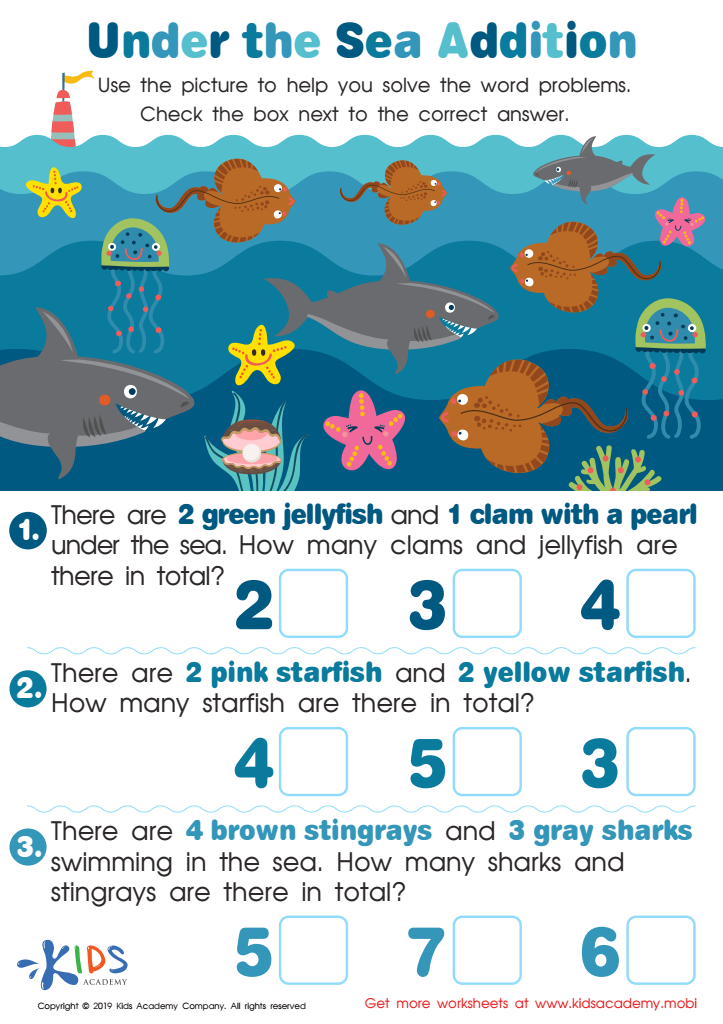
Under the Sea Addition Worksheet
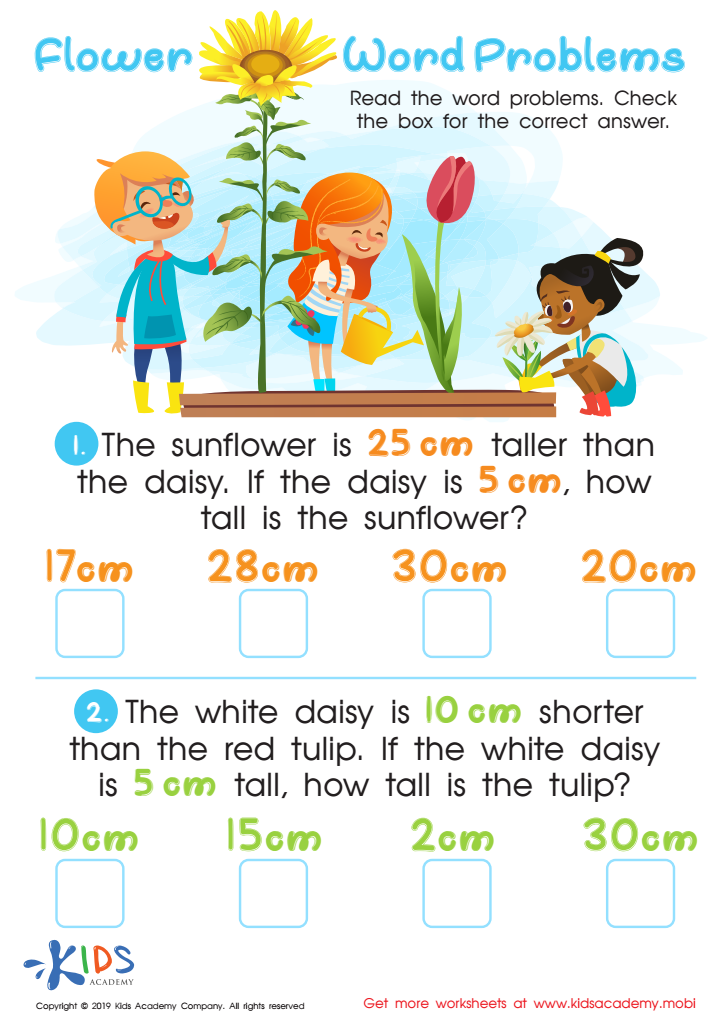
Flower Word Problems Worksheet
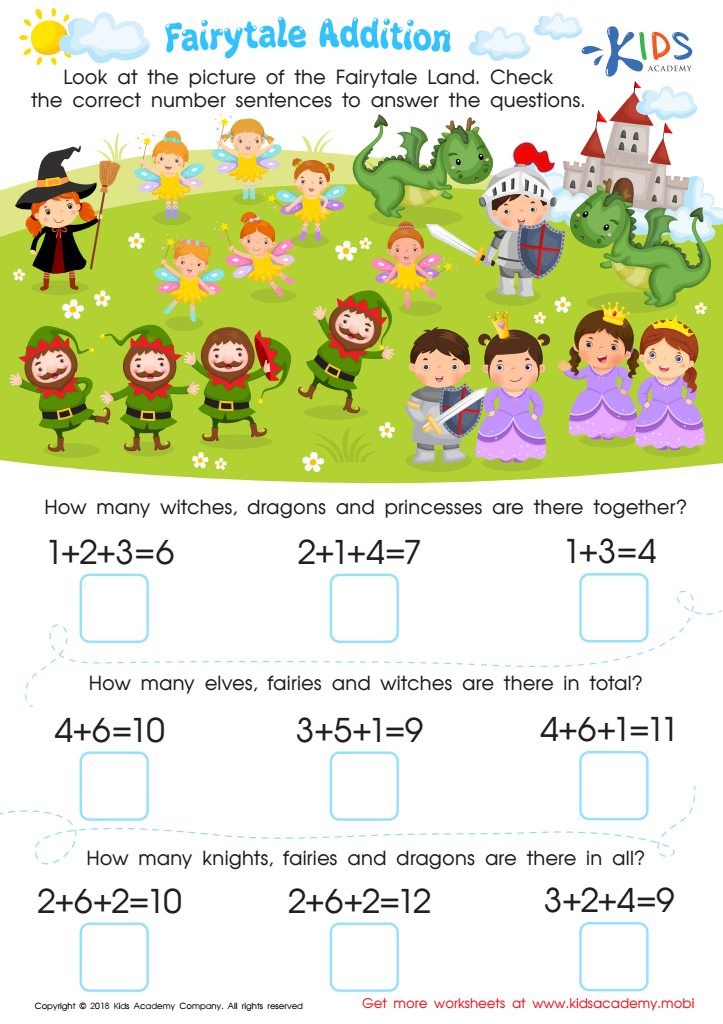
Fairytale Addition Worksheet
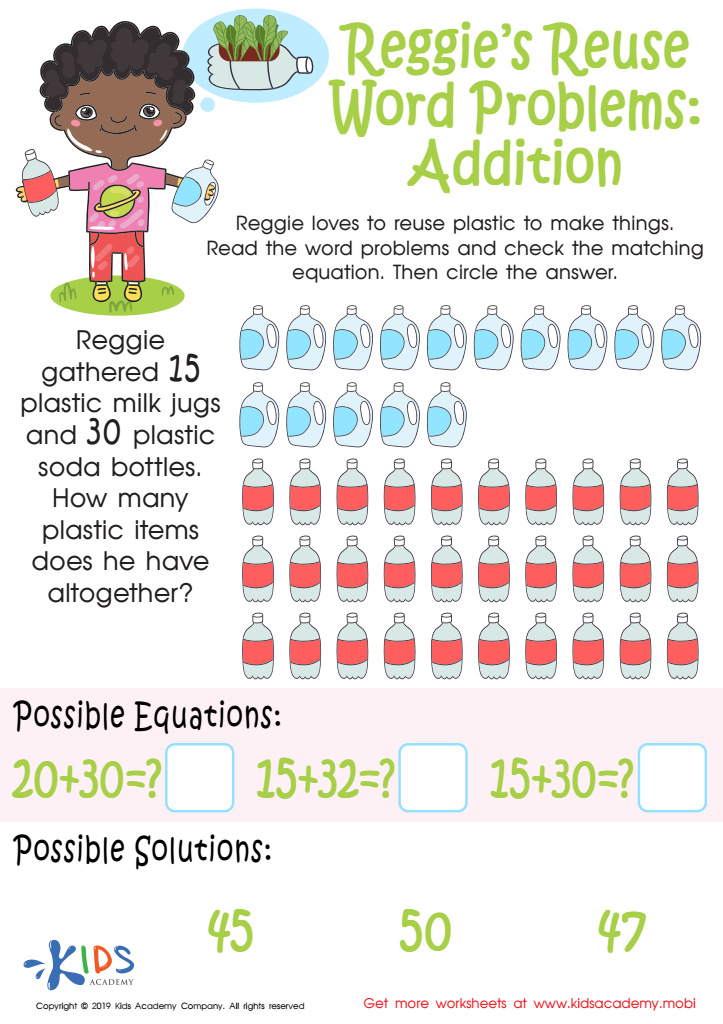
Reggie's Reuse Word Problems: Addition Worksheet








Parents and teachers alike should prioritize addition practice through easy word problems because these activities go beyond just basic arithmetic. Engaging with word problems enhances critical thinking skills as children learn to translate real-life situations into mathematical equations. This practice encourages comprehension and reasoning abilities, helping students make connections between math concepts and everyday life.
Additionally, easy word problems offer an engaging way to build confidence in early learners. When children encounter relatable scenarios, such as sharing toys or counting apples, they become more motivated to solve problems, fostering a positive attitude towards math. This foundational skill is crucial for their academic success and for developing a lifelong love for learning.
Moreover, incorporating word problems helps identify students' understanding and areas where they may struggle. Teachers can tailor their instruction accordingly, ensuring each child receives targeted support. Parents can reinforce this at home, creating a collaborative environment that emphasizes the importance of math skills.
Ultimately, addition practice using easy word problems lays the groundwork for future mathematical abilities, enabling students to tackle more complex concepts as they progress in their education. Investing time in this practice cultivates not only competence but also confidence in young learners.








