Vocabulary expansion Easy Reading Fiction Worksheets
5 filtered results
Difficulty Level
Grade
Age
-
From - To
Subject
Activity
Standards
Boost your child's language skills with our "Vocabulary Expansion Easy Reading Fiction Worksheets"! Designed for young learners, these worksheets feature engaging stories that ignite imagination while enhancing vocabulary. Each exercise guides students through fun activities that promote word recognition, context clues, and comprehension. Our user-friendly layout makes it easy for parents and teachers to incorporate these resources into their lesson plans. Ideal for both home and classroom use, these worksheets cultivate a love for reading and language, helping children express themselves confidently. Encourage your child's love for fiction while expanding their vocabulary with our thoughtfully crafted materials today!
Favorites
With answer key
Interactive
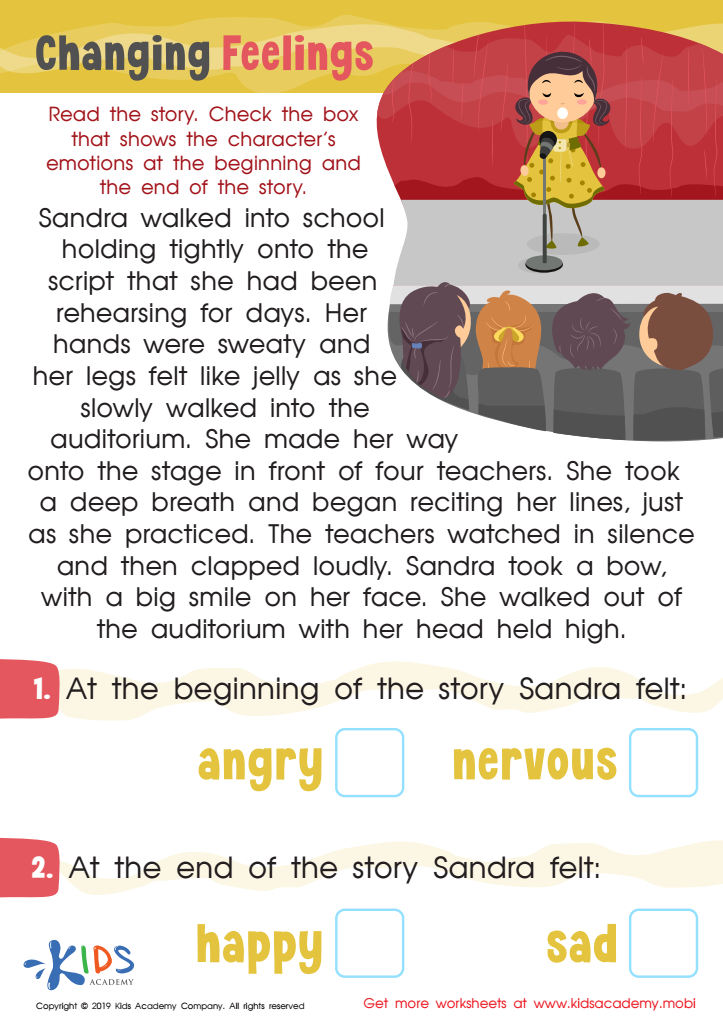
Changing Feelings Worksheet
Help your kids practice reading skills with this exercise. Ask them to read the short passage, then check the boxes showing the character's emotions at the start and end. This will help them improve their reading and understanding.
 Assign to My Students
Changing Feelings Worksheet
Worksheet
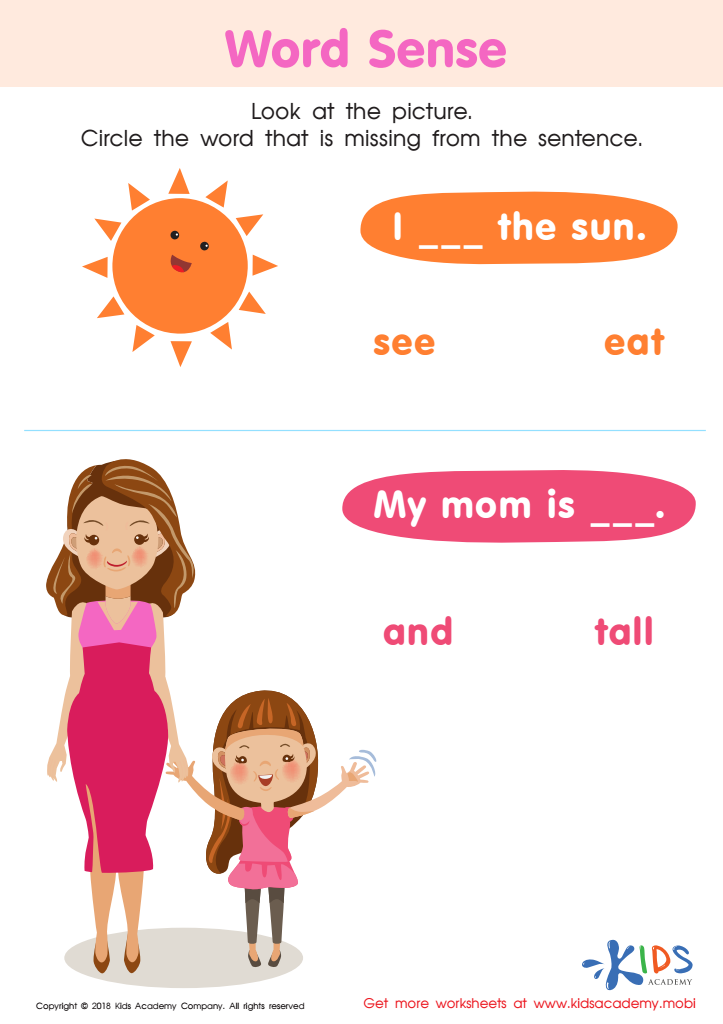
Word Sense Worksheet
Expose your child to common high-frequency words with this free and colorful worksheet. It will help them use picture clues to choose the correct word for each phrase. The more they're exposed, the stronger their fluency will become when reading. This process is an important part of the emerging reader's learning-to-read journey.
Word Sense Worksheet
Worksheet
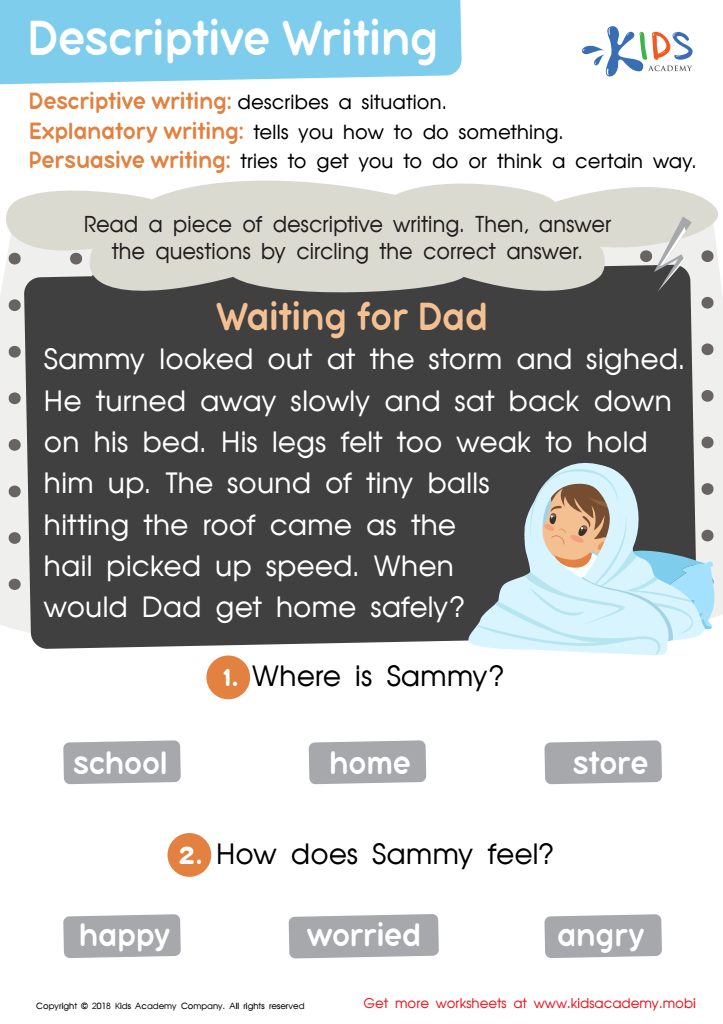
Descriptive Writing Worksheet: Part 2
In this worksheet, your kids will explore writing styles like descriptive, explanatory and persuasive. Read them the descriptive text, then have them answer the questions. Writing is an art – it's a way to express emotions, tell stories and share information.
Descriptive Writing Worksheet: Part 2
Worksheet
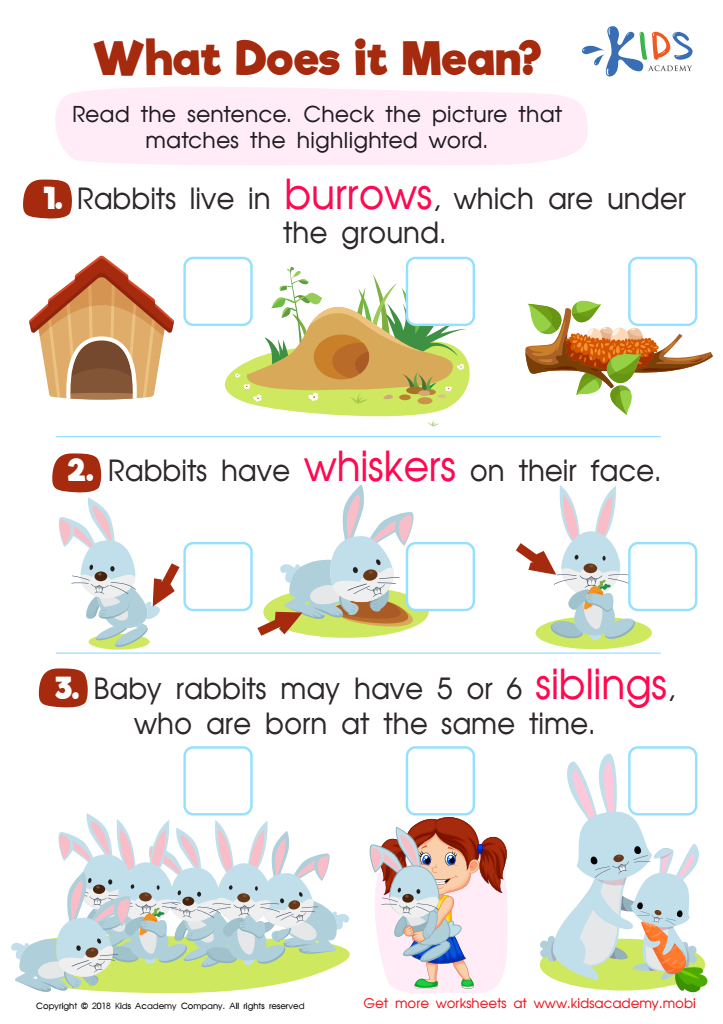
What Does It Mean? Worksheet
Teach your child to use context clues with this engaging Kids Academy worksheet. Read the sentences and find the pink-highlighted word. Use the other words in the sentence to figure out the meaning, then check the box next to the picture that represents it.
What Does It Mean? Worksheet
Worksheet
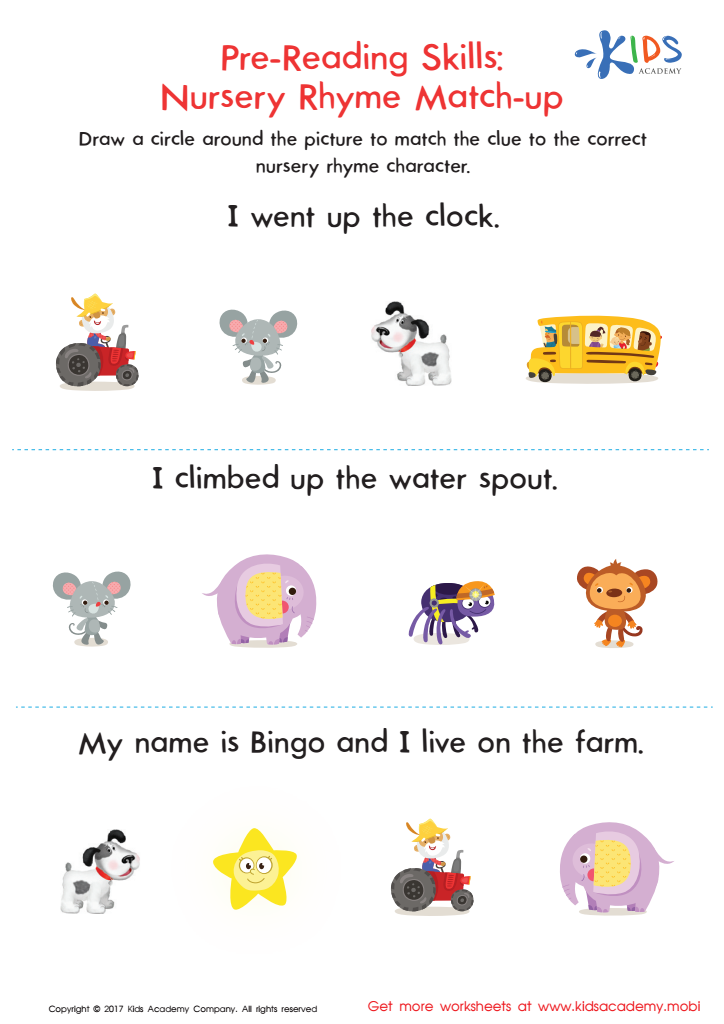
Nursery Rhyme Match–Up Worksheet
This worksheet helps kids build pre-reading skills using stories they know and love! By connecting with prior knowledge, kids can develop ideas about characters and set the stage for reading strategies.
Nursery Rhyme Match–Up Worksheet
Worksheet
Join Kids Academy for Free
Who is primarily going to use this learning content?







Parents and teachers should prioritize vocabulary expansion through easy reading fiction because it plays a crucial role in children's overall literacy development and cognitive growth. Engaging with accessible fiction allows young readers to encounter new words in context, which helps deepen their understanding of language and enhances their ability to express themselves both verbally and in writing.
Moreover, easy reading fiction often features relatable themes and characters that can capture children's attention and stimulate their imagination. This not only fosters a love for reading but also encourages critical thinking and comprehension skills as children engage with storylines and characters. Expanding vocabulary through such materials can significantly improve a child’s academic performance across all subjects, as reading proficiency is foundational to learning.
Additionally, exposure to varied vocabulary can also enrich children's social interactions and emotional intelligence, enabling them to articulate feelings and ideas more effectively. Furthermore, incorporating easy reading fiction into daily routines can strengthen the parent-child or teacher-student bond, creating shared learning experiences that reinforce the joy of reading. By supporting vocabulary expansion, adults empower children with the linguistic tools they need for lifelong success in both academic and personal endeavors.