Strategic thinking development Grade 1 Chess Worksheets
10 filtered results
-
From - To
Unlock the power of strategic thinking in your first grader with our engaging Strategic Thinking Development Grade 1 Chess Worksheets! Designed to inspire young minds, these worksheets introduce essential chess concepts through fun activities that enhance critical thinking and problem-solving skills. Each worksheet encourages students to analyze positions, visualize outcomes, and make thoughtful decisions, laying a strong foundation for future learning. Perfect for the classroom or at-home practice, our resources make it easy to integrate chess into your child's education. Help your child develop essential cognitive skills while enjoying the timeless game of chess—download your worksheets today and watch their strategic abilities flourish!
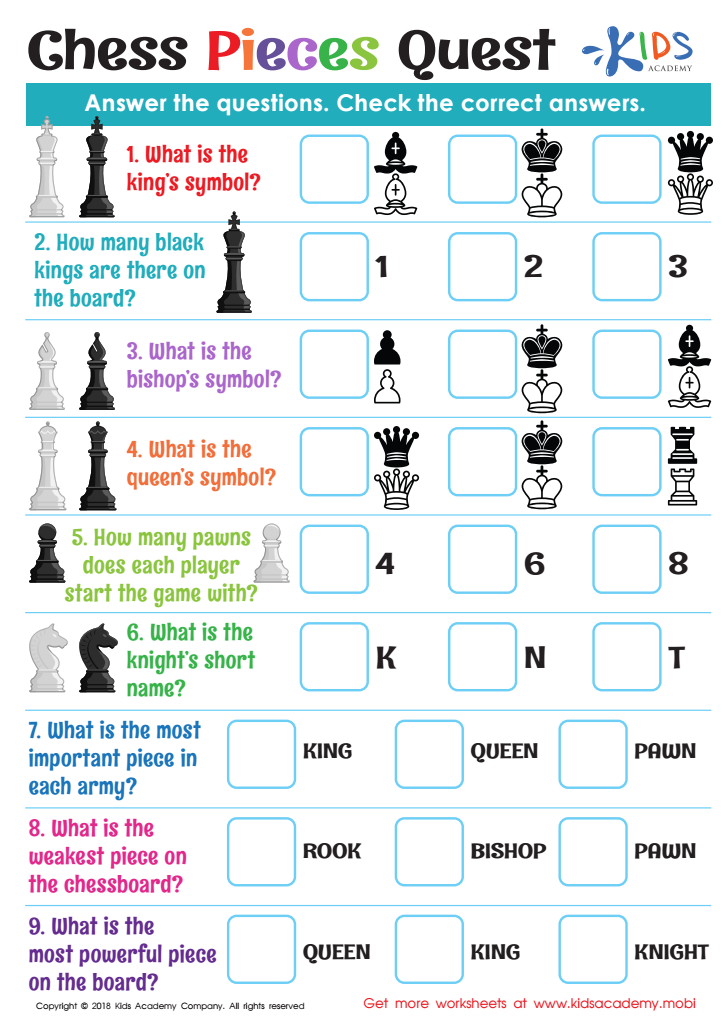
Chess Pieces Quest Worksheet
 Assign to My Students
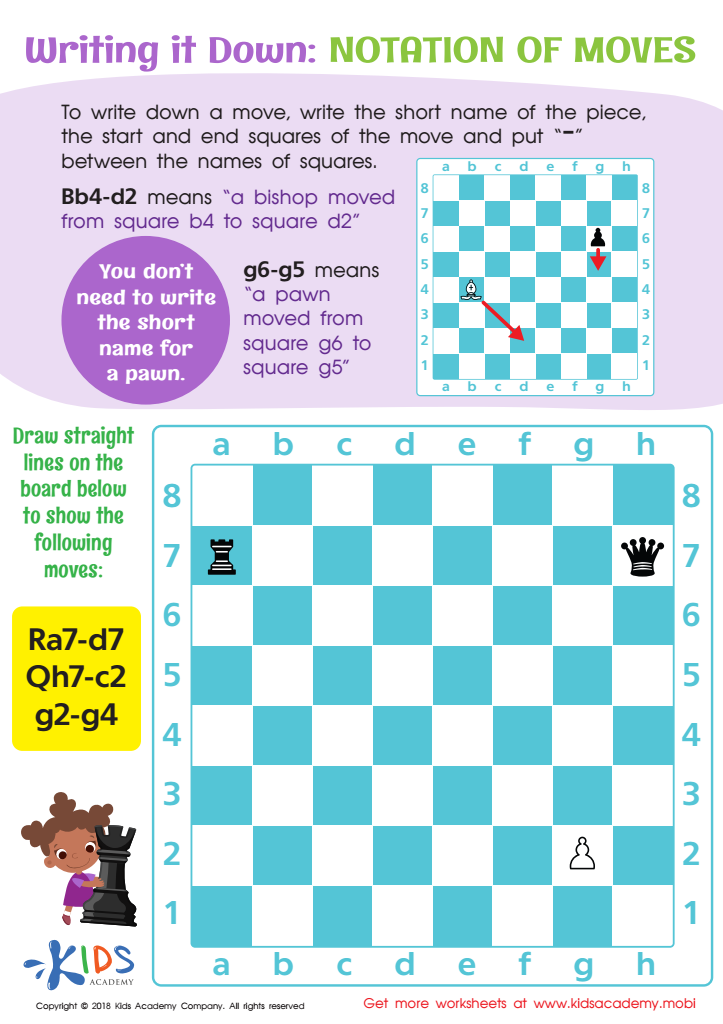
Notation of Moves Writing it Down Worksheet
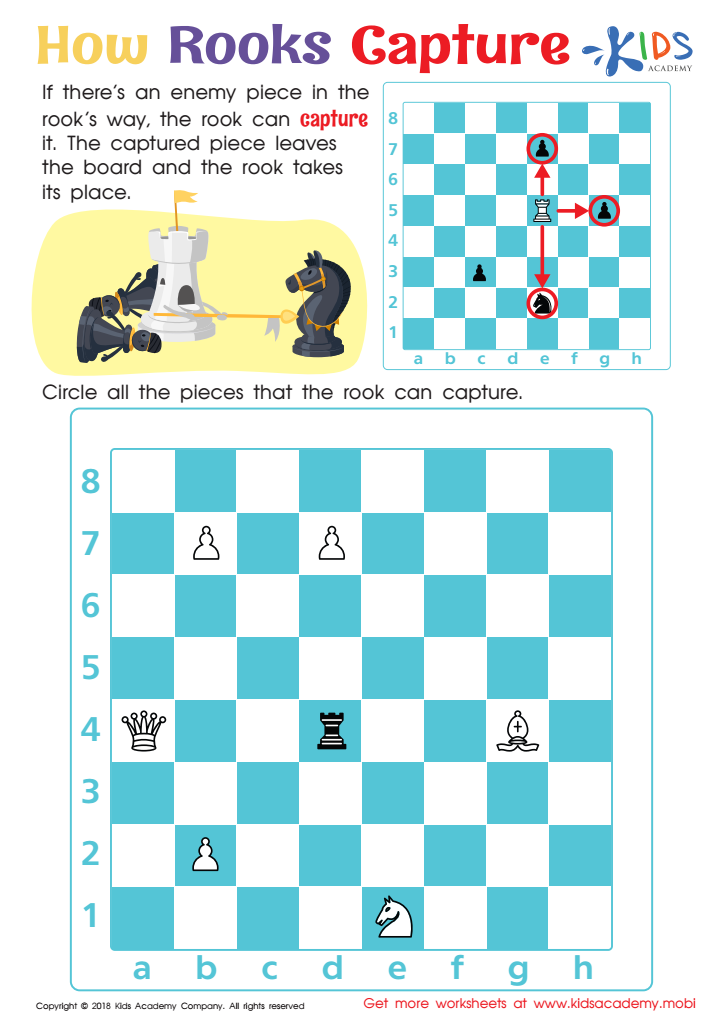
How Rooks Capture Worksheet
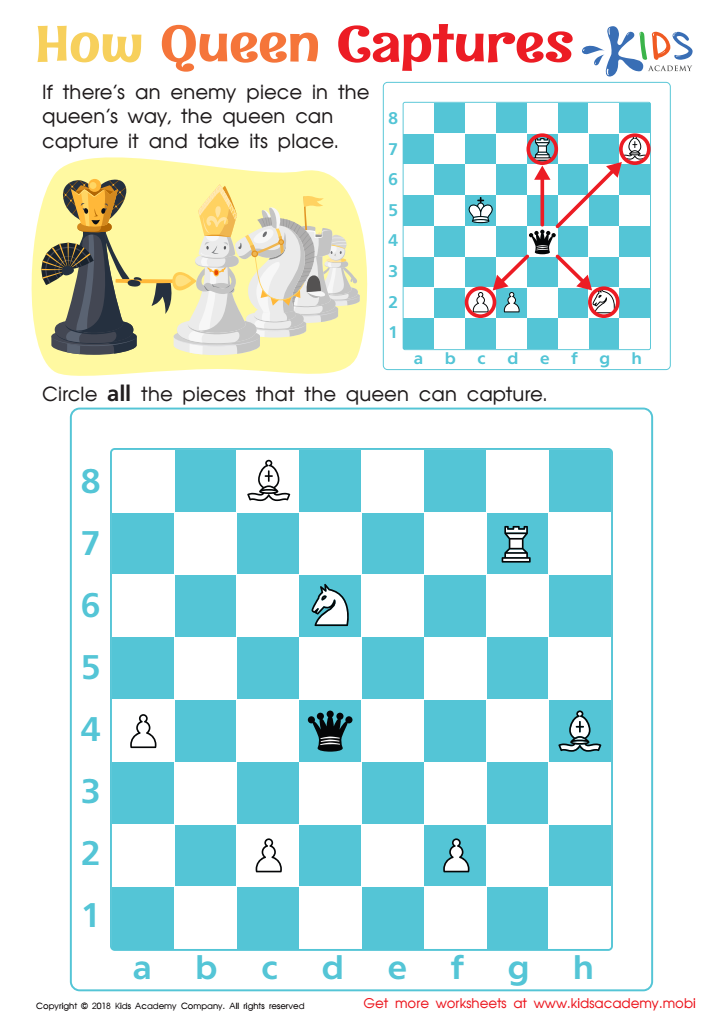
How Queen Captures Worksheet
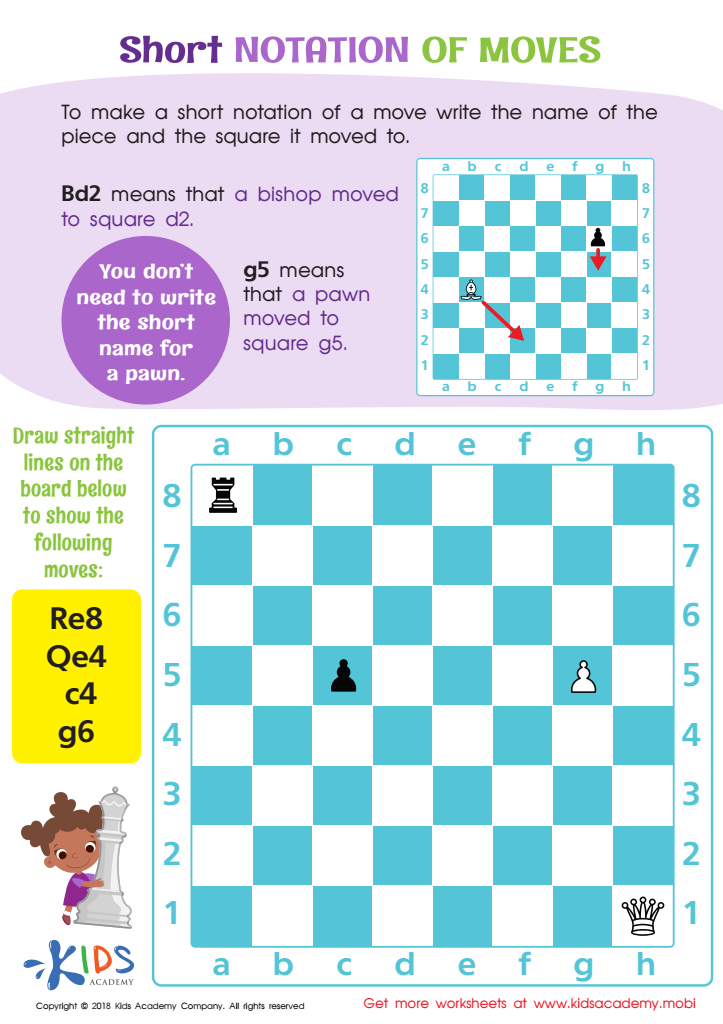
Short Notation of Moves Worksheet
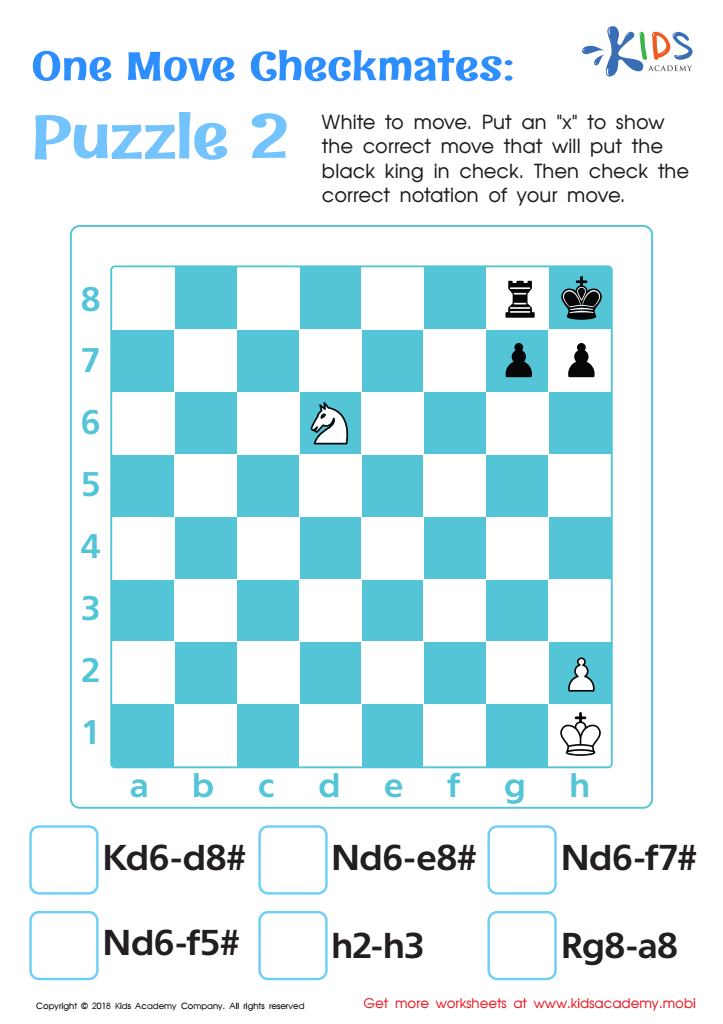
One Move Checkmates: Puzzle 2 Worksheet
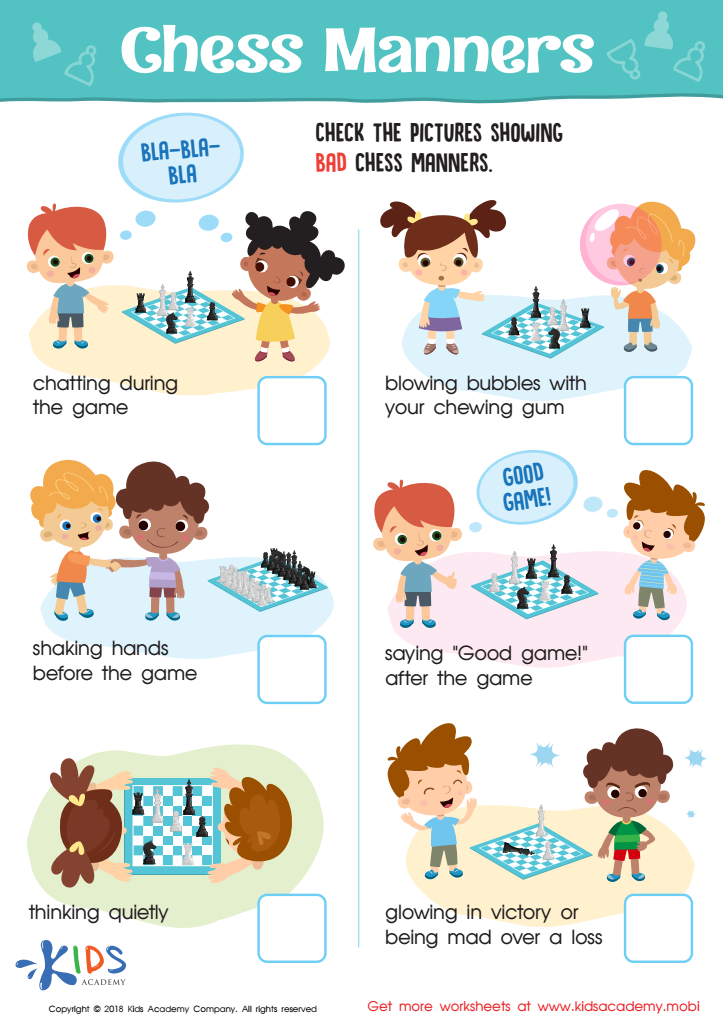
Chess Manners Worksheet
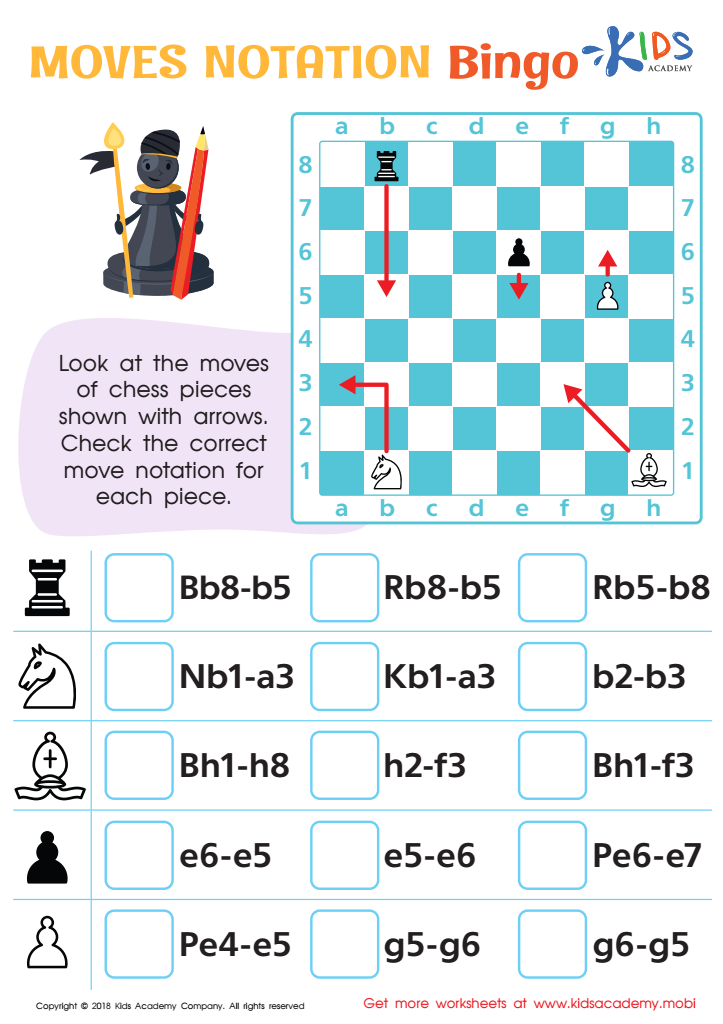
Moves Notation Bingo Worksheet
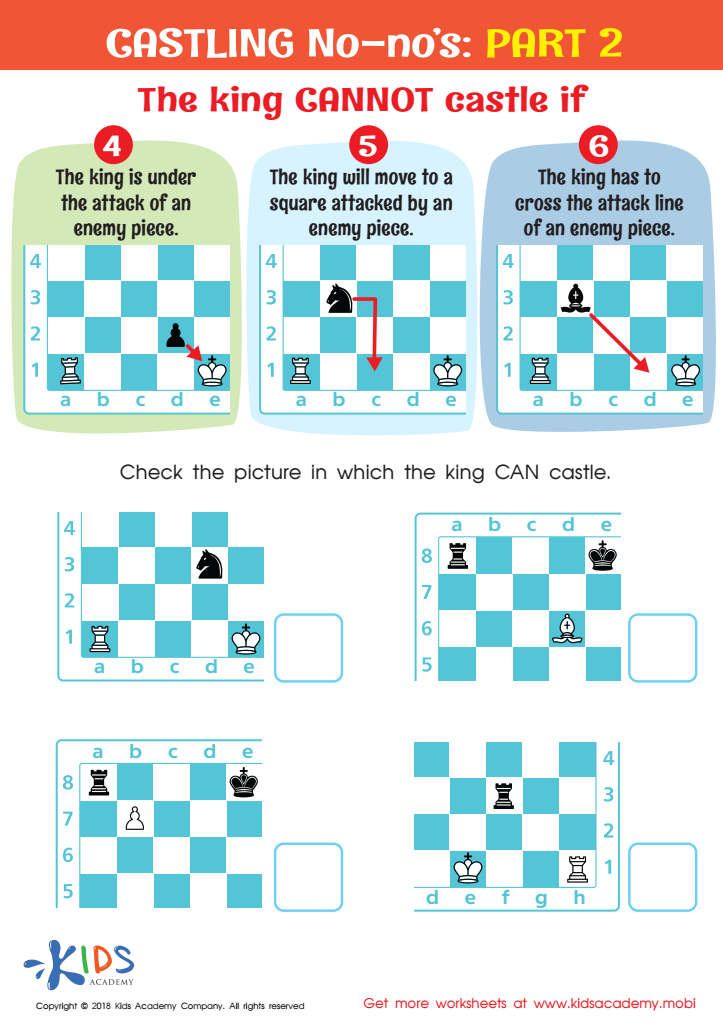
Castling No - no's: Part 2 Worksheet
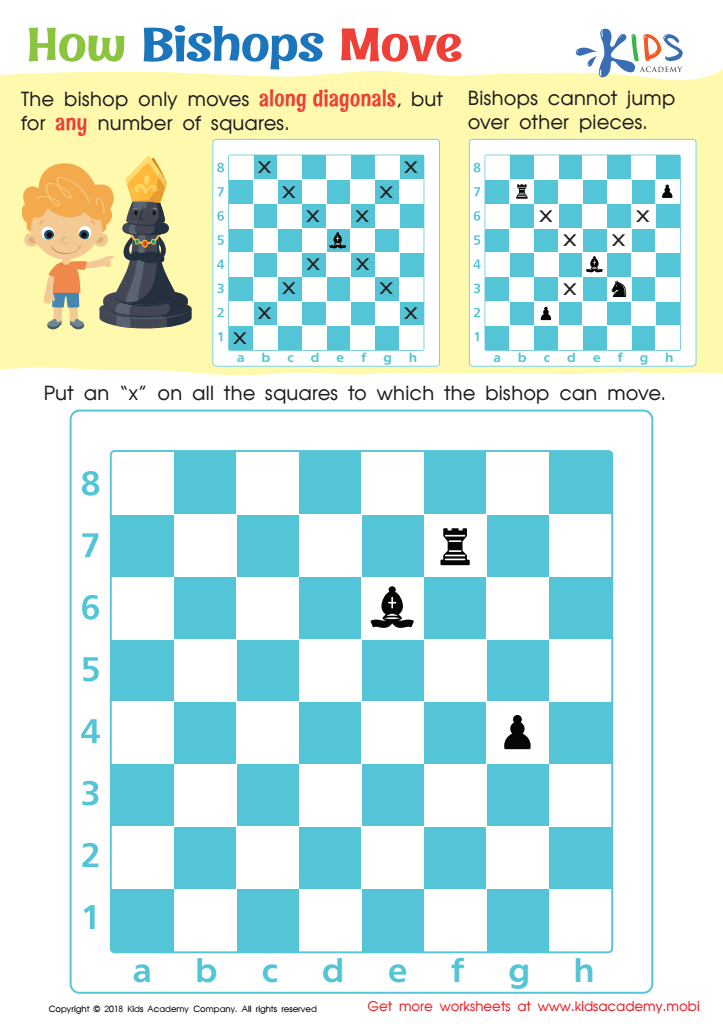
How Bishops Move Worksheet




Parents and teachers should prioritize strategic thinking development through activities like Grade 1 chess for several compelling reasons. First, chess is an engaging and mentally stimulating game that can enhance children's cognitive abilities. By learning chess at an early age, children develop critical thinking skills, which are crucial for problem-solving across various subjects. This early exposure fosters an ability to anticipate consequences, enabling them to make better decisions in academics and life.
Moreover, playing chess teaches children the importance of patience and discipline. They learn to weigh options and consider different strategies, thereby boosting their ability to focus—an essential skill for succeeding in school. Chess promotes resilience through the experience of losing or making mistakes, which encourages children to evaluate their errors and strive for improvement.
Additionally, chess can enhance social skills, as it is often played in groups or pairs. This environment encourages communication and collaboration, which are vital components of a well-rounded education. Overall, integrating chess into a young child's routine not only supports cognitive development but also lays a strong foundation for lifelong learning and personal growth, ultimately benefiting their academic and social experiences.