Basic geometry understanding Extra Challenge Worksheets for Ages 3-4
3 filtered results
-
From - To
Enhance your child's geometrical skills with our "Basic Geometry Understanding Extra Challenge Worksheets for Ages 3-4." These carefully crafted worksheets are designed to provide an engaging and interactive learning experience for young learners. With fun and colorful activities, children will practice identifying and matching shapes, understanding spatial relationships, and recognizing patterns. Each worksheet challenges kids to apply their knowledge in new and exciting ways, fostering a deeper understanding of basic geometry principles. Ideal for preschoolers, these worksheets support cognitive development and prepare them for more advanced math concepts. Get started today and watch your child’s geometry skills soar!
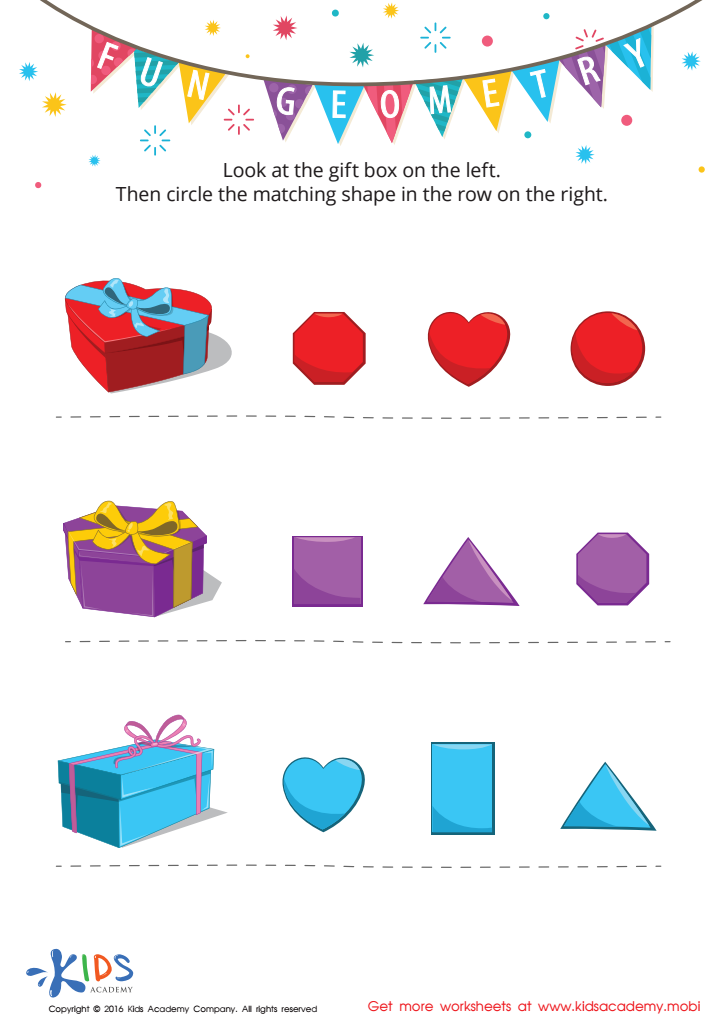
Fun Geometry Worksheet
 Assign to My Students
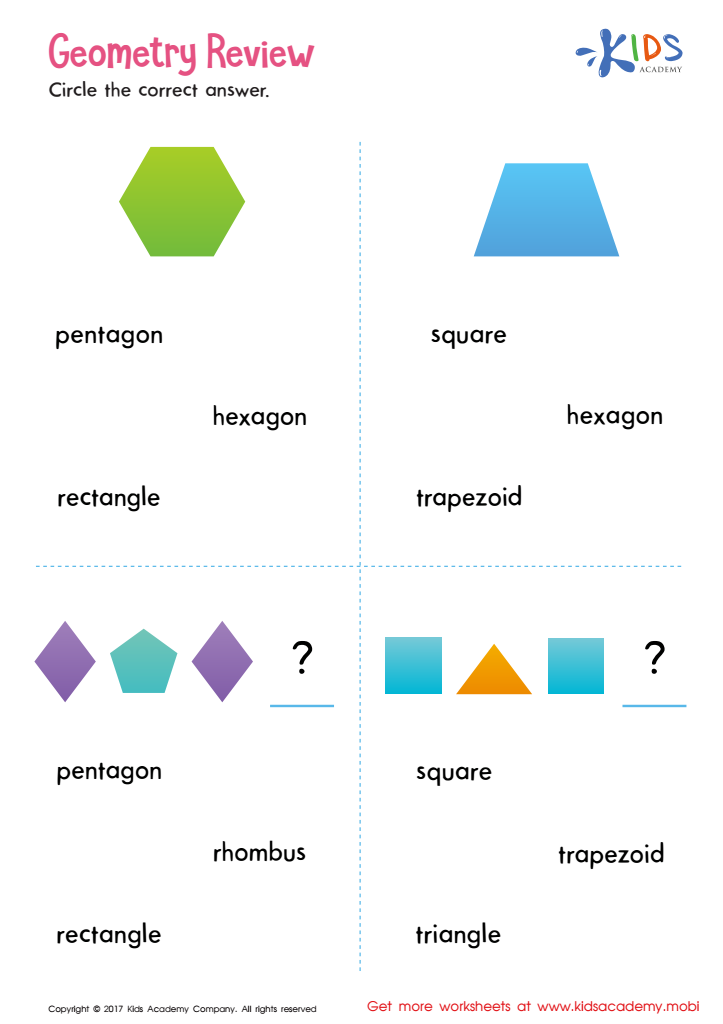
Geometry Review Printable
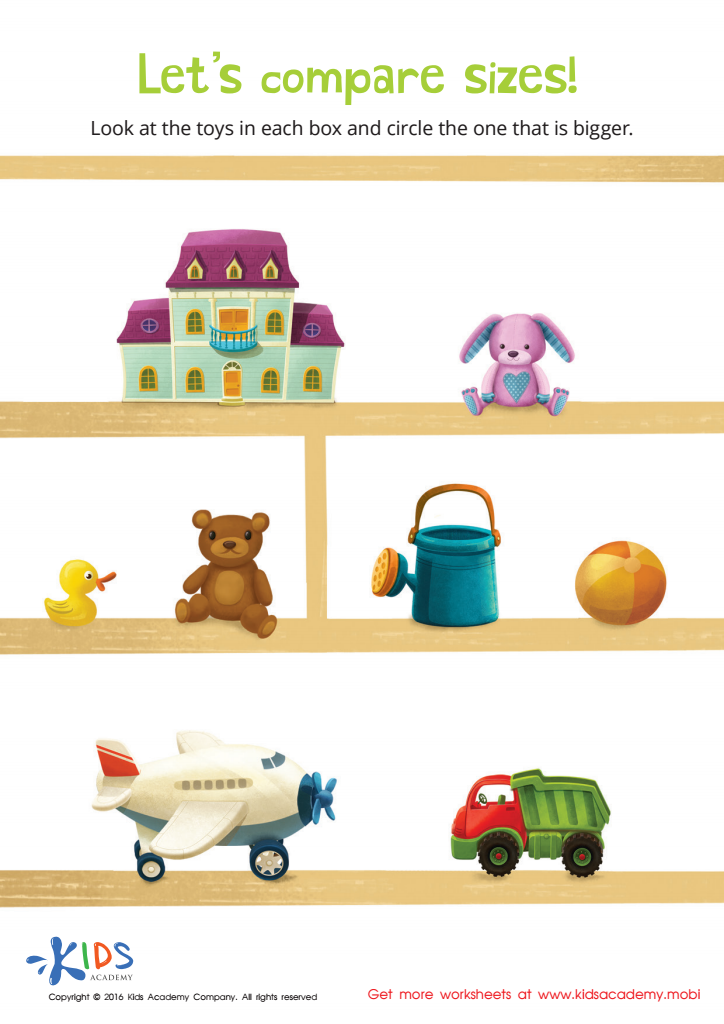
Classifying by Size Sorting Worksheet








Introducing basic geometry to children ages 3-4 offers significant cognitive and developmental benefits. At this young age, kids are incredibly receptive to new information and experiences, forming the foundation for future learning. Parents and teachers should care about incorporating extra challenges in basic geometry because it helps develop crucial skills early on.
One of the most important reasons is the development of spatial awareness. Understanding shapes, sizes, and spatial relationships aids children in navigating and interpreting the world around them. It also enhances their problem-solving abilities, as they learn to identify patterns, visualize shapes from different angles, and comprehend how pieces fit together.
Early geometry activities also promote fine motor skills. Activities like drawing shapes, building with blocks, or completing shape puzzles require precision and hand-eye coordination, which are essential for writing and other daily tasks.
Furthermore, early exposure to geometry helps fortify mathematical thinking. Recognizing geometric concepts nurtures a child’s ability to grasp more complex mathematical ideas in the future, as geometry is a building block for other areas of math like measurement and algebra.
Engaging youngsters in challenging geometry at an early age lays a robust groundwork for academic success, critical thinking, and the ability to interact meaningfully with their environment. Hence, it is essential for parents and teachers to prioritize this aspect of early childhood education.








