Basic geometry understanding Extra Challenge Worksheets for Ages 3-5
3 filtered results
-
From - To
Elevate your child's learning with our Basic Geometry Understanding Extra Challenge Worksheets designed specifically for ages 3-5. These engaging activities help young learners grasp fundamental geometry concepts such as shapes, sizes, and spatial awareness in a fun and interactive way. Each worksheet is thoughtfully crafted to challenge children's critical thinking and boost their confidence as they explore the world of geometry through vibrant visuals and hands-on exercises. Perfect for parents and educators seeking to reinforce early math skills at home or in the classroom, these worksheets provide the ideal blend of learning and playtime, setting a strong foundation for future success in mathematics.
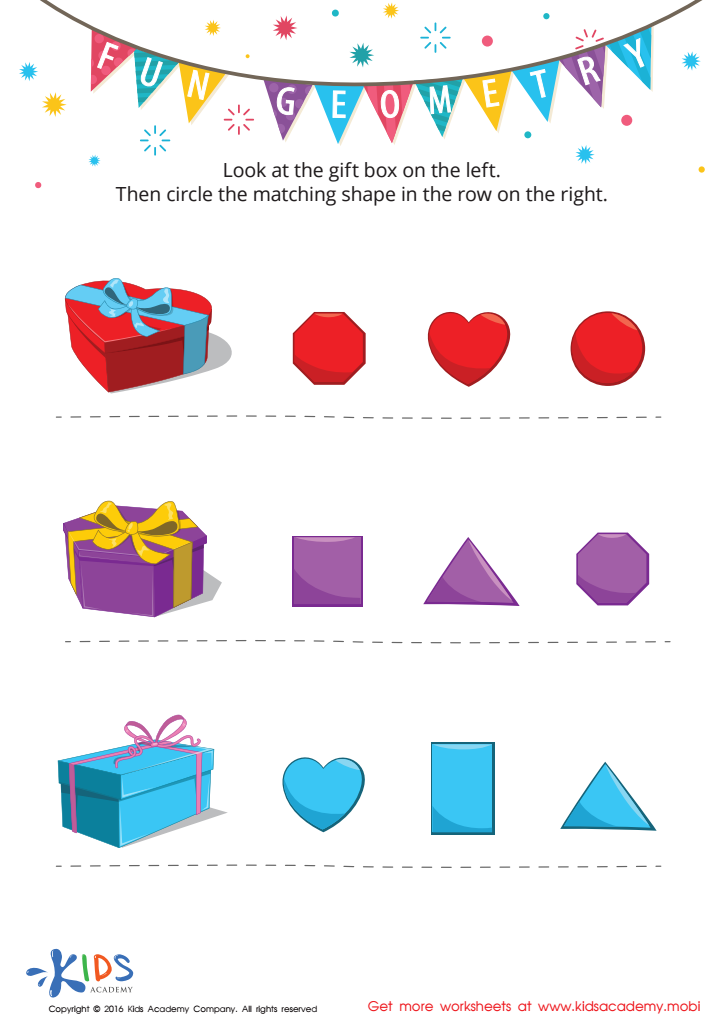
Fun Geometry Worksheet
 Assign to My Students
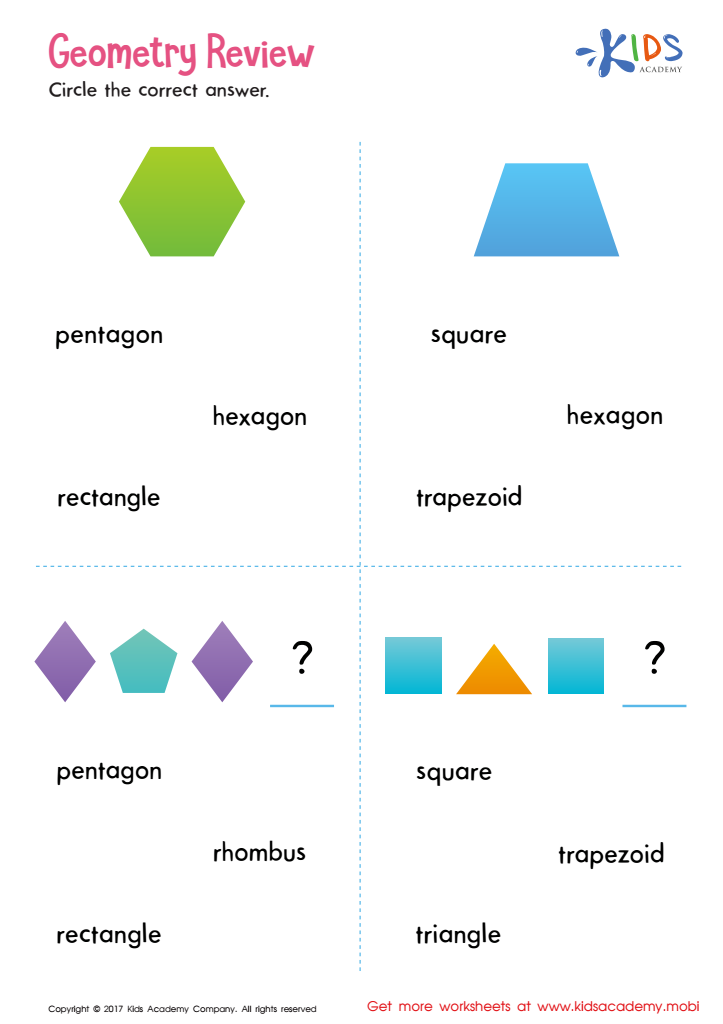
Geometry Review Printable
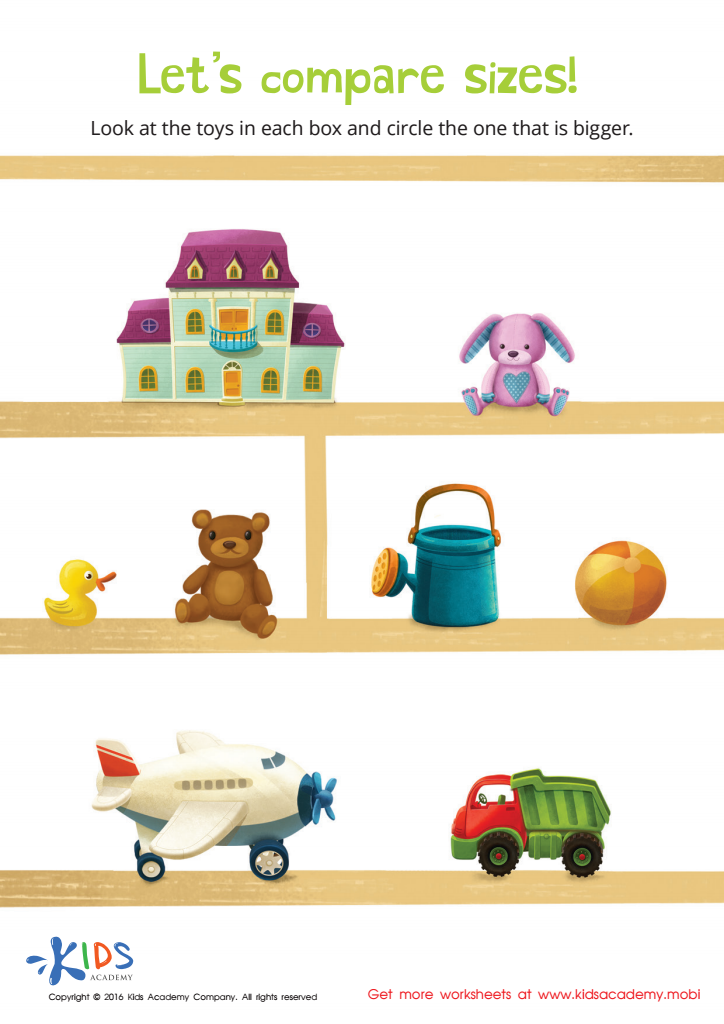
Classifying by Size Sorting Worksheet






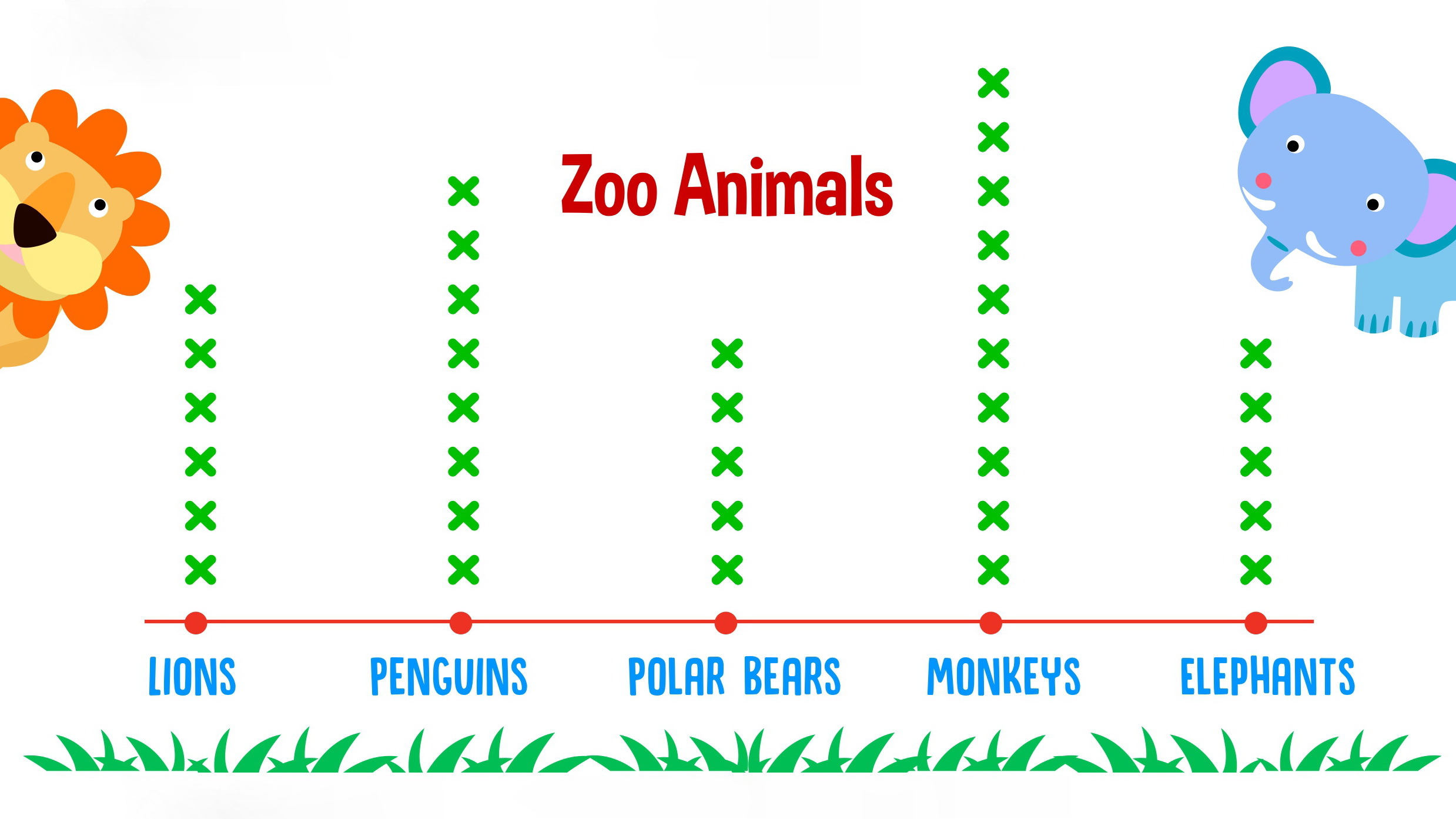

Basic geometry understanding for children ages 3-5 lays the foundation for critical thinking and problem-solving skills that extend far beyond the classroom. At this age, children are naturally curious and eager to explore their environment, making it an ideal time to introduce geometric concepts. Engaging young learners with shapes, sizes, and spatial relationships helps to develop their cognitive abilities, fine motor skills, and visual-spatial intelligence.
For parents and teachers, fostering basic geometry skills can spark creativity and enhance language development as children describe shapes and their properties. Geometry-based activities, such as shape sorting, building with blocks, or exploring patterns, motivate children to collaborate and communicate openly, strengthening their social skills. Additionally, these experiences promote a sense of accomplishment and build confidence as children begin recognizing and manipulating shapes.
By introducing basic geometry concepts early on, parents and teachers empower children to connect mathematical ideas to their everyday world, creating strong learners who are well-prepared for future academic challenges. Ultimately, a solid grounding in geometry during these formative years fosters a lifelong love for learning and equips children with essential skills for success in mathematics and beyond.








