Enhance your child's learning with our "Shape Recognition Extra Challenge Math Worksheets for Ages 3-5"! Designed for young learners, these worksheets provide a fun and engaging way to reinforce shape recognition skills. Each activity is tailored to boost cognitive development and critical thinking through interactive exercises that challenge preschoolers. With a variety of shapes and creative illustrations, children will enjoy identifying, coloring, and matching shapes. Perfect for teachers and parents, these worksheets ensure a well-rounded educational experience. Get ready to inspire a love for math and shapes in your little ones while building their confidence and preparing them for future learning success!

Check out this FREE Trial Lesson on Math for age 3-5!

Lesson 3- Classify and Sort Shapes

Favorites
With answer key
Interactive
  • 3-5
  • Shape Recognition
  • Math
  • Extra Challenge
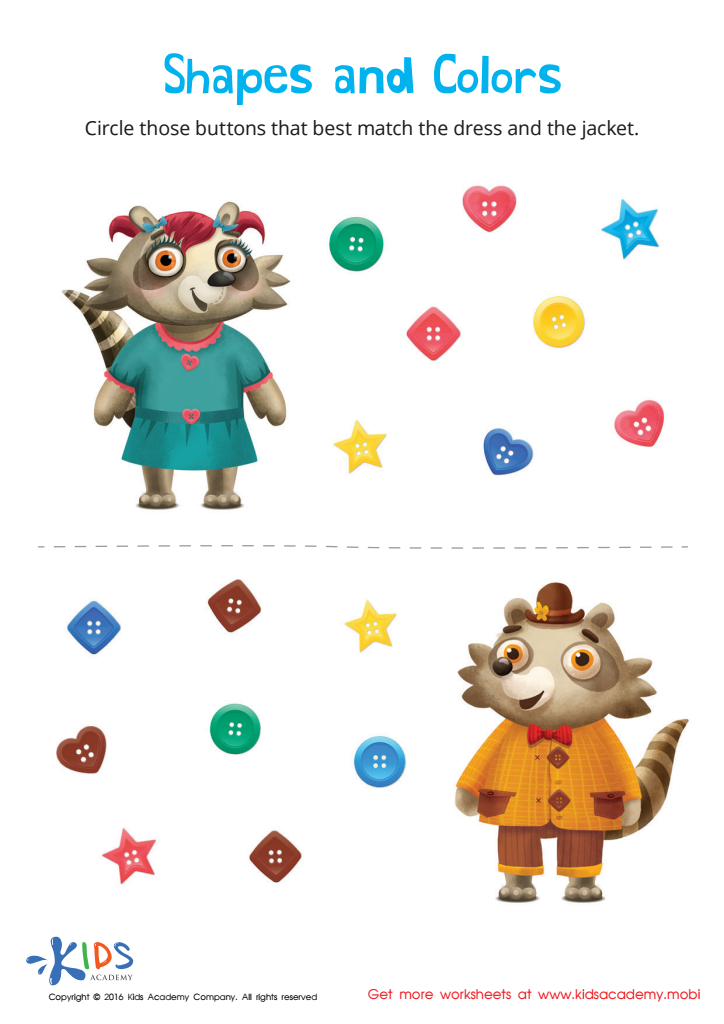
Matching Colors Worksheet

Matching: Shapes and Colors Worksheet

Help Mr. and Mrs. Raccoon find the right buttons to match their shirts! Kids will identify shapes and colors and learn to match them correctly.
Matching: Shapes and Colors Worksheet
Worksheet
Geometry Matching Worksheet

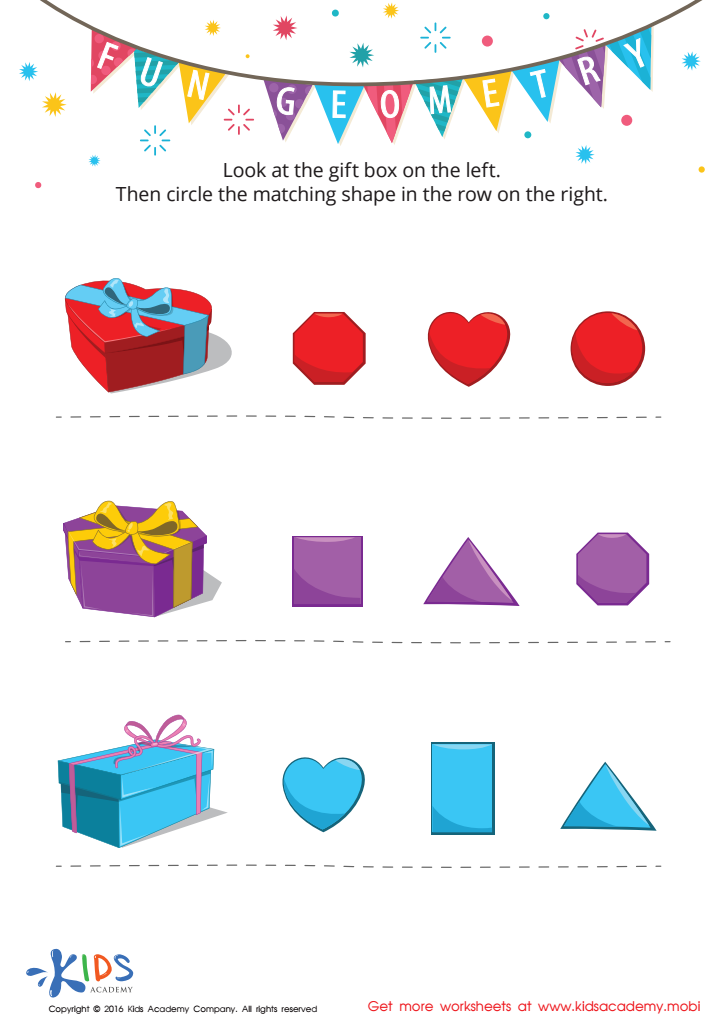
Fun Geometry Worksheet

Give your child the gift of learning with this fun and educational geometry matching worksheet! It'll help them develop essential matching and problem-solving skills while having fun. Vibrant pictures will excite them to complete it and get a better grasp of the world around them.
Fun Geometry Worksheet
Worksheet
2D and 3D Shapes Worksheet

2D and 3D Shapes Worksheet

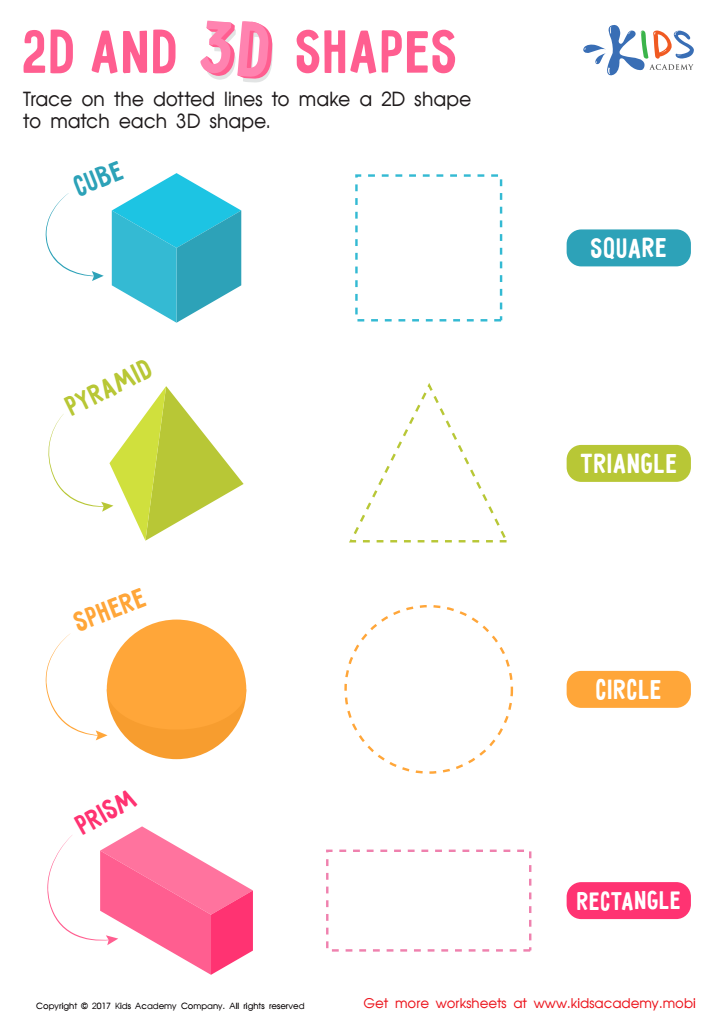
Introduce your child to 3D and 2D with this traceable worksheet. With dotted lines, help them trace and make a 2D shape for each 3D shape: square, triangle, rectangle, and circle. Show them there's more than one way to draw! You may have taken them to a 3D movie, or they've seen some fantastic 3D art. Now they can wonder no more.
2D and 3D Shapes Worksheet
Worksheet
Trace and Draw More Shapes Worksheet

Trace and Draw More Shapes Worksheet

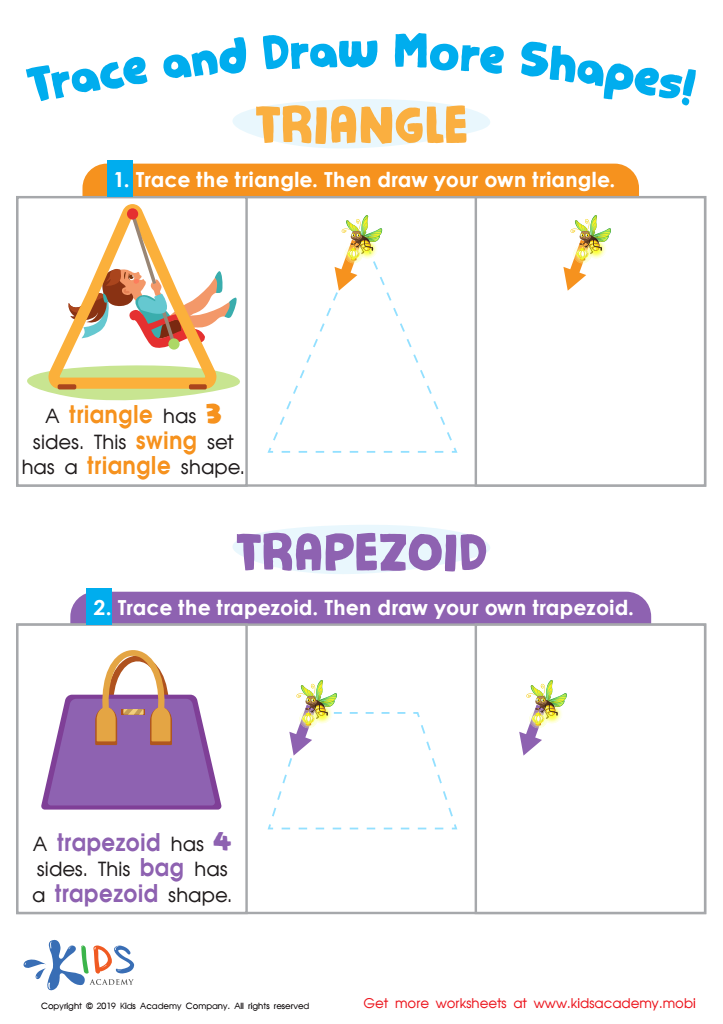
Help your kids with more learning! Look at images in the worksheet, read facts about the shapes, then help your kids trace and draw. This reinforces that learning is never done; use this simple worksheet to help your kids with school homework and more!
Trace and Draw More Shapes Worksheet
Worksheet
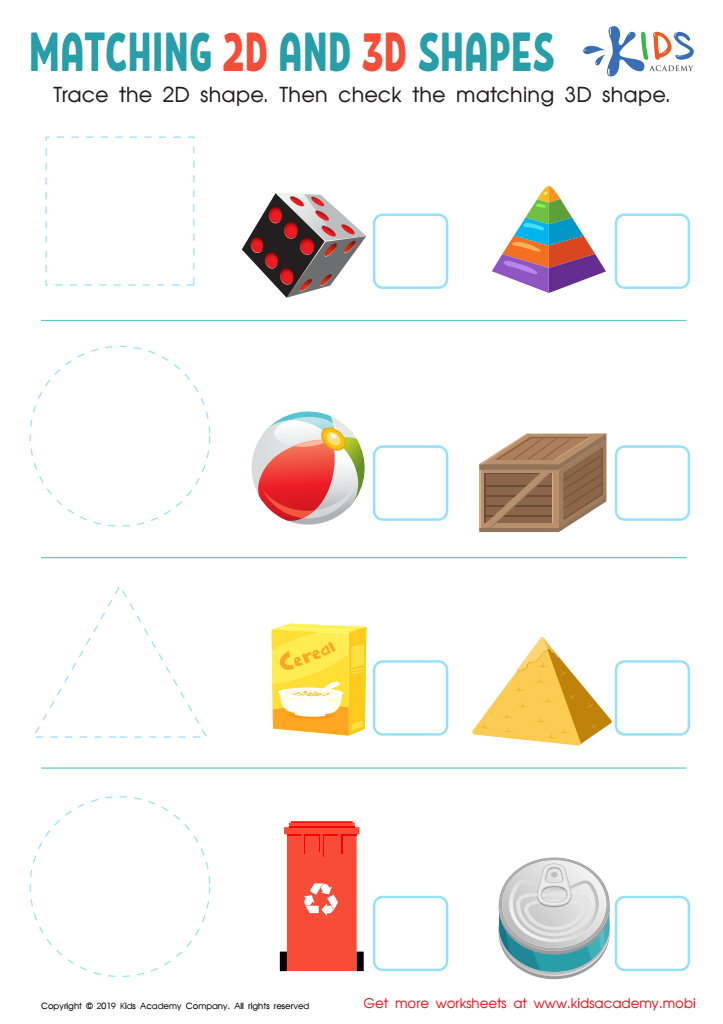
Matching 2D and 3D Shapes Worksheet

Matching 2D and 3D Shapes Worksheet

Before starting this worksheet, ask your kids what shapes they know and point out the 2D and 3D shapes on it. Help your kids trace the 2D shapes and then match them to the 3D versions. It'll be a fun new world for your kids to explore!
Matching 2D and 3D Shapes Worksheet
Worksheet
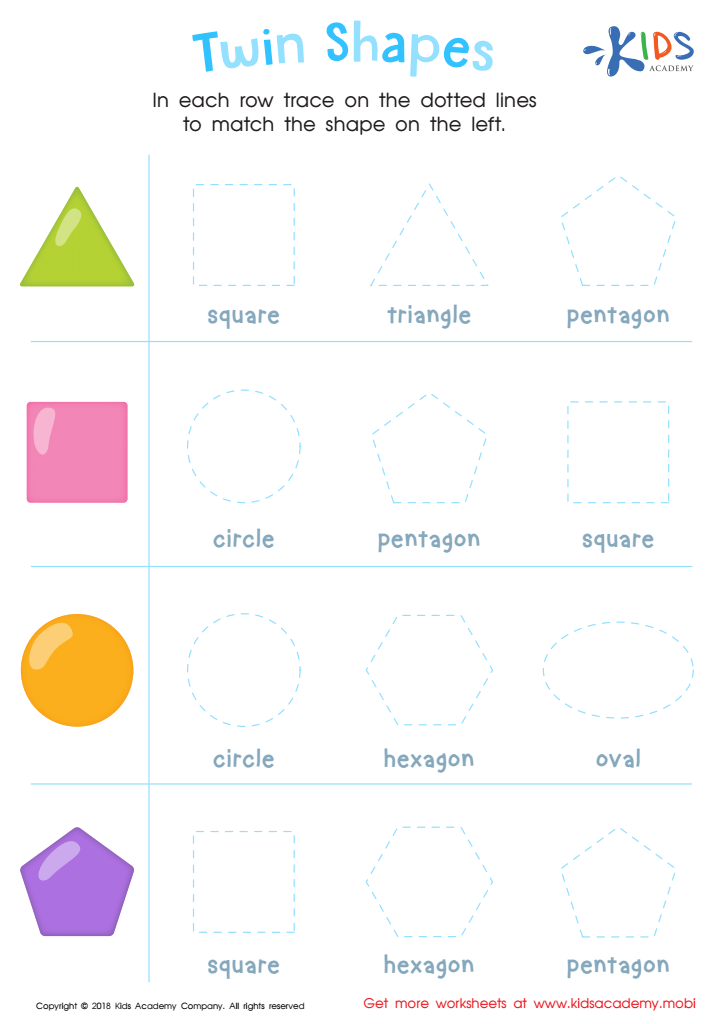
Twin Shapes Dot-to-Dot Worksheet

Twin Shapes Dot-to-Dot Worksheet

Test your child's ability to copy with this worksheet. Ask them to find and name the four shapes on the left. Then, they must match each with the dotted lines on the right. Help your child with all four shapes in this fun exercise.
Twin Shapes Dot-to-Dot Worksheet
Worksheet
Size Worksheets for Preschoolers

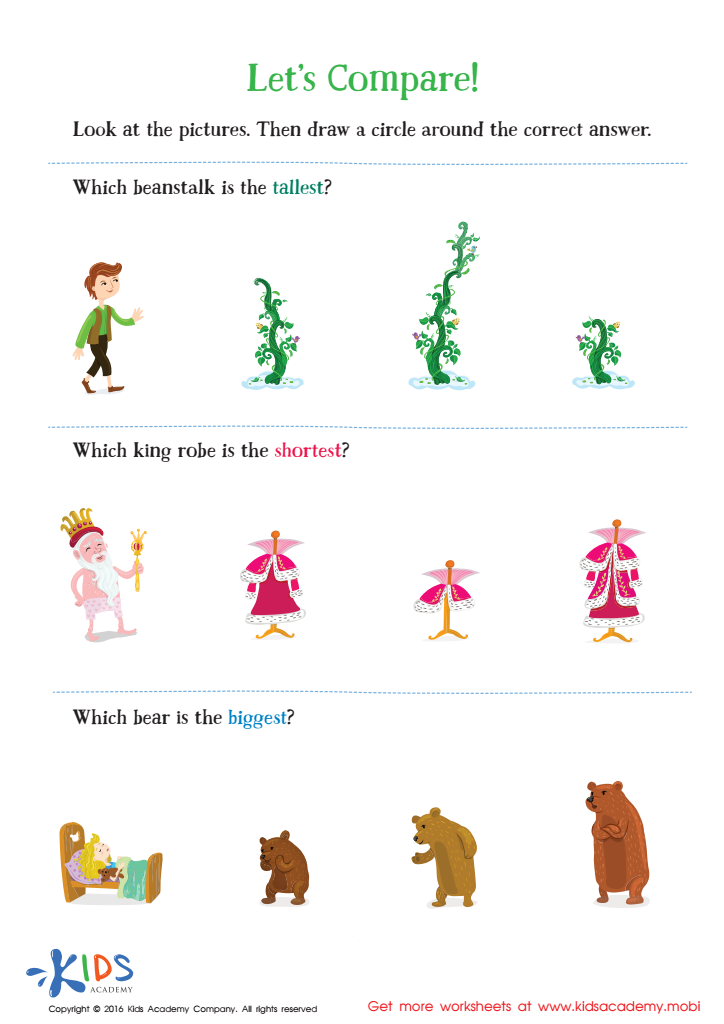
Fairy Tale Worksheet: Let's Compare

Preschoolers need to recognize different sizes of objects. This worksheet combines fun fairy tales with size practice, helping them read, problem solve, and sort through pictures. Your child will love the images and be eager to complete it. Enhance their learning by talking about the tales to build comprehension.
Fairy Tale Worksheet: Let's Compare

Worksheet


Shape Recognition Extra Challenge Math for Ages 3-5 is essential for early cognitive development. Understanding shapes is not just about recognizing a circle or square; it is foundational for various mathematical concepts that children will encounter later on. Engaging in shape recognition helps to enhance spatial awareness, a skill vital for problem-solving and navigation in everyday life.

Parents and teachers should prioritize shape recognition activities because they encourage critical thinking and enhance fine motor skills through hands-on manipulation of shapes. Additionally, these activities pave the way for developing foundational math skills such as geometry, measurement, and even basic addition and subtraction through counting sides and vertices.

Furthermore, early exposure to diverse shapes fosters creativity by allowing children to explore and form new shapes, encouraging imaginative play and artistic expression. Collaborative shape activities also promote social skills as children work together to identify, compare, and discuss different shapes.

In summary, incorporating Shape Recognition Extra Challenge Math in early education not only aids in academic readiness but also supports overall cognitive, social, and emotional development, laying a strong foundation for lifelong learning and critical thinking.