
Pattern recognition Extra Challenge Worksheets for Ages 3-6
7 filtered results
Difficulty Level
Grade
Age
-
From - To
Subject
Activity
Standards
Introducing our "Pattern Recognition Extra Challenge Worksheets for Ages 3-6" – a stimulating collection designed to enhance young learners' cognitive abilities and fine motor skills. These expertly crafted worksheets offer engaging activities that range from identifying simple sequences to solving advanced patterns, effectively boosting early math skills and critical thinking. Vibrant illustrations and fun exercises encourage children to explore shapes, colors, and numbers while practicing the important skill of pattern recognition. Perfect for preschoolers and kindergarteners, this resource paves the way for academic success through playful learning. Download today to challenge your child's mind in an enjoyable and educational way!
Favorites
With answer key
Interactive
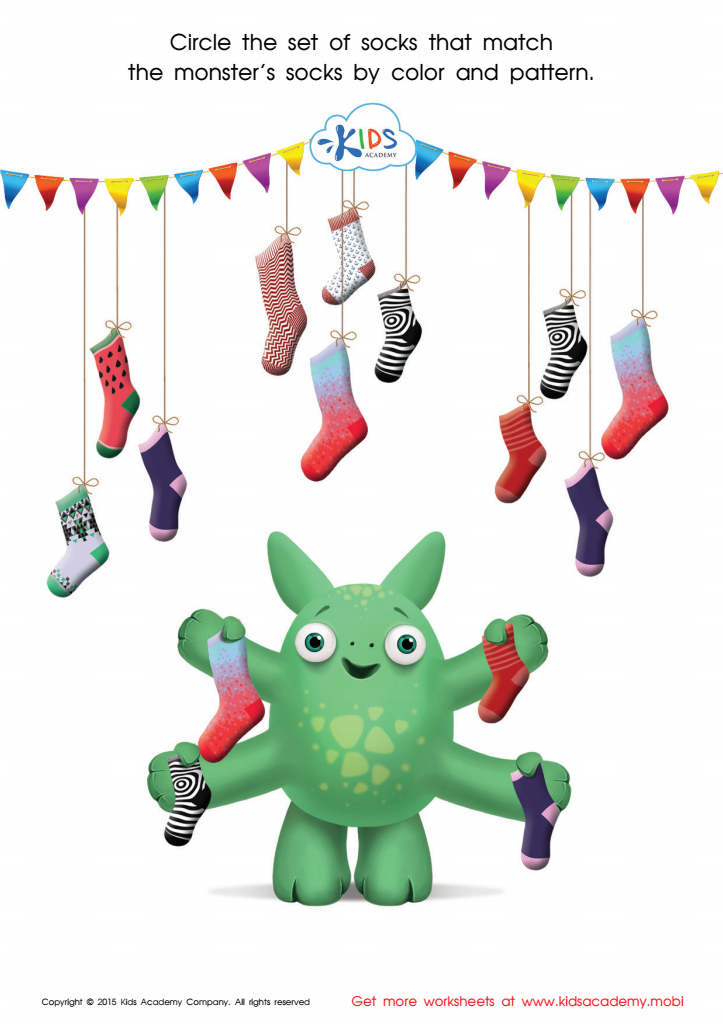
Sort the Monster's Socks Worksheet
Let your little one challenge herself and practice with matching Monster socks. She must be very attentive to match the same socks and draw a line connecting them!
 Assign to My Students
Sort the Monster's Socks Worksheet
Worksheet
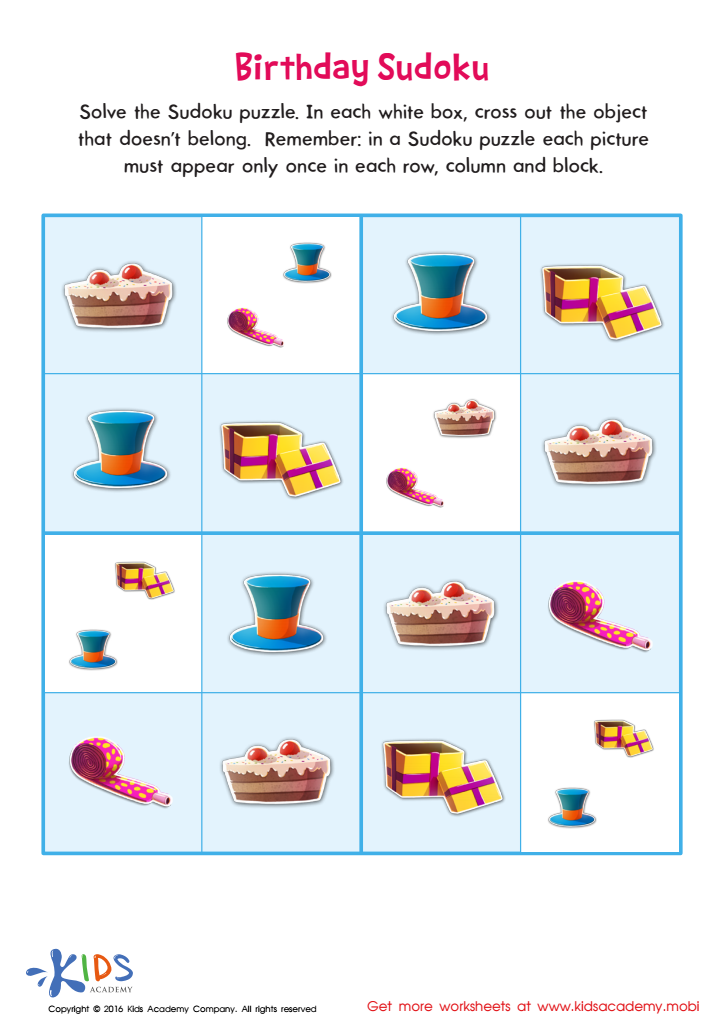
Birthday Sudoku Sorting Worksheet
With this Sudoku printable, your child will have fun and strengthen their problem-solving skills.
Birthday Sudoku Sorting Worksheet
Worksheet
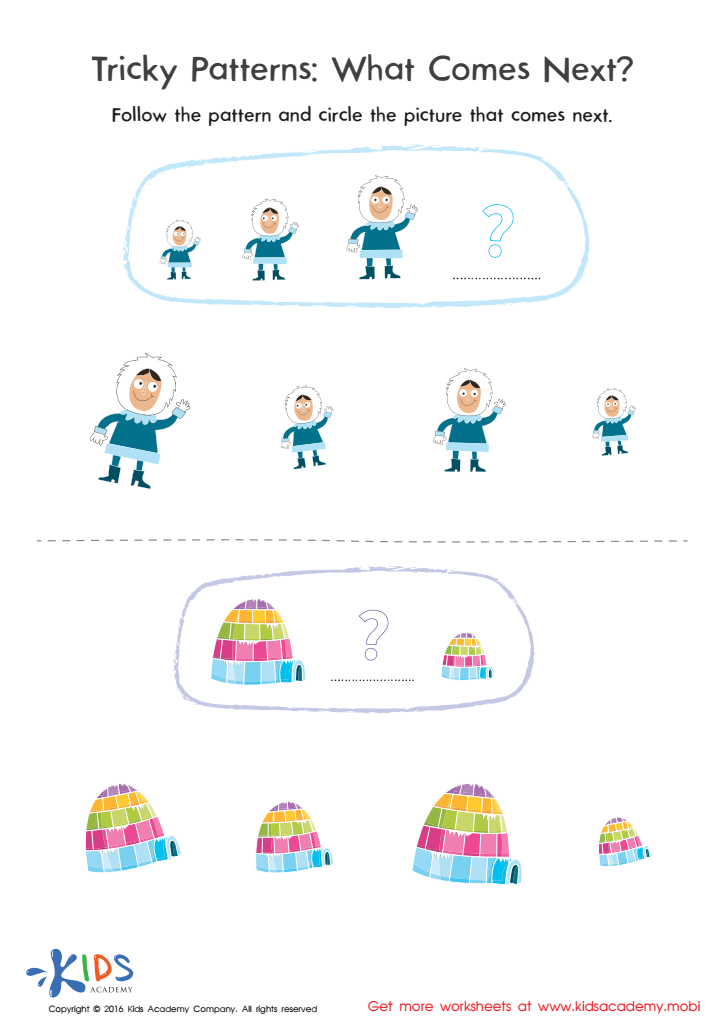
Tricky Patterns Size Worksheet
Give your child a head start on critical thinking with this picture pattern worksheet! It's an intriguingly fun way to help them master important skills like spatial reasoning, critical thinking, and logical reasoning. They'll differentiate between shapes, complete the pattern with a logical answer, and look for and understand patterns. It's the perfect foundation for future math skills, setting them up for future success!
Tricky Patterns Size Worksheet
Worksheet
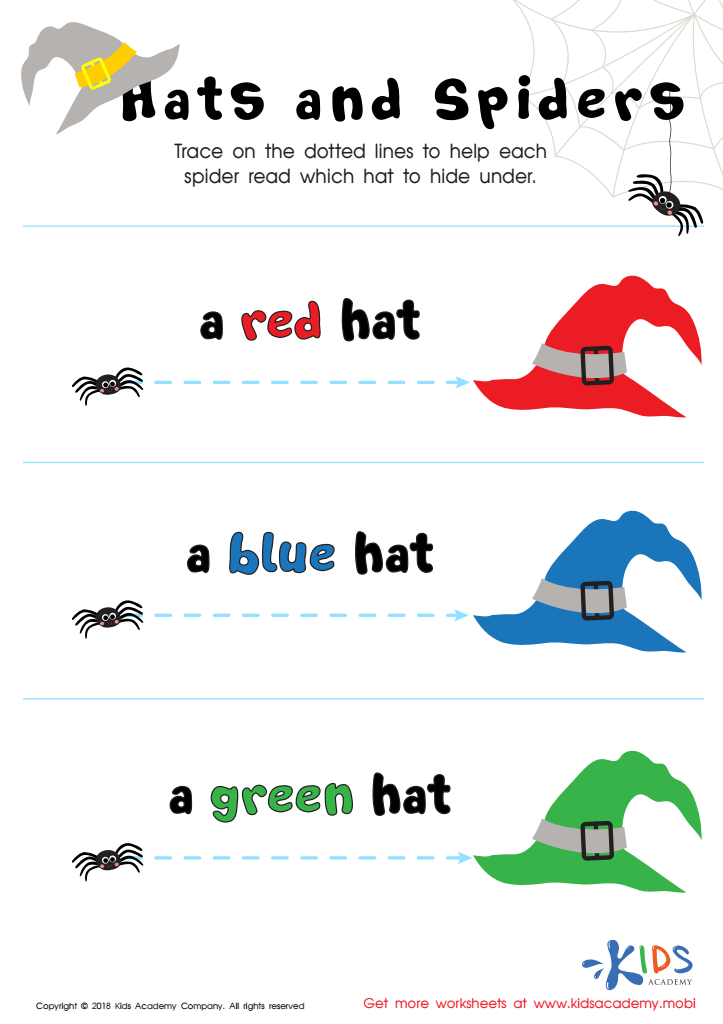
Read from Left to Right: Hats and Spiders Worksheet
Do your kids love or fear spiders? Either way, they'll enjoy helping the little critters with this traceable worksheet. Ask them to read out the words in the picture, explaining it's the description of the hats. Then help them trace on the dotted lines, so the spiders know which hat to hide under.
Read from Left to Right: Hats and Spiders Worksheet
Worksheet
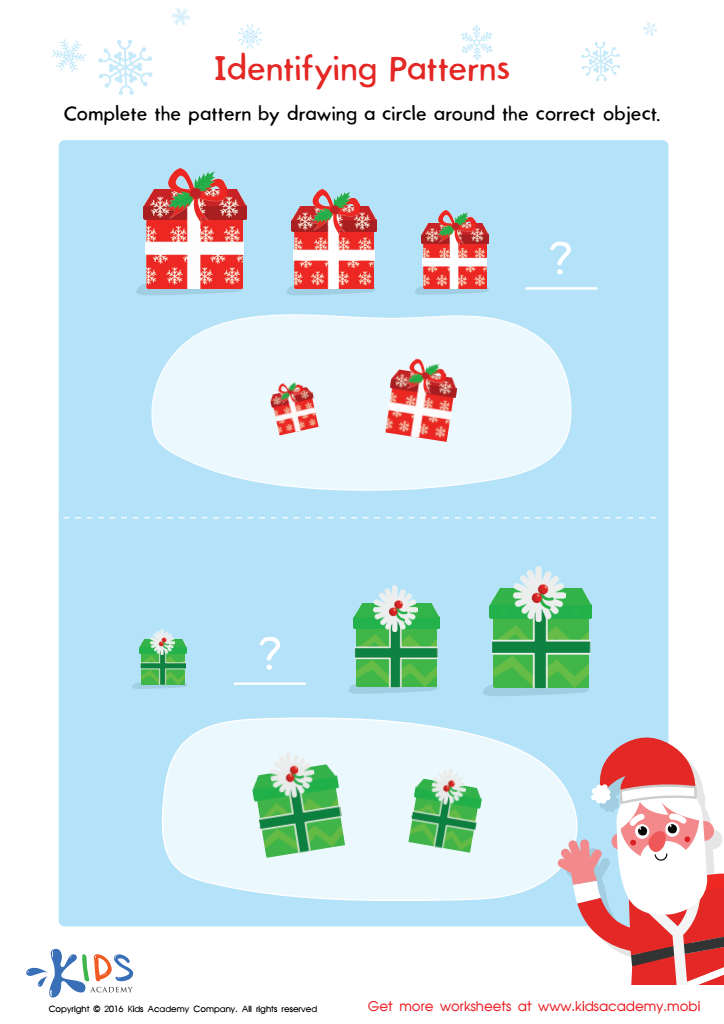
Identifying Patterns Worksheet
Kids can have fun as they learn with this festive worksheet! They'll practice early math skills while identifying patterns with colorful Christmas presents. Have your child get ready for the holidays by finding out which box comes next in the pattern!
Identifying Patterns Worksheet
Worksheet
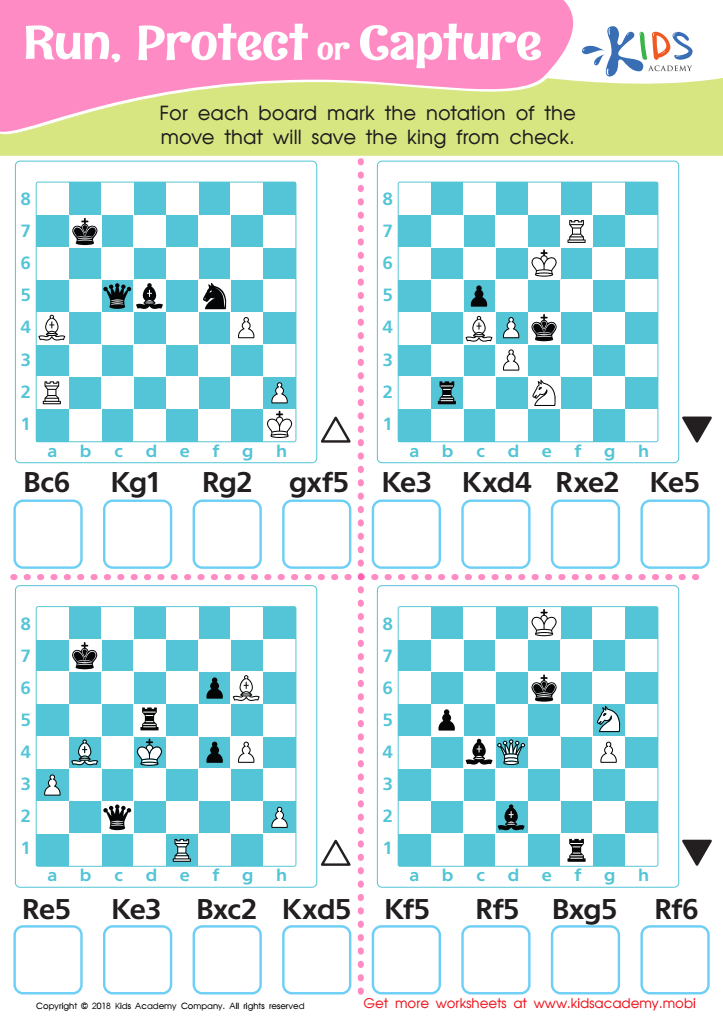
Run, Protect or Capture Worksheet
When kids play chess, they're not only striving to win - they're sharpening their critical thinking and problem-solving prowess. With this free PDF worksheet, they learn how to protect their king from check, whether it's running away, shielding it or capturing the checking piece. Sample boards offer them the chance to practice.
Run, Protect or Capture Worksheet
Worksheet
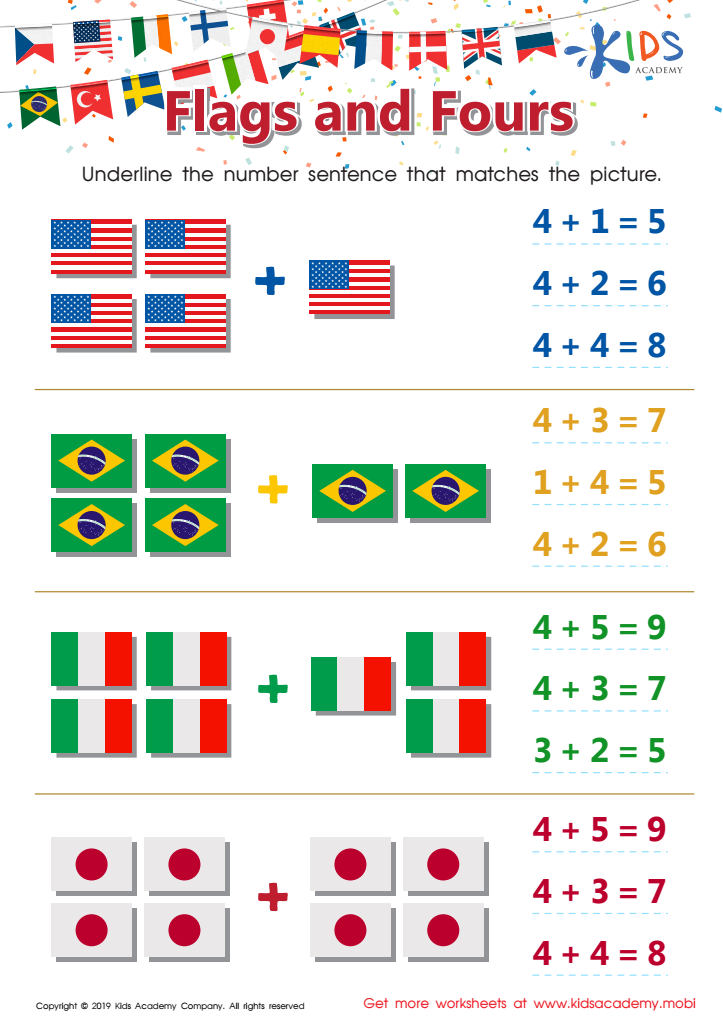
Flags and Fours Worksheet
Have your kids identify country flags from this colorful printout. Then, ask them to underline the number sentence that goes with each flag. Combining math with national flag recognition strengthens kids' knowledge of both, promoting an understanding of identity and numbers.
Flags and Fours Worksheet
Worksheet
Join Kids Academy for Free
Who is primarily going to use this learning content?



.jpg)
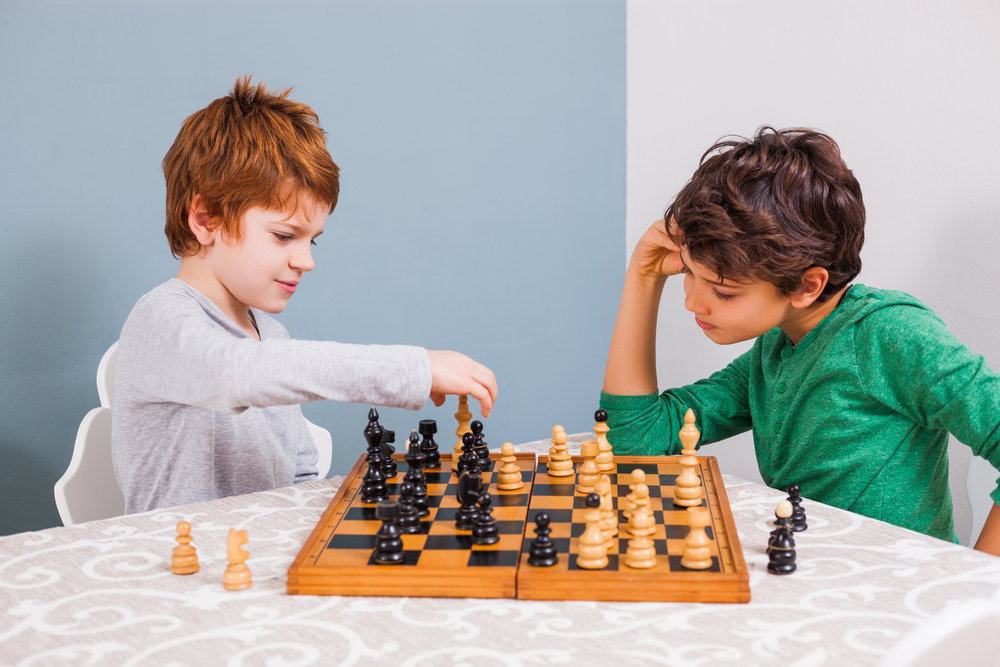


Pattern recognition is foundational for young children's development. For ages 3-6, embedding additional pattern recognition challenges into their daily routine cultivates essential skills that support broader learning domains. One fundamental aspect is cognitive development. When children identify and predict patterns, they exercise critical thinking and enhance their problem-solving abilities. This early intellectual stimulation forms a bedrock for later mathematical concepts, such as algebra and geometry, where discerning patterns is crucial.
Moreover, pattern recognition promotes language skills. Patterns exist in the structure of language, such as in rhymes and rhythms, which bolster reading and phonetic skills. When children comprehend and replicate these linguistic patterns, they develop a greater affinity for reading and writing.
Additionally, engaging with patterns also encourages social development. Group activities that involve pattern games or tasks create opportunities for children to collaborate, communicate, and learn from one another. These interactions help youngsters improve their social skills in a guided, structured manner.
Introducing extra challenges helps maintain children's interest and promotes a growth mindset, teaching them perseverance and patience. Early mastery of pattern recognition therefore has a cascading positive effect on various aspects of a child's early learning journey, making it a worthwhile focus for parents and teachers.








