Comparing objects Extra Challenge Worksheets for Ages 3-7
3 filtered results
-
From - To
Unlock your child's potential with our Comparing Objects Extra Challenge Worksheets for Ages 3-7! Designed to enhance critical thinking and observational skills, these engaging activities invite young learners to explore similarities and differences between various objects. Each worksheet encourages kids to identify, compare, and categorize items using fun visuals and relatable concepts. Perfect for parents and educators looking to supplement learning at home or in the classroom, these worksheets provide an excellent tool for developing early math and cognitive skills. Foster a love for learning and watch as your child gains confidence through hands-on comparisons in this interactive and challenging experience!
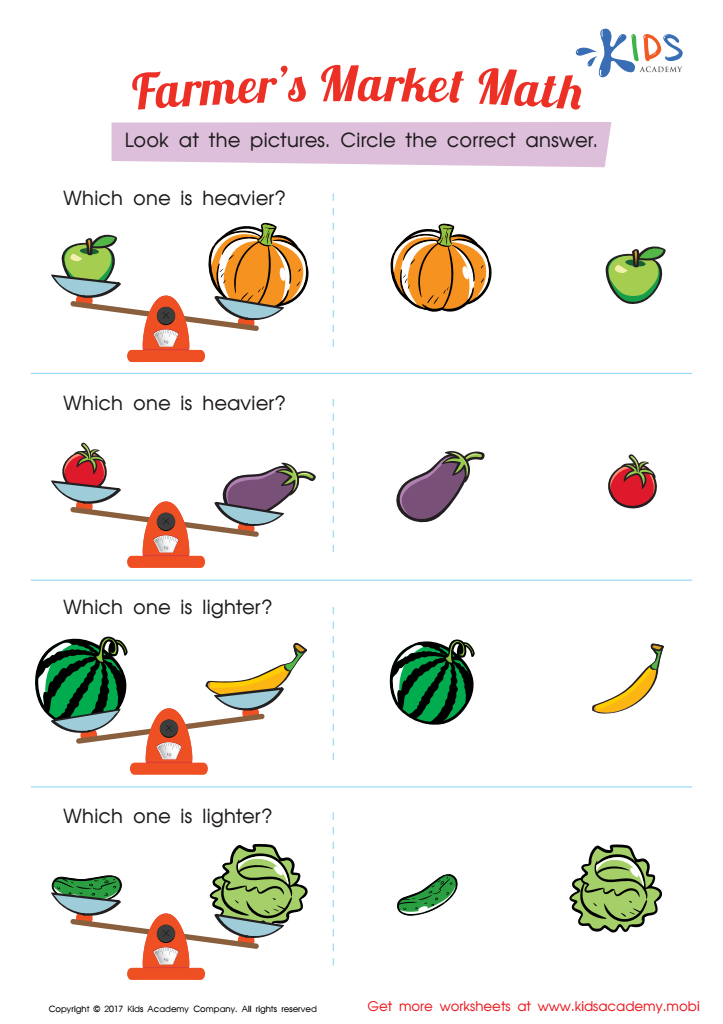
Which One Is Heavier Worksheet
 Assign to My Students
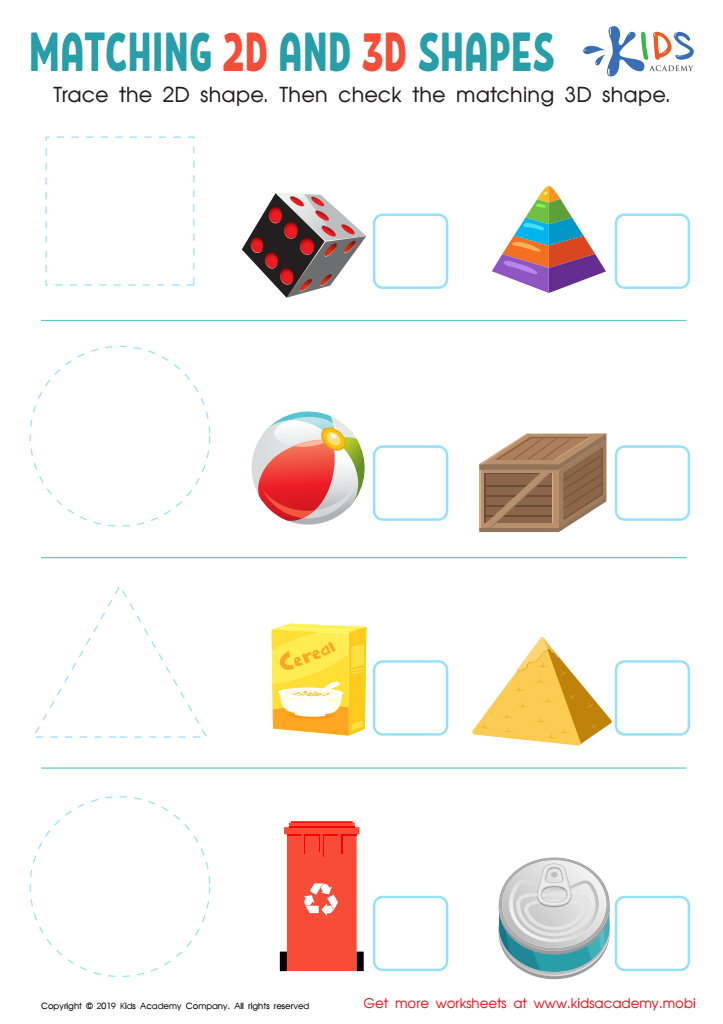
Matching 2D and 3D Shapes Worksheet
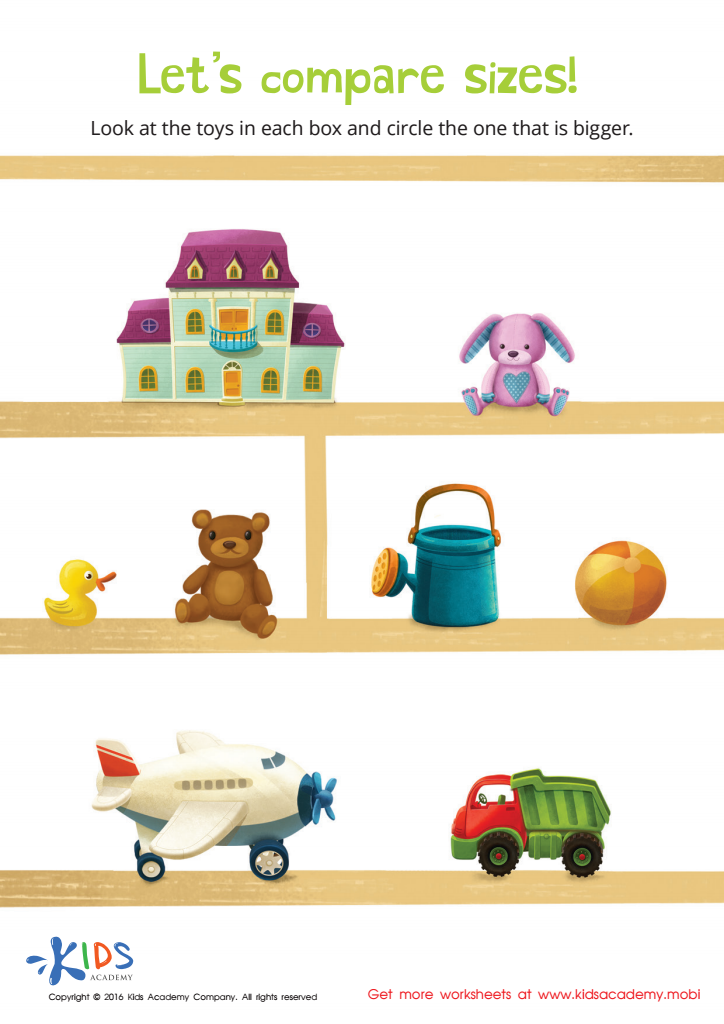
Classifying by Size Sorting Worksheet




Comparing objects is a fundamental cognitive skill that aids in a child’s overall development, making it a vital focus for parents and teachers of children aged 3-7. Engaging in comparisons encourages critical thinking and reasoning skills as children learn to distinguish similarities and differences in size, shape, color, and quantity. This foundational skill is vital for mathematical understanding, laying the groundwork for concepts like measurement, sorting, and numeracy.
Additionally, comparing objects promotes language development. When children describe what they see, they enhance their vocabulary and communication skills, learning new words and engaging in dialogue about their thoughts. This process also supports social skills and collaboration when children compare items together, fostering teamwork and decision-making.
Moreover, incorporating comparing objects in playful, interactive ways encourages active learning, making it exciting and engaging for young learners. Activities like sorting games, nature walks, or cooking provide real-world contexts for these comparisons. When parents and teachers understand the significance of this skill, they can intentionally integrate more comparison activities into their daily routines, thus supporting their children’s cognitive, linguistic, and social growth at this crucial developmental stage. Ultimately, understanding and practicing comparison can lead to more confident, capable learners.








