Shape identification Extra Challenge Worksheets for Ages 3-7
6 filtered results
-
From - To
Enhance your child's shape identification skills with our "Shape Identification Extra Challenge Worksheets" designed for ages 3-7. These engaging and interactive worksheets promote early learning by helping children recognize and categorize various shapes through fun activities. Perfectly crafted to challenge young minds, the worksheets include matching games, shape sorting, and creative drawing tasks that encourage critical thinking and fine motor skills development. Ideal for teachers and parents, these resources provide an excellent way to reinforce classroom concepts or support at-home learning. Shape recognition is foundational for future math skills, setting your child on the path to academic success. Download now for fun learning!
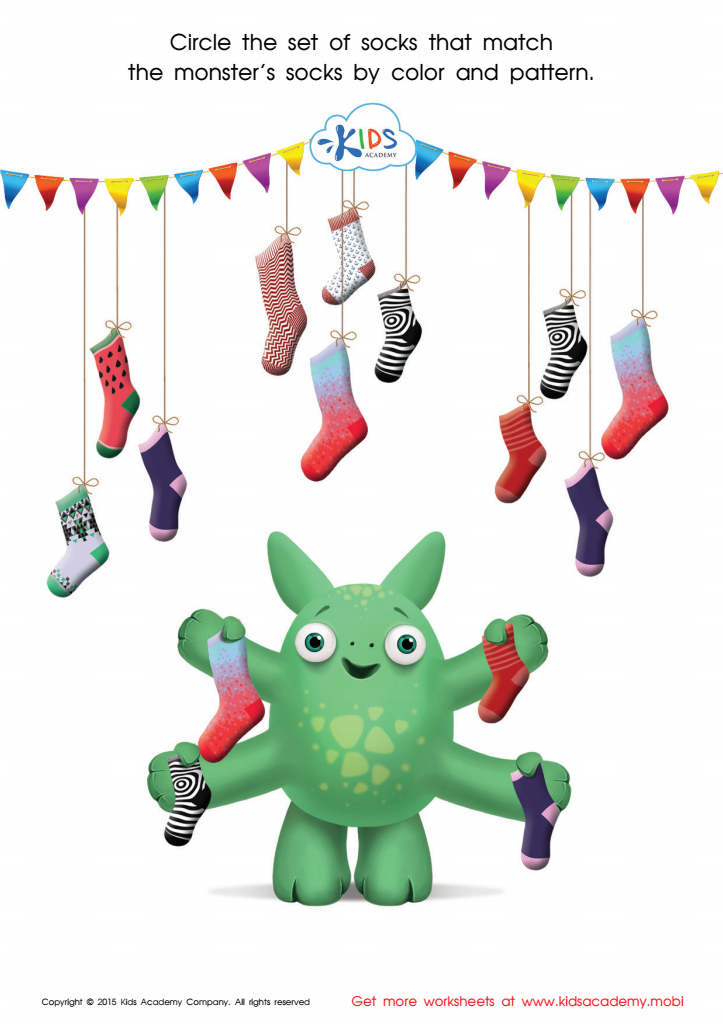
Sort the Monster's Socks Worksheet
 Assign to My Students
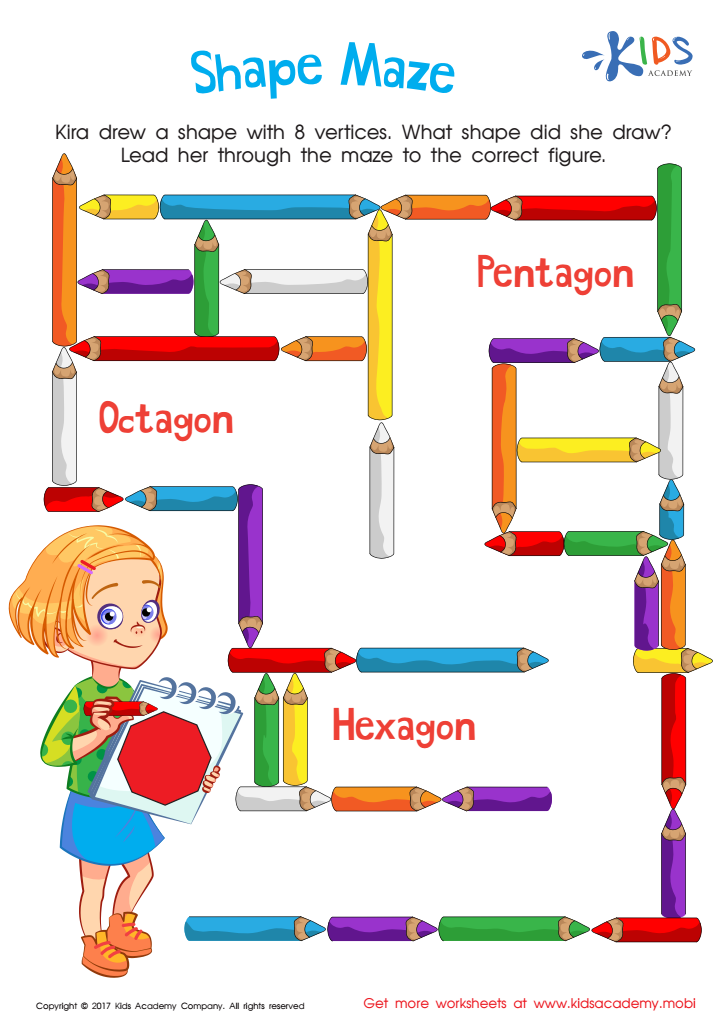
Shape Maze Worksheet
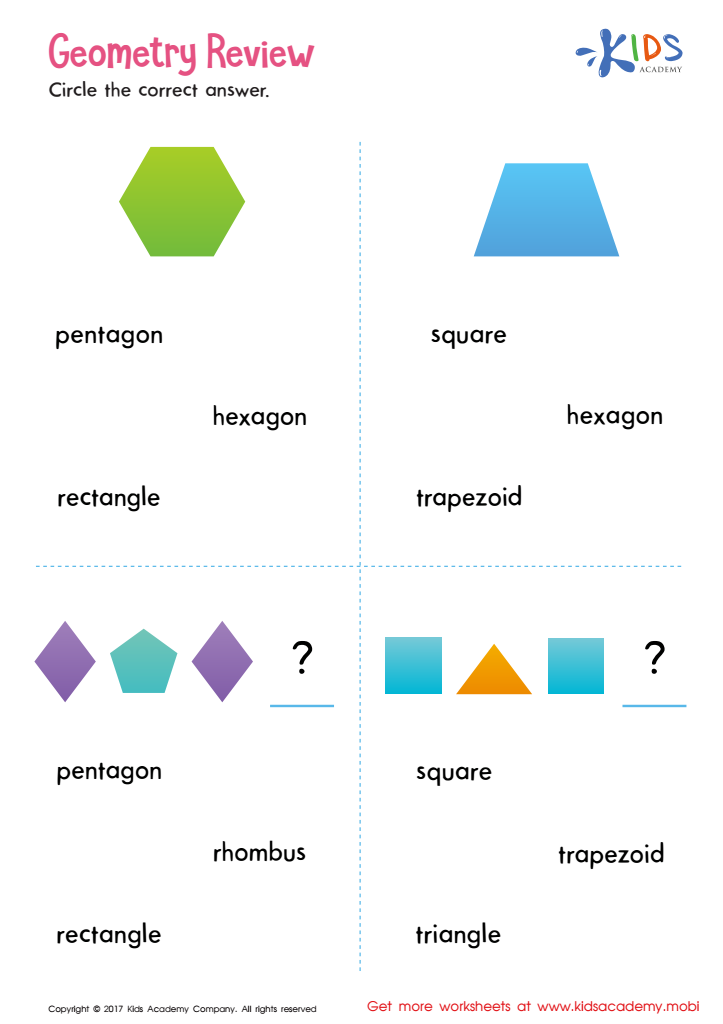
Geometry Review Printable
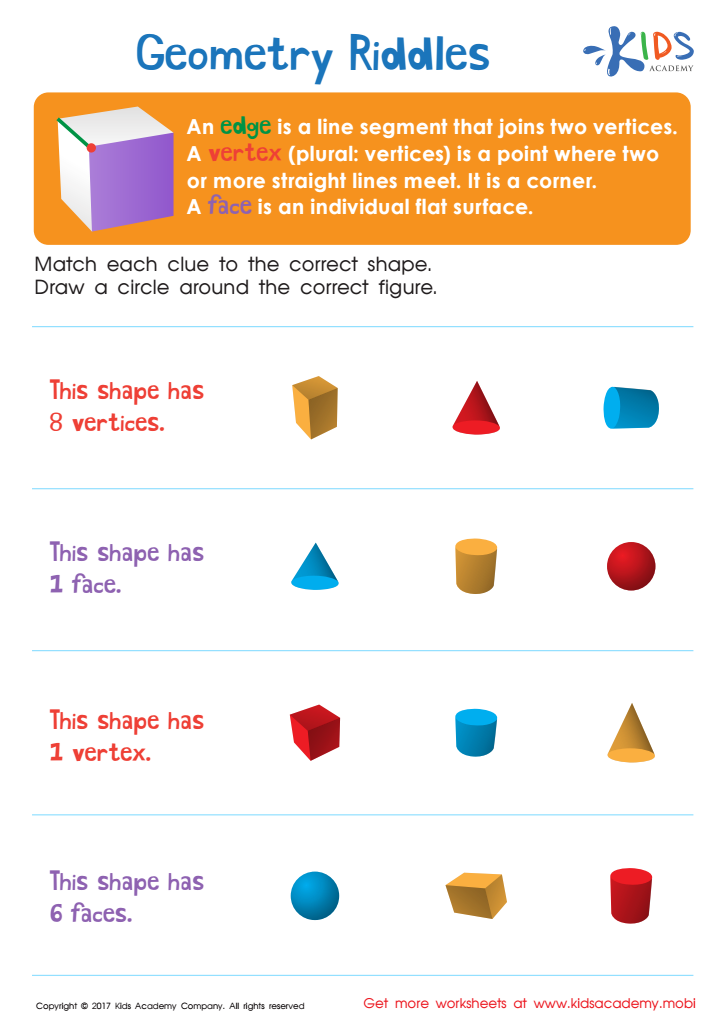
Geometry Riddles Printable
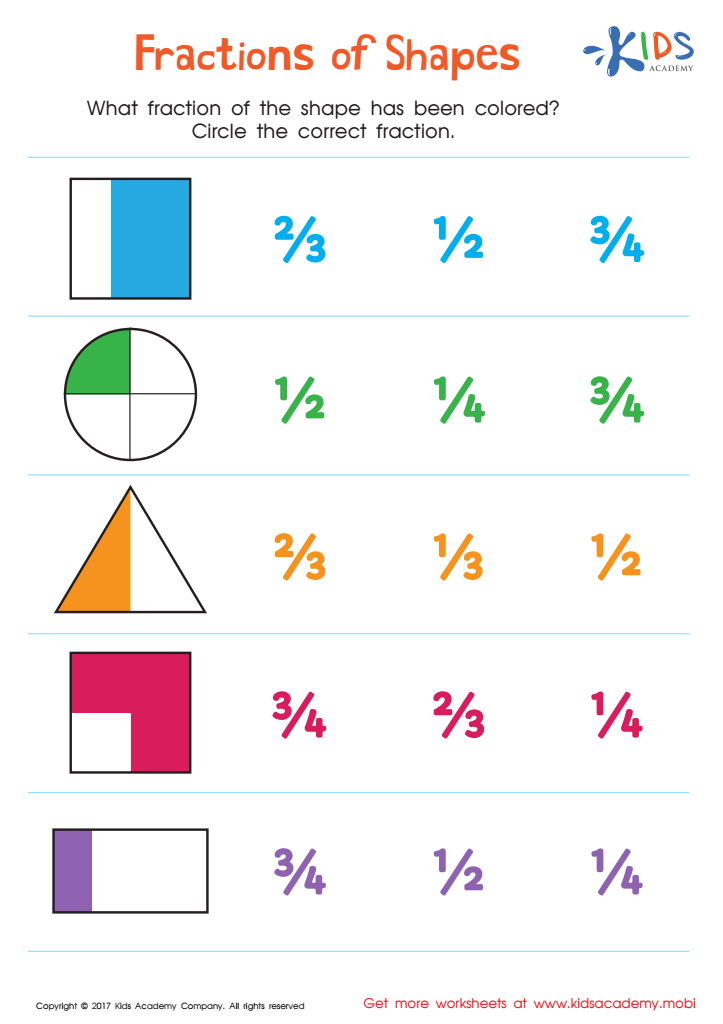
Fractions of Shapes: Math Concept Worksheet
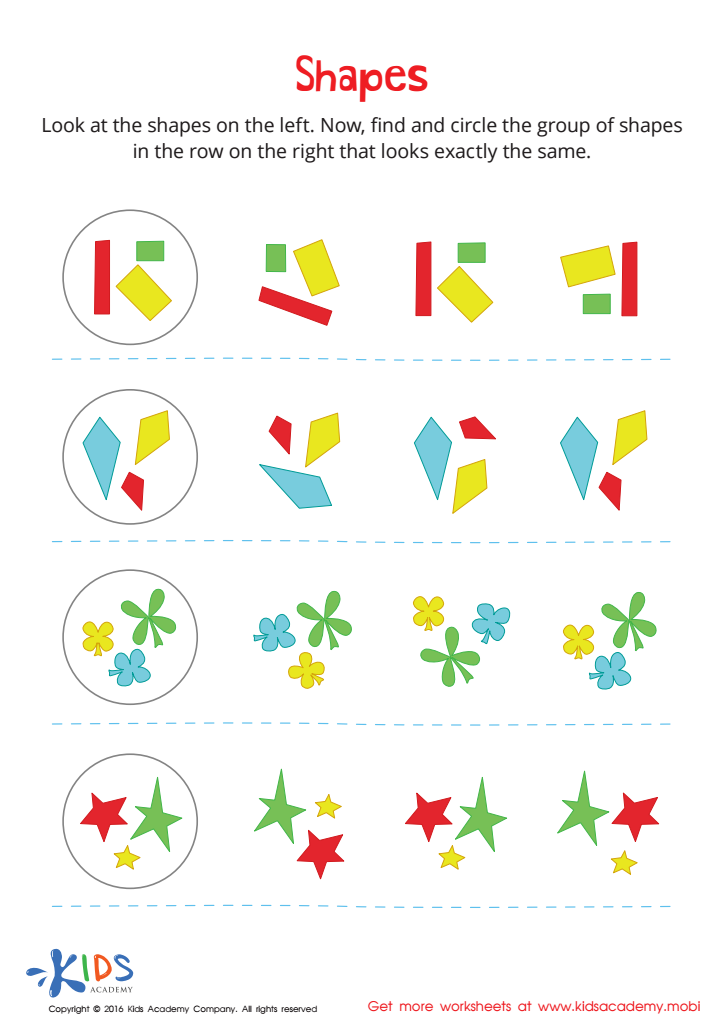
Shapes Worksheet



.jpg)




Shape identification is a foundational skill that plays a crucial role in early childhood development, particularly for children ages 3-7. Parents and teachers should care about shape identification Extra Challenge activities because they not only enhance children's cognitive skills but also promote a deeper understanding of the world around them. Mastery of shapes lays the groundwork for critical mathematical concepts, such as geometry and spatial awareness, making it easier for children to grasp more complex ideas later on.
Furthermore, engaging in shape identification activities fosters fine motor skills as children manipulate shapes through drawing, cutting, or building. These activities also promote language development as kids learn to articulate shape names and characteristics, enhancing their vocabulary.
Socially, shape identification challenges can encourage collaboration and teamwork among peers, enhancing social skills as children work together to identify, sort, or create shapes. Moreover, adding an extra challenge can stimulate curiosity and problem-solving abilities, keeping children engaged and motivated.
By focusing on these activities, parents and teachers create stimulating environments that nurture holistic development, preparing children not only for academic success but also for creativity and critical thinking in everyday life.








