Comparing Fractions Extra Challenge Addition & Subtraction Worksheets for Ages 3-7
4 filtered results
-
From - To
Elevate early math skills with our specialized "Comparing Fractions Extra Challenge Addition & Subtraction Worksheets" designed for ages 3-7. These engaging and meticulously crafted worksheets help young learners master the basics of fractions while incorporating fun addition and subtraction exercises. Each activity strengthens foundational math skills, promotes problem-solving, and enhances critical thinking. Perfect for at-home practice or classroom use, these worksheets cater to different learning levels, ensuring your child remains challenged. Give your child the tools they need for future success in math with these comprehensive and enjoyable worksheets. Start today and watch their confidence soar!
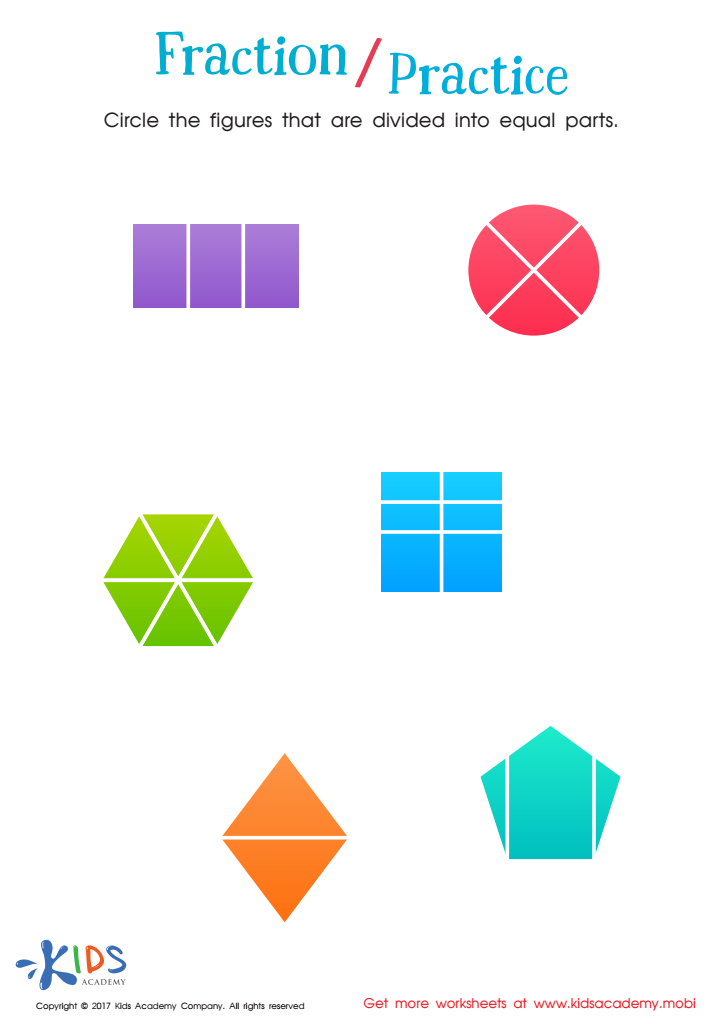
Fractions: Shapes Worksheet
 Assign to My Students
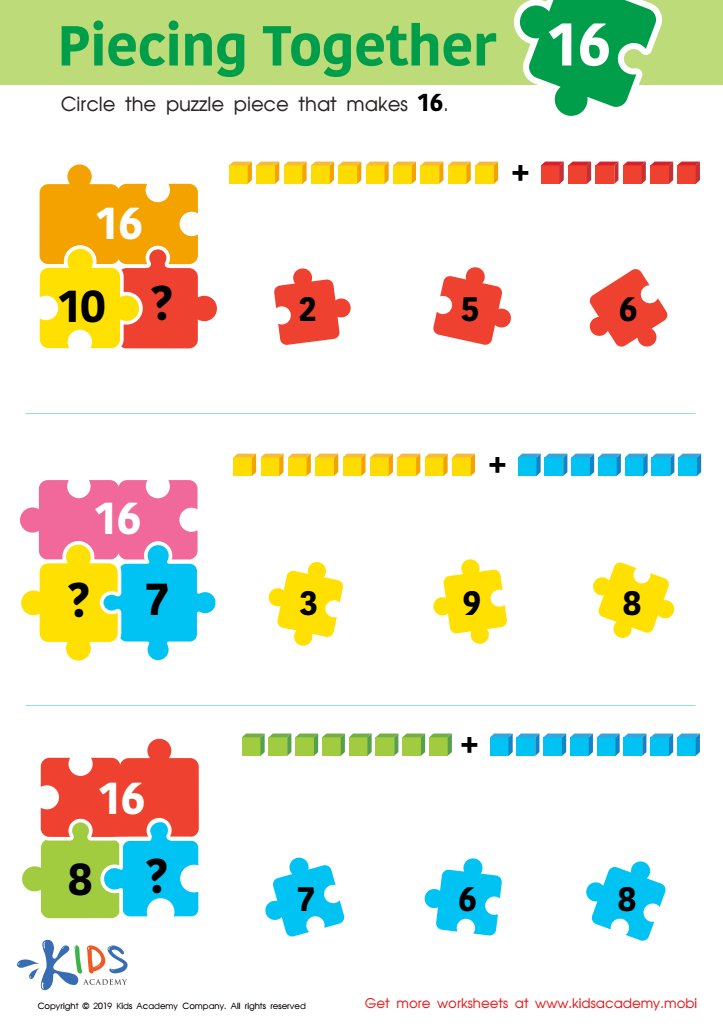
Piecing Together 16 Worksheet
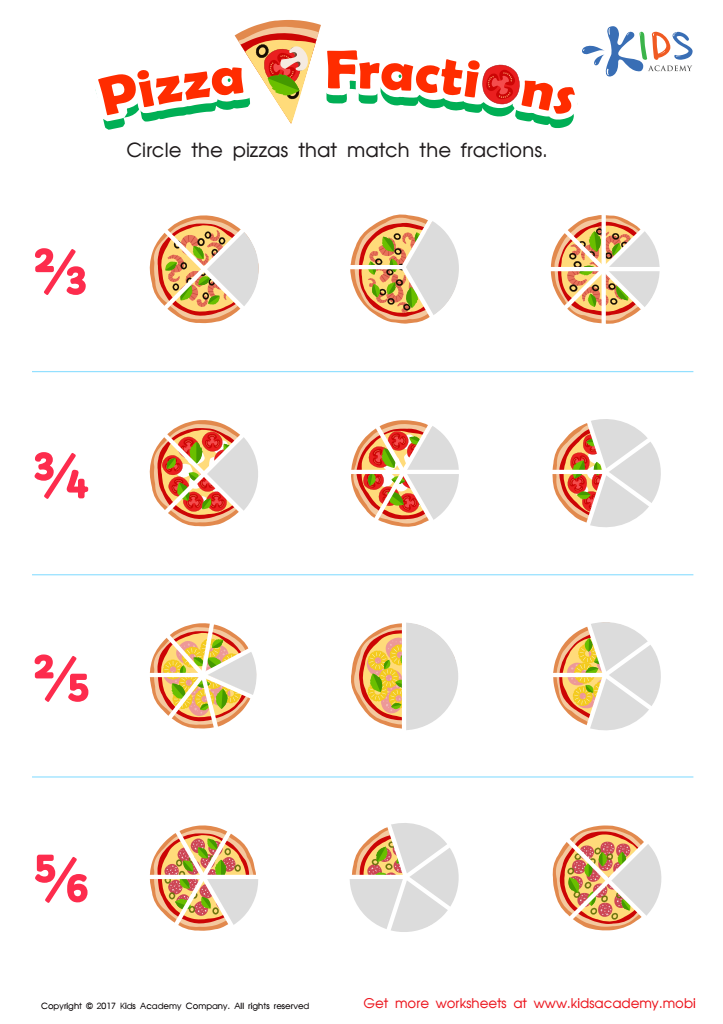
Fractions: Pizza Printable
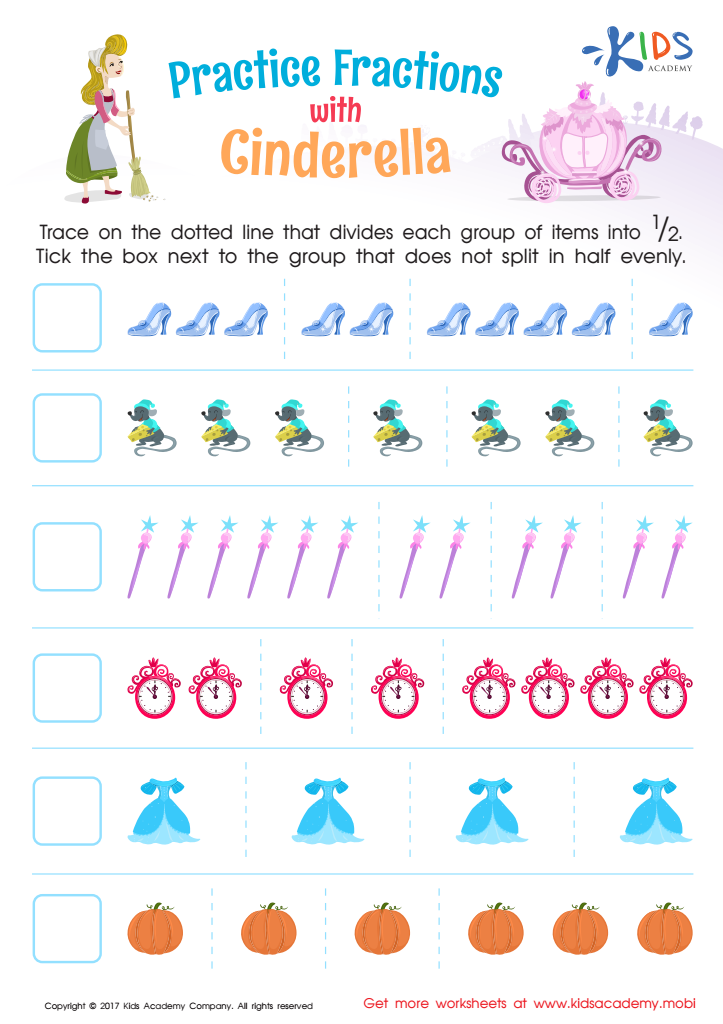
Fractions: Cinderella Printable








Comparing Fractions Extra Challenge Addition & Subtraction tasks for ages 3-7 are crucial for developing a strong mathematical foundation. At this formative stage, children are naturally curious and absorb concepts quickly. Engaging them with comparing fractions and basic arithmetic ensures they grasp these fundamental skills early on.
Understanding fractions lays the groundwork for more complex mathematics they will encounter later in life. When children learn to compare fractions, they develop critical thinking and problem-solving skills. This can improve their ability to interpret and manipulate various math problems, fostering mathematical fluency.
Incorporating addition and subtraction challenges further enhances their number sense. Handling these operations with fractions demands a higher level of cognitive engagement, thus sharpening their analytical skills. These activities can also help to solidify their understanding of division and multiplication, as these concepts are essentially intertwined with fractions.
For teachers and parents, providing these early challenges not only boosts academic preparedness but also boosts self-confidence in young learners. It sends a positive message that math is fun and accessible, ultimately fostering a lifelong love for learning. Consequently, investing time in these foundational activities reaps long-term educational benefits, propelling children towards academic success in future mathematical endeavors.








