Shape identification Extra Challenge Geometry Worksheets for Ages 3-7
5 filtered results
-
From - To
Unlock your child's geometric potential with our "Shape Identification Extra Challenge Geometry Worksheets" tailored for ages 3-7! These engaging worksheets are designed to strengthen shape recognition and spatial reasoning skills through fun and interactive activities. Each worksheet offers unique challenges that go beyond basic identification, encouraging critical thinking and problem-solving. Perfect for both classroom settings and at-home learning, these resources help young learners explore 2D and 3D shapes while boosting their confidence in math. Enhance your child’s love for geometry while preparing them for future academic success. Dive into our worksheets and watch their skills flourish!
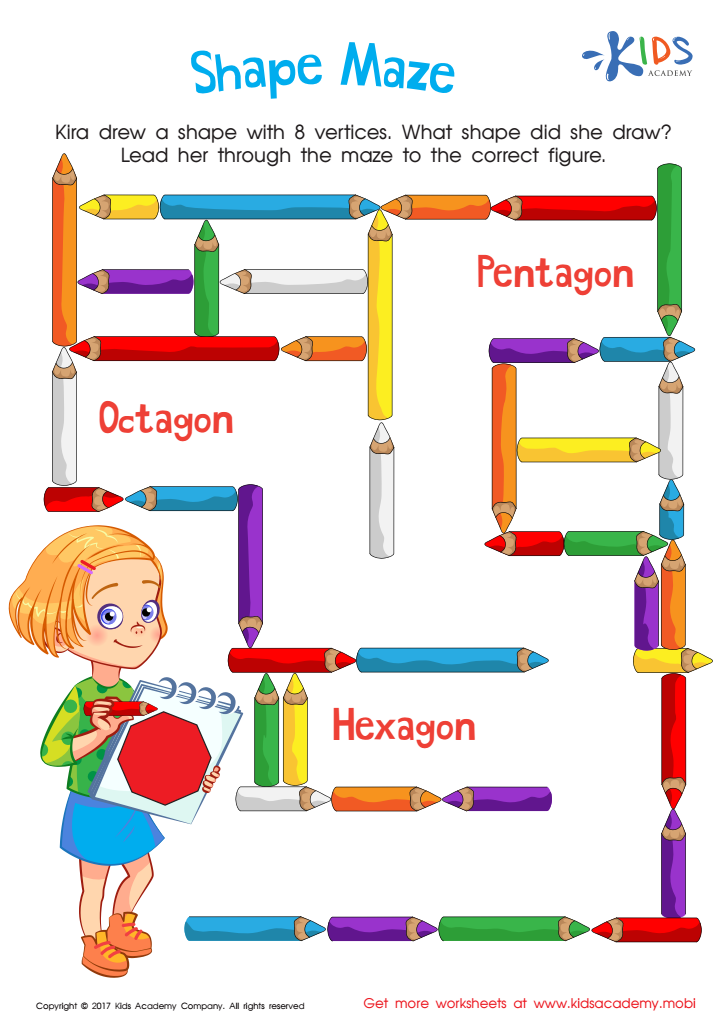
Shape Maze Worksheet
 Assign to My Students











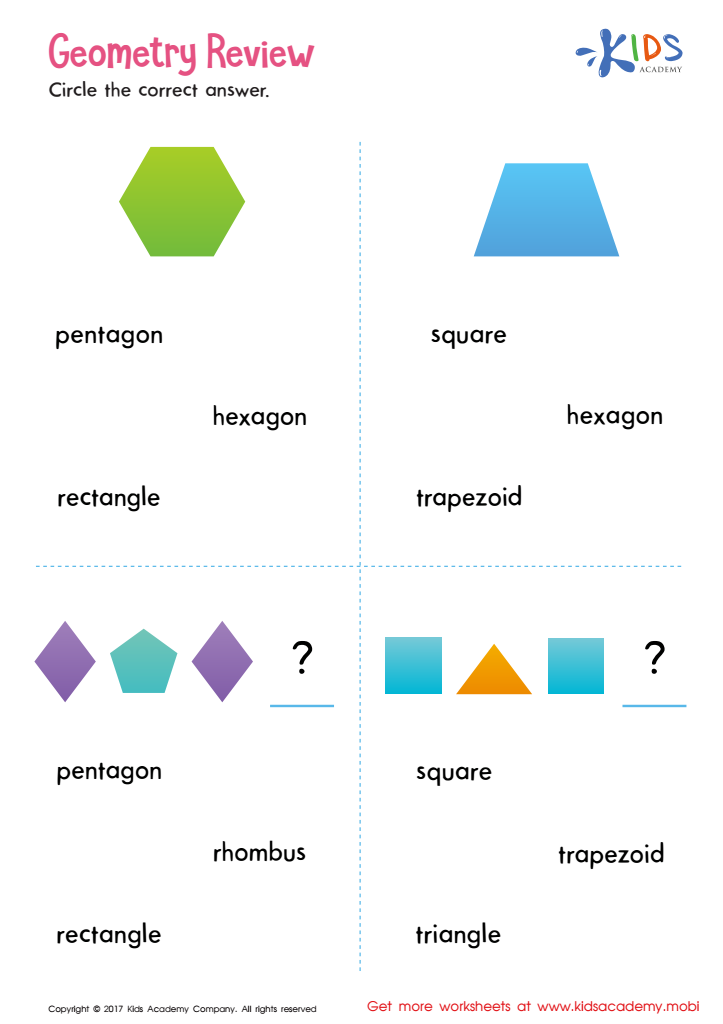
Geometry Review Printable
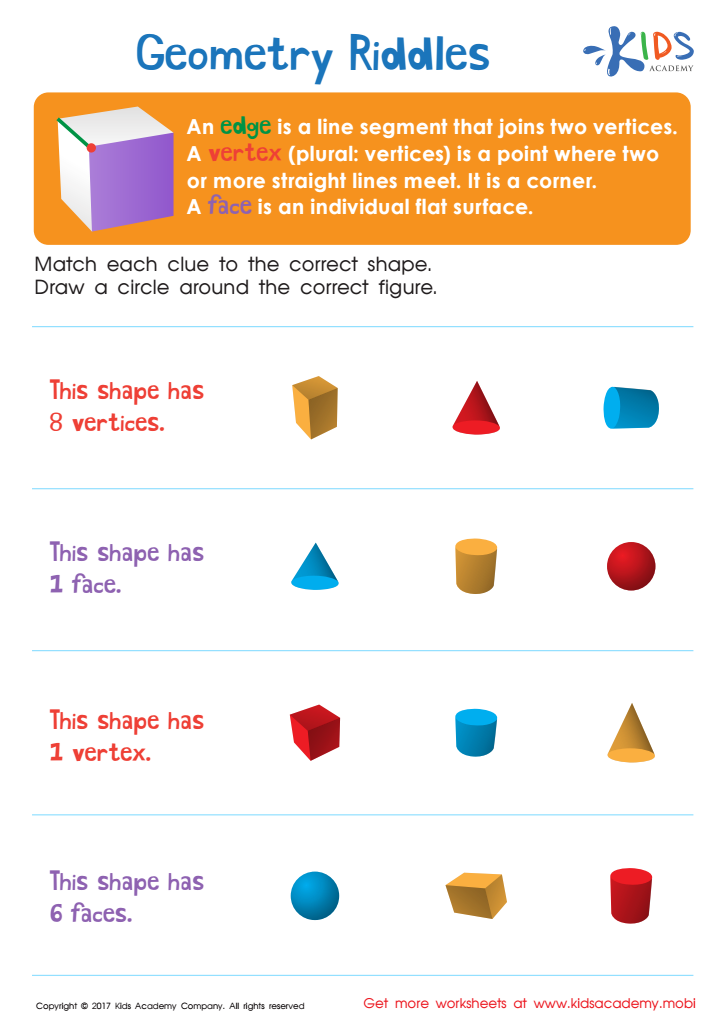
Geometry Riddles Printable
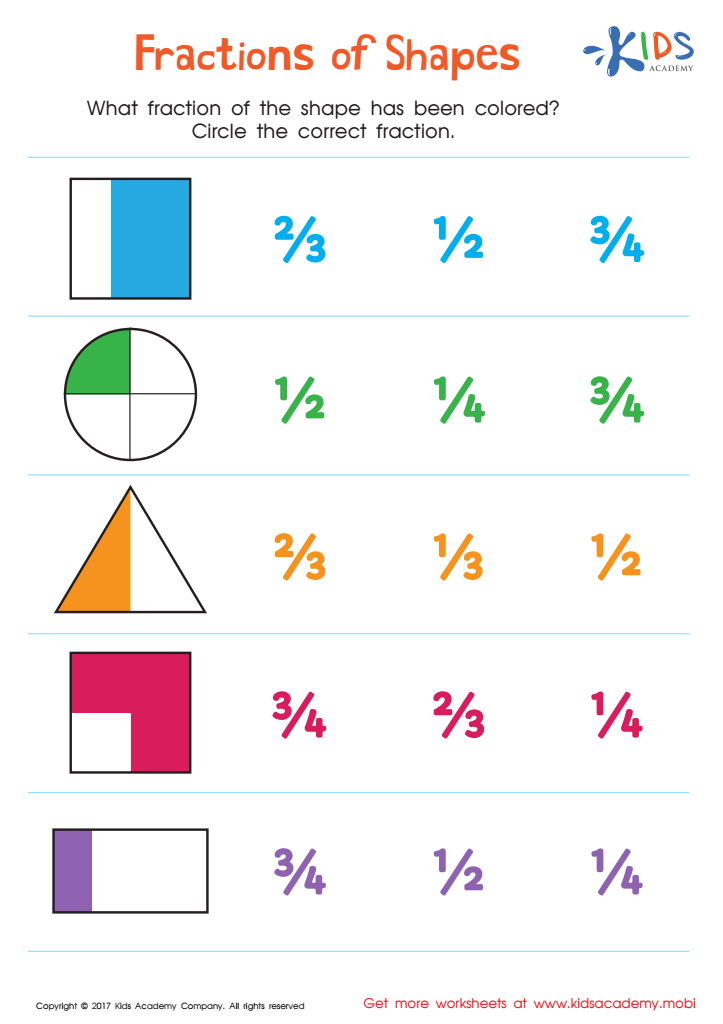
Fractions of Shapes: Math Concept Worksheet
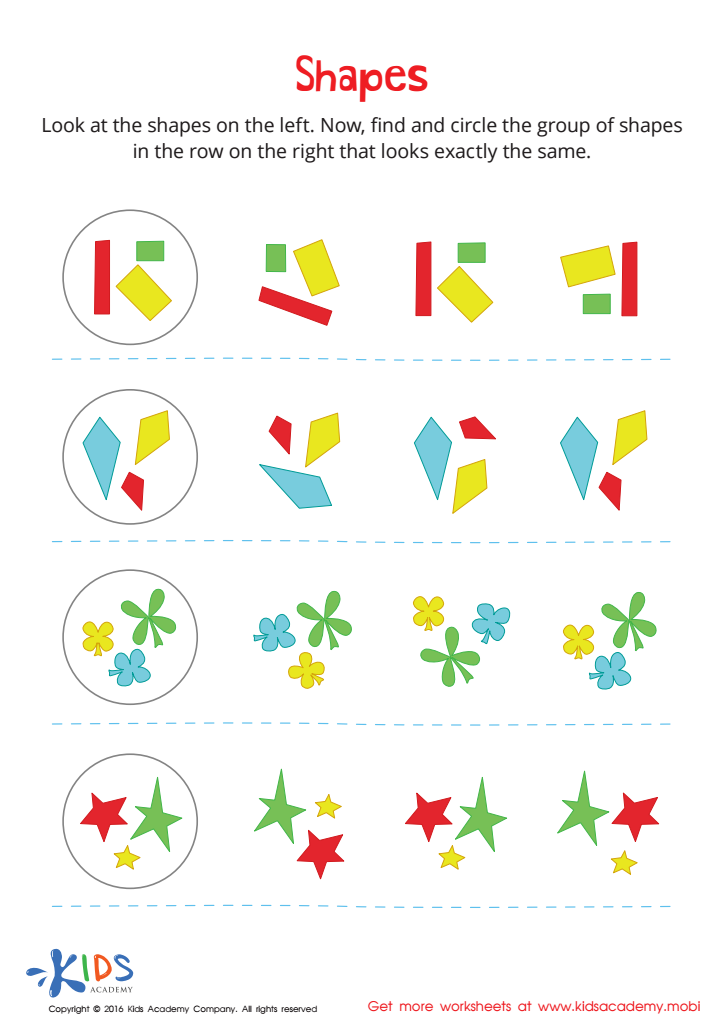
Shapes Worksheet








Shape identification is a fundamental skill that lays the groundwork for understanding geometry and spatial awareness in young children aged 3-7. Parents and teachers should care about this Extra Challenge Geometry initiative as it not only aids in cognitive development but also enhances critical thinking and problem-solving abilities. Early exposure to shapes helps children recognize and differentiate between various geometric forms, fostering their ability to categorize and associate these shapes with objects in their environment.
Additionally, mastering shape identification supports the development of preparation skills in math. It encourages the integration of concepts such as symmetry, measurement, and spatial reasoning, which are crucial as children progress in their education. This initiative also promotes creativity, as children learn to see shapes in art and nature, fostering an appreciation for the visuals around them.
Moreover, engaging children in shape-related challenges can be a fun, interactive way to learn, making educational experiences enjoyable and memorable. By investing time and resources into shape identification, parents and teachers can help build a solid foundation for later mathematics learning, equip children with essential problem-solving skills, and prepare them for future academic success. Ultimately, shape identification is a gateway to a more profound understanding of the world, encouraging exploration and curiosity.