Shape Recognition Extra Challenge Geometry Worksheets for Ages 3-7
11 filtered results
-
From - To
Boost your child's geometric skills with our "Shape Recognition Extra Challenge Geometry Worksheets" for ages 3-7! Designed to enhance shape recognition, these engaging worksheets offer a stimulating challenge for young learners. Packed with vibrant visuals and interactive activities, they encourage kids to identify, compare, and categorize shapes in a fun way. Perfect for preschool and early elementary students, these worksheets promote critical thinking and fine motor skills. Whether for home use or classroom settings, our extra challenges help foster a solid foundation in geometry, preparing your little ones for future math success. Download now and watch their skills flourish!
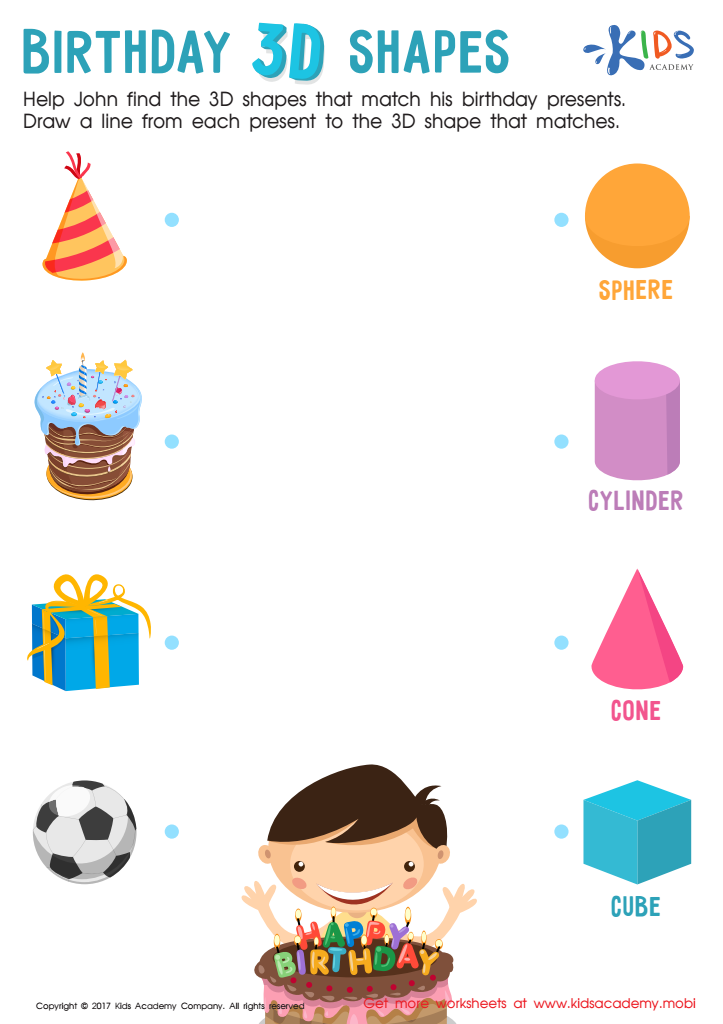
Birthday 3D Shapes Worksheet
 Assign to My Students











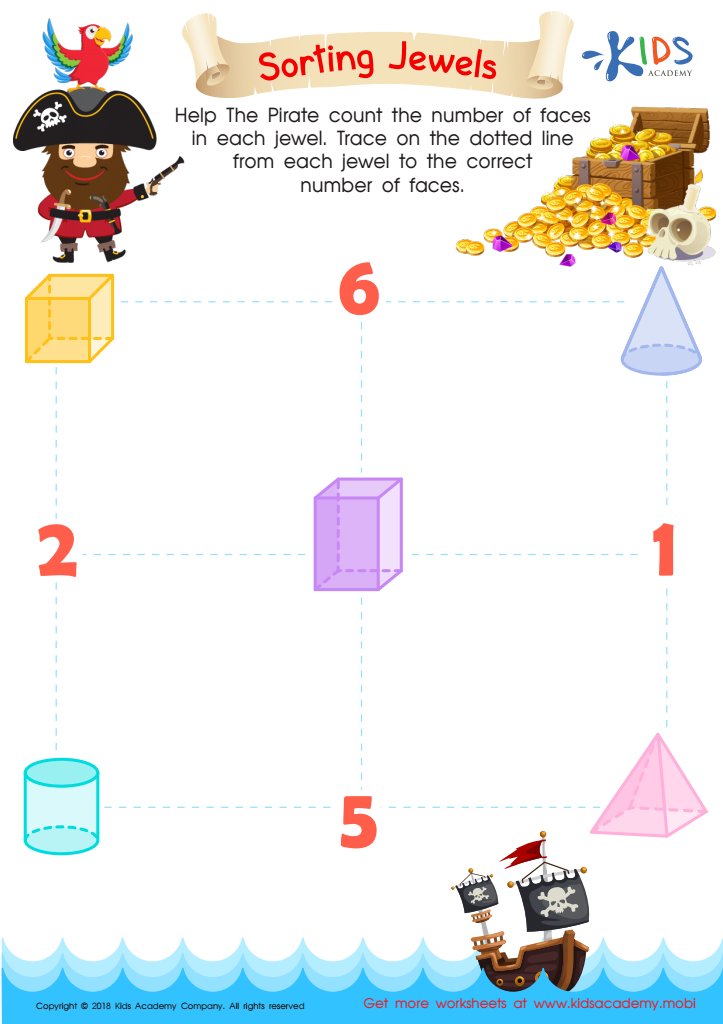
Sorting Jewels Worksheet
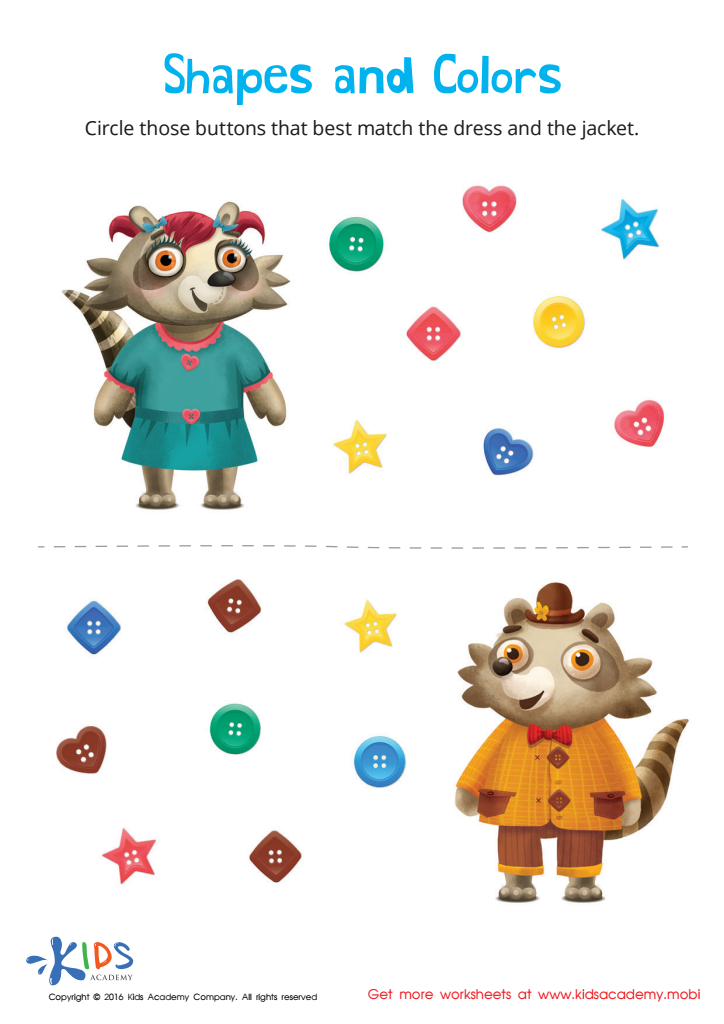
Matching: Shapes and Colors Worksheet
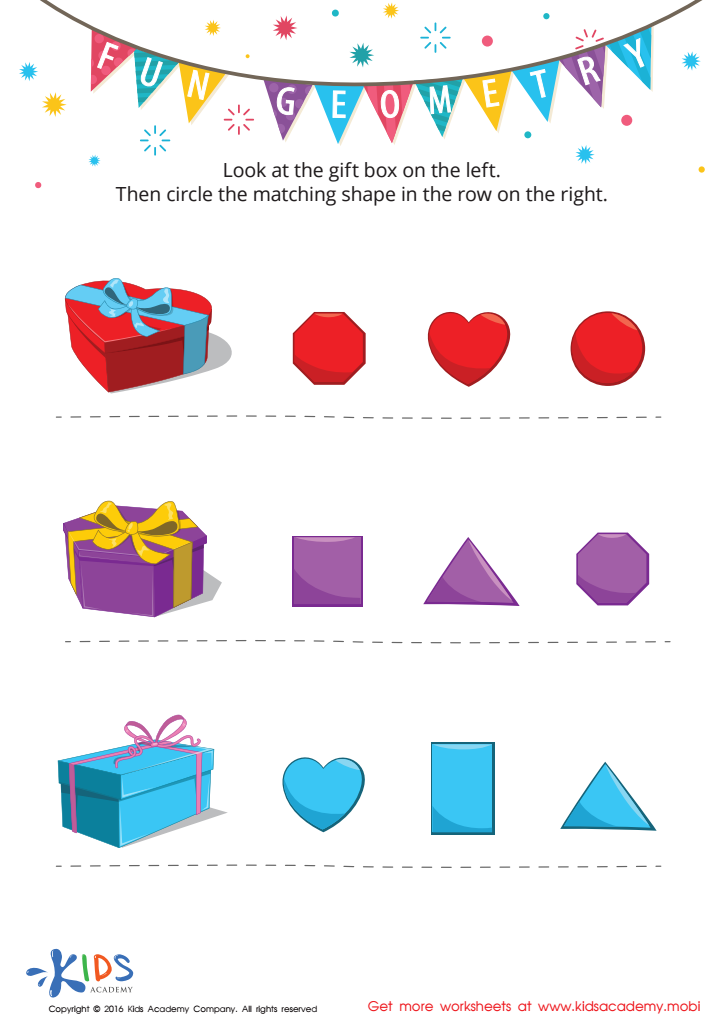
Fun Geometry Worksheet
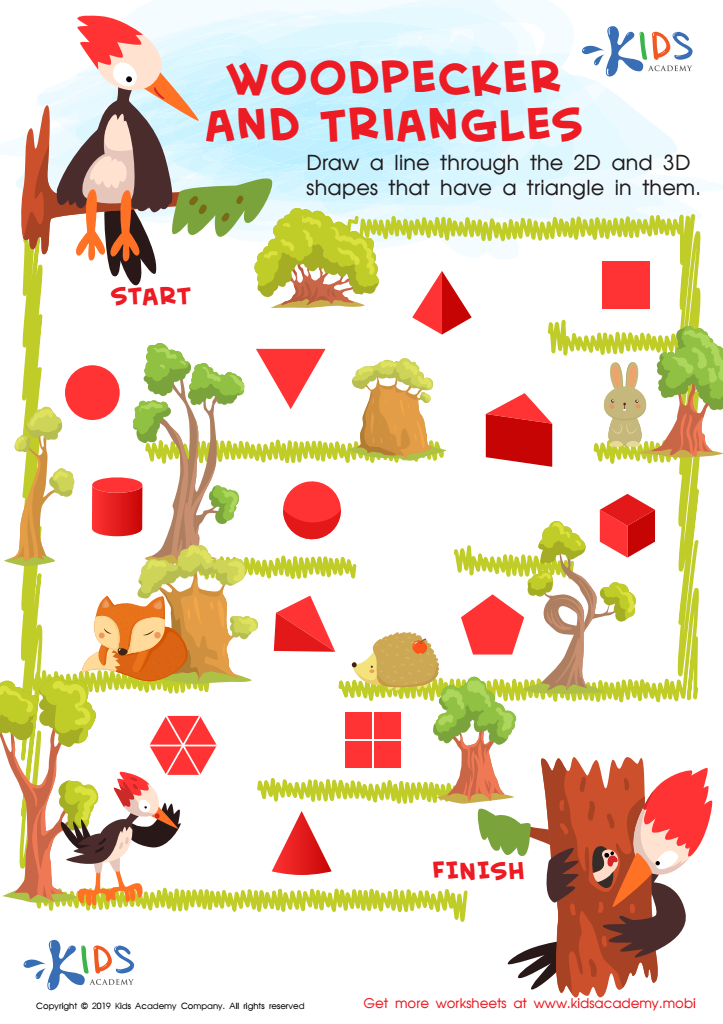
Woodpecker and Triangles Worksheet
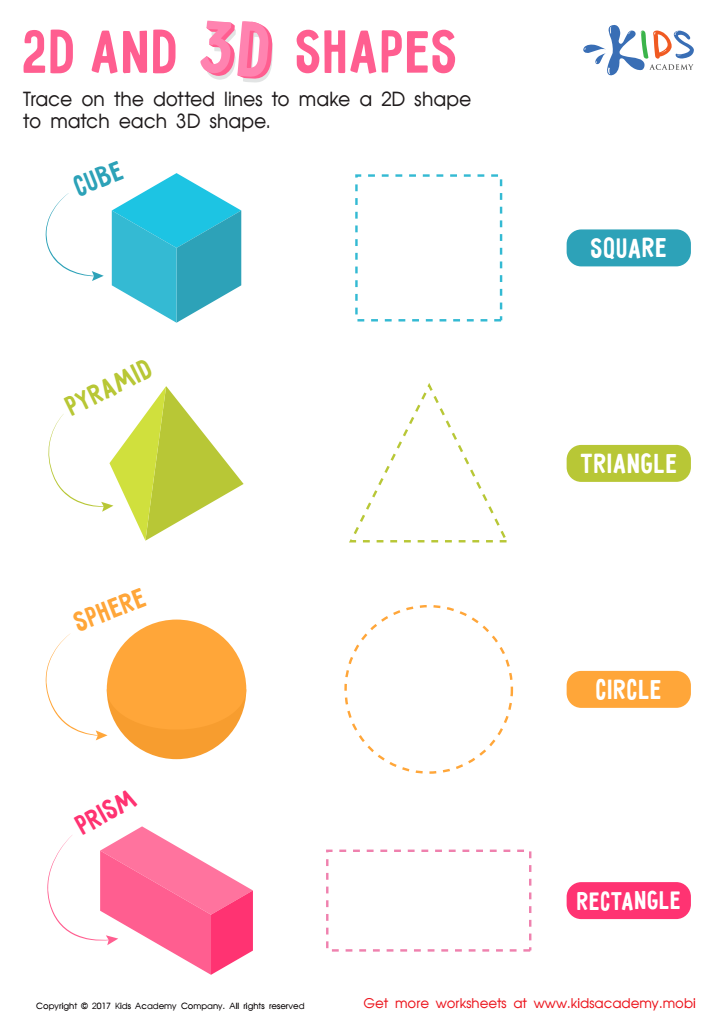
2D and 3D Shapes Worksheet
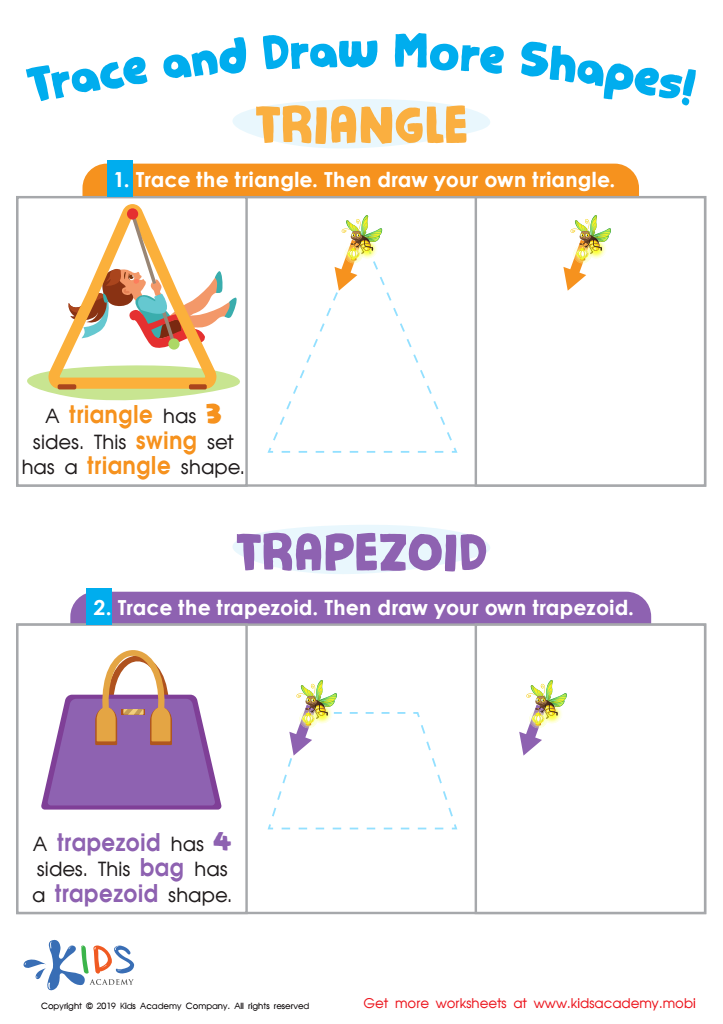
Trace and Draw More Shapes Worksheet
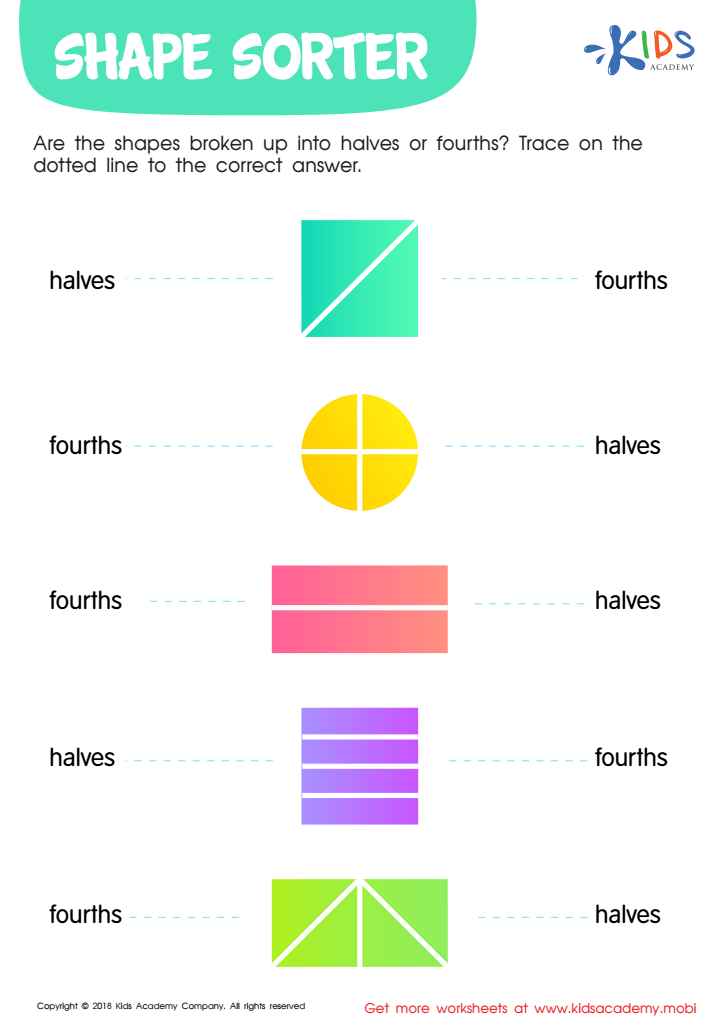
Shape Sorter Worksheet
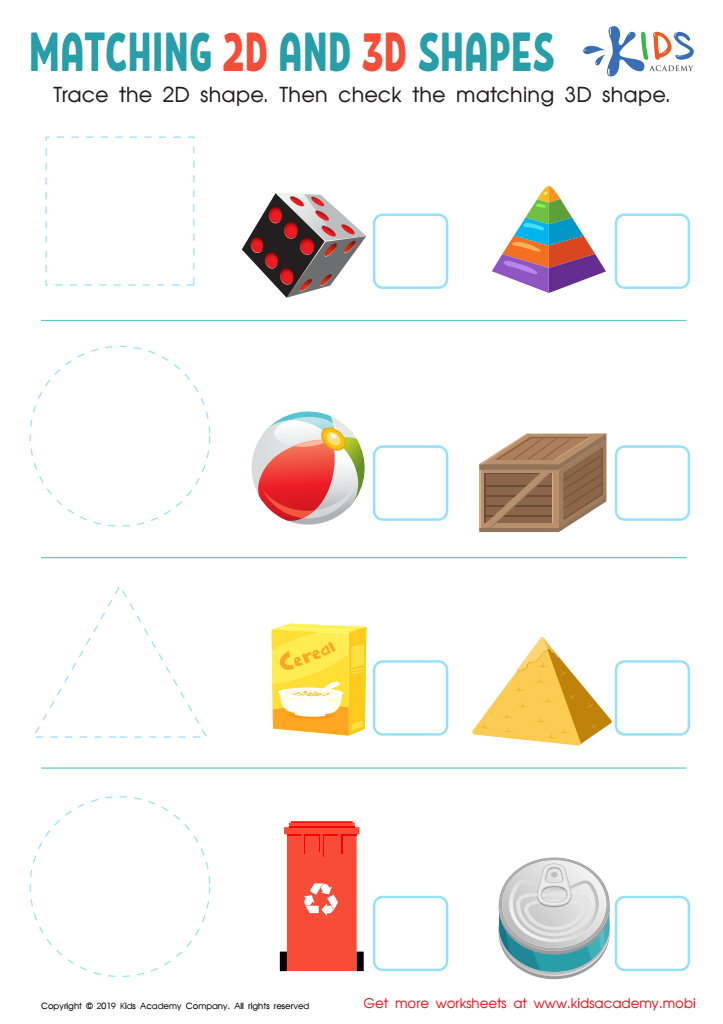
Matching 2D and 3D Shapes Worksheet
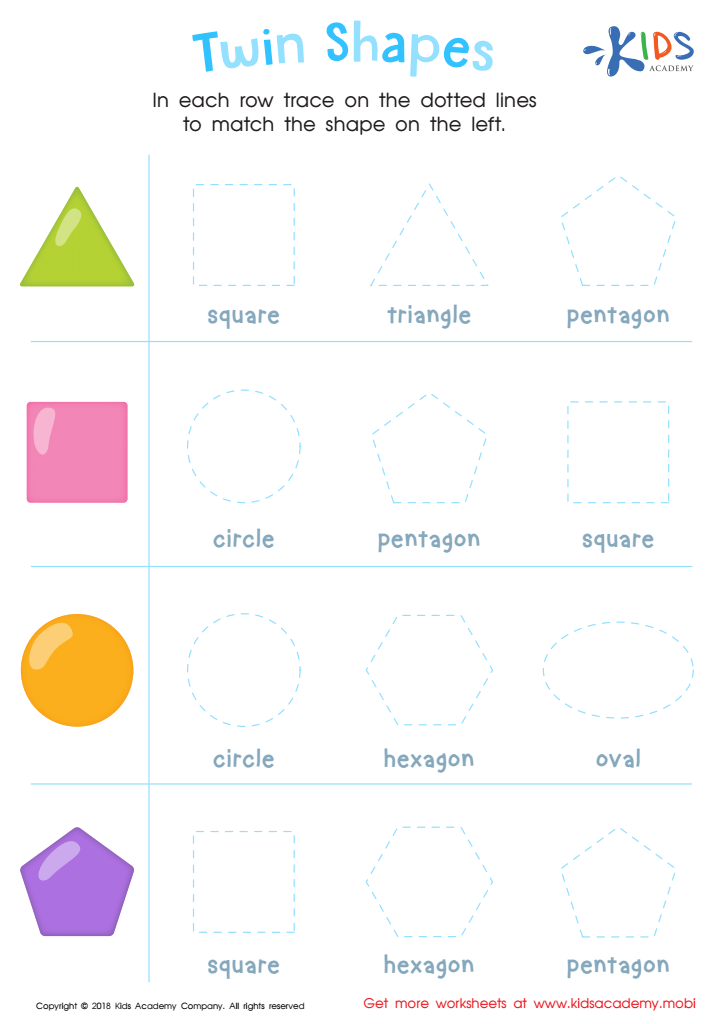
Twin Shapes Dot-to-Dot Worksheet
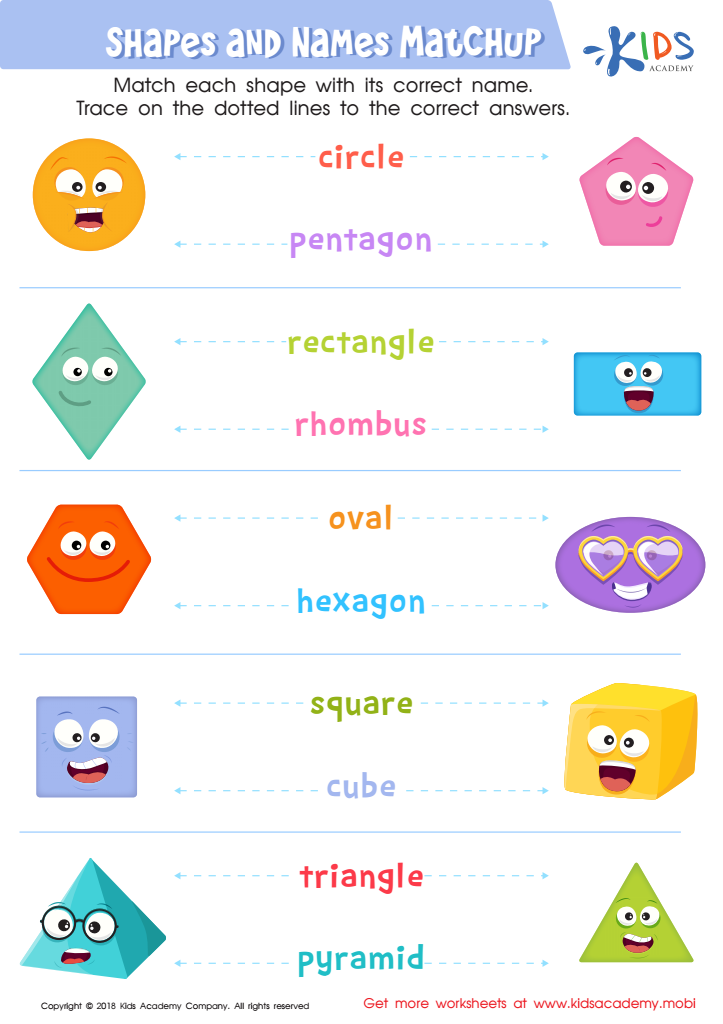
Shapes and Names Matchup Worksheet








Shape Recognition Extra Challenge Geometry is essential for parents and teachers to focus on because it lays a foundational understanding of spatial awareness and mathematical concepts in young learners aged 3-7. Engaging children in shape recognition activities promotes critical cognitive skills that enhance their problem-solving abilities and future academic performance, particularly in mathematics and geometry.
Shapes are everywhere in our environment, and recognizing them helps children describe and categorize the world around them. This skill fosters language development as they learn to express their observations. Furthermore, shape recognition activities often involve hands-on learning and play, making it an enjoyable experience that promotes social interaction and collaboration among peers.
Early exposure to geometry concepts helps to build confidence and encourages a positive attitude toward math as children grow. Skills developed during this foundational stage pave the way for more complex topics like measurement and spatial reasoning encountered in later grades. Additionally, promoting shape recognition aids in fine motor skills through various hands-on tasks, which are vital for early development. In essence, paying attention to shape recognition challenges is an investment in a child’s cognitive, social, and emotional growth, setting the stage for lifelong learning.








