Understanding fractions Extra Challenge Geometry Worksheets for Ages 3-7
7 filtered results
-
From - To
Explore our "Understanding Fractions Extra Challenge Geometry Worksheets" designed specifically for children aged 3 to 7! These engaging worksheets offer a fun and interactive way for young learners to grasp the concept of fractions through geometry. With vibrant visuals and age-appropriate activities, children will develop a solid foundational understanding of dividing shapes, recognizing parts within wholes, and more. Each worksheet provides an extra challenge to enhance critical thinking and problem-solving skills while building confidence in numeracy. Perfect for classroom use or home learning, these worksheets are a valuable resource to help children master fractions in an enjoyable and stimulating way!
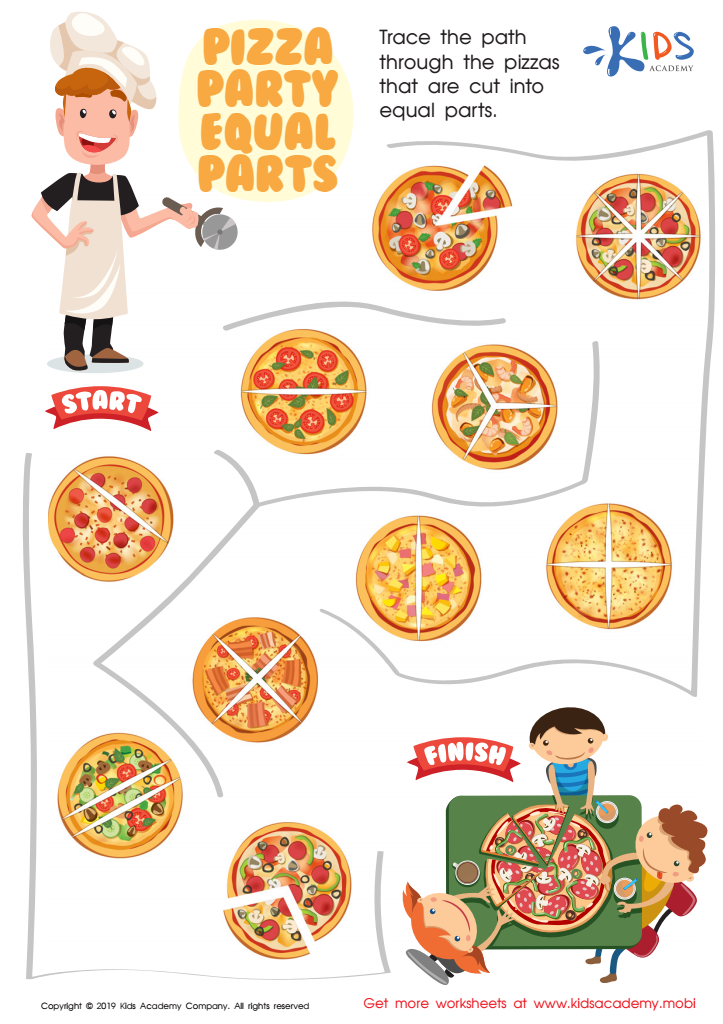
Pizza Party Equal Parts Worksheet
 Assign to My Students











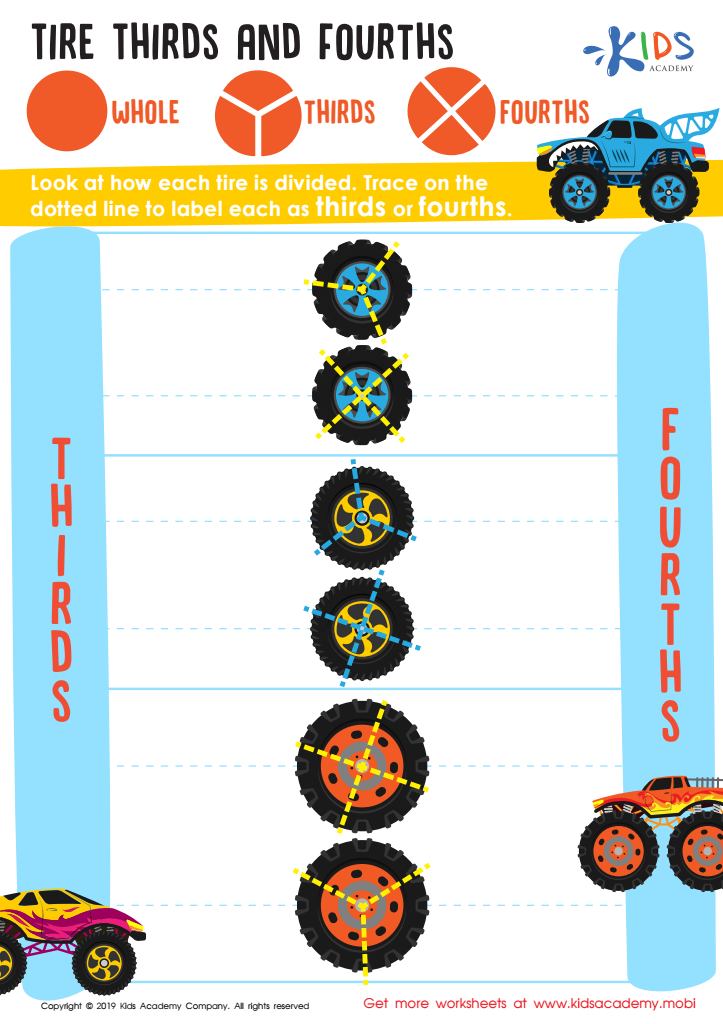
Tire Thirds and Fourths Worksheet
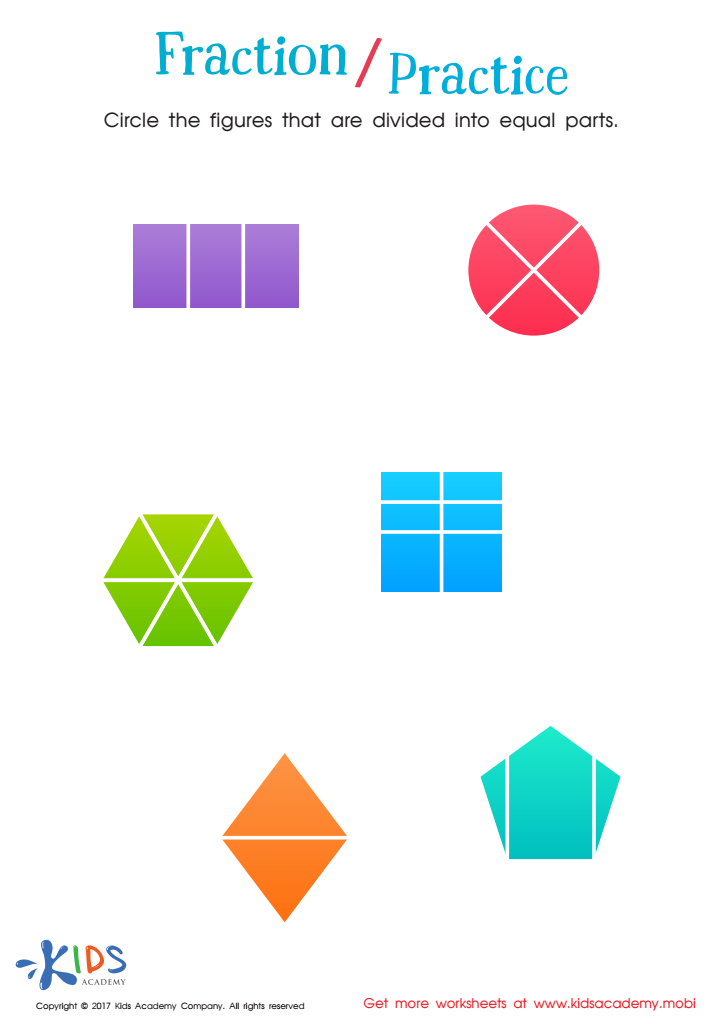
Fractions: Shapes Worksheet
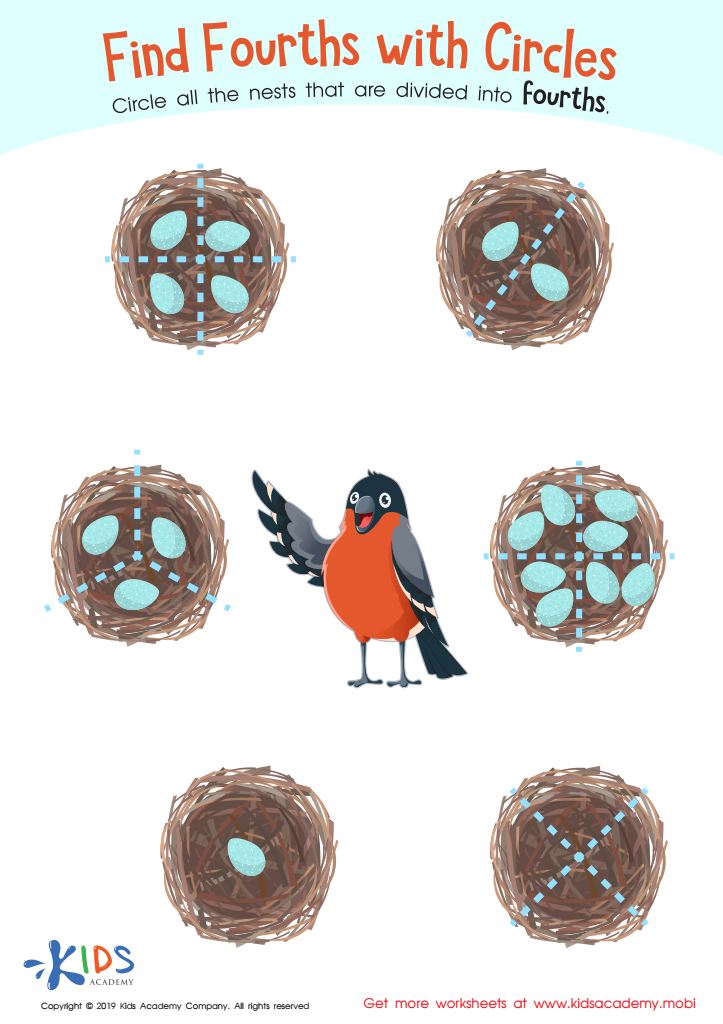
Find Fourths Circles Worksheet
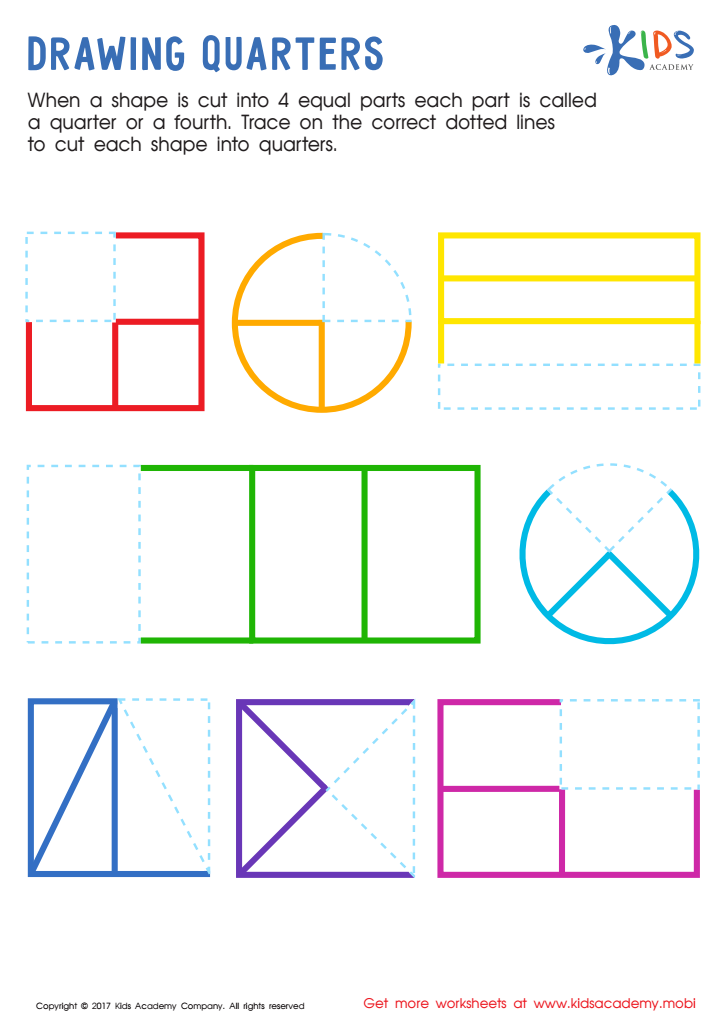
Drawing Quarters Worksheet
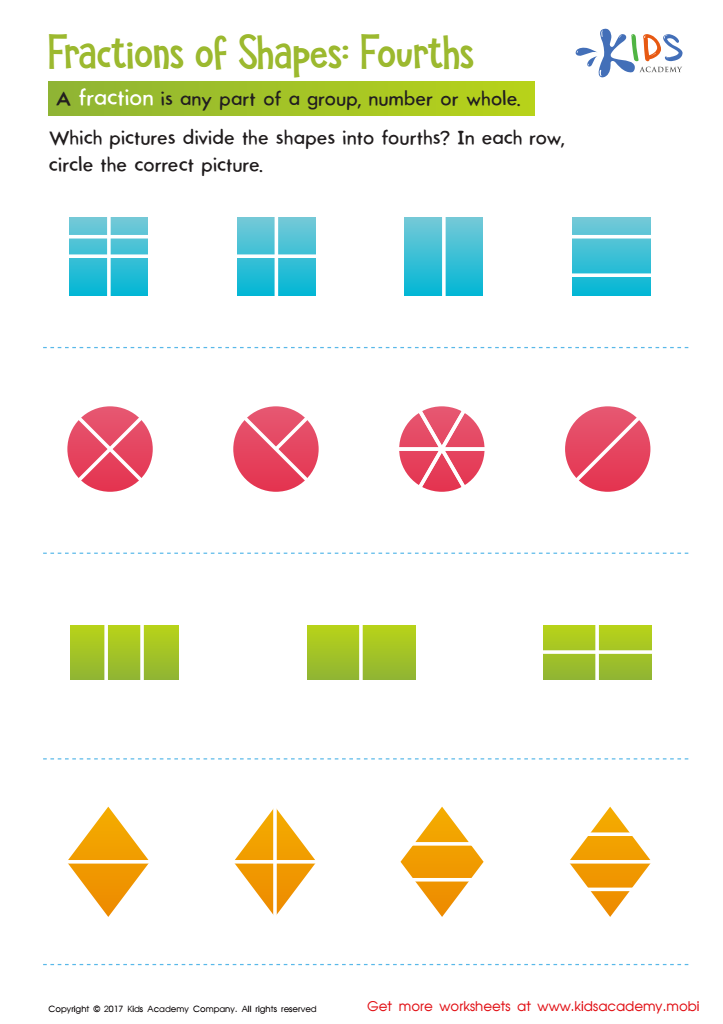
Fractions of Shapes Worksheet
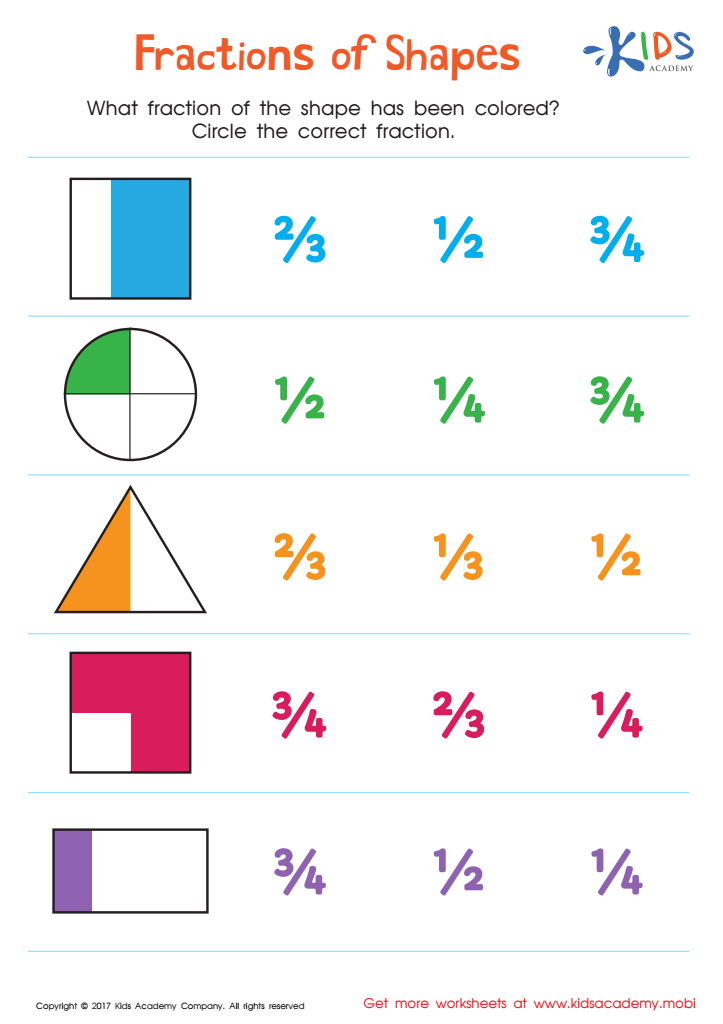
Fractions of Shapes: Math Concept Worksheet








Understanding fractions and geometry at an early age is crucial for children's cognitive development, laying the foundation for more complex mathematical concepts they will encounter in later grades. For parents and teachers of children aged 3-7, focusing on these subjects fosters critical thinking and problem-solving skills.
Fractions teach kids about parts of a whole—key concepts in sharing, measuring, and comparing. Mastering these ideas can improve children's abilities in everyday situations, such as cooking or dividing snacks, enhancing their understanding of teamwork and fairness. Furthermore, learning fractions cultivates an eye for proportional reasoning, useful across various disciplines.
In addition, geometry introduces concepts like shapes, spatial reasoning, and symmetry. These ideas can enhance visual-spatial skills, necessary not only in mathematics but also in science, art, and everyday life. Early exposure makes children more comfortable with math, reducing anxiety around the subject and increasing confidence.
By engaging children in understanding fractions and geometry through fun, age-appropriate activities, parents and teachers can create a supportive environment that emphasizes exploration and discovery, paving the way for future academic success. Encouraging these foundational skills early on promotes a lifelong appreciation for learning and prepares students for more advanced mathematics.