Handwriting practice Extra Challenge ABC Order Worksheets for Ages 3-8
5 filtered results
-
From - To
Enhance your child's handwriting skills with our Handwriting Practice Extra Challenge ABC Order Worksheets designed for ages 3-8. These engaging worksheets combine letter tracing, handwriting practice, and alphabet order exercises to boost fine motor skills and early literacy. Kids will love sorting and arranging letters while improving their penmanship, letter recognition, and sequencing abilities. Perfect for young learners, our worksheets are an excellent resource for parents and educators focused on developing neat and legible handwriting. Make learning fun and effective with these thoughtfully designed, kid-friendly activities that cater to various skill levels.
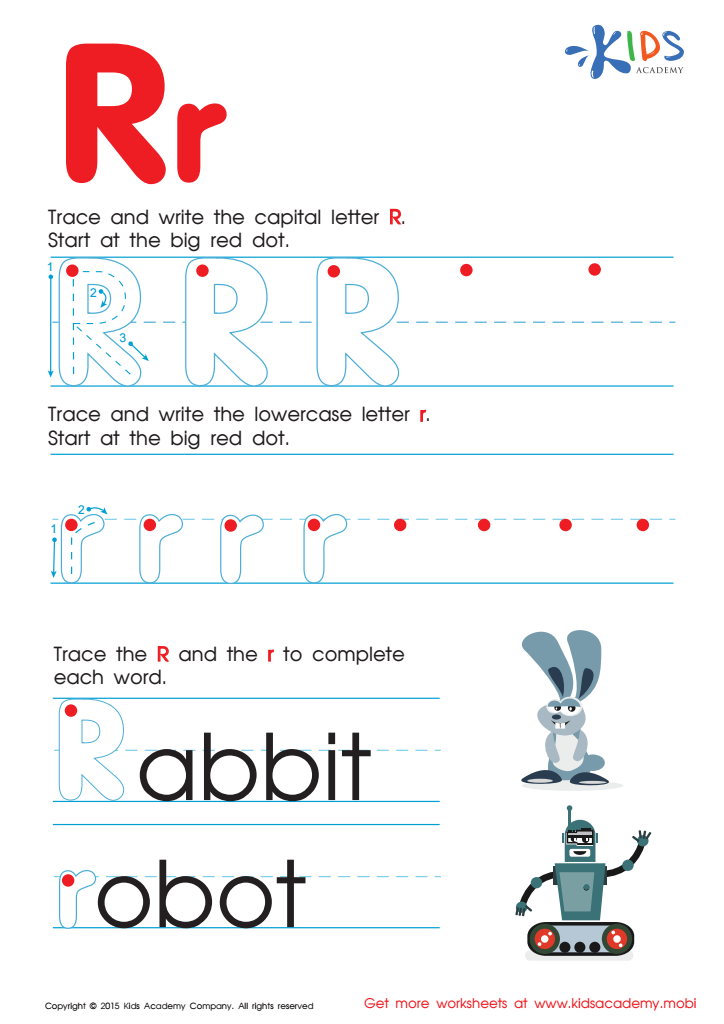
Letter R Tracing Page
 Assign to My Students








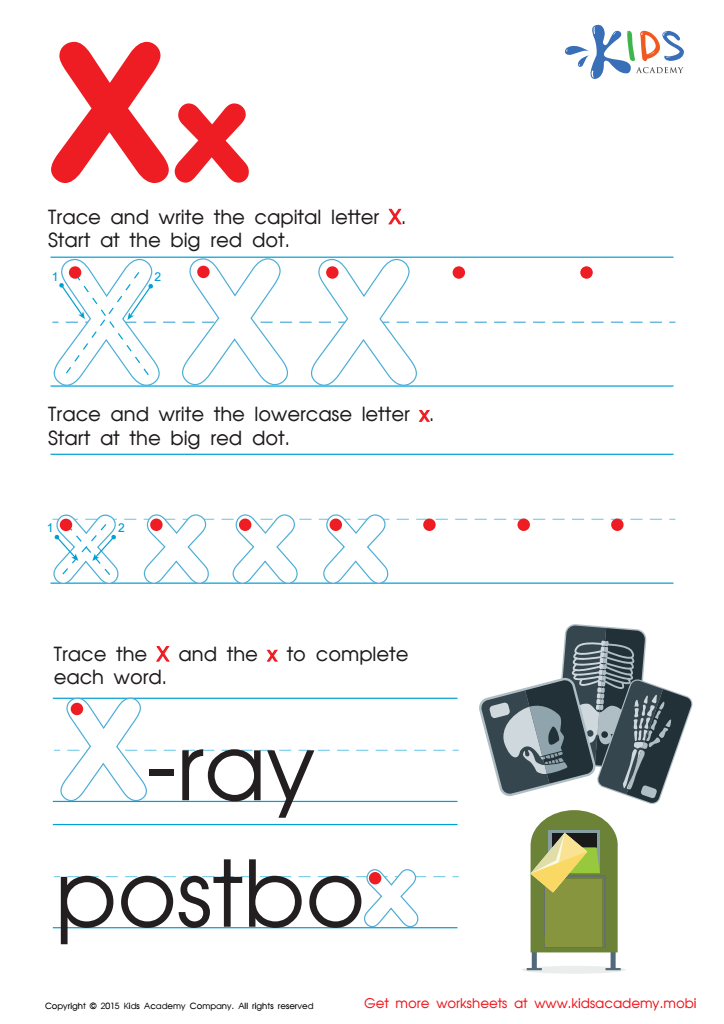
Letter X Tracing Page
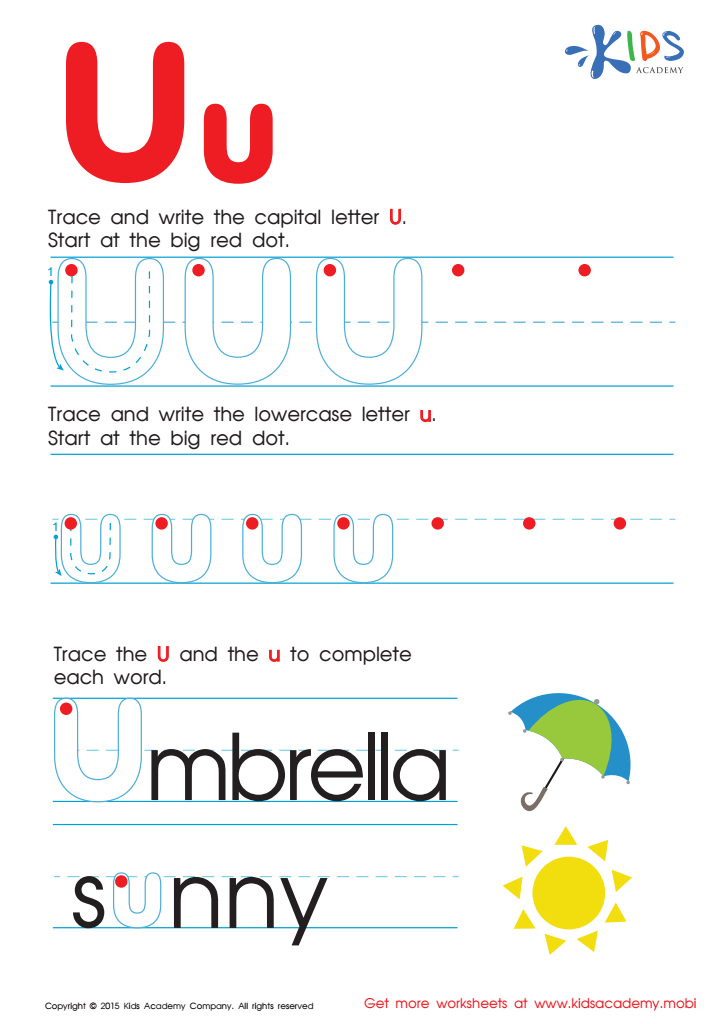
Letter U Tracing Page
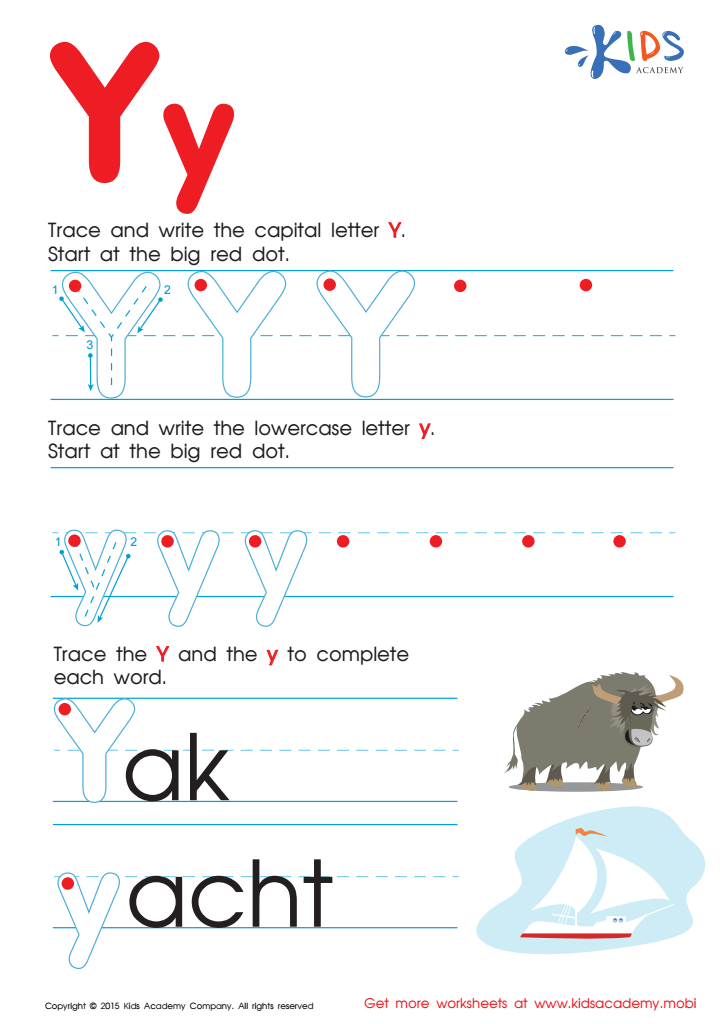
Letter Y Tracing Page
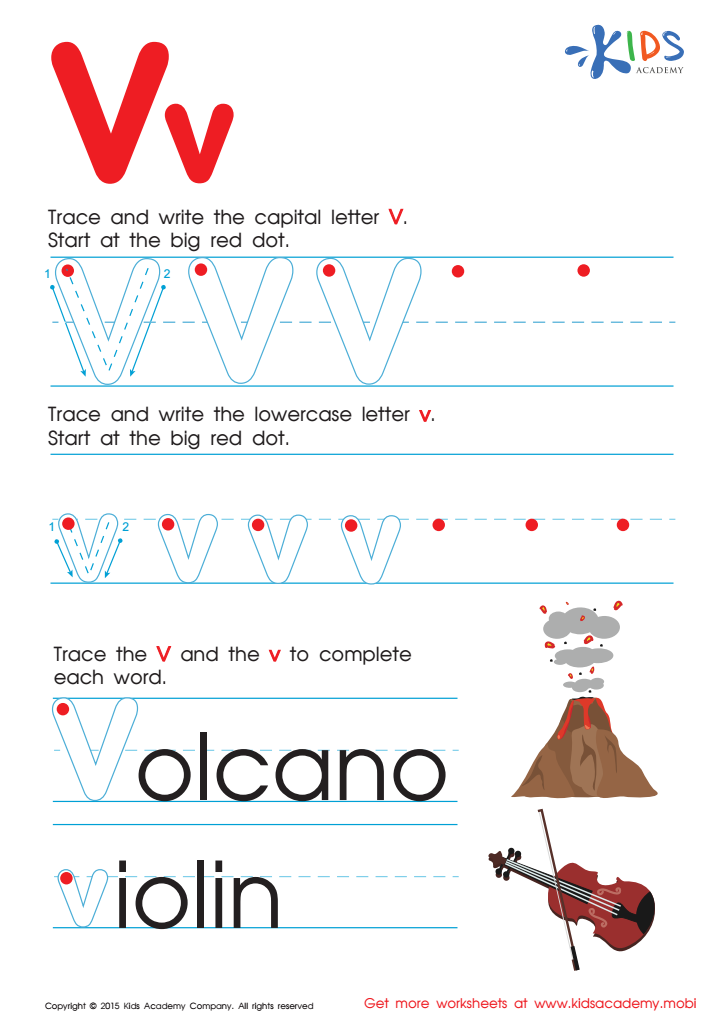
Letter V Tracing Page








Handwriting practice and learning the ABC order are vital activities for children aged 3-8, providing numerous educational and developmental benefits. First, handwriting practice helps young learners develop fine motor skills essential for writing and other manual tasks, such as buttoning clothes or using scissors. Improved fine motor skills contribute to greater hand-eye coordination and precision.
Second, handwriting practice contributes to cognitive development. Forming letters and words requires children to engage their memory and attention, enhancing their concentration and reinforcing their understanding of letter shapes and phonetics. Moreover, writing by hand activates brain areas associated with reading and literacy, supporting language acquisition and spelling proficiency.
Incorporating an extra challenge, like arranging letters in ABC order, further enriches their learning experience. Understanding and practicing alphabetical order deepens a child’s comprehension of how language is organized, which is foundational for reading and dictionary use later on. It also boosts critical thinking and problem-solving skills, as children discern patterns and sequences.
Lastly, frequent handwriting and ABC order exercises can foster a sense of accomplishment and boost a child’s confidence as they master new skills. Investing time in these practices at an early age sets children up for academic success and lifelong literacy skills, making it crucial for parents and teachers to incorporate them into daily routines.








