Data interpretation Extra Challenge Worksheets for Ages 3-8
4 filtered results
-
From - To
Unlock your child's potential with our Data Interpretation Extra Challenge Worksheets, specially designed for ages 3-8! These engaging resources offer an exciting way to enhance your child's critical thinking and analytical skills through fun activities. Each worksheet encourages young learners to interpret visual data, such as charts and graphs, fostering early math confidence and understanding. Perfect for home or classroom use, our challenges are tailored to varying skill levels, ensuring every child can grow at their own pace. With vibrant visuals and age-appropriate tasks, these worksheets make data interpretation an enjoyable learning adventure. Start the journey of discovery today!
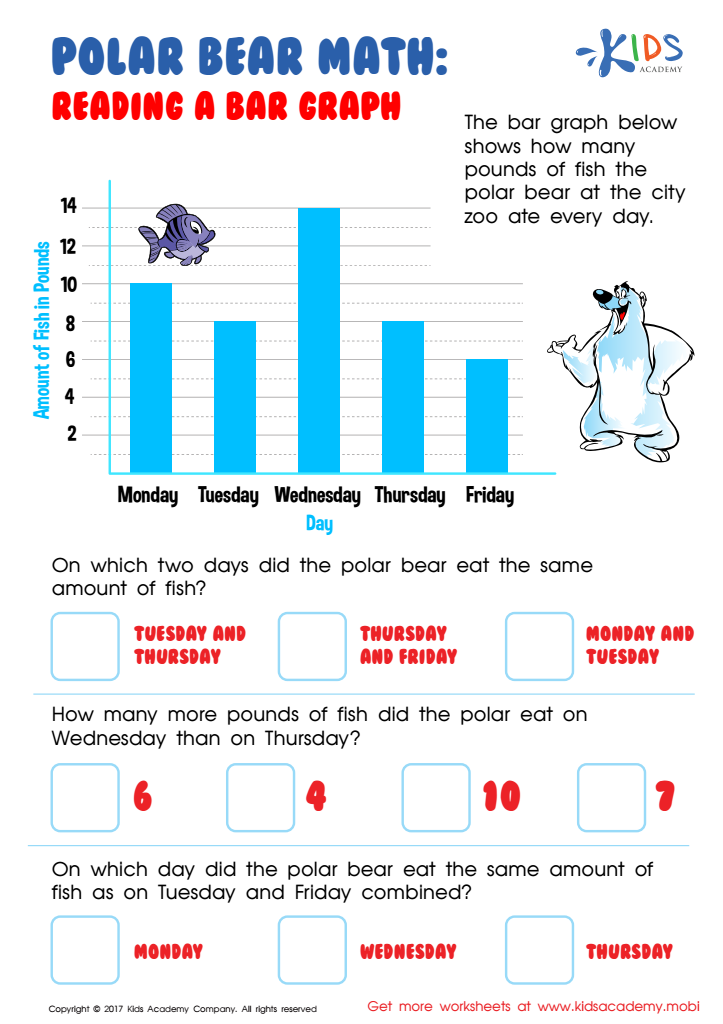
Reading Bar Graph Worksheet
 Assign to My Students
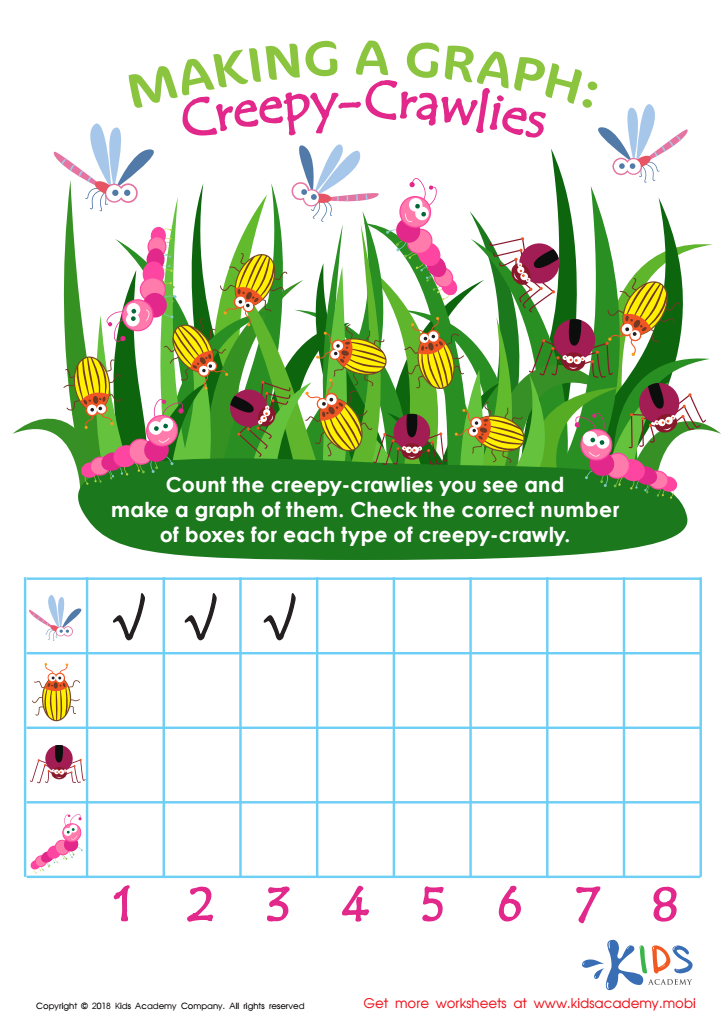
Making a Graph: Creepy Crawlies Worksheet
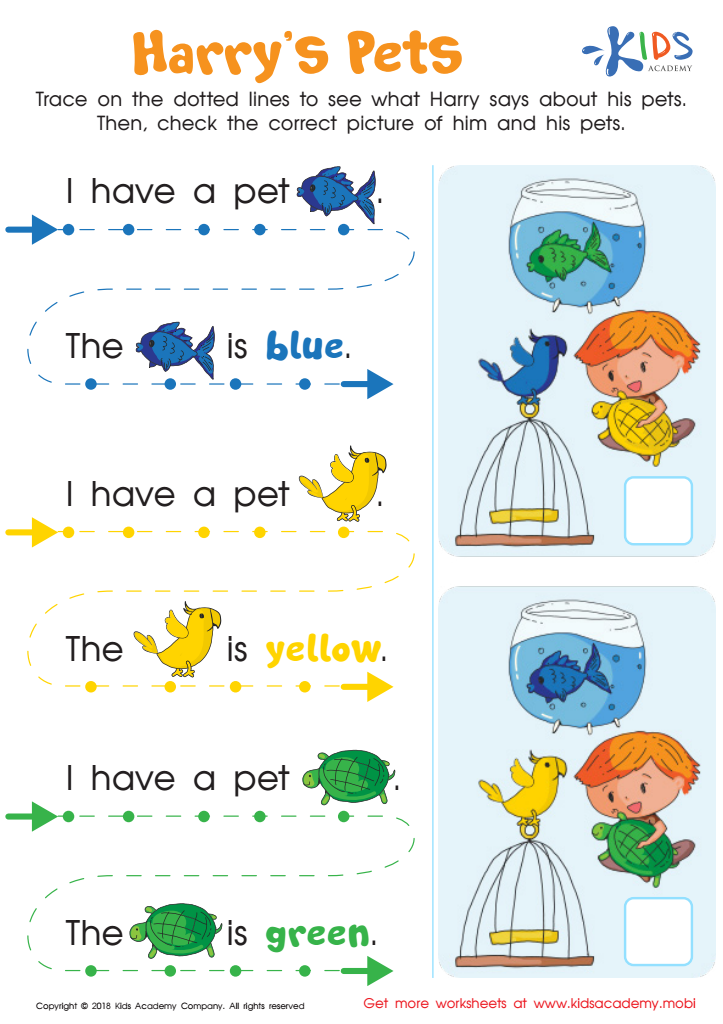
Read from Left to Right: Harry's Pets Worksheet
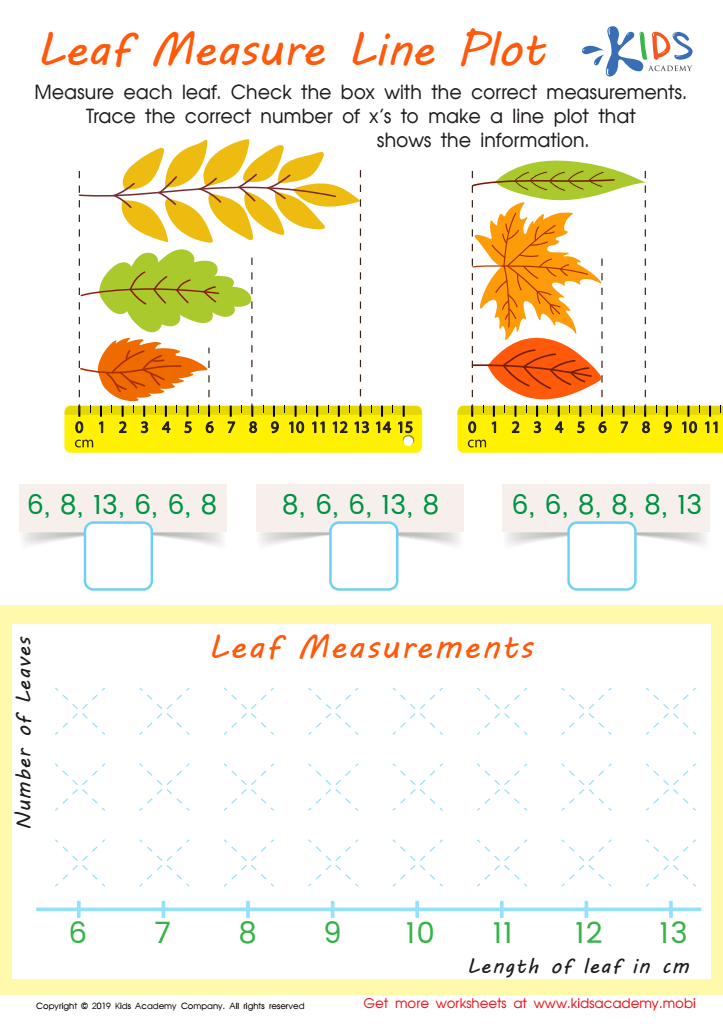
Leaf Measure Line Plot Worksheet








Data interpretation is an essential skill that can enhance critical thinking, problem-solving abilities, and decision-making in young children. For parents and teachers working with children aged 3-8, fostering these skills through activities like the "Data Interpretation Extra Challenge" is crucial for several reasons.
Firstly, understanding data helps children learn to make sense of the world around them, including interpreting everyday information such as time, quantity, and patterns. These early experiences in data analysis lay the foundation for more complex mathematical concepts later on.
Secondly, engaging in data interpretation activities encourages curiosity. Children become explorers, asking questions such as, "What happens if we change this?" or "How can we represent this information differently?" This inquiry-based learning promotes engagement and motivation.
Moreover, developing data literacy at a young age equips children with essential skills for the future. As society becomes increasingly data-driven, being comfortable interpreting charts, graphs, and other data representations prepares children for academic and real-world situations.
Incorporating extra challenges related to data interpretation makes learning fun and meaningful, allowing children to work collaboratively, think critically, and develop communication skills. Overall, embracing data interpretation skills helps nurture informed, confident thinkers who can navigate complex information throughout their lives.








