Listening skills Extra Challenge Worksheets for Ages 3-8
3 filtered results
-
From - To
Enhance your child's listening skills with our Extra Challenge Worksheets, designed specifically for ages 3-8! These engaging and fun worksheets promote active listening, comprehension, and focus, helping young learners build essential skills for academic success. Rich with diverse activities such as audio recognition tasks, following instructions, and responding to questions, these worksheets foster critical thinking while keeping kids entertained. Perfect for parents and educators, our printable resources ensure children are challenged appropriately, engaging them in a meaningful way. Help your little ones develop their listening abilities confidently with our thoughtfully crafted worksheets today! Unlock their potential and encourage a love for learning!
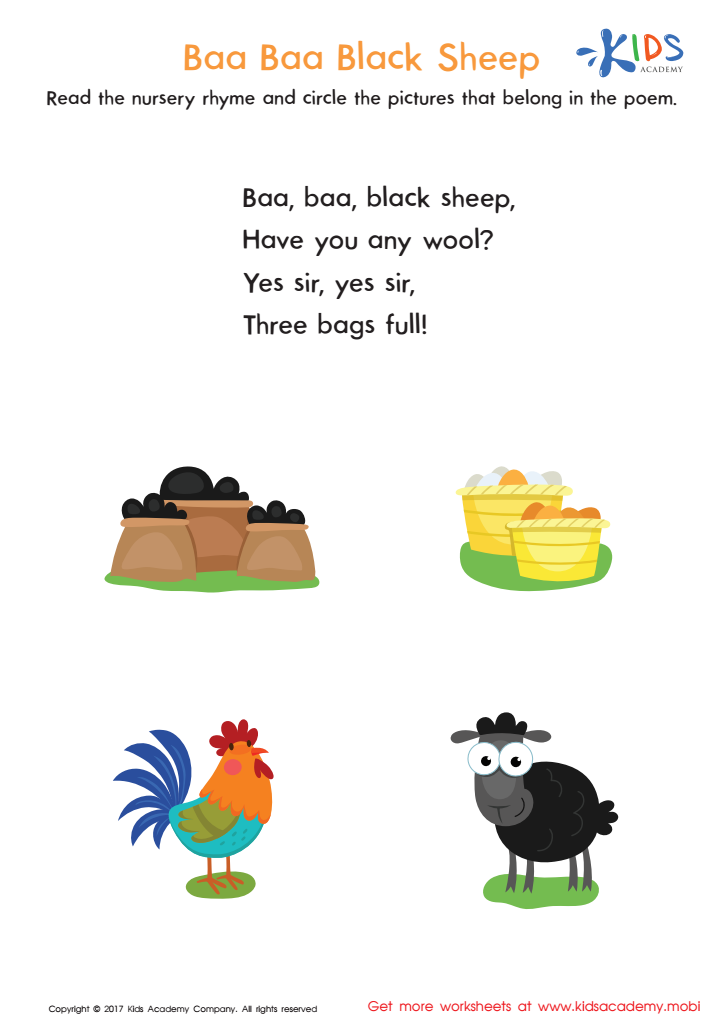
Baa Baa Black Sheep Printable
 Assign to My Students
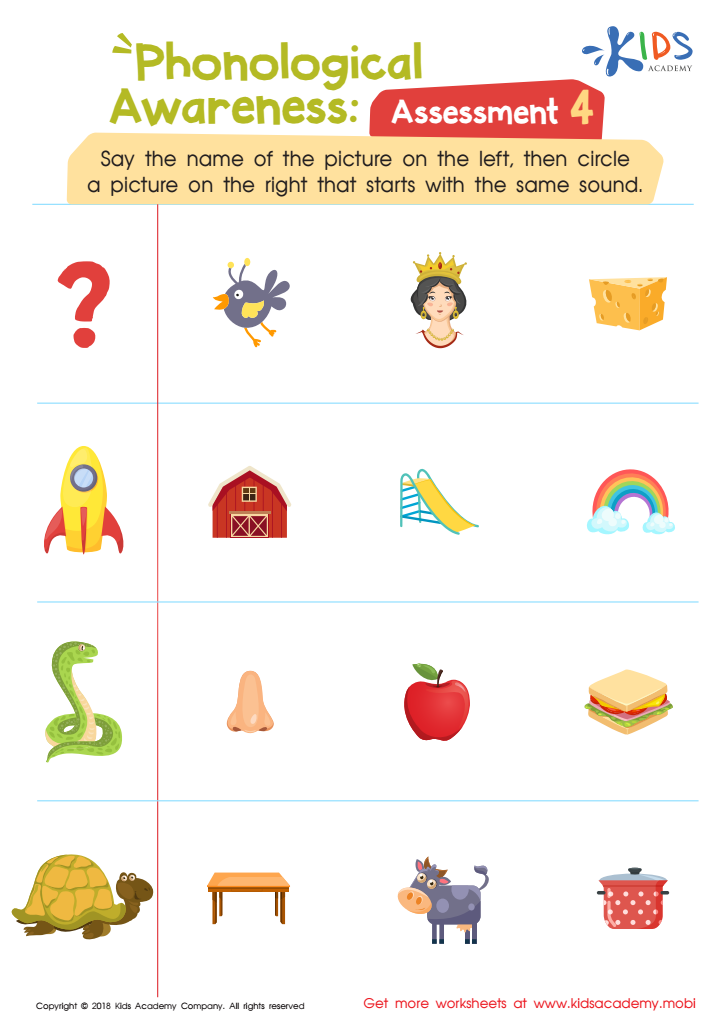
Phonological Awareness: Assessment 4 Worksheet
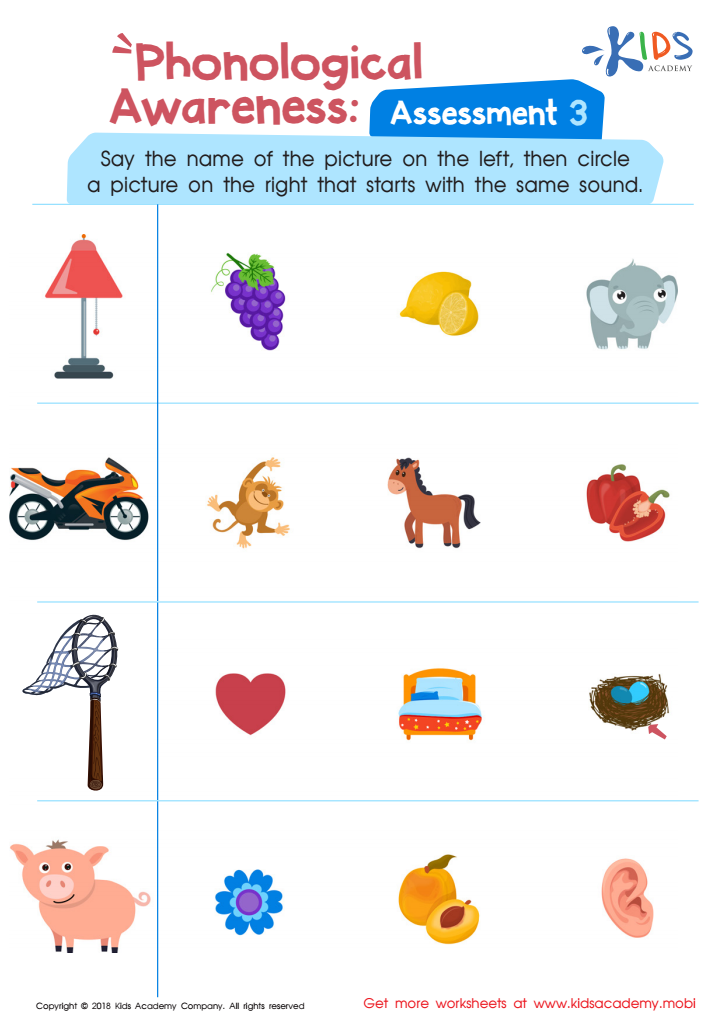
Phonological Awareness: Assessment 3 Worksheet







Listening skills are fundamental for the development of young children, particularly for those aged 3-8. Parents and teachers should care about enhancing these skills because listening is the cornerstone of effective communication and learning. At this age, children are not only absorbing language but also learning how to interpret and respond to the world around them.
Developing strong listening skills enhances a child's comprehension abilities, allowing them to connect ideas, follow instructions, and engage more richly in conversations. It also fosters empathy by helping children tune into emotions and perspectives expressed by others, which is crucial for social interactions.
Extra challenges in listening can utilize games, storytelling, and interactive play, making the learning process enjoyable. These activities stimulate cognitive development, creativity, and critical thinking. Additionally, children who listen well tend to perform better academically, as they can retain information and understand classroom activities more effectively.
By prioritizing listening skills, parents and teachers equip children with abilities essential for their lifelong learning and socialization. This investment also lays a strong foundation for collaborative skills, active participation, and respectful communication, ultimately empowering children to thrive in diverse environments as they grow.








