Time reading skills Extra Challenge Worksheets for Ages 3-8
5 filtered results
-
From - To
Enhance your child's understanding of time with our engaging "Time Reading Skills Extra Challenge Worksheets," designed for ages 3-8. These worksheets offer fun, interactive exercises that promote essential time-telling skills, from clock recognition to reading both analog and digital times. Ideal for parents and educators, these extra challenges encourage children to apply their knowledge creatively. With a combination of colorful illustrations and varying difficulty levels, kids will enjoy learning about time in an exciting way. Explore our collection to inspire your little learners and help them become confident in their time-reading abilities! Perfect for supplementary practice at home or in the classroom.
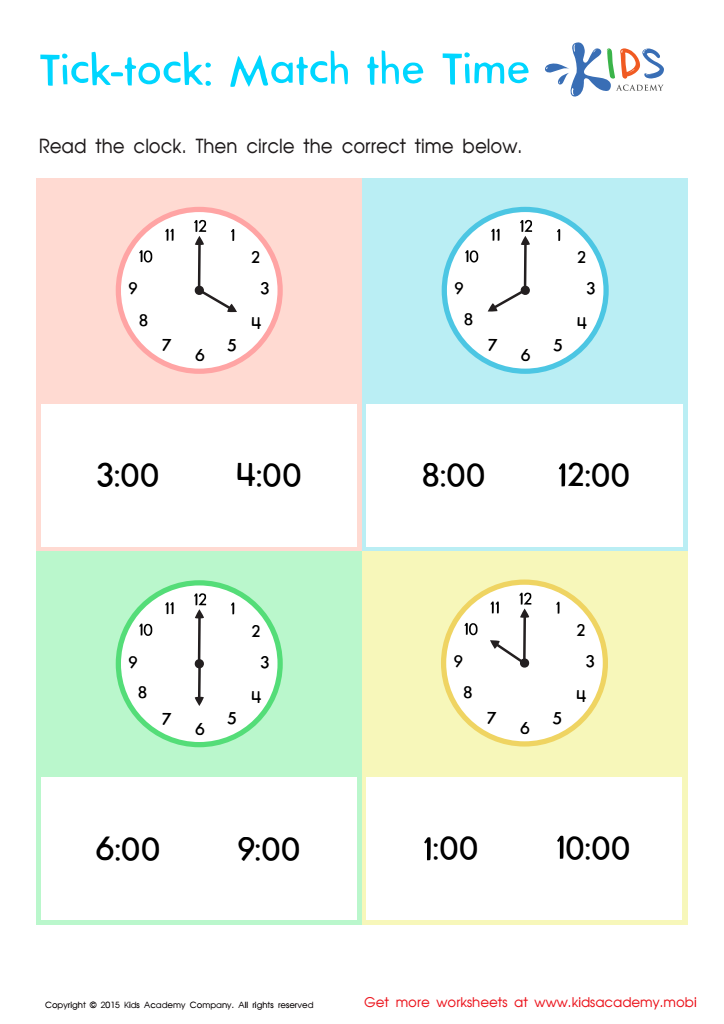
Telling The Time Worksheet: Part 4
 Assign to My Students
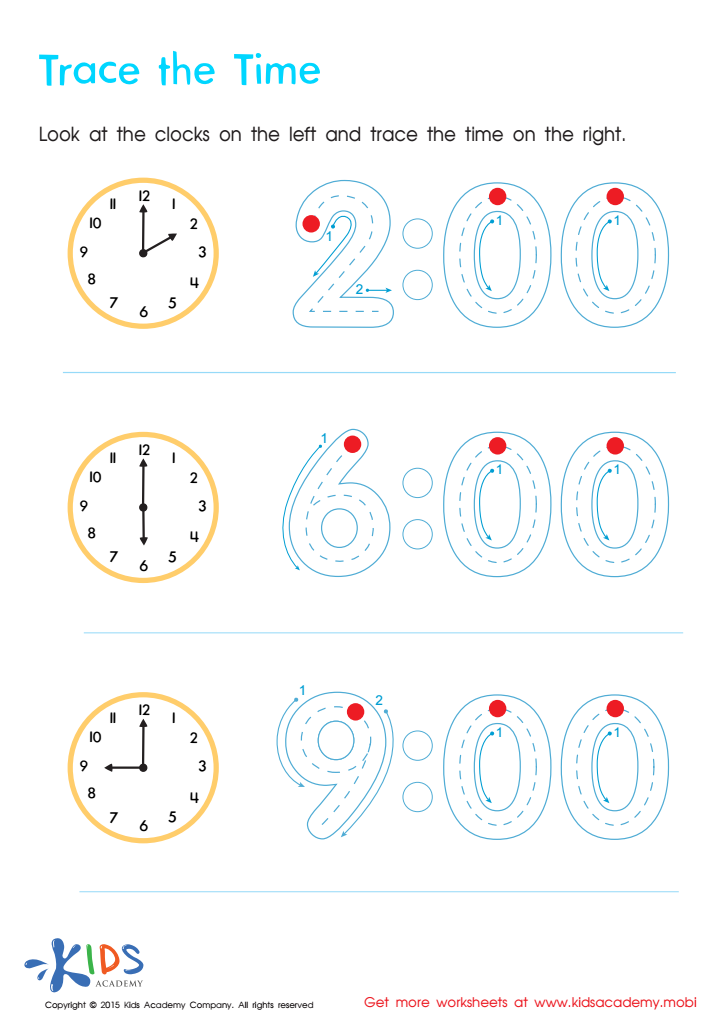
Telling The Time Worksheet: Part 2
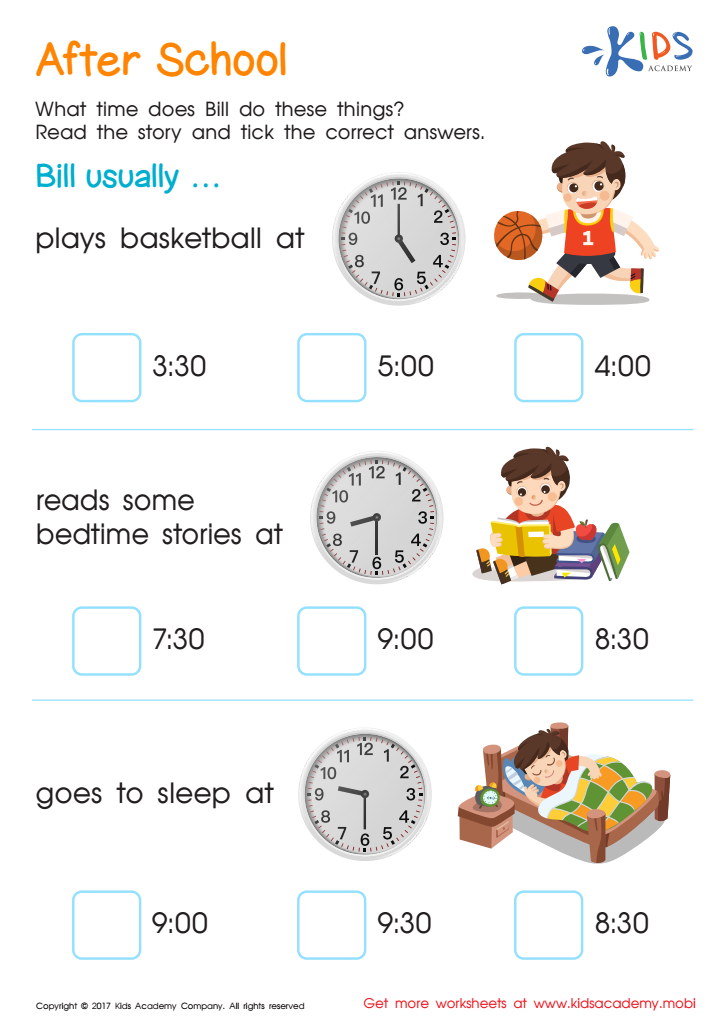
After School Time Printable
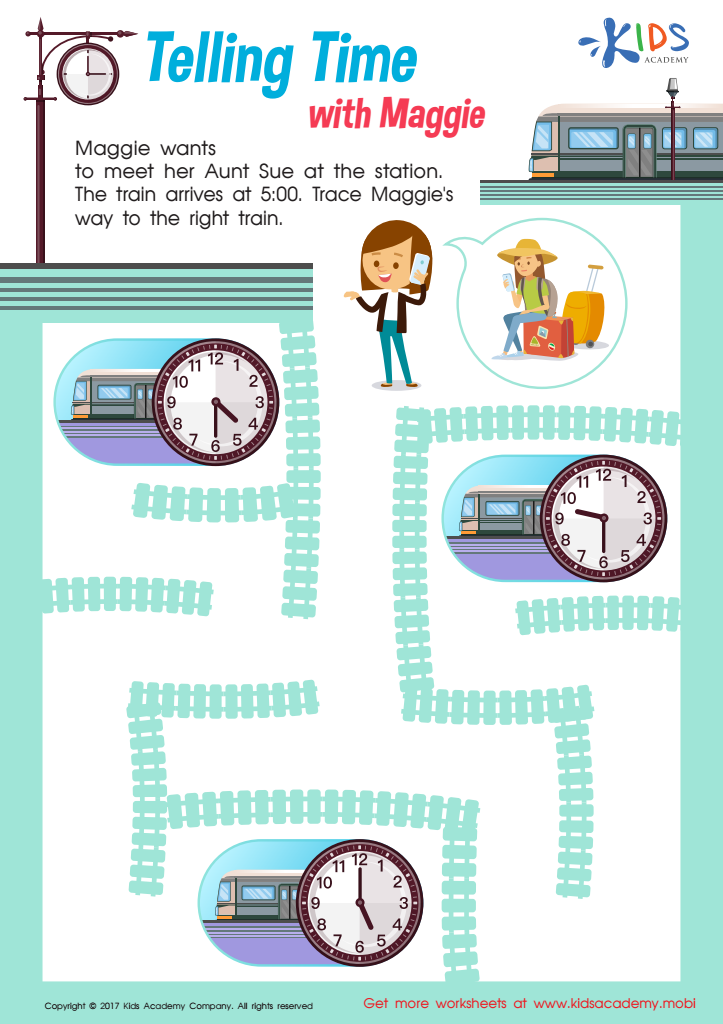
Telling Time With Maggie Time Worksheet
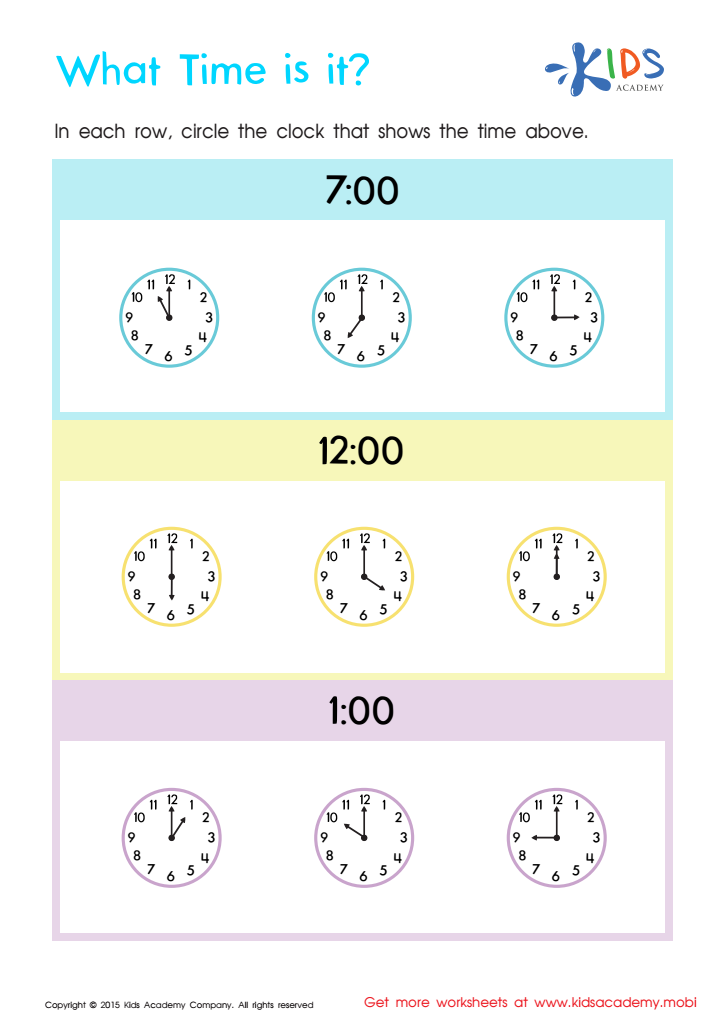
Telling The Time Worksheet: Part 3







Parents and teachers should prioritize Time reading skills for children ages 3-8 as it lays a crucial foundation for their overall development. Mastering time-related concepts not only reinforces literacy skills—such as vocabulary and comprehension—but also enhances critical thinking and problem-solving abilities. Learning to read time helps children grasp essential life skills, promoting independence as they begin to understand schedules, routines, and time management.
Furthermore, developing time-reading skills fosters a sense of responsibility and helps children structure their day. It can transform abstract concepts of time into tangible experiences, allowing children to make connections between actions and their consequences—such as understanding that bedtime means preparing for sleep, or that completing chores can lead to free time.
Additionally, as children engage with time-related activities—like storytelling, interactive games, or clock-based lessons—they are more likely to develop social skills through cooperative play and shared learning, enhancing emotional intelligence. Building these skills can also aid cognitive development; understanding time concepts can boost mathematical abilities in later grades, aligning with academic success. Therefore, investing in time reading skills is not just an educational task; it's a vital step in preparing children for a successful future.








