Understanding graphs Extra Challenge Worksheets for Ages 3-8
3 filtered results
-
From - To
Introduce your young learners to the fascinating world of graphs with our "Understanding Graphs Extra Challenge Worksheets for Ages 3-8". Tailored specifically for early graders, these engaging and visually appealing worksheets help children grasp the basics of interpreting and creating graphs. Through fun activities, kids will learn to identify patterns, compare amounts, and make simple data-driven conclusions. Ideal for reinforcing math skills in an enjoyable way, these extra challenge worksheets ensure a solid understanding foundational to future learning. Empower your child's analytical thinking and boost their confidence with our expertly crafted educational resources!
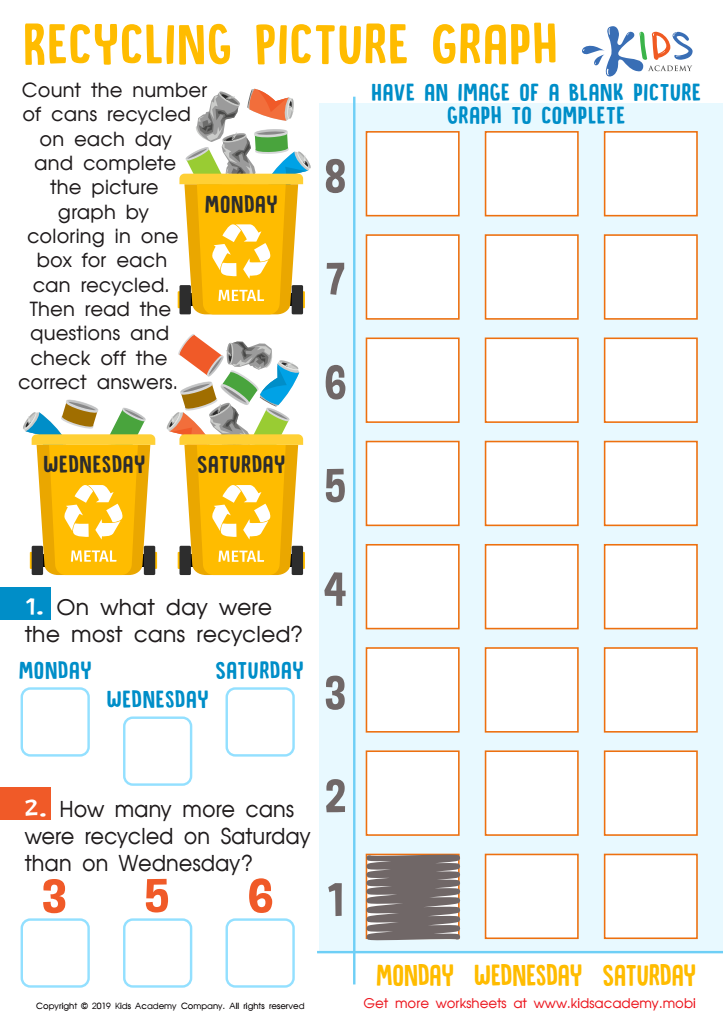
Recycling Picture Graph Worksheet
 Assign to My Students
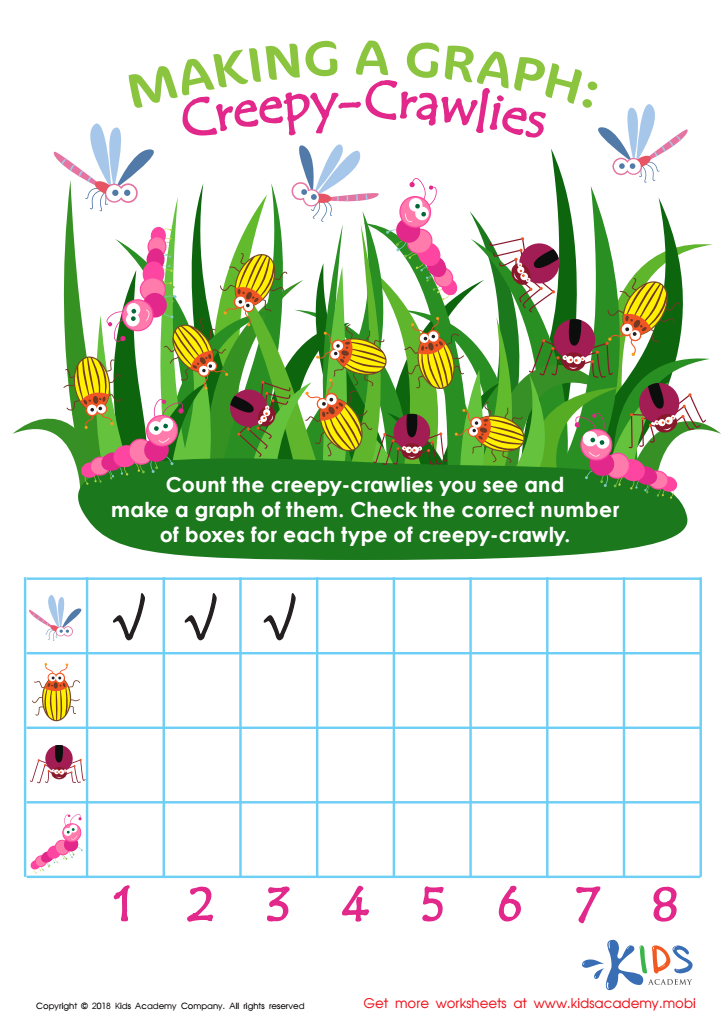
Making a Graph: Creepy Crawlies Worksheet
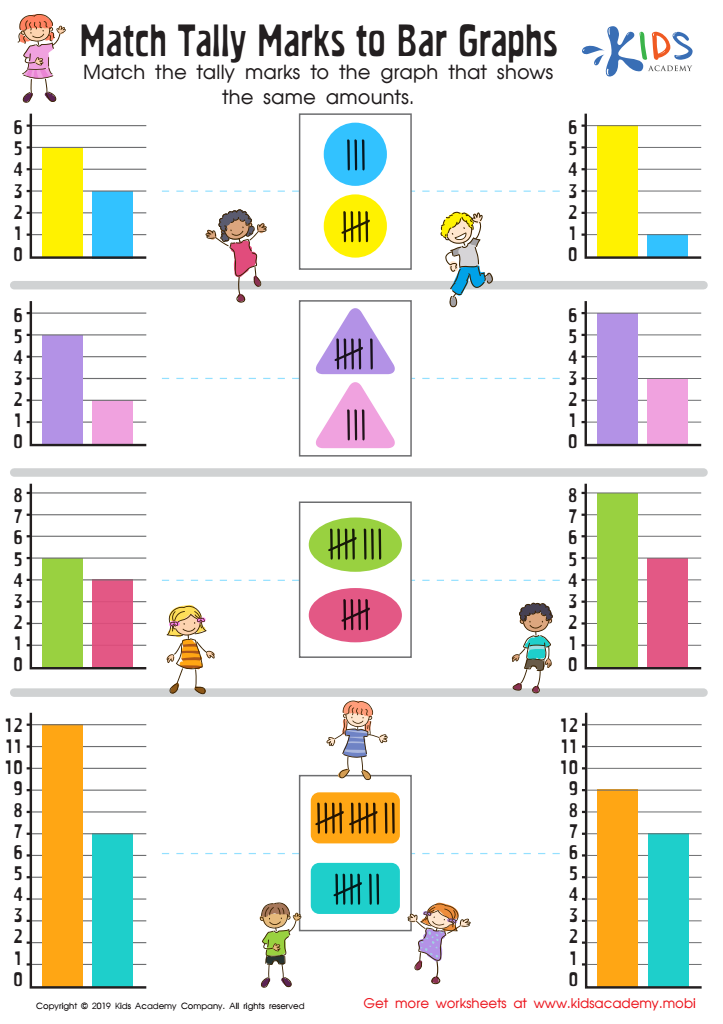
Match Tally Marks to Bar Graphs Worksheet







Understanding graphs is an essential early skill that lays the foundation for mathematical literacy, critical thinking, and problem-solving. For young children (ages 3-8), this skill can be especially beneficial for several reasons. Firstly, introducing kids to graphs at an early age helps them to visualize and organize data, making abstract concepts more concrete and easier to understand.
Through age-appropriate and engaging activities with graphs, children improve their ability to sort and categorize information. These activities develop both their analytical skills and their ability to communicate findings clearly. For example, a simple bar graph used to track the growth of a plants can make basic concepts in science more accessible and intriguing to a young mind.
Additionally, early familiarity with graphs builds a strong mathematical foundation, essential for more advanced math concepts they will encounter as they grow. It enhances their capability to interpret, compare and draw conclusions from data, which are valuable skills not just academically but in everyday decision-making processes.
Parents and teachers play a crucial role in this developmental stage. Encouraging children to engage with graphs through interactive, fun, and relatable tasks, sets them on a path to be confident in problem-solving and making reasoned conclusions. Therefore, caring about and incorporating graph understanding in early education stimulates curiosity and lays a strong groundwork for future learning.








