Extra Challenge Math Worksheets for Ages 3-8 - Page 14
318 filtered results
-
From - To
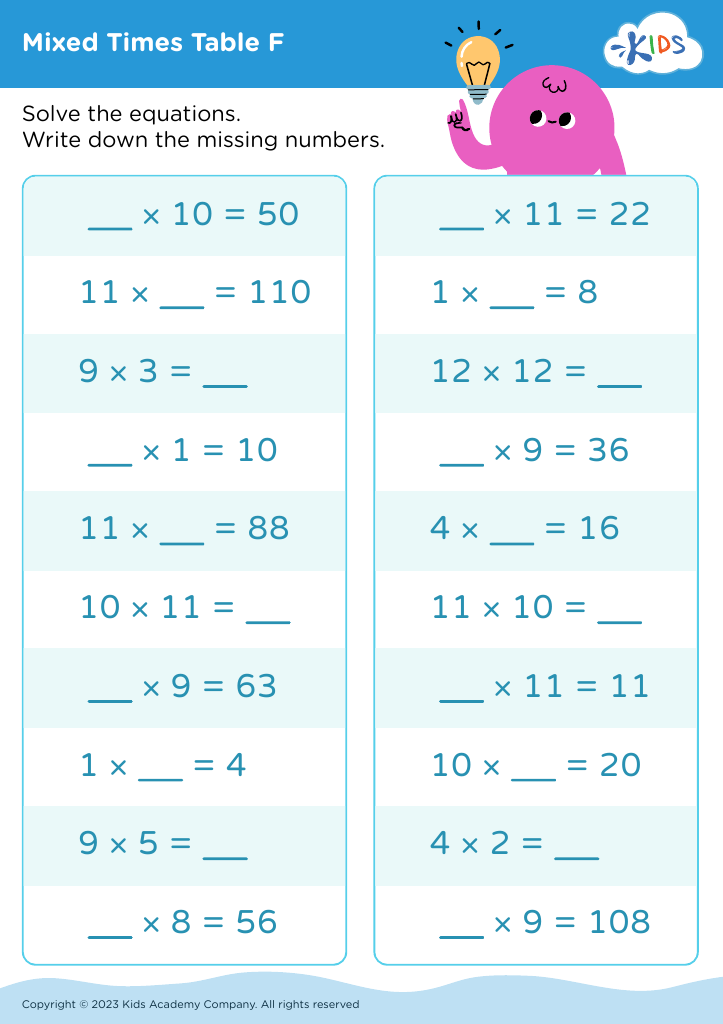
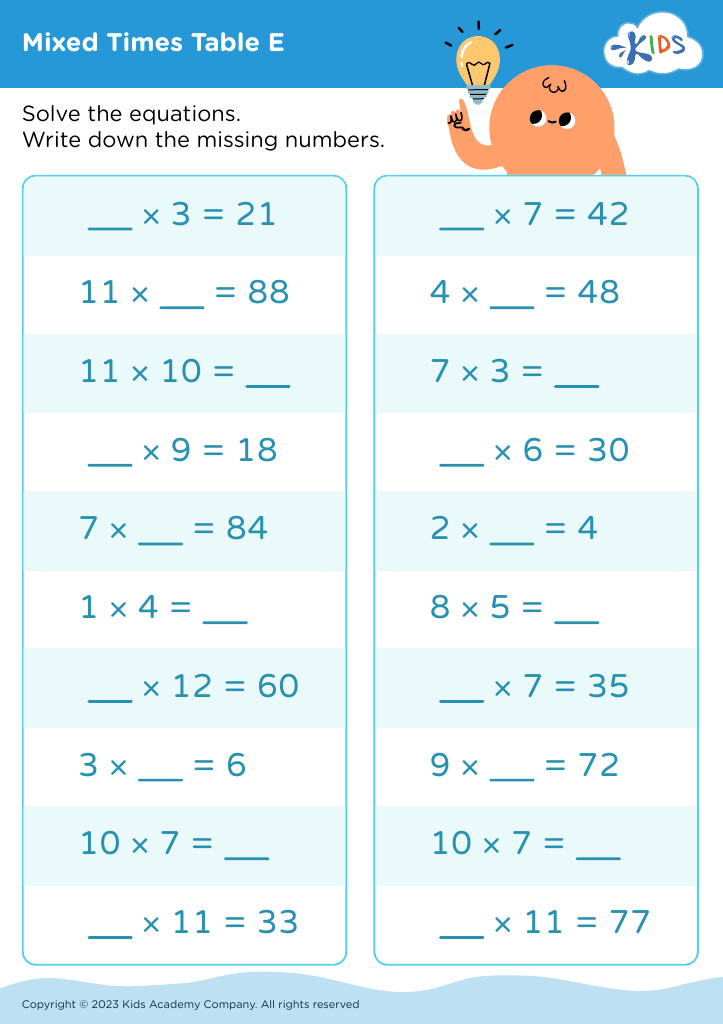
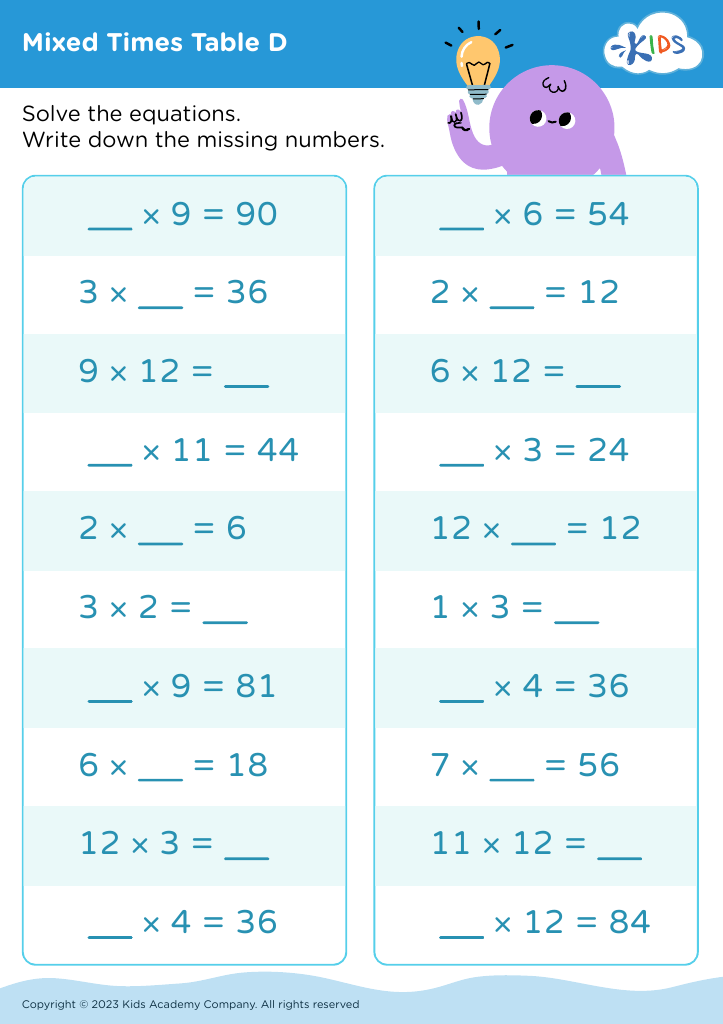
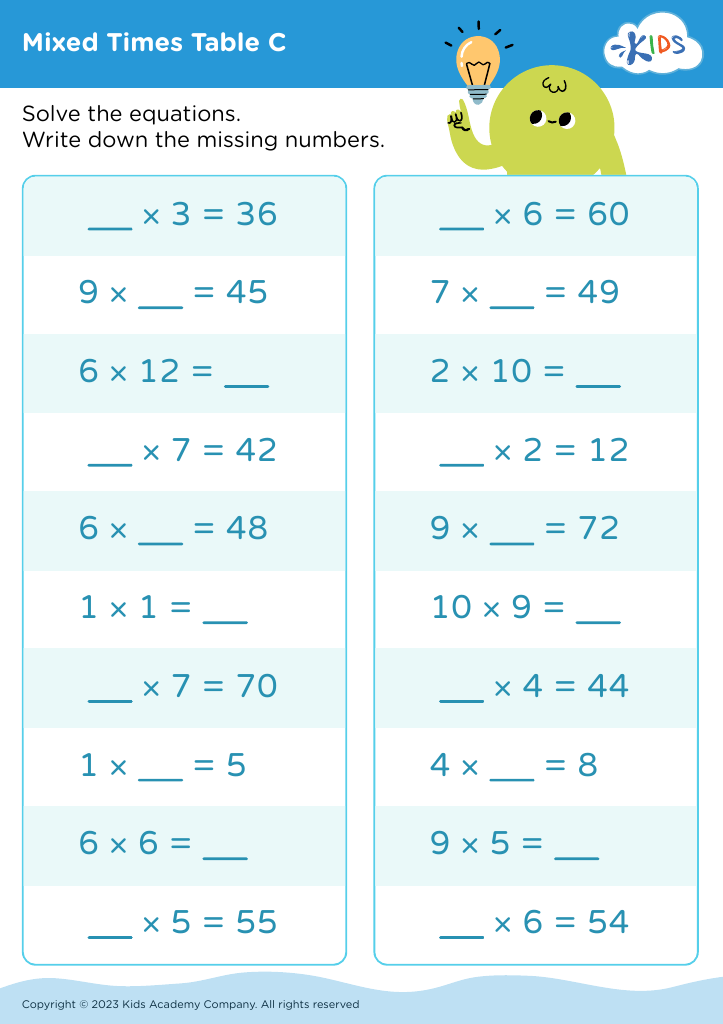
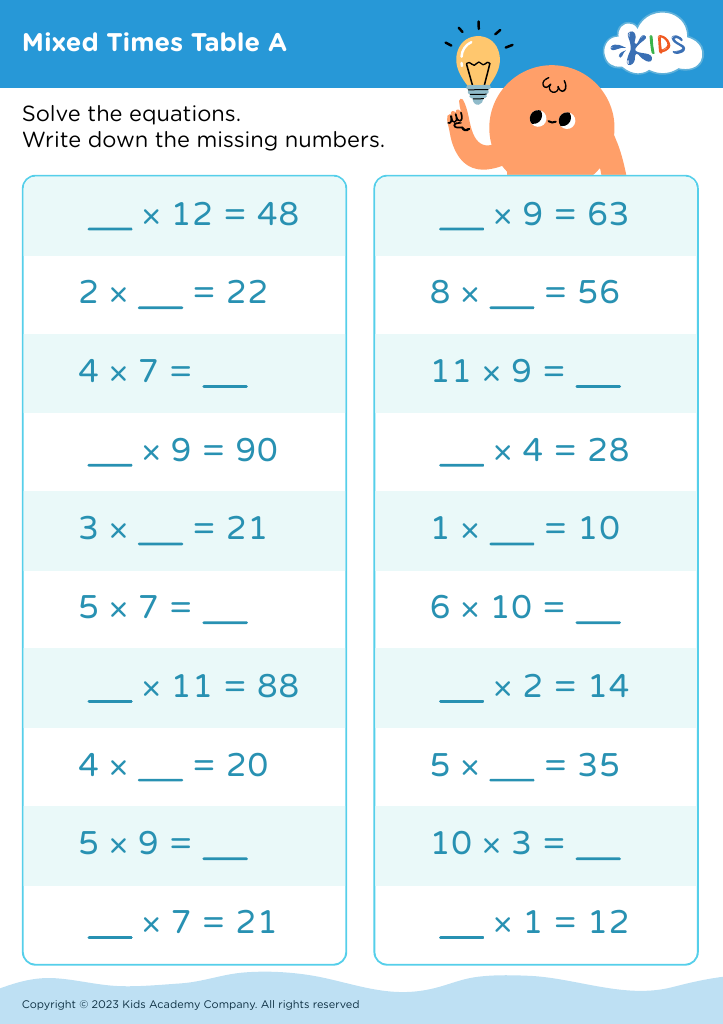
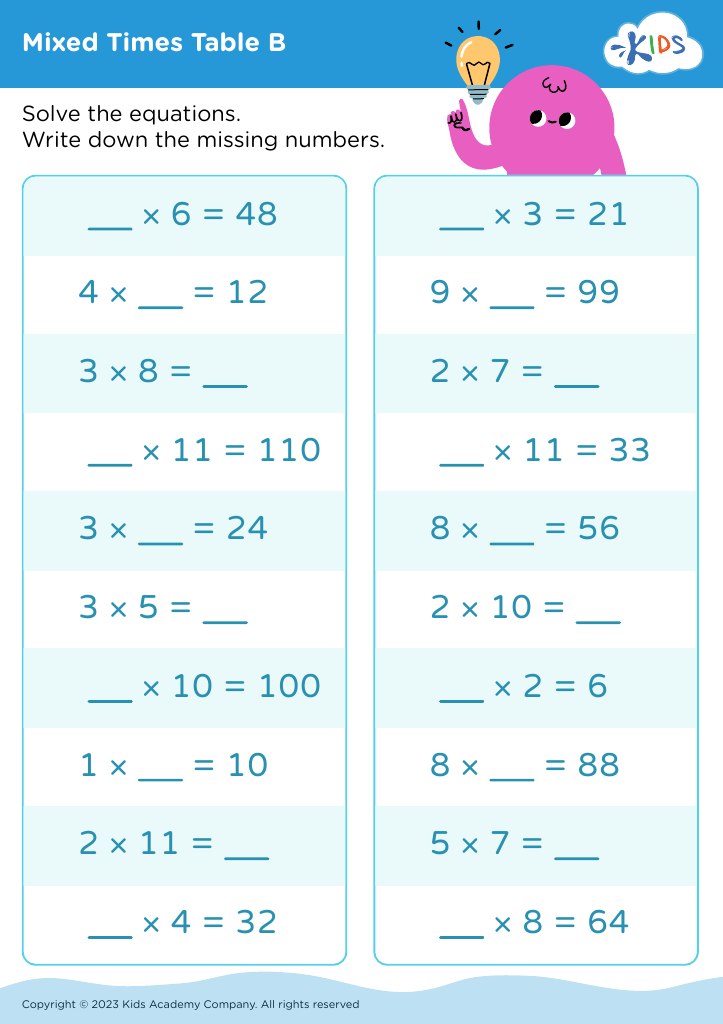








Extra Challenge Math for ages 3-8 is crucial in early childhood development for several compelling reasons. First, early exposure to challenging math problems fosters a solid foundation in critical thinking, analytical skills, and problem-solving abilities. Research shows that children who engage in math early on are more likely to develop enhanced cognitive skills, which benefit them across various subjects.
Second, for both parents and teachers, recognizing and nurturing a child's mathematical abilities can ignite a lifelong love for the subject. Fun and engaging math activities allow children to see math as a dynamic and enjoyable part of their daily lives, breaking the stigma that math is hard or boring.
Moreover, early math challenges can help identify and support gifted children who might need more stimulation beyond the standard curriculum. For kids who find math challenging, extra practice in a supportive environment can boost their confidence and improve their skills, ensuring they don't fall behind.
Finally, math education at a young age lays the groundwork for future academic success and practical life skills. As math is integral to various aspects of life, starting early ensures children are equipped to handle more complex concepts as they grow, thereby opening doors to countless opportunities in their educational and professional future.