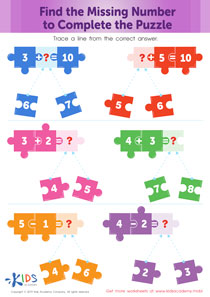
Problem-Solving Skills Extra Challenge Addition Worksheets for Ages 3-8
5 filtered results
-
From - To
Our Problem-Solving Skills Extra Challenge Addition Worksheets for Ages 3-8 provide young learners with an entertaining way to enhance their math abilities. These specially designed worksheets blend fun and education, encouraging creative thinking and practical application of addition principles. Perfect for early grade students, each sheet presents engaging challenges tailored to stimulate their curiosity and support the mastery of foundational math concepts. By integrating colorful graphics and age-appropriate themes, these worksheets propel cognitive growth and problem-solving proficiency. Ideal for use at home or in the classroom, our resources build confidence and a strong mathematical foundation for future learning success.
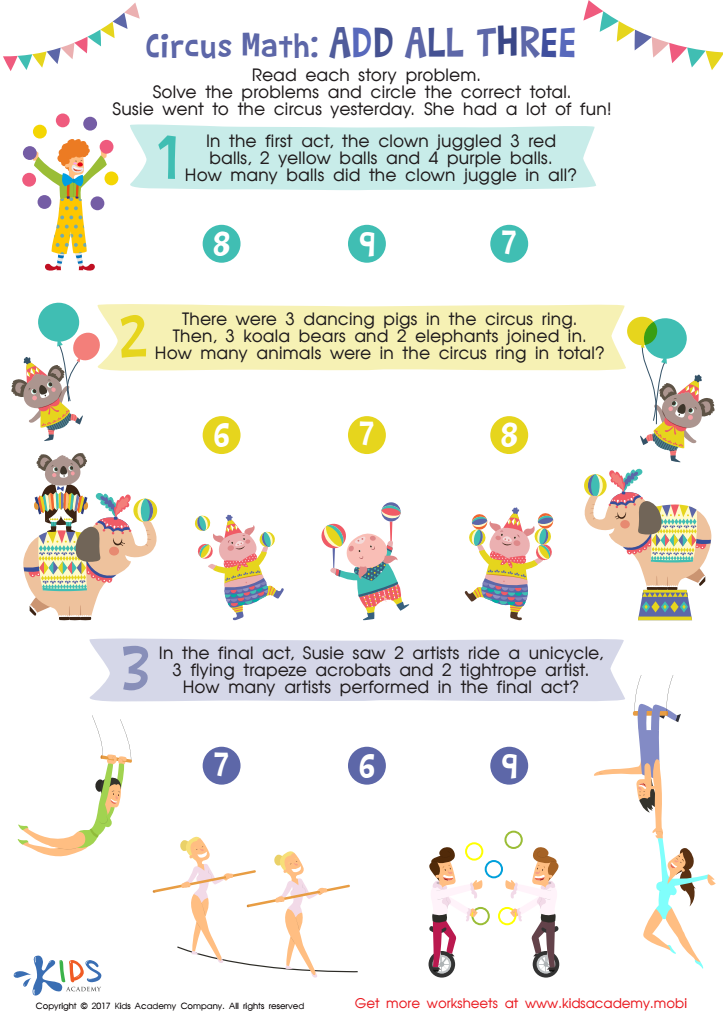
Circus Math Printable
 Assign to My Students
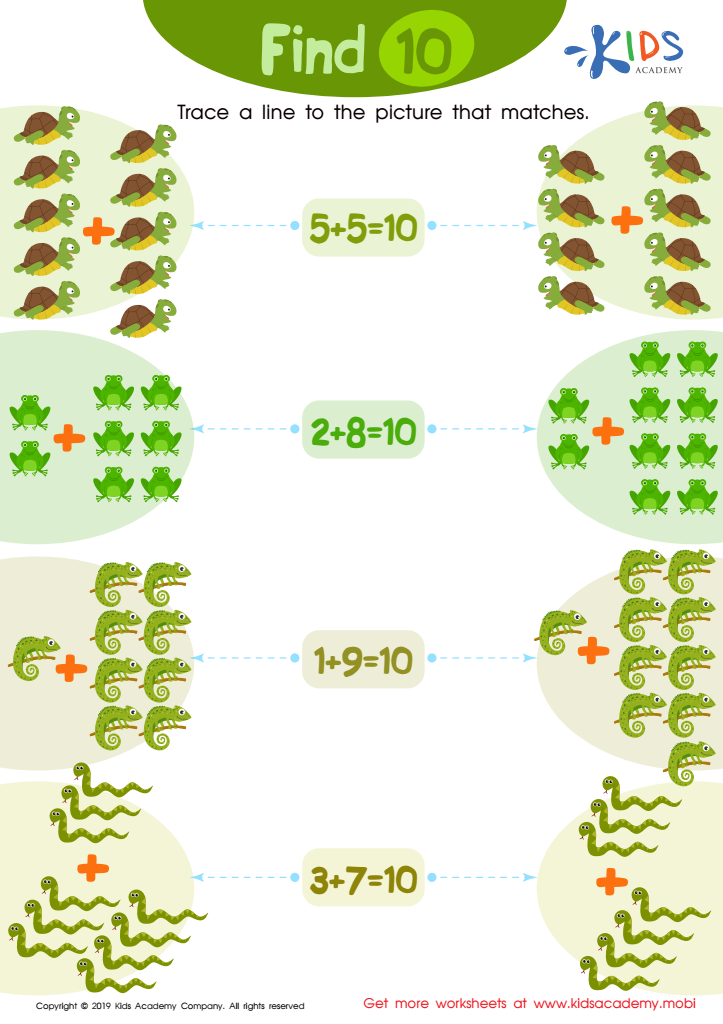
Find 10 Worksheet
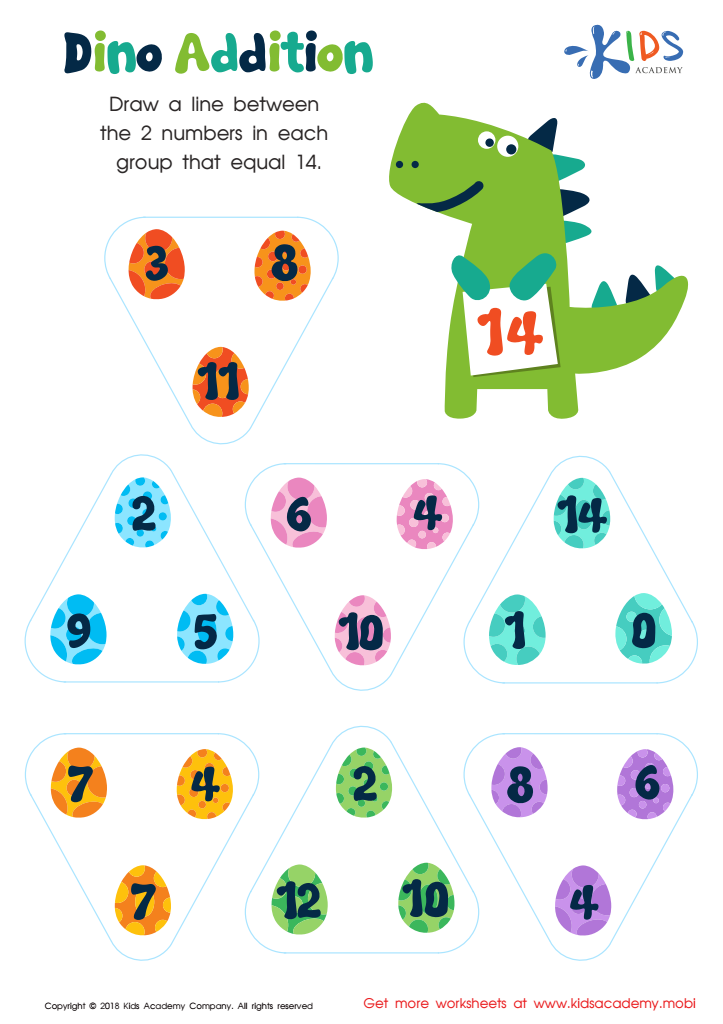
Dino Addition Worksheet
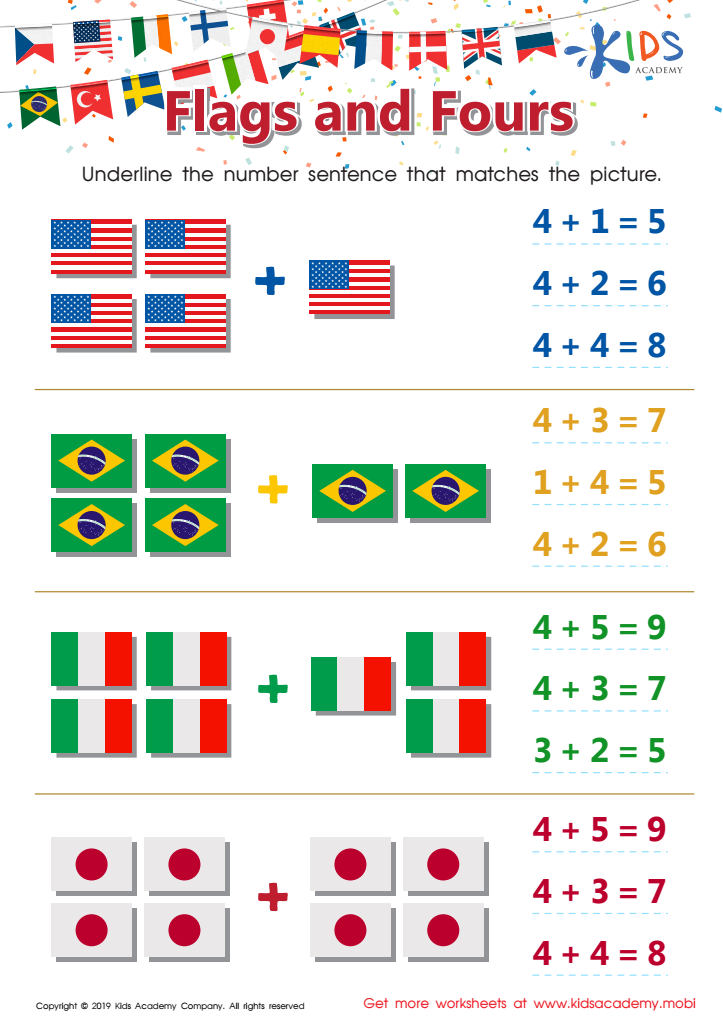
Flags and Fours Worksheet
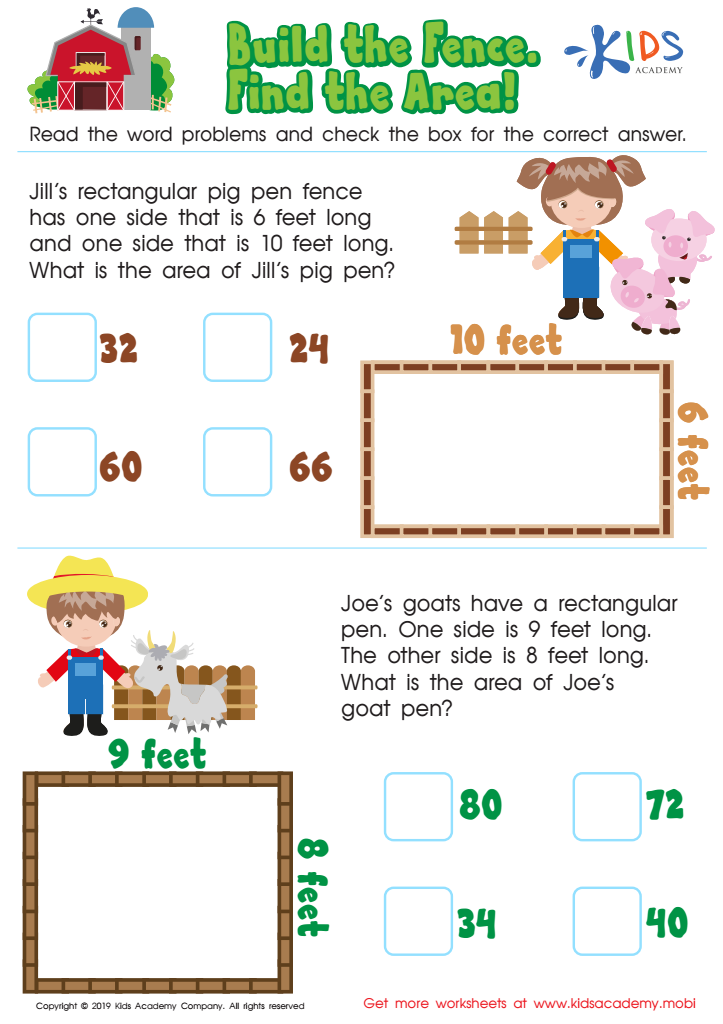
Build the Fence, Find the Area Worksheet



.jpg)




Problem-solving skills form the backbone of effective learning and cognitive development in early childhood, and they are essential for children aged 3-8. During these formative years, children are rapidly expanding their minds, physical capabilities, and social interactions. Extra challenge addition activities are uniquely beneficial because they require children to think critically, apply logic, and experiment with numbers in a practical context.
Firstly, engaging in problem-solving activities enhances a child's ability to think critically and logically. They learn to break down problems into manageable steps, fostering skills like patience, perseverance, and resilience. These are important not just in mathematics but across all areas of learning and life.
Secondly, solving extra challenge addition problems can boost a child's confidence and self-esteem. Accomplishing a challenging task gives children a sense of achievement and encourages them to take on new challenges without fear.
Finally, these activities have social and emotional benefits. They frequently involve collaborative work, which helps children develop teamwork and communication skills. Moreover, solving problems inherently teaches children about trial and error, helping them understand that making mistakes is a natural part of learning.
Therefore, both parents and teachers should prioritize problem-solving skills in their children’s early education, as they lay the foundational blocks for lifelong learning and personal growth.