Vowel Recognition Extra Challenge Worksheets for Ages 3-9
9 filtered results
-
From - To
Enhance your child's vowel recognition skills with our "Vowel Recognition Extra Challenge Worksheets for Ages 3-9." These expertly designed worksheets offer fun and interactive activities combining coloring, matching, and word exercises to reinforce learning. Tailored for young learners between 3-9 years old, they progressively challenge your child's understanding of vowels, helping to master letter recognition, phonetics, and foundational reading skills. Our carefully structured tasks help maintain engagement while ensuring education quality. Perfect for extra practice at home or in the classroom, these worksheets are a valuable resource for parents and educators alike. Discover the joy of vowel mastery today!
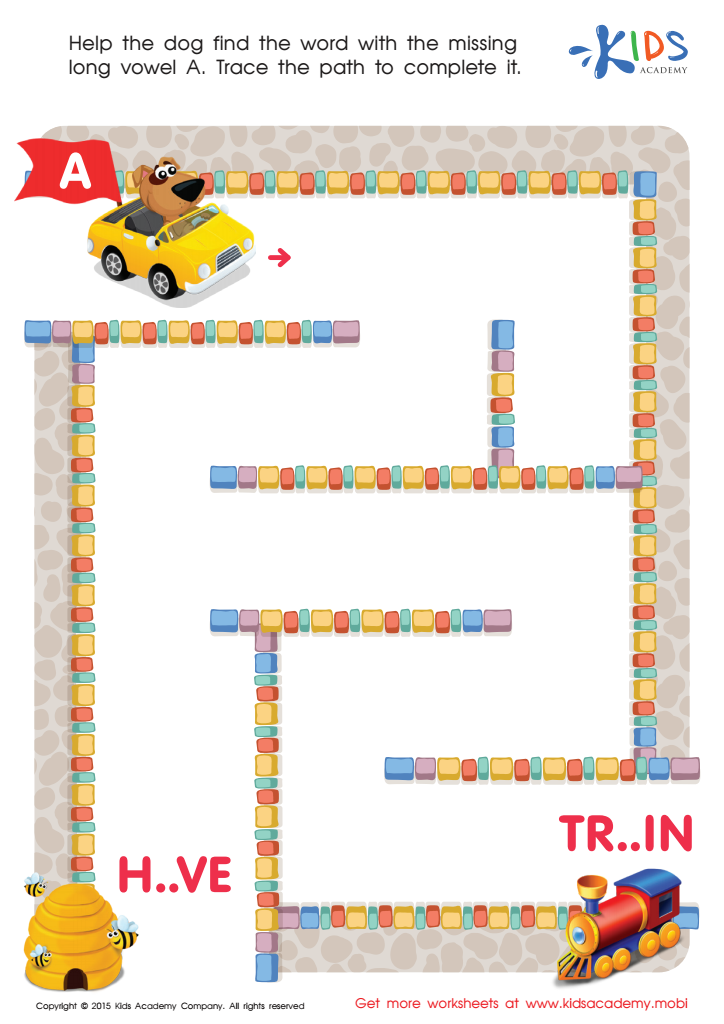
Long Vowel Sound A Worksheet
 Assign to My Students
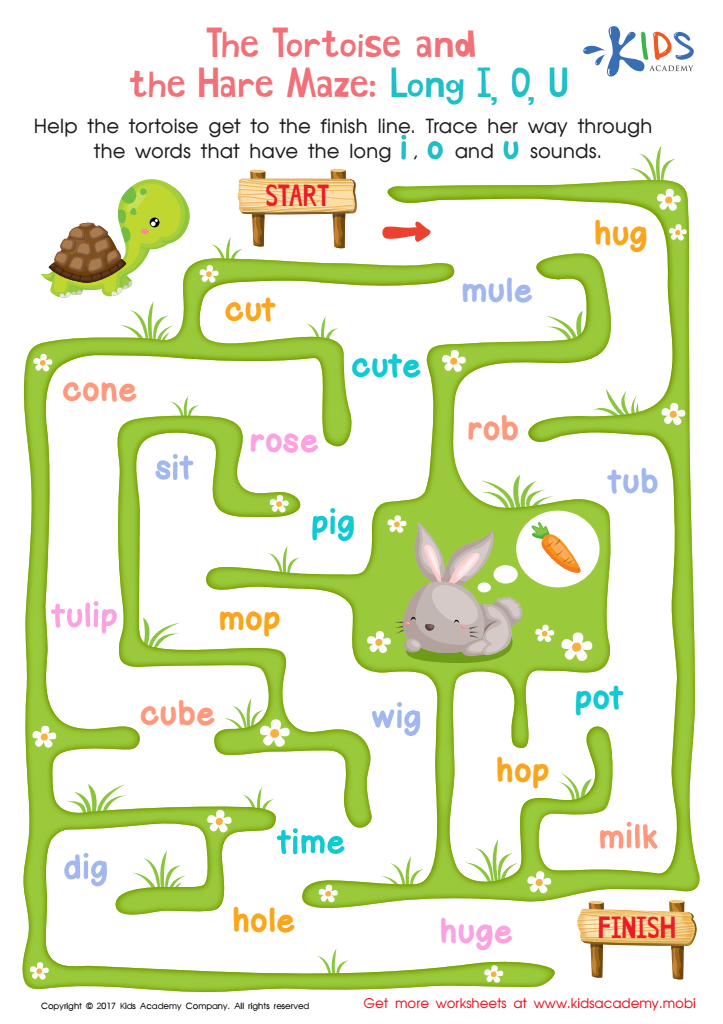
Long I, O, U Words Worksheet
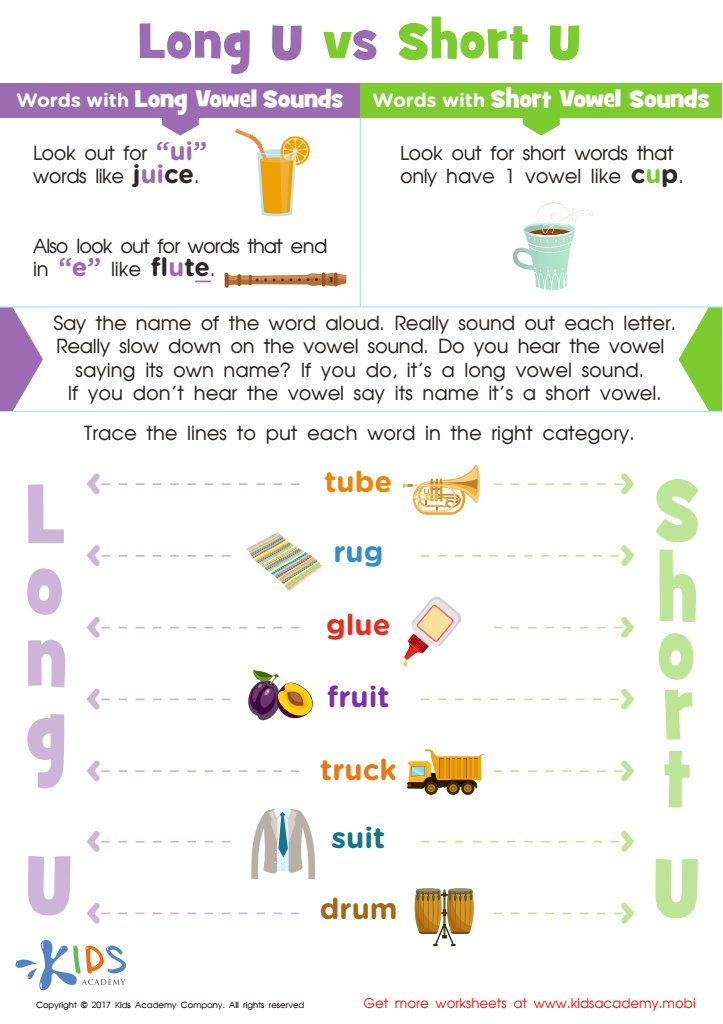
Long and Short Vowel U Spelling Worksheet
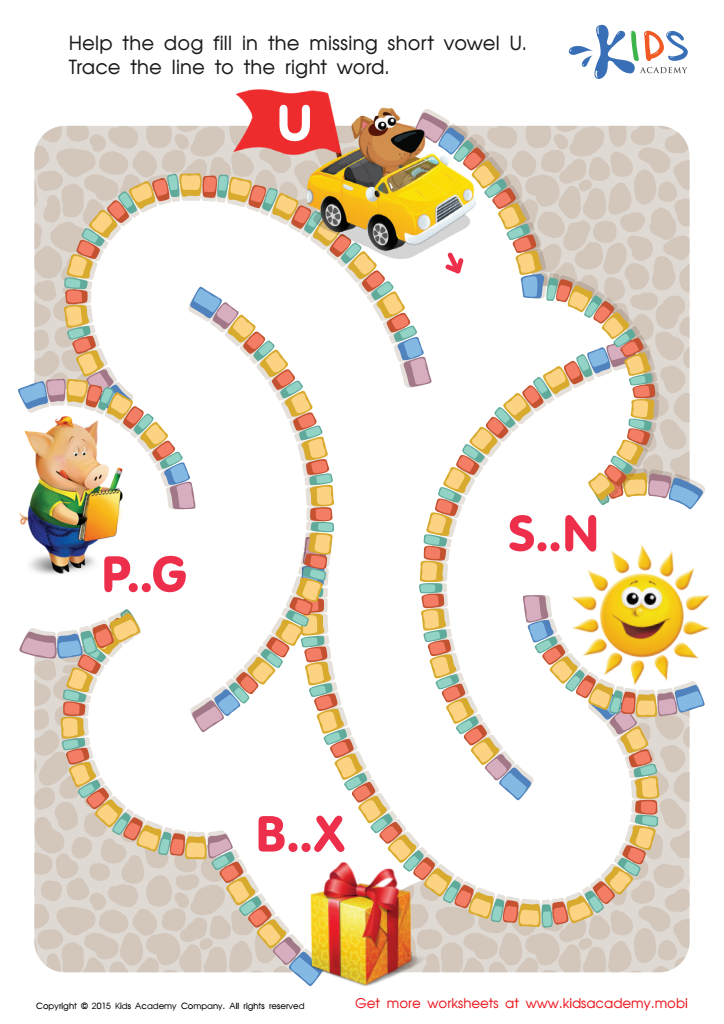
Short Vowel Sound U Worksheet
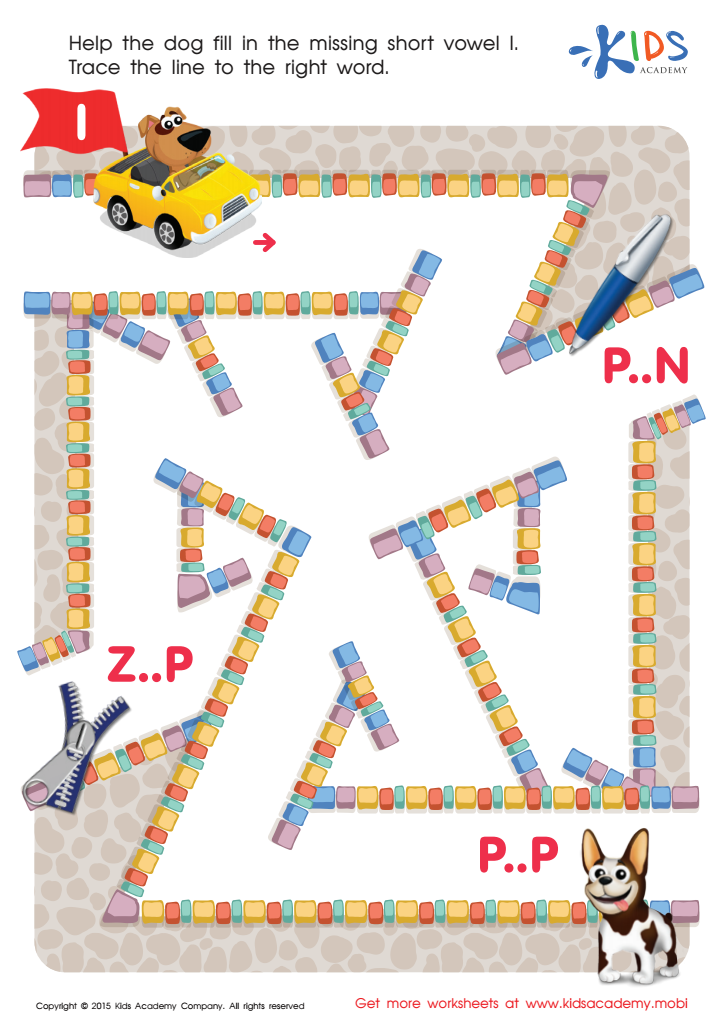
Short Vowel Sound I Worksheet
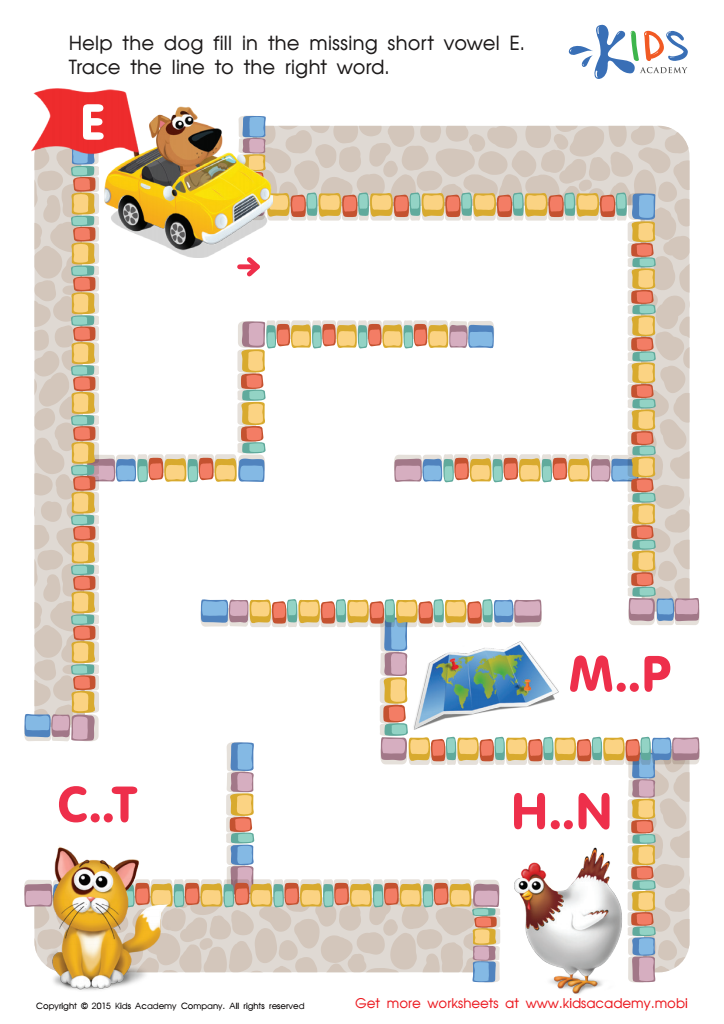
Short Vowel Sound E Worksheet
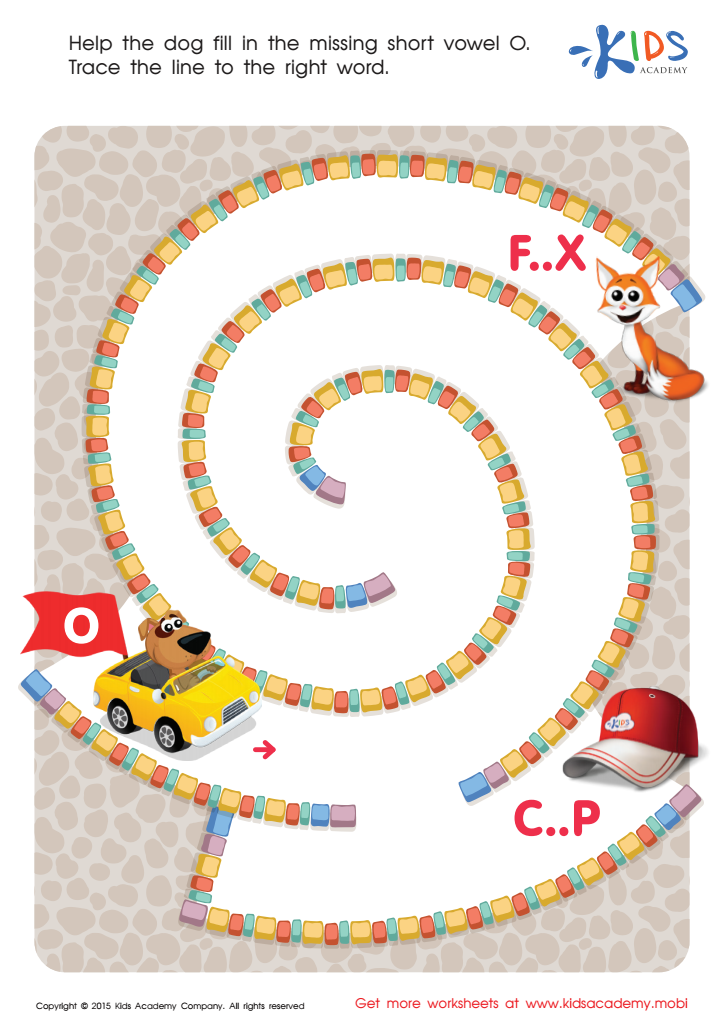
Short Vowel Sound O Worksheet
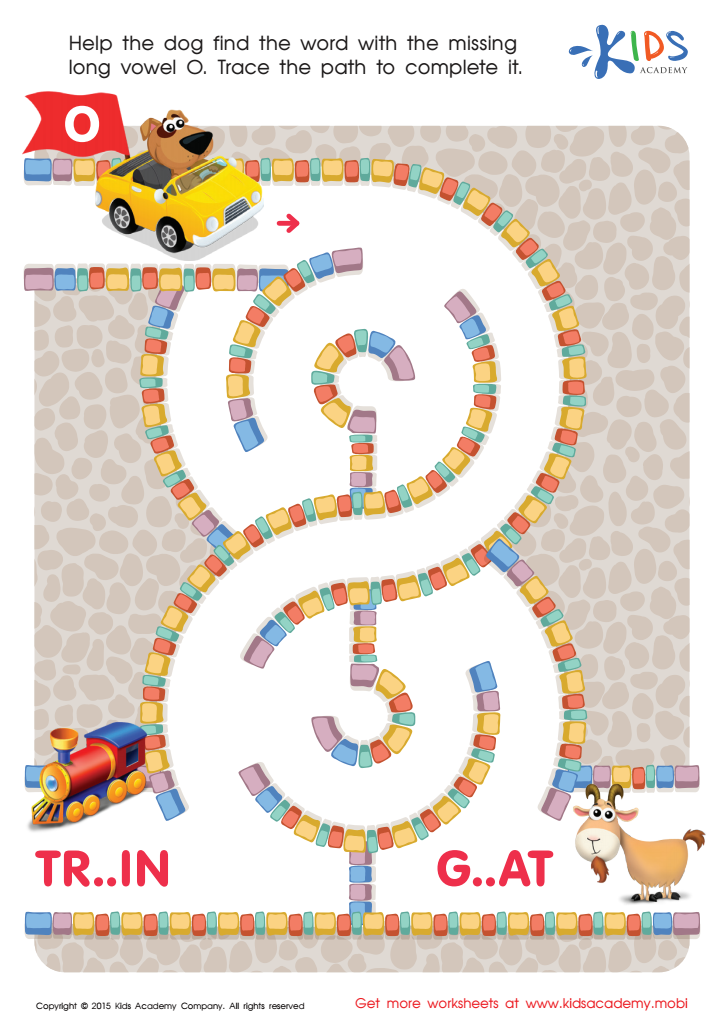
Long Vowel Sound O Worksheet
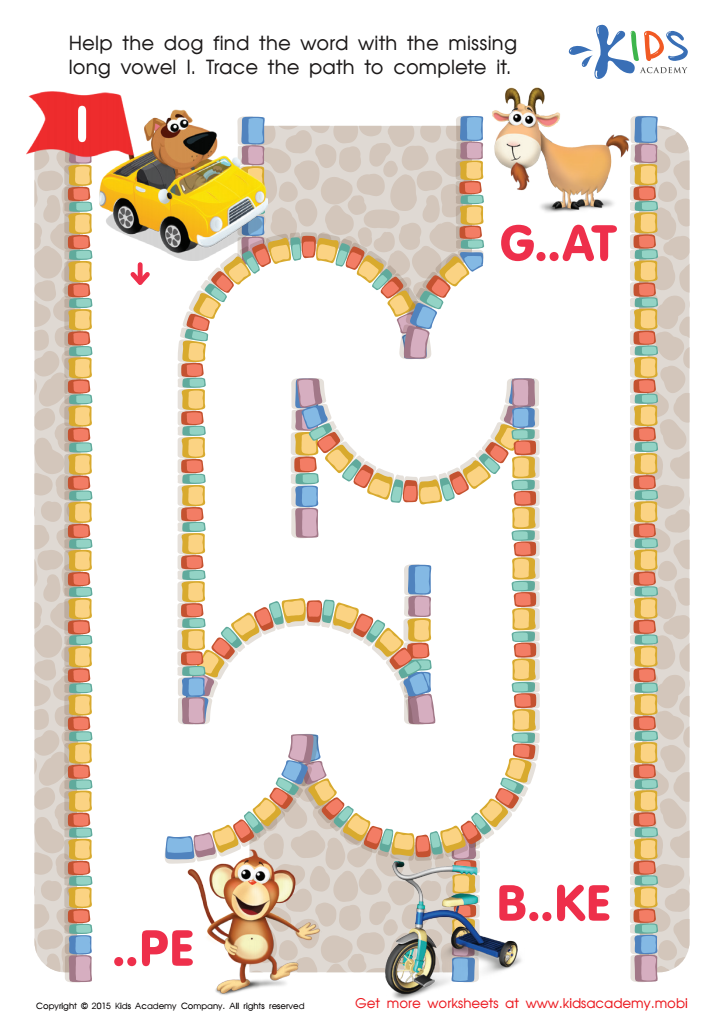
Long Vowel Sound I Worksheet








Vowel Recognition Extra Challenge is a pivotal activity for children aged 3-9 because it forms the cornerstone of their language and reading development. At these formative ages, children are in the critical phases of phonemic awareness and literacy acquisition. Vowels play a crucial role in creating distinct sounds and patterns within words, making their recognition fundamental in early reading skills.
For parents and teachers, focusing on vowel recognition helps children improve their decoding abilities—identifying and sounding out words correctly—which is essential for reading fluency. Distinguished from consonants, vowel sounds can often vary, influencing pronunciation and meaning. Recognizing these variations early aids kids in developing a strong foundational grasp of language structure.
Moreover, involving young children in vowel-focused challenges fosters visual and auditory discrimination skills. Activities designed to enhance vowel recognition encourage kids to differentiate between sounds, a skill that transcends reading and is beneficial in all forms of communication. By integrating these challenges into early literacy education, parents and teachers can greatly enhance a child’s confidence and enthusiasm for reading, which can lead to better academic performance and a lifelong love for learning. Thus, prioritizing vowel recognition lays the groundwork for a successful journey into literacy and language proficiency.








