Basic geometry understanding Extra Challenge Worksheets for Ages 4-5
3 filtered results
-
From - To
Introduce your young learners to the fascinating world of geometry with our "Basic Geometry Understanding Extra Challenge Worksheets for Ages 4-5." Designed to enhance spatial awareness and shape recognition, these engaging worksheets provide extra challenges that make learning fun! Children will explore essential concepts through captivating activities focused on identifying shapes, understanding spatial relationships, and developing problem-solving skills. Perfect for reinforcing classroom lessons or as supplemental practice at home, these worksheets are crafted to keep kids engaged and motivated. Foster your child's love for math and help build a strong foundation in geometry today! Download and watch their confidence grow!
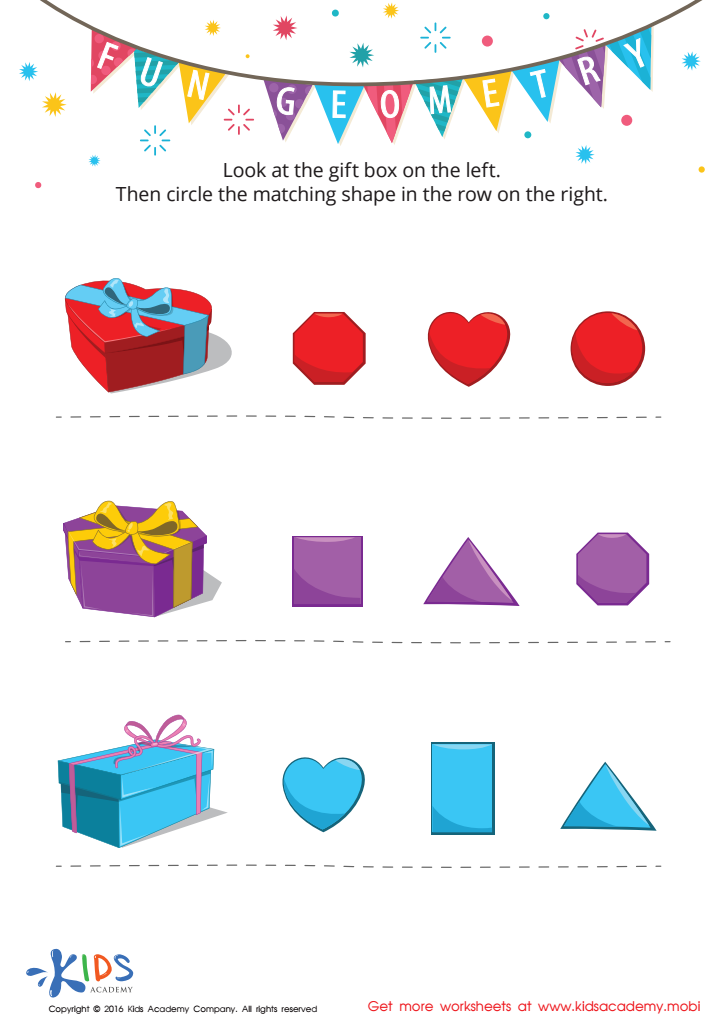
Fun Geometry Worksheet
 Assign to My Students
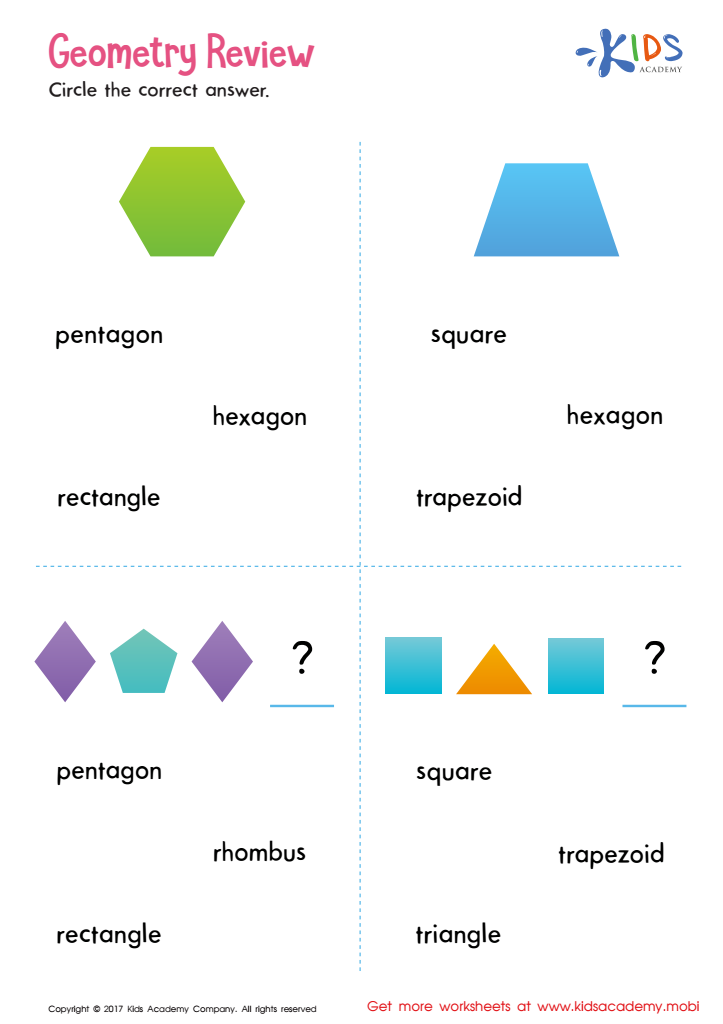
Geometry Review Printable
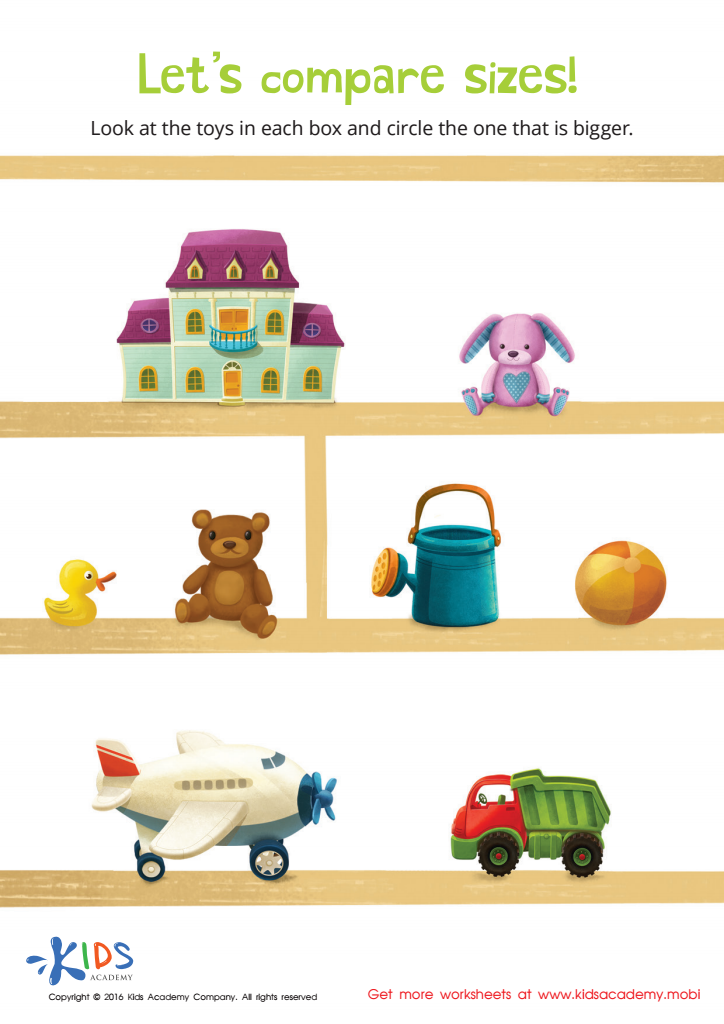
Classifying by Size Sorting Worksheet





.jpg)

Understanding basic geometry in early childhood, especially for ages 4-5, is crucial for several reasons. Firstly, it lays the foundation for critical thinking and problem-solving skills. At this age, children are naturally curious and eager to explore their environment—geometry allows them to categorize shapes and understand spatial relationships, which enhances cognitive development. Recognizing shapes and their attributes helps children make connections with the world around them, fostering an early appreciation for math in everyday life.
Moreover, a solid grasp of basic geometry encourages early language development. As children learn to describe shapes and their characteristics (e.g., "round," "square," "corners," "sides"), they expand their vocabulary and improve communication skills. Interaction through games and activities related to geometry also promotes social skills, as children often engage in collaborative play, enhancing teamwork and cooperation.
In addition, establishing a strong foundation in geometry at this stage can have long-term academic benefits. Early exposure leads to greater enthusiasm for math as they progress in their education, setting them up for future success. Ultimately, parents and teachers play a vital role in nurturing this understanding, integrating fun, hands-on activities that inspire a lifelong love for learning and exploration in mathematics.








