Shape Recognition Extra Challenge Geometry Worksheets for Ages 4-5
6 filtered results
-
From - To
Discover our exciting "Shape Recognition Extra Challenge Geometry Worksheets" specially designed for children aged 4-5! These engaging worksheets enhance young learners' shape identification skills while making math fun. With a variety of lively activities, children will explore shapes through coloring, matching, and visual recognition exercises, fostering both creativity and critical thinking. Ideal for preschool and kindergarten educators or parents looking to supplement learning at home, these worksheets guide children as they develop essential geometric skills. Promote early math proficiency and confidence in your little ones today with our extra challenge resources—perfect for nurturing a love for learning through play!
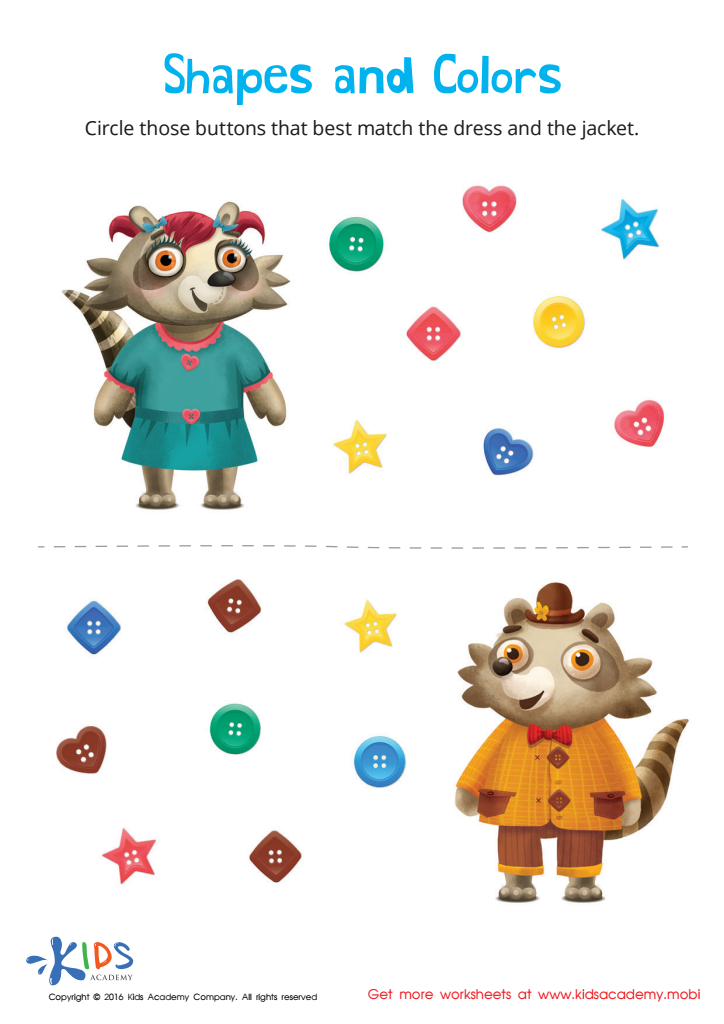
Matching: Shapes and Colors Worksheet
 Assign to My Students











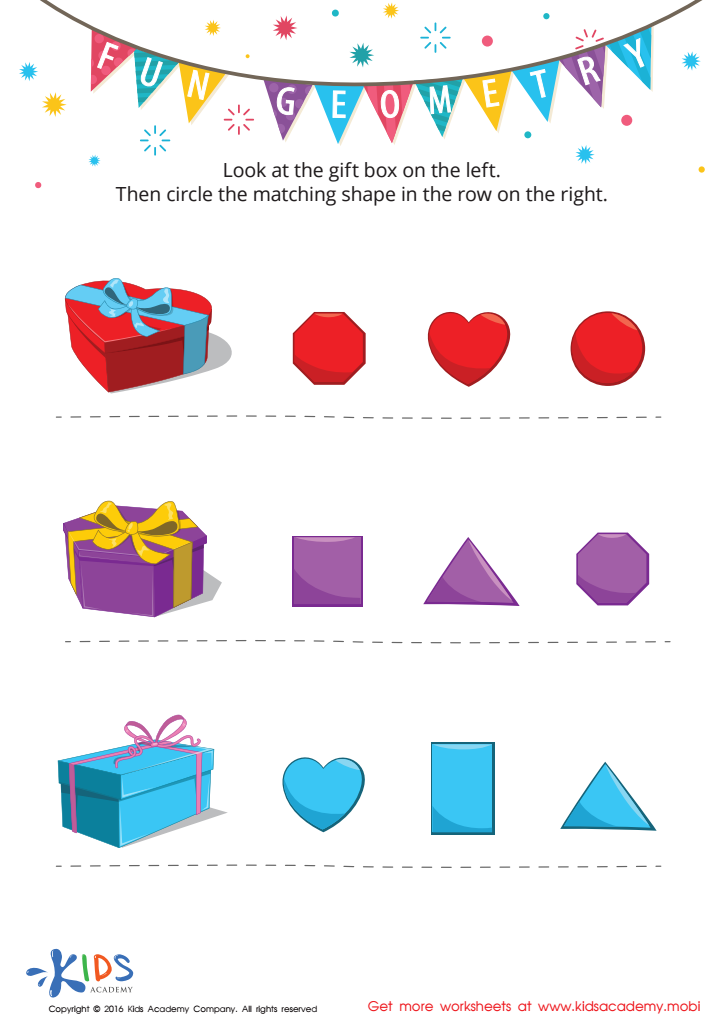
Fun Geometry Worksheet
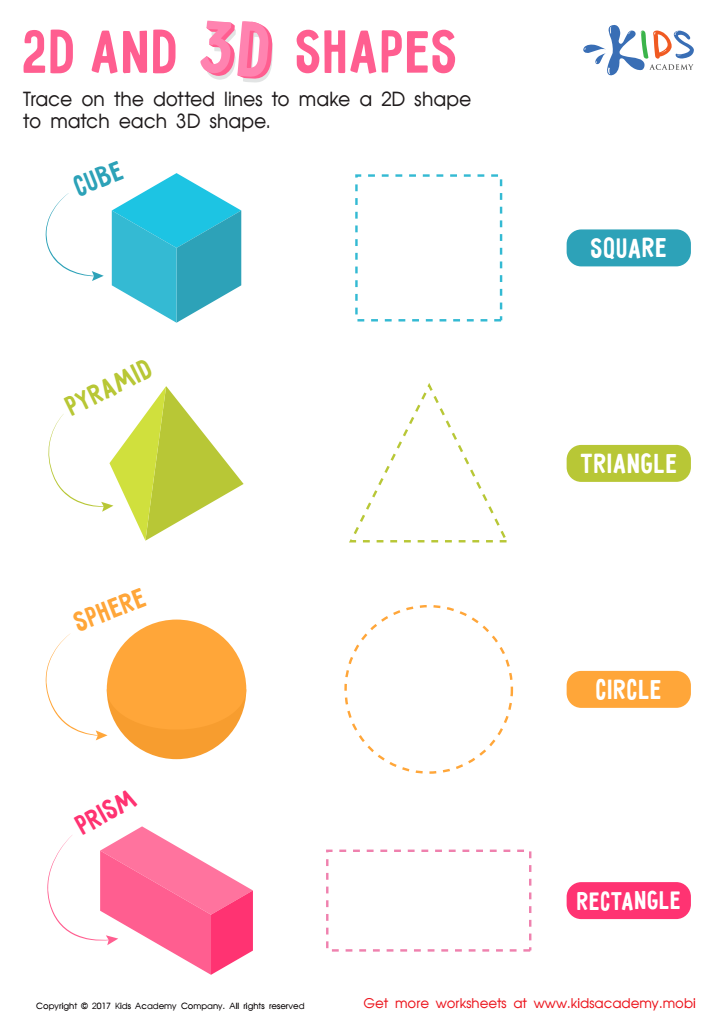
2D and 3D Shapes Worksheet
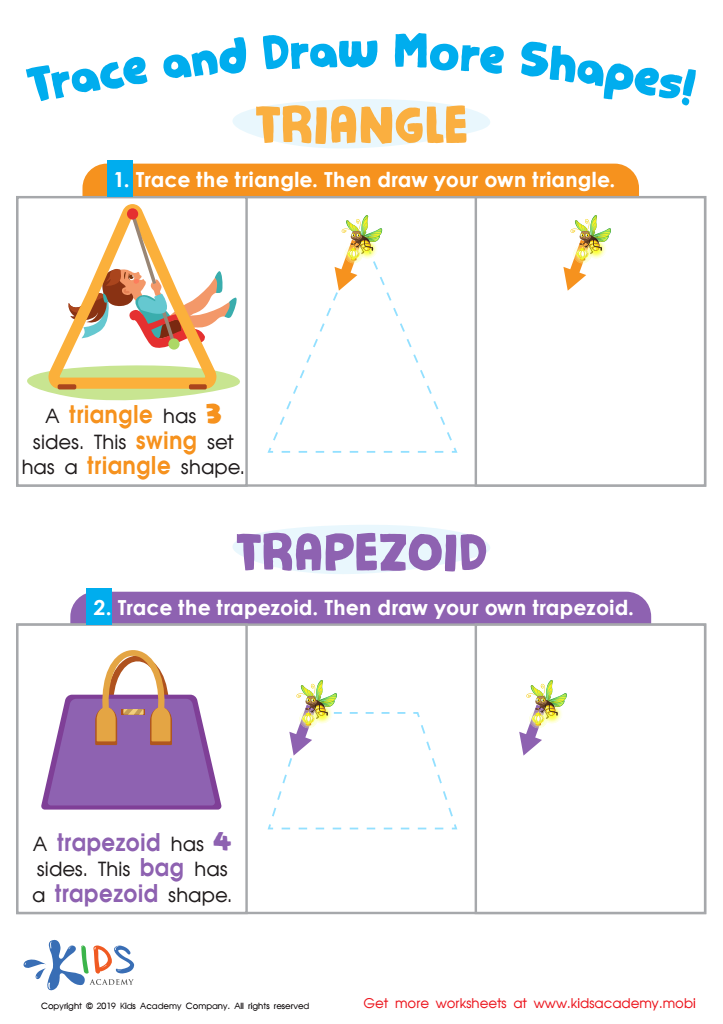
Trace and Draw More Shapes Worksheet
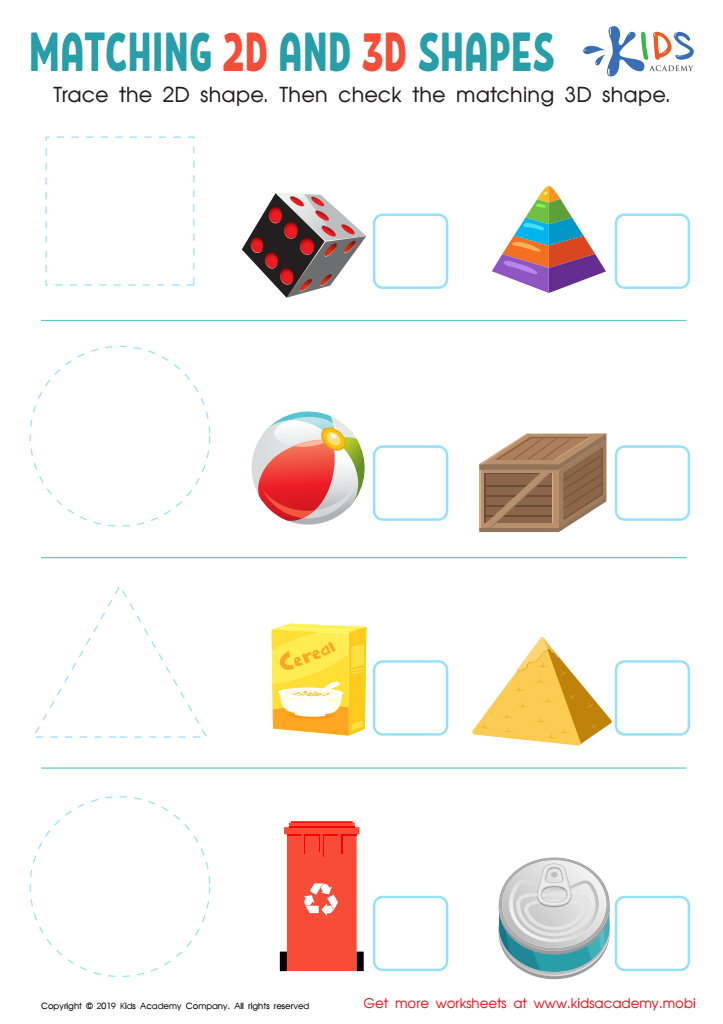
Matching 2D and 3D Shapes Worksheet
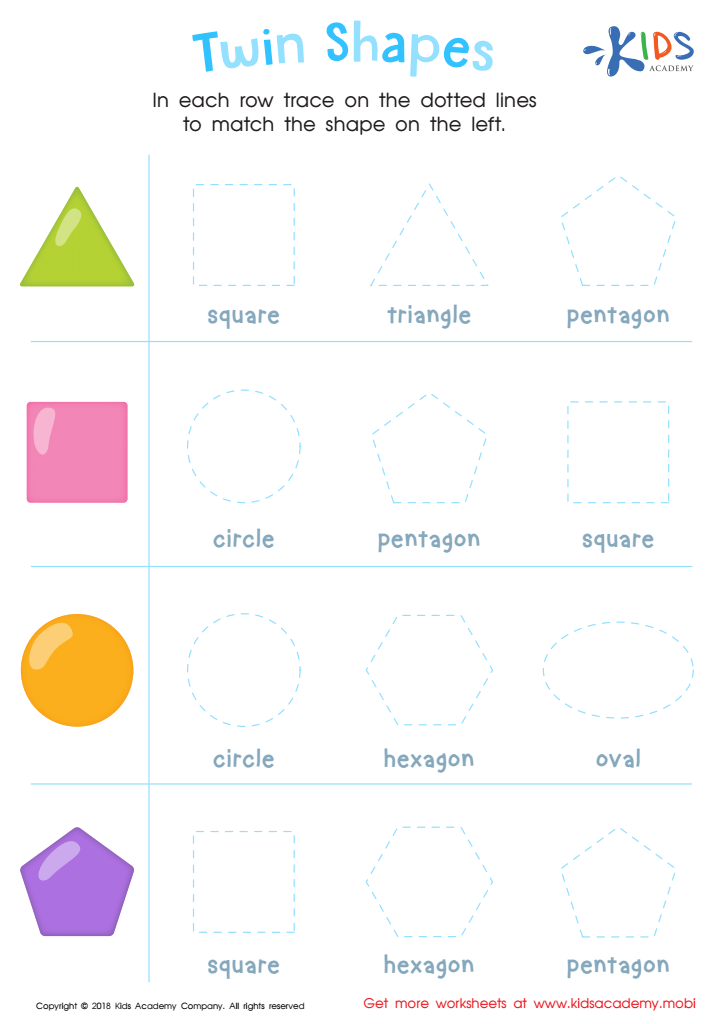
Twin Shapes Dot-to-Dot Worksheet








Shape Recognition Extra Challenge Geometry for ages 4-5 is crucial as it lays the foundation for early mathematical understanding and spatial awareness. Engaging children in activities that challenge their shape recognition capabilities helps them not only identify different shapes but also understand their properties and how they relate to one another. This early exposure to geometry fosters critical thinking skills that are essential for problem-solving in everyday life.
Moreover, shape recognition is integrally connected to a variety of essential skills, including pattern recognition, fine motor development, and even future success in mathematics. As children learn to differentiate and categorize shapes, they're also developing cognitive skills that enhance their ability to think logically. Additionally, these activities often incorporate hands-on learning, making the experience interactive and enjoyable—an important aspect of maintaining a child’s interest in learning.
By prioritizing shape recognition challenges, parents and teachers can encourage children to explore and discover the world around them. This exploration not only boosts their confidence but also cultivates a lifelong love for learning. In essence, shape recognition is not just about math; it's about nurturing well-rounded, curious young minds ready to tackle more complex concepts in the future.








