Pattern recognition Extra Challenge Worksheets for Ages 4-6
7 filtered results
-
From - To
Unlock your child's potential with our engaging Pattern Recognition Extra Challenge Worksheets designed specifically for ages 4 to 6. These printable activities not only enhance critical thinking skills but also make learning fun! Each worksheet is thoughtfully crafted to encourage kids to identify and create patterns through colorful illustrations and interactive tasks. This extra challenge fosters essential cognitive development while promoting problem-solving abilities. Perfect for both classroom settings and at-home practice, our worksheets provide endless opportunities for hands-on learning. Help your little ones become pattern detectives and boost their confidence in recognizing sequences and relationships with our exciting worksheets today!
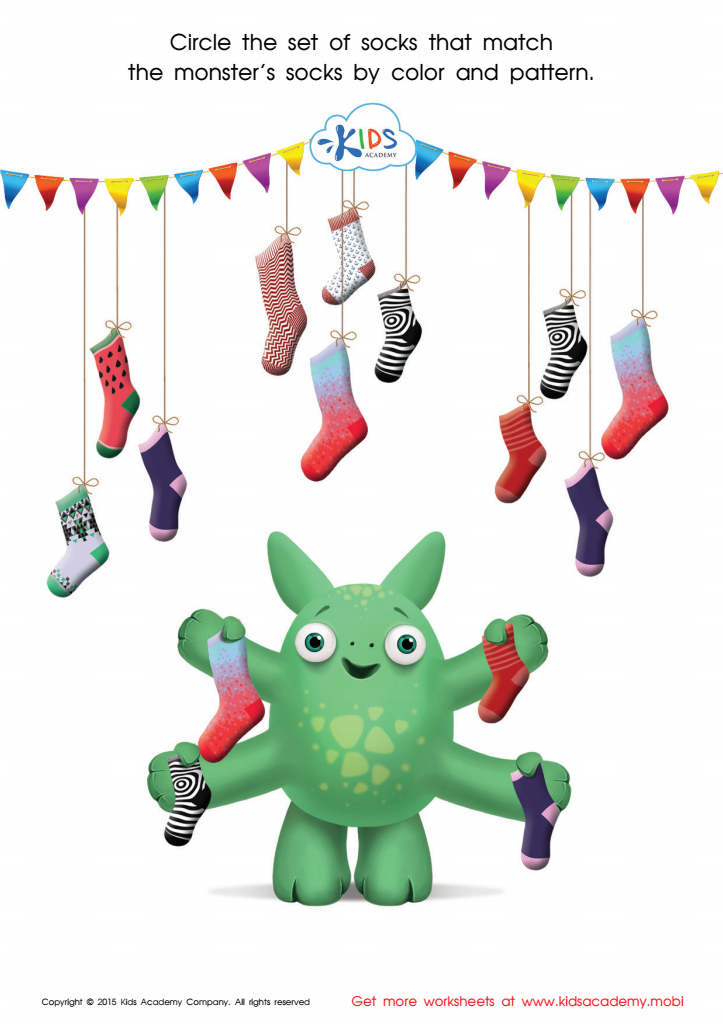
Sort the Monster's Socks Worksheet
 Assign to My Students
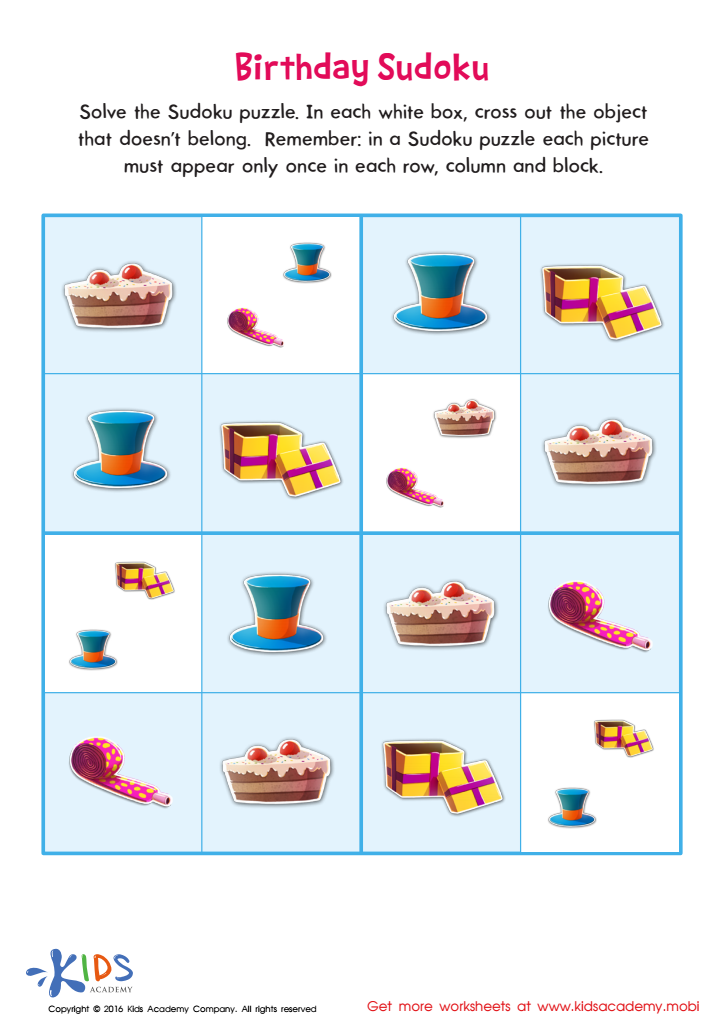
Birthday Sudoku Sorting Worksheet
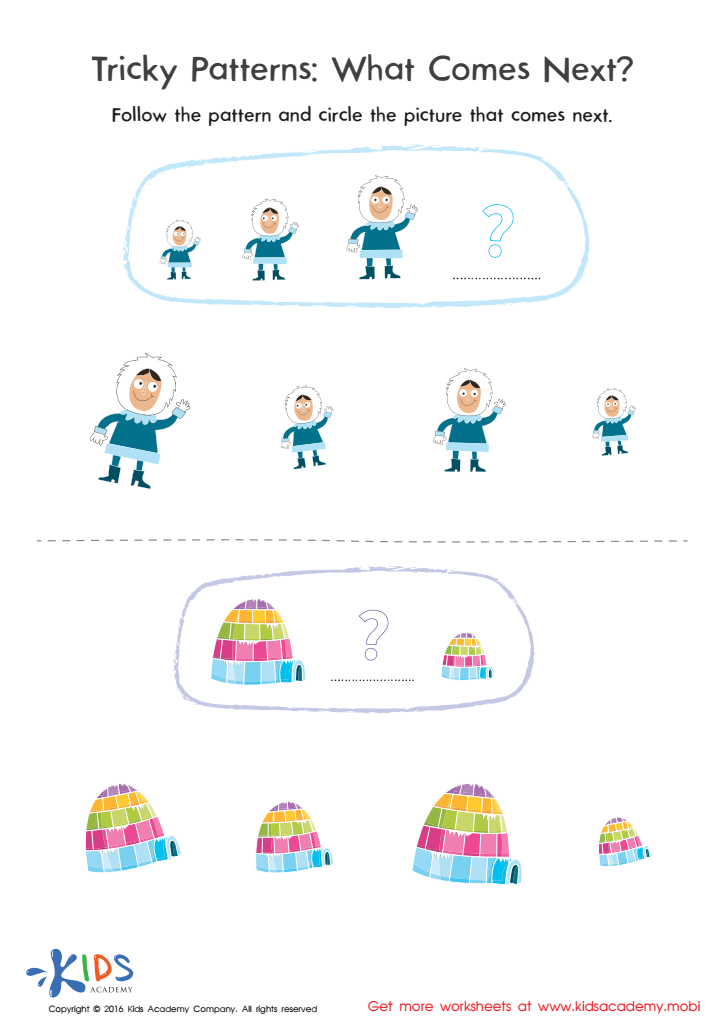
Tricky Patterns Size Worksheet
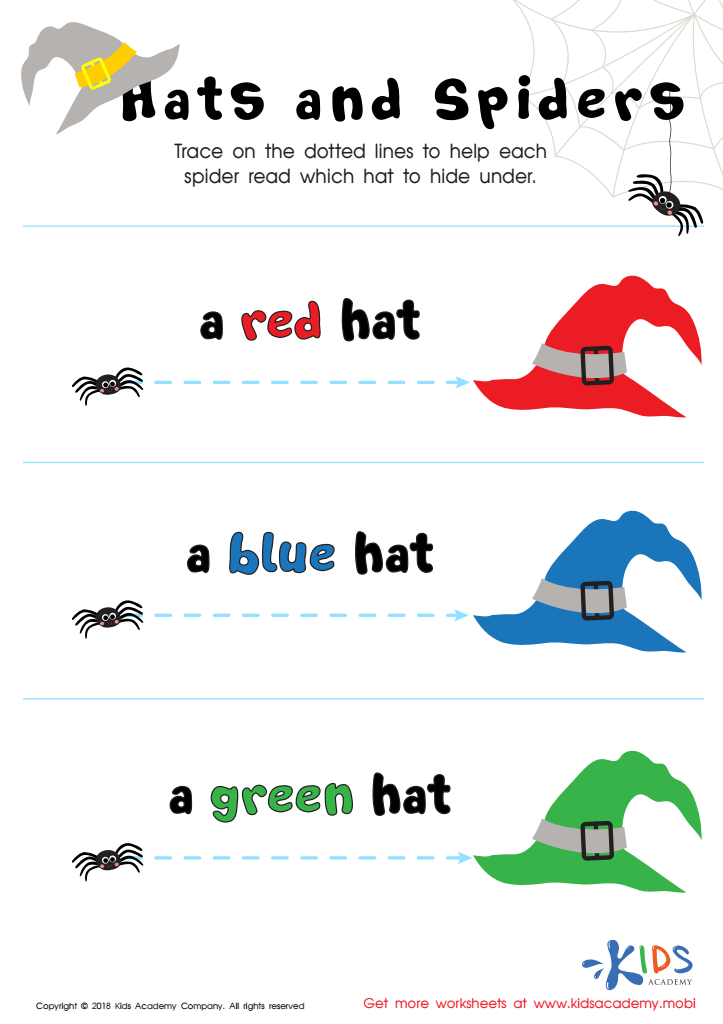
Read from Left to Right: Hats and Spiders Worksheet
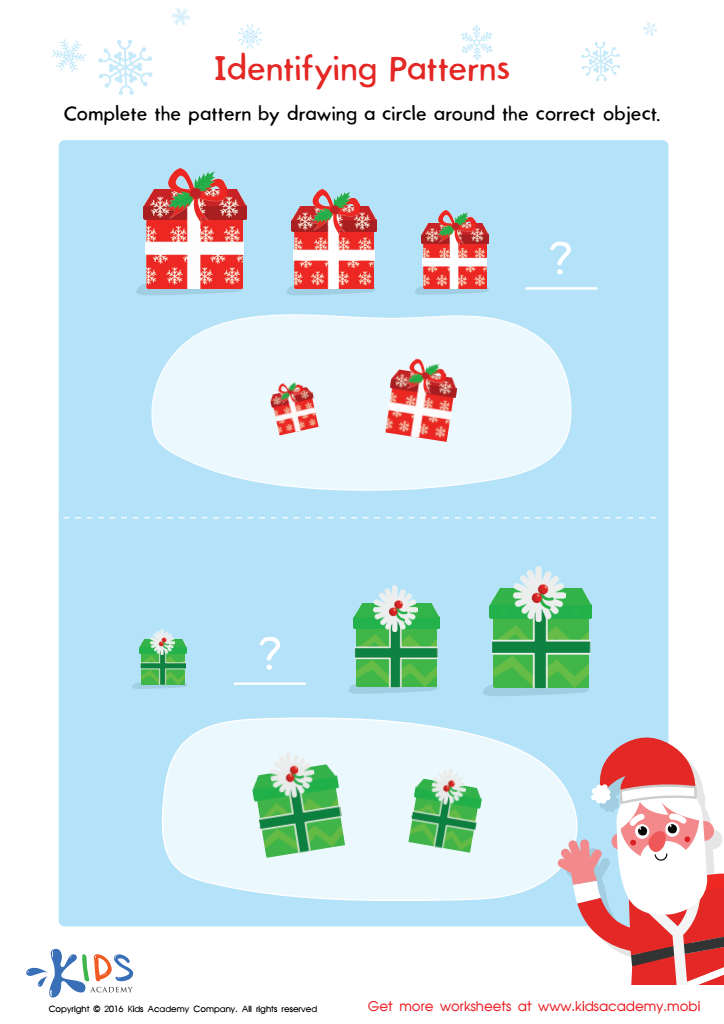
Identifying Patterns Worksheet
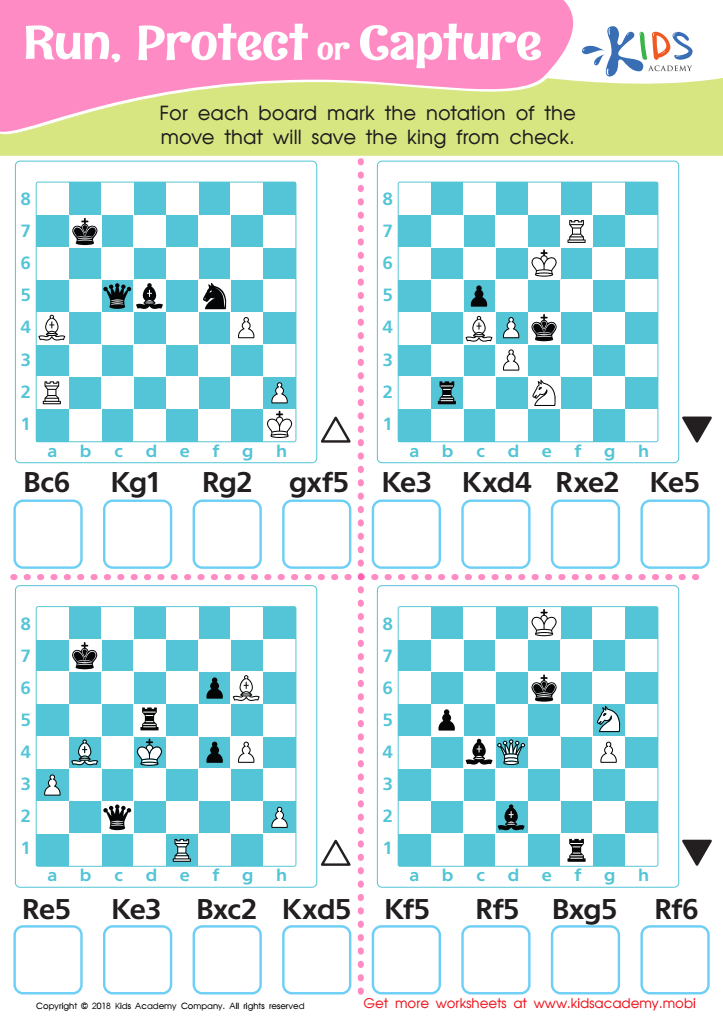
Run, Protect or Capture Worksheet
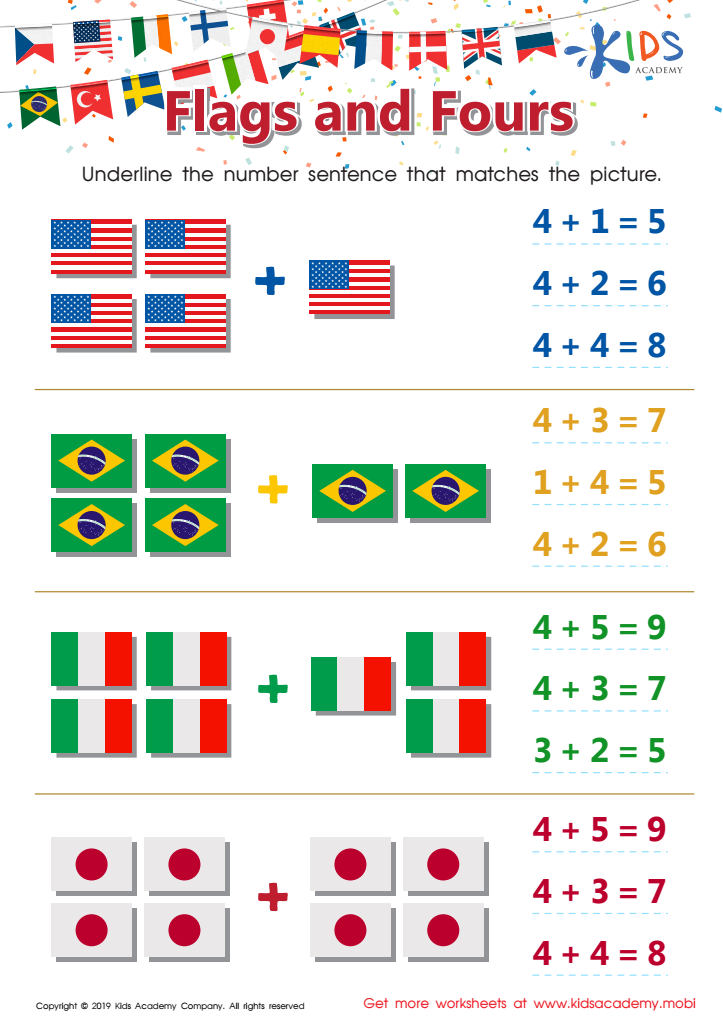
Flags and Fours Worksheet








Pattern recognition is a fundamental cognitive skill that underpins various areas of learning and development in early childhood. For parents and teachers, focusing on Pattern Recognition Extra Challenge activities for ages 4-6 is crucial for several reasons.
Firstly, recognizing patterns helps children develop critical thinking skills. It encourages them to identify relationships, make predictions, and solve problems—all essential skills for future academic success. Engaging children in activities that challenge their pattern recognition abilities fosters an inquisitive mindset, promoting exploration and discovery.
In addition, pattern recognition is foundational for mathematics. Children who can identify and create patterns enhance their numerical understanding and improve counting skills. This skill also aids in literacy, as recognizing patterns in letters and sounds contributes to early reading competence.
Moreover, pattern recognition activities can support social-emotional development. They often encourage cooperative play and communication with peers, fostering teamwork and social skills.
Finally, incorporating challenges into pattern recognition activities keeps learning enjoyable and engaging. It motivates children to think critically and push their boundaries in a fun context. Overall, promoting pattern recognition in early childhood is vital for holistic development, setting a strong foundation for lifelong learning.








