Shape identification Extra Challenge Worksheets for Ages 4-6
3 filtered results
-
From - To
Discover our engaging "Shape Identification Extra Challenge Worksheets" designed specifically for children ages 4-6. These versatile worksheets encourage young learners to dive deeper into shape recognition through fun, interactive activities. Each worksheet features a variety of challenges, including tracing, matching, and coloring different shapes, which help reinforce essential math skills while keeping kids entertained. Perfect for parents and educators, our extra challenge worksheets promote critical thinking and problem-solving abilities, making learning exciting and enjoyable! Add these creative resources to your teaching toolkit and support your child's early mathematical development today. Explore the world of shapes and watch their confidence grow!
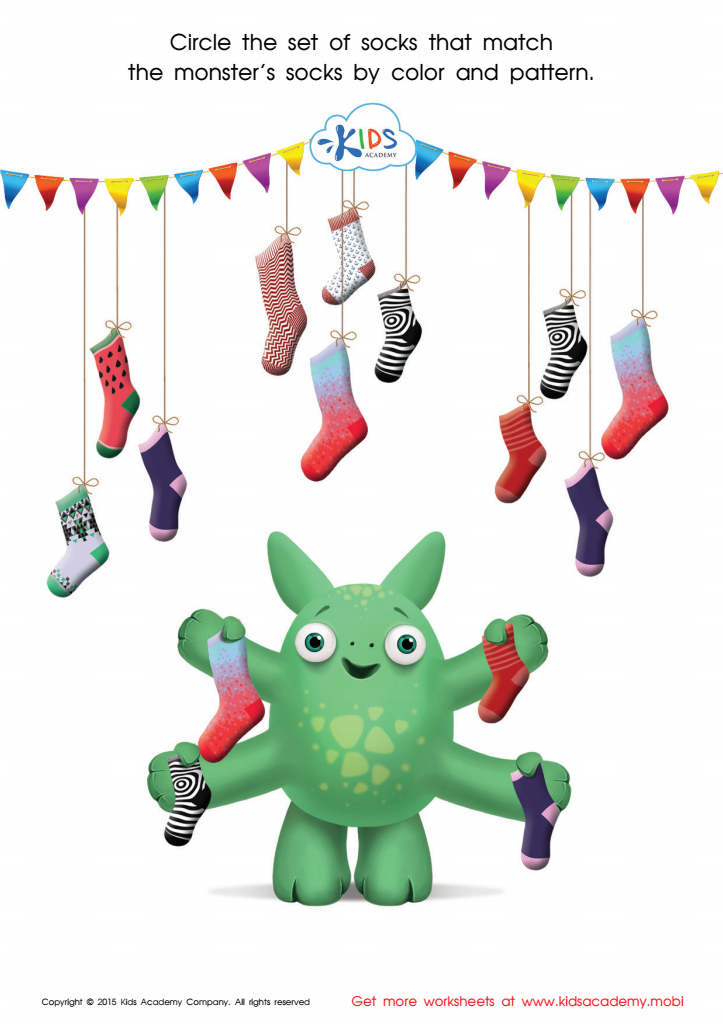
Sort the Monster's Socks Worksheet
 Assign to My Students
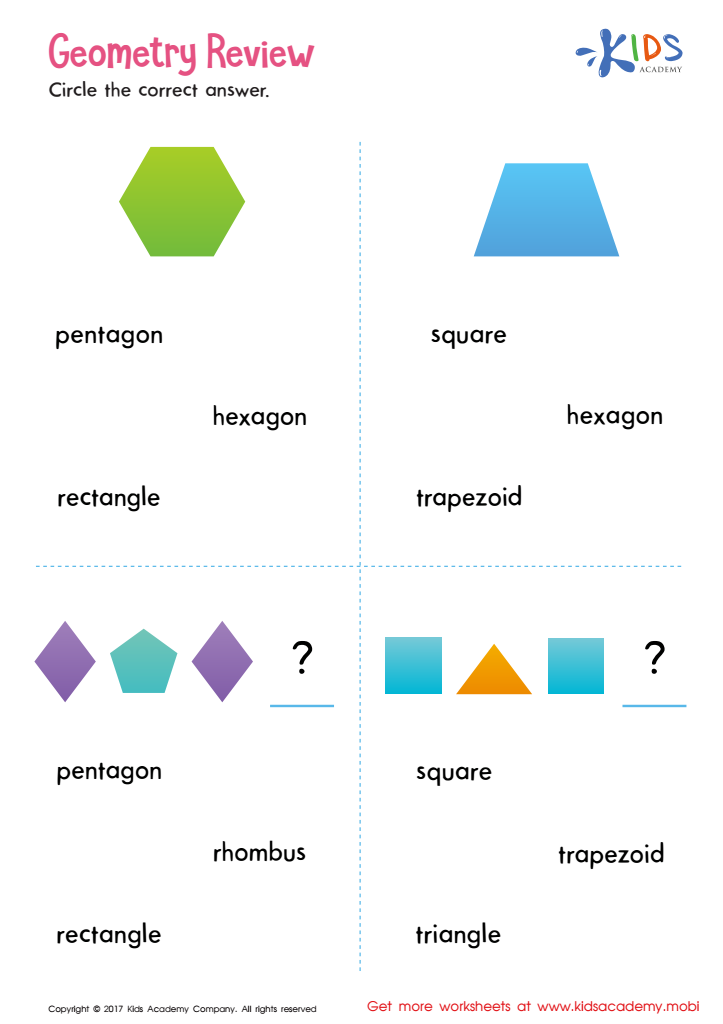
Geometry Review Printable

Shapes Worksheet


.jpg)





Shape identification is a foundational skill in early childhood education, and its importance cannot be overstated for children aged 4-6. Understanding shapes lays the groundwork for various cognitive developments, fostering spatial awareness, problem-solving abilities, and logical reasoning. Engaging in shape identification activities not only enhances a child's mathematical understanding but also enriches their language skills as they learn to describe, compare, and classify shapes.
Parents and teachers should care about introducing extra challenges related to shape identification, as it encourages children to think critically and appreciate the world around them. For instance, distinguishing between geometric shapes, identifying shapes in everyday objects, and recognizing shapes in art can enhance observation skills and creativity. Furthermore, these challenges motivate children to take initiative and persist through difficulties, building resilience and confidence.
Additionally, extra challenges can drive engagement and excitement within the learning environment, making education a fun and enriching experience. This is crucial in fostering a lifelong love of learning. By supporting shape identification activities, parents and teachers lay a strong foundation for children’s academic success, setting them up for positive learning experiences in mathematics and beyond. Emphasizing these skills ultimately benefits children's overall development and preparedness for future challenges.








